


1


Atnaujinta lapkritis 2026 · pagal mūsų populiarumumo koeficientą (paieškos, lankytojai ir užsakymai kiekvienam kūriniui) · 54 Théobaldas Chartranas darbai mūsų kataloge
Trumpai tariant
Monseigneur Darboy (1813-1871), Archbishop of Paris, exhibited after his death (1871) yra viena iš labiausiai žaičiamosių Théobaldas Chartranas tapierių; originalas priklauso Carnavalet muziejus, Paris. Po to akmuo patenka į Sketch for the church of Champigny-sur-Marne: the Martyrdom of Saint Saturnin (1876) ir Priam Asking Achilles for the Body of Hector (1876). Iš 54 Théobaldas Chartranas darbų mūsų kataloge šios 53 yra garsiausios – kiekvienas yra unikali originali dai̇lia, pateikta su jos metais, muziejumi ir priežastimi, kodėl ji išlieka per amžius.


 Portrait of Mounet-Sully (Jean-Sully Mounet, 1841-1916, said), member of the Comédie-Française1885 · Carnavalet muziejus
12
 Portrait of Gustave Worms (1836-1910), Member of the Comédie-Française1885 · Carnavalet muziejus
13
 Portrait of Henri Maubant (1821-1902), member of the Comédie-Française1885 · Carnavalet muziejus
14
 Portrait of Louis Delaunay father (1826-1903), member of the Comédie Française1885 · Carnavalet muziejus
15
 Portrait of Louis Delaunay (1854-1937), member of the Comédie-Française, in the role of Perdican1885 · Carnavalet muziejus
16
 Portrait of Émilie Broisat (1848-1929), member of the Comédie-Française, in stage costume1883 · Carnavalet muziejus
17
 Portrait of Marie Favart (1833-1908), member of the Comédie-Française1884 · Carnavalet muziejus
18
 Portrait of Suzanne Reichenberg (1853-1924), member of the Comédie-Française1883 · Carnavalet muziejus
19
 Portrait of Frédéric Fèbvre (1835-1916), member of the Comédie-Française1883 · Carnavalet muziejus
20
 Portrait of François-Joseph-Philoclès Régnier (1807-1885), sociétaire of the Comédie-Française1885 · Carnavalet muziejus
21
 The Burial1892 · Petit Palais
22
 Sketch for the staircase of the Sorbonne: Louis IX at the Abbey of Royaumont1888 · Petit Palais
23
 Sketch for the wedding room of the Mairie de Montrouge: The Law and Marriage (Ceiling)1886 · Petit Palais
24
 Venice1890 · Petit Palais
25
 Sketch for the staircase of the Sorbonne: Ambroise Paré at the siege of Metz1888 · Petit Palais
26
 Sketch for the staircase of the Sorbonne: Bernard Palissy opening a public course of mineralogy in Paris, with the permission of the king1888 · Petit Palais
27
 Sketch for the Salon des Arts of the Hôtel de Ville de Paris: Figures Carrying Banners1891 · Petit Palais
28
 Sketch for the Salon des Arts of the Hôtel de Ville de Paris: Medal Engraving. Goldsmithing. Song. Music.1891 · Petit Palais
29
 Sketch for the Salon des Arts of the Hôtel de Ville de Paris: Painting, Sculpture, Architecture, Intaglio Engraving1891 · Petit Palais
30
 Portrait of Charles Le Bargy (1858-1936), member of the Comédie-Française, in stage costume1887 · Carnavalet muziejus
31
 Portrait of Madame Olympe Hériot, née Cyprienne Dubernet (1857-1947)1891 · Carnavalet muziejus
32
 Portrait of Olympe Hériot (1833-1899), businessman1891 · Carnavalet muziejus
33
 Portrait of Réjane (1856-1920) in Stage Costume1888 · Carnavalet muziejus
34
 Portrait of Sarah Bernhardt (1844-1923), in "Gismonda"1896 · Carnavalet muziejus
35
 Emma Calvé as Carmen1894
36
 Quarrel of Cardinals1904
37
 Portrait of Constant Coquelin, called Coquelin aîné (1841-1909), in the role of Cyrano de Bergerac1901 · Carnavalet muziejus
38
 Matthew Chaloner Durfee Borden (1842-1912), B.A. 1864, M.A. 18671901 · Yale University Art Gallery
39
 Mildred Hazen Dewey1900 · National Portrait Gallery
40
 Admiral George Dewey1900 · National Portrait Gallery
41
 Cardinal James Gibbons1904 · National Portrait Gallery
42
 George Robert White1904 · Museum of Fine Arts
43
 Harriet White Bradbury1904 · Museum of Fine Arts
44
 Portrait of Washington A. Roebling1899 · Brooklyn Museum
45
 Robert Winthrop (1833-1892)Harvard Art Museums
46
 Les Matines a la Grande Chartreuse
47
 Portrait of Andrew Carnegie
48
 The Signing of the Protocol of Peace Between the United Stat
49
 Portrait of Henry Phipps
50
 Portrait of Mrs Charles Lockhart
51
 Portrait of Charles Lockhart
52
 The exiles from thebes
53
 Pencil Drawing (One of Five Sketches)The Frick Pittsburgh
Ketverios temos, dažniausiai pasikrausto originaluose, kiekvienos su savo puikiausiu pavyzdžiu.
8 muziejai, kuriuose saugoma daugiausia šioje pusėje esamų paveikslų.
| Muzejaus | Miestas | Théobaldas Chartranas darbai | Šiojo sąrašo paveikslai |
|---|---|---|---|
 Carnavalet muziejus |
Paris | 19 | Monseigneur Darboy (1813-1871), Archbishop of Paris, exhibited after his death, Portrait of Jean-Baptiste Bressant (1815-1886), member of the Comédie-Française, Portrait of Édile Riquer (1832-1911), member of the Comédie-Française, in stage costume |
 Petit Palais |
Paris | 16 | Sketch for the church of Champigny-sur-Marne: the Martyrdom of Saint Saturnin, Priam Asking Achilles for the Body of Hector, Portrait of the Artist's Mother (Mme Dillon) |
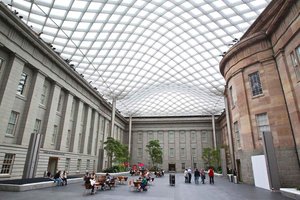 National Portrait Gallery |
Vašingtonas | 3 | Mildred Hazen Dewey, Admiral George Dewey, Cardinal James Gibbons |
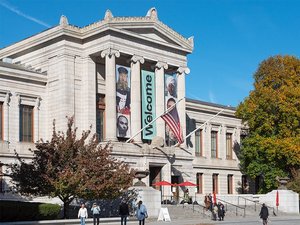 Museum of Fine Arts |
Bostonas | 2 | George Robert White, Harriet White Bradbury |
 Yale University Art Gallery |
Niū Hevenas | 1 | Matthew Chaloner Durfee Borden (1842-1912), B.A. 1864, M.A. 1867 |
 Brooklyn Museum |
Brooklyn | 1 | Portrait of Washington A. Roebling |
 Harvard Art Museums |
Kembrižas | 1 | Robert Winthrop (1833-1892) |
 The Frick Pittsburgh |
Pittsburgh | 1 | Pencil Drawing (One of Five Sketches) |
Pasirinkite dešimtmetį, kad pamatytėte jį apibrėžusį originalą.


Monseigneur Darboy (1813-1871), Archbishop of Paris, exhibited after his death (1871), Carnavalet muziejus, Paris. Toliau seka Sketch for the church of Champigny-sur-Marne: the Martyrdom of Saint Saturnin (1876) ir Priam Asking Achilles for the Body of Hector (1876).
22 metų amžiaus: Monseigneur Darboy (1813-1871), Archbishop of Paris, exhibited after his death sukurta 1871 m. Nr. Théobaldas Chartranas gimė 1849.
Monseigneur Darboy (1813-1871), Archbishop of Paris, exhibited after his death, Sketch for the church of Champigny-sur-Marne: the Martyrdom of Saint Saturnin, Priam Asking Achilles for the Body of Hector, Portrait of the Artist's Mother (Mme Dillon), Sketch for the wedding hall of the Mairie de Courbevoie: The Protective Law of the Hymenaeus (Ceiling), Sketch for the wedding room of the mairie de Courbevoie: bottle, maternity, education, Sketch for the wedding room of the Mairie de Courbevoie: Spinner. The Wedding. Shepherd, Sketch for the wedding room of the Mairie de Courbevoie: Love - The Marriage, Portrait of Jean-Baptiste Bressant (1815-1886), member of the Comédie-Française ir Portrait of Édile Riquer (1832-1911), member of the Comédie-Française, in stage costume. Viršuje esančioje reitingo sąraše nurodyta kiekvieno kūrinio metis ir muziejus.
Mūsų kataloge yra 54 Théobaldas Chartranas darbų, skirtų laikotarpiui nuo 1871 iki 1904.
Daugiausia – Carnavalet muziejus (Paris), Petit Palais (Paris) ir National Portrait Gallery (Vašingtonas). Viršuje esančiame muziejų sąraše yra visi jie.
1880s laikotarpiu: 23 iš 53 šioje pusėje esančių darbų buvo sukurtos tada, iš jų Portrait of the Artist's Mother (Mme Dillon).
Šioje pusėje seniausias darbas yra Monseigneur Darboy (1813-1871), Archbishop of Paris, exhibited after his death (1871), o naujausias – Quarrel of Cardinals (1904).
Portraits (2), Portrait painting (2) ir 19th century style (2) iš 53 šioje pusėje esamų darbų.
Academic realism, vadovaujantis šios puslapio originalais kūriniais.
Monseigneur Darboy (1813-1871), Archbishop of Paris, exhibited after his death, Portrait of Jean-Baptiste Bressant (1815-1886), member of the Comédie-Française ir Portrait of Édile Riquer (1832-1911), member of the Comédie-Française, in stage costume: Carnavalet muziejus, Paris kolekcijoje yra 19 šioje pusėje esančių darbų.
Théobald Chartran (1849–1907) remains a captivating figure in the tapestry of late 19th-century French art, an artist whose legacy is woven from the delicate threads of academic precision and the sharp wit of social caricature. Born in Besançon to a family with deep roots in the French legal and military aristocracy, Chartran’s path was not initially destined for the easel. While his parents envisioned a future in law or the military, the young artist felt an irresistible pull toward the visual arts. This early tension between duty and passion would later manifest in a style that balanced the rigorous discipline of the École des Beaux-Arts with a profound, empathetic understanding of the human spirit.
His formal education under the legendary Alexandre Cabanel provided him with a formidable foundation in the classical tradition. From this mentorship, Chartran inherited an unwavering commitment to anatomical accuracy and the subtle mastery of tonal gradation. His work was never about the loud or the flamboyant; instead, he sought the quiet truth found in a gaze or the soft fall of light across a subject's features. This dedication to the essence of his sitters earned him significant acclaim, most notably when his poignant portrait of the Archbishop Georges Darboy—painted amidst the somber atmosphere of the Paris Commune—won him the prestigious Grand Prix de Rome in 1877.
While his academic training anchored him in the realm of serious portraiture, Chartran possessed a versatile spirit that allowed him to thrive within the burgeoning media landscape of the Victorian era. Writing and illustrating under the pseudonym "T", he became a vital contributor to the iconic Vanity Fair magazine. Here, his talent took on a different dimension, blending astute political awareness with a playful, satirical edge. He navigated the complexities of European politics through his caricatures, capturing the likenesses of titans such as:
This duality—the ability to move from the biting humor of a caricature to the dignified solemnity of an oil portrait—distinguished him from his contemporaries. Whether he was depicting the inventor of the stethoscope, René Laennec, or the operatic intensity of Emma Calvé as Carmen, Chartran’s brushwork remained consistent in its pursuit of character. He did not merely paint faces; he painted histories, using rich background gradients and a restrained palette to ensure that the subject's intellect and soul remained the focal point of the canvas.
The historical significance of Théobald Chartran lies in his role as a chronicler of a rapidly changing world. As the 19th century gave way to the 20th, his work served as a bridge between the rigid hierarchies of the past and the modern, media-driven era of celebrity and political satire. His portraits were more than mere likenesses; they were psychological studies that sought to understand humanity within the shifting cultural landscape of France and beyond.
Though some of his most famous encounters with power ended in colorful historical footnotes—such as his widely discussed, yet famously rejected, portrait of Theodore Roosevelt—his contribution to the art of portraiture remains indelible. Through his meticulous technique and his ability to capture both the humor and the gravity of his subjects, Chartran ensured that the faces of his era would not merely be remembered, but truly felt by future generations.