
1


Atnaujinta lapkritis 2026 · pagal mūsų populiarumumo koeficientą (paieškos, lankytojai ir užsakymai kiekvienam kūriniui) · 20 Stephen W Macphail darbai mūsų kataloge
Trumpai tariant
Wild Gravity (from the series 'Just Imagine') (1990) yra viena矚 most žiūrėlių pritraukiančių Stephen W Macphail tapierių; originalas saugomas Leighton Buzzard Library, Leighton Buzzard. Po to akmuo patenka į The Crossing (from the series 'Just Imagine') (1991) ir Holey Island (from the series 'Just Imagine') (1990). Iš 20 Stephen W Macphail darbų mūsų kataloge šios 20 yra garsiausios – kiekvienas yra unikali originali dai̇lia, pateikta su jos metais, muziejumi ir priežastimi, kodėl ji išlieka per amžius.


 Friendship (from the series 'Just Imagine')1991 · Leighton Buzzard Library
12
 Palette1991 · Leighton Buzzard Library
13
 Reaching for the Moon on the Heads of My Ancestors (from the series 'Just Imagine')1991 · Leighton Buzzard Library
14
 'I'm Gonna Get You' (from the series 'Just Imagine')1991 · Leighton Buzzard Library
15
 Hannah's Room (from the series 'Just Imagine')1991 · Leighton Buzzard Library
16
 The Shadow (from the series 'Just Imagine')1991 · Leighton Buzzard Library
17
 Rapunzel (from the series 'Just Imagine')1991 · Leighton Buzzard Library
18
 Sea Ghouls (from the series 'Just Imagine')1991 · Leighton Buzzard Library
19
 Evil (from the series 'Just Imagine')1991 · Leighton Buzzard Library
20
 Love, Peace, Joke (from the series 'Just Imagine')1991 · Leighton Buzzard Library
1 muziejai, kuriuose yra daugiausia šioje puslapyje esamų paveikslų.
| Muzejaus | Miestas | Stephen W Macphail darbai | Šiojo sąrašo paveikslai |
|---|---|---|---|
 Leighton Buzzard Library |
Leighton Buzzard | 20 | Wild Gravity (from the series 'Just Imagine'), The Crossing (from the series 'Just Imagine'), Holey Island (from the series 'Just Imagine') |
Kiekvienas rodomas čia originalus Stephen W Macphail kūrinys, nurodytas 2 metų laikotarpyje tarp 1990 ir 1991 metų: po kiekvienais metais, štai jie.
Pasirinkite metus, kad pamatytumėte originalus darbus.
Daugiau nuo 1990
 #3 Holey Island (from the series 'Just Imagine')
 #4 The Parson's Brandy (from the series 'Just Imagine')
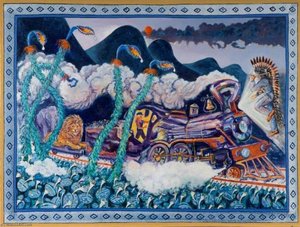 #5 Mystery Train (from the series 'Just Imagine')
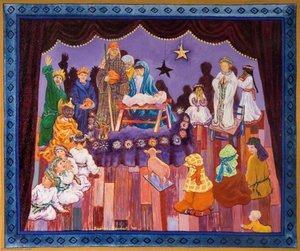 #6 Nativity (from the series 'Just Imagine')
 #7 William's Mission (from the series 'Just Imagine')
 #8 Wind in the Willows (from the series 'Just Imagine')
 #9 Nursery Rhyme (from the series 'Just Imagine')
Daugiau nuo 1991
 #10 The Leap (from the series 'Just Imagine')
#11 Friendship (from the series 'Just Imagine')
#12 Palette
#13 Reaching for the Moon on the Heads of My Ancestors (from the series 'Just Imagine')
#14 'I'm Gonna Get You' (from the series 'Just Imagine')
#15 Hannah's Room (from the series 'Just Imagine')
#16 The Shadow (from the series 'Just Imagine')
#17 Rapunzel (from the series 'Just Imagine')
#18 Sea Ghouls (from the series 'Just Imagine')
#19 Evil (from the series 'Just Imagine')
#20 Love, Peace, Joke (from the series 'Just Imagine')
Wild Gravity (from the series 'Just Imagine') (1990), Leighton Buzzard Library, Leighton Buzzard. Toliau seka The Crossing (from the series 'Just Imagine') (1991) ir Holey Island (from the series 'Just Imagine') (1990).
43 metų amžiaus: Wild Gravity (from the series 'Just Imagine') sukurta 1990 m. Nr. Stephen W Macphail gimė 1947.
Wild Gravity (from the series 'Just Imagine'), The Crossing (from the series 'Just Imagine'), Holey Island (from the series 'Just Imagine'), The Parson's Brandy (from the series 'Just Imagine'), Mystery Train (from the series 'Just Imagine'), Nativity (from the series 'Just Imagine'), William's Mission (from the series 'Just Imagine'), Wind in the Willows (from the series 'Just Imagine'), Nursery Rhyme (from the series 'Just Imagine') ir The Leap (from the series 'Just Imagine'). Viršuje esančioje reitingo sąraše nurodyta kiekvieno kūrinio metis ir muziejus.
Mūsų kataloge yra 20 Stephen W Macphail darbų, skirtų laikotarpiui nuo 1990 iki 1991.
Daugiausia – Leighton Buzzard Library (Leighton Buzzard). Viršuje esančiame muziejų sąraše yra visi jie.
1991 laikotarpiu: 12 iš 20 šioje pusėje esančių darbų buvo sukurtos tada, iš jų The Crossing (from the series 'Just Imagine').
Šioje pusėje seniausias darbas yra Wild Gravity (from the series 'Just Imagine') (1990), o naujausias – The Crossing (from the series 'Just Imagine') (1991).
Wild Gravity (from the series 'Just Imagine'), The Crossing (from the series 'Just Imagine') ir Holey Island (from the series 'Just Imagine'): Leighton Buzzard Library, Leighton Buzzard kolekcijoje yra 20 šioje pusėje esančių darbų.
Stephen W. Macphail, born in 1947, stands as a singular voice in contemporary art, weaving together the profound weight of biblical narrative with the ethereal lightness of dreamlike landscapes. A British artist whose work transcends simple illustration, Macphail has mastered a style that sits comfortably within the realm of naive art, yet possesses a psychological depth that invites endless contemplation. His artistic journey is inextricably linked to his formative years in Oxford, where his studies at St Stephen’s House Theological College provided more than just academic grounding; they offered a spiritual vocabulary that would become the heartbeat of his entire oeuvre. This deep immersion in theology instilled in him a reverence for storytelling, viewing the canvas not merely as a surface for pigment, but as a vessel for conveying eternal truths through visual metaphor.
The evolution of Macphail’s aesthetic is a fascinating study in the marriage of disparate influences. While his thematic core is rooted in the sacred, his visual language draws heavily from the surrealist traditions of masters such as René Magritte and Giorgio Morandi. From these predecessors, he inherited an ability to utilize paradoxical juxtapositions and subconscious imagery to evoke wonder. By eschewing the rigid constraints of academic realism, Macphulated developed a deliberately simplified aesthetic. This approach allows the emotional resonance of his subjects to take center stage, unburdened by the distractions of meticulous anatomical or architectural detail. His work does not seek to replicate the physical world, but rather to capture its spiritual essence through an intuitive and uninhibited technique.
To encounter a Macphail painting is to enter a world defined by vibrant, pulsating hues. He often employs a palette dominated by lush blues and verdant greens, creating immersive environments that feel both ancient and otherworldly. His mastery of watercolor and mixed media allows for a fluidity that mirrors the movement of his subjects, whether they are figures traversing a tropical paradise or a steam train navigating a gravity-defying landscape. This use of color is never merely decorative; it serves as a primary tool for emotional transport, pulling the viewer into the heart of his "Just Imagine" series and other seminal works.
The artist's technical brilliance lies in his ability to balance the whimsical with the profound. In pieces such as The Crossing, one observes a breathtaking use of movement and bold color that brings biblical figures to life within a surreal, tropical setting. Similarly, works like Wild Gravity demonstrate his capacity to blend the mechanical—a steam train—with the fantastical, creating a sense of cosmic playfulness. This unique ability to navigate between the historical weight of Genesis and the whimsical freedom of a dreamscape is what defines his contribution to the contemporary art landscape.
The significance of Stephen W. Macphail’s work lies in its ability to bridge the gap between the terrestrial and the divine. By utilizing the principles of naive art—prioritizing imagination and intuitive feeling over formal precision—he has created a body of work that feels accessible yet deeply mysterious. His paintings serve as windows into a reimagined history, where the stories of old are breathed into new, vibrant life through a lens of surrealist wonder.
Throughout his career, Macphail has achieved a level of recognition that places him among the significant figures of modern spiritual art. His influence can be felt in the way he challenges the viewer to look past the surface of reality to find the miraculous hidden within. As his works continue to be celebrated for their sensitivity and imaginative power, Macphail remains a vital architect of the contemporary imagination, reminding us that the most profound truths are often found in the most beautiful dreams.