Seth Eastman portretas

37 garsiausių Seth Eastman paveikių rinkinys: galerijos išboru

Atnaujinta lapkritis 2026 · pagal mūsų populiarumumo koeficientą (paieškos, lankytojai ir užsakymai kiekvienam kūriniui) · 37 Seth Eastman darbai mūsų kataloge

Trumpai tariant

Iš visų paliktų originalų kūrinių Seth Eastman garsiausias yra Sioux Indians Breaking Up Camp (1848), esantis Museum of Fine Arts kolekcijoje, Bostonas. Tiesiog už jų seka Dakotah village ir Gathering Wild Rice. Mūsų kataloge yra 37 darbų autoriaus Seth Eastman; galerija išsaugojo 37 labiausiai pasaulyje žyminiausių kūrinių – kiekvienas jų pateikiamas su datos, muziejaus ir istorijos aprašymu.

1808 – 1875, Brunswick Hudson river school Daugiausia darbų: Crocker Art Museum

Seth Eastman geriausios 10 paveikslų: galerijos pasirinkimas

1
Sioux Indians Breaking Up Camp (1848) aut. Seth Eastman

Sioux Indians Breaking Up Camp

1848 · Oil On Canvas · Museum of Fine Arts, Bostonas

The scene unfolds in Sioux Indians Breaking Up Camp, a work painted by Seth Eastman. The air feels heavy with the movement of a people in transition, as the community prepares to leave their current site. This painting, dating to about 1848, captures a specific moment of departure across the expansive prairie. The figures move with purpose, tending to their belongings and animals under a vast, shifting sky.

4
Ballplay of the Dakota on the St. Peters River in Winter (1848) aut. Seth Eastman

Ballplay of the Dakota on the St. Peters River in Winter

In the quiet, biting chill of an 1848 winter, Seth Eastman captured more than just a landscape; he immortalized a vibrant pulse of life amidst the frost. Ballplay of the Dakota on the St. Peters River in Winter serves as a breathtaking window into a vanished era, where the frozen expanse of the river becomes a stage for communal joy and athletic prowess. The painting depicts a spirited game of…

Seth Eastman darba rinkinys tęsiamas, nuo 11 iki 37

Temos, kurios domino Seth Eastman

Ketverios temos, dažniausiai pasikrausto originaluose, kiekvienos su savo puikiausiu pavyzdžiu.

Muziejai, kuriuose saugomi Seth Eastman originalūs darbai

7 muziejai, kuriuose saugoma daugiausia šioje pusėje esamų paveikslų.

Muzejaus Miestas Seth Eastman darbai Šiojo sąrašo paveikslai
Crocker Art Museum, SacramentoCrocker Art Museum Sacramento 2 Gathering Grass Seed, San Joaquin Valley, California, Transporting Water and Grass Seed, Valley of San Joaquin, California
Museum of Fine Arts, BostonasMuseum of Fine Arts Bostonas 1 Sioux Indians Breaking Up Camp
Amon Carter prigimtinio amerikietiško meno muziejus, Fort WorthAmon Carter prigimtinio amerikietiško meno muziejus Fort Worth 1 Ballplay of the Dakota on the St. Peters River in Winter
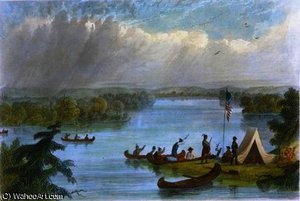
Saint Louis Art Museum, Saint LouisSaint Louis Art Museum Saint Louis 1 Chippewa Encampment on the Upper Mississippi
Cincinnati Art Museum, SinciatiatiCincinnati Art Museum Sinciatiati 1 Buffalo Hunt
National Gallery of Art, VašingtonasNational Gallery of Art Vašingtonas 1 Ball Playing among the Sioux Indians
Minneapolis Institute of Art, MinneapolisMinneapolis Institute of Art Minneapolis 1 The Falls of St. Anthony

Seth Eastman metai po metų: originalūs darbai, apibūdinantys kiekvieną iš jų

Šioje apžvalsoje Seth Eastman darbai apima tik 7 metų laikotarpį, nuo 1845 iki 1851: trumpa karjera, pateikta čia metis metams.

Darbai pagal metus

Pasirinkite metus, kad pamatytumėte originalus darbus.

Kolekcjonerų klausimai apie Seth Eastman paveikslus

Kuriu darbu Seth Eastman yra labiausiai garsus?Atsakymas

Sioux Indians Breaking Up Camp (1848), Museum of Fine Arts, Bostonas. Toliau seka Dakotah village ir Gathering Wild Rice.

Kokia buvo Seth Eastman amžius, kai buvo sukurtas Sioux Indians Breaking Up Camp?Atsakymas

40 metų amžiaus: Sioux Indians Breaking Up Camp sukurta 1848 m. Nr. Seth Eastman gimė 1808.

Kokie yra 10 garsiausių Seth Eastman paveikslų?Atsakymas

Sioux Indians Breaking Up Camp, Dakotah village, Gathering Wild Rice, Ballplay of the Dakota on the St. Peters River in Winter, Chippewa Encampment on the Upper Mississippi, Buffalo Hunt, Ball Playing among the Sioux Indians, Lake itsaca, Wabeno Songs, from 'Information Respecting ir Indian Burial,. Viršuje esančioje reitingo sąraše nurodyta kiekvieno kūrinio metis ir muziejus.

Kiek paveikslų paliko Seth Eastman?Atsakymas

Mūsų kataloge yra 37 Seth Eastman darbų, skirtų laikotarpiui nuo 1845 iki 1851.

Kuriuose muziejuose eksponuojami Seth Eastman šedevrai?Atsakymas

Daugiausia – Crocker Art Museum (Sacramento), Museum of Fine Arts (Bostonas) ir Amon Carter prigimtinio amerikietiško meno muziejus (Fort Worth). Viršuje esančiame muziejų sąraše yra visi jie.

Kuriomis metais Seth Eastman tapo savo garsiausius kūrinius?Atsakymas

1848 laikotarpiu: 3 iš 37 šioje pusėje esančių darbų buvo sukurtos tada, iš jų Sioux Indians Breaking Up Camp.

Kokie yra pirmasis ir paskutinis garsieji Seth Eastman originalūs darbai?Atsakymas

Šioje pusėje seniausias darbas yra Chippewa Encampment on the Upper Mississippi (1845), o naujausias – Ball Playing among the Sioux Indians (1851).

Kurią temą Seth Eastman rinkosi dažniausiai?Atsakymas

Native american life (3), Music (3) ir 19th century america (2) iš 37 šioje pusėje esamų darbų.

Kurią techniką Seth Eastman naudojo dažniausiai?Atsakymas

Watercolor, iš 37 šios puslapio darbų – 2.

Kelią meno kryptį priklauso Seth Eastman?Atsakymas

Hudson river school, vadovaujantis šios puslapio originalais kūriniais.

Kurių Seth Eastman darbai eksponuojami Crocker Art Museum?Atsakymas

Gathering Grass Seed, San Joaquin Valley, California ir Transporting Water and Grass Seed, Valley of San Joaquin, California: Crocker Art Museum, Sacramento kolekcijoje yra 2 šioje pusėje esančių darbų.

Seth Eastman: gyvenimas ir kūryba

The Dual Vision of a Frontier Chronicler

Seth Eastman lived a life defined by the striking duality of the sword and the brush. As a West Point graduate and a distinguished officer in the United States Army, his early years were forged in the crucible of military discipline and the rugged expanses of the American frontier. During the Mexican-American War, Eastman did not merely navigate challenging terrains as a soldier; he observed them with the keen, analytical eye of a mapmaker. This period of service, marked by bravery and leadership, provided him with a unique vantage point—a perspective that blended the strategic precision of a military officer with the profound sensitivity of an artist.

His journey through the Dakota Territory and his command positions within the expanding West allowed him to witness the dramatic shifts of a nation in motion. While his military career saw him rise through the ranks to become a Lieutenant Colonel, it was his quiet moments of observation that would ultimately secure his place in the annals of American art history.

A Witness to Vanishing Worlds

Perhaps Eastman’s most enduring contribution to the American identity is his role as an ethnographic chronicler. Tasked by Congress with documenting the lives of Native American tribes following the Treaty of Fort Laramie, he undertook arduous expeditions that were as much scientific endeavors as they were artistic ones. His work for Henry Rowe Schoolcraft’s monumental six-volume study stands as a testament to his commitment to accuracy and detail. Through his hundreds of illustrations, Eastman captured the rhythmic pulse of the Sioux tribes in Minnesota and South and Dakota—documenting hunting rituals, sacred ceremonies, and the dignified portraits of tribal elders with an uncompromising realism.

These works are more than mere illustrations; they are windows into a way of life that was being irrevocably altered by the tides of westward expansion. In his depictions of communal joy, such as the spirited ballplay of the Dakota on the frozen St. Peters River, or the quiet dignity of daily survival, Eastman imbued his subjects with a humanity that transcended the colonial gaze. He possessed a rare ability to translate the ephemeral moments of frontier life into permanent visual records, ensuring that the vibrant culture of the Plains peoples would not be lost to the shadows of history. His brush served as a bridge between the known and the unknown, capturing the essence of a world in transition.

The Hudson River Legacy and the Golden West

Artistically, Eastman was deeply rooted in the Hudson River School tradition, a movement characterized by its reverence for the sublime power of nature. His style reflected the meticulous attention to detail and the luminous quality of light that defined his contemporaries, such as Thomas Moran. This influence is evident in his ability to render the landscape not just as a backdrop, but as a living, breathing protagonist in the American story.

This mastery of light and texture extended even to his explorations of the California frontier. In his delicate watercolors depicting the Yokuts people within the San Joaquin Valley, Eastman demonstrated an extraordinary capacity for capturing the translucent layers of the natural world. Whether portraying the purposeful movement of women gathering grass seed or the sweeping vistas of a golden valley, his work remained anchored in a profound connection to the earth. Through this seamless blend of military precision and artistic lyricism, Seth Eastman remains a singular figure—a man who mapped the land and, in doing so, captured its very soul.