Romualdo Frederico Locatelli: A Brazilian Portraitist Steeped in Impressionism
Romualdo Frederico Locatelli (1905-1943) remains a relatively obscure figure within the broader landscape of Brazilian art history, yet his distinctive style—characterized by intimate portraits imbued with classical influences and bathed in warm tonal palettes—continues to resonate with collectors and scholars alike. Born in São Paulo, Brazil, Locatelli’s artistic journey unfolded against the backdrop of a burgeoning modernist movement while simultaneously honoring traditions rooted in European painting techniques.
- Early Influences: Locatelli's formative years were marked by exposure to Impressionist masters such as Claude Monet and Pierre Auguste Renoir. These artists championed capturing fleeting moments of light and color, principles that profoundly shaped his approach to portraiture. He diligently studied the works of Rembrandt and Rubens, absorbing their mastery of chiaroscuro—the dramatic interplay between light and shadow—a technique he skillfully employed to convey emotion and depth within his canvases.
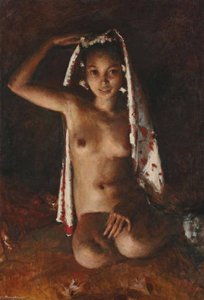
- Style Development: Locatelli’s artistic style evolved organically over time, blending Impressionistic luminosity with Baroque compositional considerations. His paintings often depict figures bathed in soft, diffused light, capturing subtle expressions of character and conveying a sense of serene contemplation. He favored muted hues—ochres, siennas, and umbers—creating canvases that possess an understated elegance.
Notable Works: Capturing Essence Through Light and Shadow
Locatelli’s oeuvre comprises approximately 50 paintings, predominantly portraits of individuals from São Paulo's upper echelon. Among his most celebrated pieces is “Ritratto di Fu Ku Ko,” a captivating depiction of a woman playing the mandolin—a masterful example of Impressionistic style executed in oil on canvas. The painting utilizes warm tonal harmonies and subtle symbolic gestures to convey not merely likeness but also psychological nuance. Another significant work, "State Rio-grandense," showcases Locatelli's adeptness at capturing atmospheric conditions and conveying mood through color and brushwork. These paintings stand as testament to his unwavering commitment to portraying subjects with sensitivity and artistic precision.
- Technique: Locatelli’s technique involved meticulous layering of thin glazes—transparent washes of pigment applied over subsequent coats—allowing for gradual build-up of color and luminosity. He skillfully manipulated brushstrokes, creating textures that subtly suggest movement and depth. His canvases retain a remarkable degree of surface detail, reflecting his dedication to capturing the nuances of human expression.
- Legacy: Despite facing challenges during his lifetime – including limited commercial success – Locatelli’s artistic legacy persists through his enduring portraits. They exemplify the harmonious fusion of Impressionist idealism and Baroque realism, securing his place as a pivotal figure in Brazilian art history. His work continues to inspire admiration for its quiet beauty and profound psychological insight.
Historical Context: Brazil’s Artistic Awakening Amidst Modernity
Locatelli's artistic activity coincided with Brazil’s burgeoning modernist movement, which sought to break free from academic conventions and embrace new aesthetic ideals. Influenced by European avant-garde trends—particularly Cubism and Surrealism—Brazilian artists experimented with innovative forms of expression while simultaneously retaining connections to national traditions. Locatelli’s stylistic choices reflected this broader cultural dialogue, demonstrating a willingness to engage critically with artistic developments abroad.
- Recognition: Although Locatelli's work received modest attention during his lifetime, it has gained increasing recognition in recent decades as scholars reassess Brazilian art history. His paintings are housed in several museums and private collections across Brazil, ensuring that his distinctive vision continues to be appreciated by future generations.
Concluding Thoughts: An Artist's Enduring Resonance
Romualdo Frederico Locatelli’s artistic contribution lies not merely in the creation of aesthetically pleasing images but also in his ability to convey profound human emotion through carefully crafted compositions and subtle tonal harmonies. His portraits stand as poignant reminders of a bygone era—a testament to Brazilian art's capacity for both beauty and intellectual depth. Through his unwavering devotion to classical principles blended with Impressionistic luminosity, Locatelli cemented his place as an artist whose work continues to captivate viewers today.