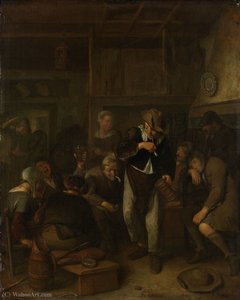
Richardas Brakenburgas portretas

45 garsiausių Richardas Brakenburgas paveikių rinkinys: galerijos išboru

Atnaujinta lapkritis 2026 · pagal mūsų populiarumumo koeficientą (paieškos, lankytojai ir užsakymai kiekvienam kūriniui) · 46 Richardas Brakenburgas darbai mūsų kataloge

Trumpai tariant

Iš visų paliktų originalų kūrinių Richardas Brakenburgas garsiausias yra Tavern Scene (1692), esantis Nationalmuseum kolekcijoje, Stokholmas. Tiesiog už jų seka Tavern interior with dancing peasants, (1690) ir Interior with a company celebrating Twelfth Night, the Feast of Epiphany (1690). Mūsų kataloge yra 46 darbų autoriaus Richardas Brakenburgas; galerija išsaugojo 45 labiausiai pasaulyje žyminiausių kūrinių – kiekvienas jų pateikiamas su datos, muziejaus ir istorijos aprašymu.

1650 – 1702, Harlemas Dutch golden age Daugiausia darbų: Bavarijos valstybinės paveikslų kolekcijos

Richardas Brakenburgas geriausios 10 paveikslų: galerijos pasirinkimas

1
Tavern Scene (1692) aut. Richardas Brakenburgas

Tavern Scene

1692 · Oil On Canvas · Nationalmuseum, Stokholmas

A single light source, perhaps a guttering candle, strikes the scene from the left. It catches the white fabric of a woman’s garment in the foreground, turning her into a bright anchor amidst a sea of ochre and deep brown. Around her, the tavern breathes with a heavy, crowded energy. Figures lean into one another, their postures shaped by the weight of conversation and the pull of drink. The air…

2
Tavern interior with dancing peasants, (1690) aut. Richardas Brakenburgas

Tavern interior with dancing peasants,

1690 · Oil On Canvas · Kunsthistorisches Museum, Viena

Step into the warmth of this 1690 tavern scene, where the air seems thick with the scent of spilled ale and the sound of rhythmic footsteps. Richard Brakenburgh has captured a fleeting moment of celebration among the peasantry, drawing us into a crowded, lively interior. The composition pulls the viewer through a deep perspective, moving from the immediate, tactile details of the foreground into a shadowy, bustling crowd that recedes…

3
Interior with a company celebrating Twelfth Night, the Feast of Epiphany (1690) aut. Richardas Brakenburgas

Interior with a company celebrating Twelfth Night, the Feast of Epiphany

1690 · Oil On Canvas · Kunsthistorisches Museum, Viena

In this work, titled Interior with a company celebrating Twelfth Night, the Feast of Epiphany, we find ourselves observing a quiet moment of communal gathering. Painted by Richard Brakenburgh in 1690, the scene captures a specific social ritual. It is a fine example of genre art, focusing on the everyday interactions and festivities of the period. The subject matter centers on a group of people gathered for the Twelfth Night…

4
Réunion dans un cabaret aut. Richardas Brakenburgas

Réunion dans un cabaret

Oil On Canvas

The air inside the cabaret feels thick, heavy with the scent of spilled ale and the warmth of too many bodies gathered in a single room. Light flickers from candles, casting long, dancing shadows that stretch across the floor and climb the walls. In the center of this swirling chaos, a group of figures moves in a rhythmic dance, their forms blurring slightly as they spin. Around them, the tavern…

5
Merry Company (1676) aut. Richardas Brakenburgas

Merry Company

Richard Brakenburgh's Merry Company captures a lively social gathering, likely situated within a tavern or a domestic setting. The scene focuses on a group of people engaged in conversation and leisure, embodying the 'Merry Company' theme prevalent in Dutch Golden Age painting. This subject matter reflects the communal spirit and social interactions of the seventeenth century.

6
The Resurrection of Christ and the Visit of the Women to the Tomb (1676) aut. Richardas Brakenburgas

The Resurrection of Christ and the Visit of the Women to the Tomb

In The Resurrection of Christ and the Visit of the Women to the Tomb, Richard Brakenburgh orchestrates a scene of intense, sudden movement. The composition follows a dynamic pyramidal structure that draws the eye upward toward a burst of light in the upper center. From this celestial radiance, a luminous, winged angelic figure descends, gesturing toward the earthly events unfolding below. The perspective is set slightly from below, which lends…

7
Drinkers and Musicians in a Cabaret, with Child with a Hoop (1675) aut. Richardas Brakenburgas

Drinkers and Musicians in a Cabaret, with Child with a Hoop

1675 · Oil On Canvas

The air in the room feels heavy with the scent of spilled ale and the low hum of conversation. Light spills from a large window on the left, cutting through the dimness to strike the faces of men gathered around a table. They are lost in the rhythm of the moment, some leaning into a drink, others lost to the music. In the corner, a child moves with a hoop,…

8
Monk's Entertainment in a Roman Cloister (1680) aut. Richardas Brakenburgas

Monk's Entertainment in a Roman Cloister

1680 · Oil On Canvas · Slovak National Gallery, Bratislava

In Monk's Entertainment in a Roman Cloister, Richard Brakenburgh employs a sophisticated chiaroscuro technique to define the cavernous interior. A single, unseen light source from the left casts strong highlights onto faces and hands, allowing them to emerge from deep, atmospheric shadows. This dramatic interplay of light and dark creates a sense of depth and bustling activity within the crowded space. Through precise perspective, the artist organizes the overlapping clusters…

9
Portrait of a young woman (1683) aut. Richardas Brakenburgas

Portrait of a young woman

1683 · Oil

In "Portrait of a young woman" by Richard Brakenburgh, the subject is captured in a three-quarter length pose. She sits centrally, anchored against a dark and atmospheric background that recedes into shadow. The color palette relies on deep blacks and browns, creating a somber foundation for the figure. This darkness pushes the subject forward, making her presence feel immediate and singular.

10
merry party (1686) aut. Richardas Brakenburgas

merry party

1686 · Oil · Museum Gouda, Gouda

The air in the room feels heavy with the scent of spilled ale and uninhibited laughter. A dense crowd of figures presses together in a crowded interior, their bodies caught in a moment of boisterous social indulgence. To the right, a large, heavy curtain hangs in deep folds, framing the scene like a stage set for a play that has already reached its climax. Light spills from the upper left,…

Richardas Brakenburgas darba rinkinys tęsiamas, nuo 11 iki 45

11A Game of Cards at an Inn (1683) aut. Richardas BrakenburgasA Game of Cards at an Inn1683 · Statens Museum For Kunst 12Tavern Interior with a Maidservant and Drinkers (1680) aut. Richardas BrakenburgasTavern Interior with a Maidservant and Drinkers1680 · Hallwyl Museum 13Adoration of the Shepherds (1694) aut. Richardas BrakenburgasAdoration of the Shepherds1694 · Bavarijos valstybinės paveikslų kolekcijos 14An Interior with Figures (1689) aut. Richardas BrakenburgasAn Interior with Figures1689 · National Gallery of Ireland 15The Eve of Saint Nicholas (1690) aut. Richardas BrakenburgasThe Eve of Saint Nicholas1690 · Frans Hals muziejus 16Dance in a Cottage (1699) aut. Richardas BrakenburgasDance in a Cottage1699 · Nationalmuseum 17merry party (1691) aut. Richardas Brakenburgasmerry party1691 · Frans Hals muziejus 18A family on a terrace. (1691) aut. Richardas BrakenburgasA family on a terrace.1691 19The Feast of St. Nicholas (1698) aut. Richardas BrakenburgasThe Feast of St. Nicholas1698 20Family Scene (1680) aut. Richardas BrakenburgasFamily Scene1680 · Fitzwilliam College 21May Queen Festival (1700) aut. Richardas BrakenburgasMay Queen Festival1700 · Szépművészeti Múzeum 22Dutch Merchants Trading in a Chinese Harbor (1683) aut. Richardas BrakenburgasDutch Merchants Trading in a Chinese Harbor1683 · Groninger Museum 23Celebration of a Birth (1683) aut. Richardas BrakenburgasCelebration of a Birth1683 24Interior of a Farmhouse (1699) aut. Richardas BrakenburgasInterior of a Farmhouse1699 · Fitzwilliam College 25Intérieur d'auberge aut. Richardas BrakenburgasIntérieur d'aubergeLiuvro muziejus 26Cabaret Interior aut. Richardas BrakenburgasCabaret InteriorPetit Palais 27Jolly Company aut. Richardas BrakenburgasJolly CompanyAntverpio karališkasis gražiųjų menų muziejus 28Figural scene against architecture aut. Richardas BrakenburgasFigural scene against architectureNacionalinis muziejus Varšuvoje 29INTERIEUR D'UN ESTAMINET aut. Richardas BrakenburgasINTERIEUR D'UN ESTAMINET 30SCENE GALANTE aut. Richardas BrakenburgasSCENE GALANTE 31LE LEVER DE LA MARIEE aut. Richardas BrakenburgasLE LEVER DE LA MARIEE 32Feast of St Nicholas aut. Richardas BrakenburgasFeast of St NicholasSzépművészeti Múzeum 33Family Portrait (1670) aut. Richardas BrakenburgasFamily Portrait1670 · Art Museum Riga Bourse 34St Nicholas Eve (1685) aut. Richardas BrakenburgasSt Nicholas Eve1685 · Amstelkring Museum 35The doctor's visit. aut. Richardas BrakenburgasThe doctor's visit.Museum Boijmans Van Beuningen 36Moines et religieuses en goguette aut. Richardas BrakenburgasMoines et religieuses en goguette 37In the tavern. aut. Richardas BrakenburgasIn the tavern. 38Family Having Breakfast aut. Richardas BrakenburgasFamily Having Breakfast 39Merry company. aut. Richardas BrakenburgasMerry company.Museum Boijmans Van Beuningen 40Gallant scene at Palais des Beaux-Arts de Lille. aut. Richardas BrakenburgasGallant scene at Palais des Beaux-Arts de Lille. 41Celebration of a Birth aut. Richardas BrakenburgasCelebration of a BirthDulwich Picture Gallery 42Merry company aut. Richardas BrakenburgasMerry companySzépművészeti Múzeum 43The Feast of St. Nicholas aut. Richardas BrakenburgasThe Feast of St. NicholasRijksmuseum 44A Medical Practitioner Taking a Girl's Pulse and Holding a Flask of Her Urine aut. Richardas BrakenburgasA Medical Practitioner Taking a Girl's Pulse and Holding a Flask of Her Urine 45Peasant's inn aut. Richardas BrakenburgasPeasant's innRijksmuseum

Temos, kurios domino Richardas Brakenburgas

Ketverios temos, dažniausiai pasikrausto originaluose, kiekvienos su savo puikiausiu pavyzdžiu.

Muziejai, kuriuose saugomi Richardas Brakenburgas originalūs darbai

8 muziejai, kuriuose saugoma daugiausia šioje pusėje esamų paveikslų.

Muzejaus Miestas Richardas Brakenburgas darbai Šiojo sąrašo paveikslai
Bavarijos valstybinės paveikslų kolekcijos, MiunchasBavarijos valstybinės paveikslų kolekcijos Miunchas 3 Merry Company, The Resurrection of Christ and the Visit of the Women to the Tomb, Adoration of the Shepherds
Szépművészeti Múzeum, BudapeštasSzépművészeti Múzeum Budapeštas 3 May Queen Festival, Feast of St Nicholas, Merry company
Nationalmuseum, StokholmasNationalmuseum Stokholmas 2 Tavern Scene, Dance in a Cottage
Kunsthistorisches Museum, VienaKunsthistorisches Museum Viena 2 Tavern interior with dancing peasants,, Interior with a company celebrating Twelfth Night, the Feast of Epiphany
Frans Hals muziejus, HarenFrans Hals muziejus Haren 2 The Eve of Saint Nicholas, merry party
Fitzwilliam College, CambridgeFitzwilliam College Cambridge 2 Family Scene, Interior of a Farmhouse
Museum Boijmans Van Beuningen, RoterdamasMuseum Boijmans Van Beuningen Roterdamas 2 The doctor's visit., Merry company.
Rijksmuseum, AmsterdamasRijksmuseum Amsterdamas 2 The Feast of St. Nicholas, Peasant's inn

Richardas Brakenburgas dešimtmetėms po dešimtmetės: originalus kūrinys, apibūdinantis kiekvieną iš jų

Darbai pagal dešimtmečius

Pasirinkite dešimtmetį, kad pamatytėte jį apibrėžusį originalą.

Kolekcjonerų klausimai apie Richardas Brakenburgas paveikslus

Kuriu darbu Richardas Brakenburgas yra labiausiai garsus?Atsakymas

Tavern Scene (1692), Nationalmuseum, Stokholmas. Toliau seka Tavern interior with dancing peasants, (1690) ir Interior with a company celebrating Twelfth Night, the Feast of Epiphany (1690).

Kokia buvo Richardas Brakenburgas amžius, kai buvo sukurtas Tavern Scene?Atsakymas

42 metų amžiaus: Tavern Scene sukurta 1692 m. Nr. Richardas Brakenburgas gimė 1650.

Kokie yra 10 garsiausių Richardas Brakenburgas paveikslų?Atsakymas

Tavern Scene, Tavern interior with dancing peasants,, Interior with a company celebrating Twelfth Night, the Feast of Epiphany, Réunion dans un cabaret, Merry Company, The Resurrection of Christ and the Visit of the Women to the Tomb, Drinkers and Musicians in a Cabaret, with Child with a Hoop, Monk's Entertainment in a Roman Cloister, Portrait of a young woman ir merry party. Viršuje esančioje reitingo sąraše nurodyta kiekvieno kūrinio metis ir muziejus.

Kiek paveikslų paliko Richardas Brakenburgas?Atsakymas

Mūsų kataloge yra 46 Richardas Brakenburgas darbų, skirtų laikotarpiui nuo 1670 iki 1700.

Kuriuose muziejuose eksponuojami Richardas Brakenburgas šedevrai?Atsakymas

Daugiausia – Bavarijos valstybinės paveikslų kolekcijos (Miunchas), Szépművészeti Múzeum (Budapeštas) ir Nationalmuseum (Stokholmas). Viršuje esančiame muziejų sąraše yra visi jie.

Kuriomis metais Richardas Brakenburgas tapo savo garsiausius kūrinius?Atsakymas

1680s laikotarpiu: 10 iš 45 šioje pusėje esančių darbų buvo sukurtos tada, iš jų Monk's Entertainment in a Roman Cloister.

Kokie yra pirmasis ir paskutinis garsieji Richardas Brakenburgas originalūs darbai?Atsakymas

Šioje pusėje seniausias darbas yra Family Portrait (1670), o naujausias – May Queen Festival (1700).

Kurią temą Richardas Brakenburgas rinkosi dažniausiai?Atsakymas

People (19), Figures (10) ir Table (9) iš 45 šioje pusėje esamų darbų.

Kurią techniką Richardas Brakenburgas naudojo dažniausiai?Atsakymas

Oil On Canvas, iš 45 šios puslapio darbų – 12.

Kelią meno kryptį priklauso Richardas Brakenburgas?Atsakymas

Dutch golden age, vadovaujantis šios puslapio originalais kūriniais.

Kurių Richardas Brakenburgas darbai eksponuojami Bavarijos valstybinės paveikslų kolekcijos?Atsakymas

Merry Company, The Resurrection of Christ and the Visit of the Women to the Tomb ir Adoration of the Shepherds: Bavarijos valstybinės paveikslų kolekcijos, Miunchas kolekcijoje yra 3 šioje pusėje esančių darbų.

Richardas Brakenburgas: gyvenimas ir kūryba

Gyvenimas, užfiksuotas Aukso amžiaus spalvomis

Gedęs istoriniame Olandijos mieste Haarlem, Richardas Brakenburgas tapo pastebėjama figūra gyvybingai spalvoto Olandijos Aukso amžiaus tapetėje. Jo gyvenimas ir menas buvo glaudžiai įsiুmirtę Haarlem kultūrinę žemę, kurioje jis išugdė jautrumą užfiksuoti íntvius, o kartais ir triukšmingas XVII amžiaus kasdienybės akimirkas. Nors kai kurie istoriniai šaltiniai teigia, kad jis turėjo lengvo būdo poeto sielą, jo tikroji palikimas slypi sluoksniuose, kurie atgaivino jo laikotarpio socialinį pulsą. Jo kelionė per meno pasaulį buvo grinta ryšiu su gimtoji šalies tradicijomis, o tai, kad septemnientosdešimto metų dešimtmetyje jis buvo veiklus Leeuwarden mieste, leidžia daryti prielaidą apie jo mobilumą, kuris leido jo įtampai išsiplėsti už gimtąją kraštinę.

Meneskio palikimas ir įkvėpimai

Richardas Brakenburgas savo meninę stilių formavo meistrai, kurie vadovavo juos prieš jo atėjimą arba kūrybos kelio metu lydėjo. Jis žinomas kaip Hendrikas Mommersas mokinys – mokytojo, kurio gebėjimas įtvirtinti sumanias genro escenas tapo pagrindiniu blueprintu pačios Richardo Brakenburgo žmogaus santykių tyrimų pagrindu. Tačiau jo darbus lydėjo dar didesnių meistrų šešėliai; itin gilus buvo Janus Steeno įtakos vaidmuo, vadovavęs menininką kurti sudėtingas, naratyvą kuriančias kompozicijas. Taip pat pastebamas pastebimas stiliaus dialogas tarp Richardo Brakenburgo ir Bernardo Schendelio, nes abu menininkai gyveno panašausiomis laikais ir turėjo artimą požiūrį į savo kūrybos temas. Didelę jo estetiką galima rasti grinta iš Adriaen van Ostade tradicijos, ypač tai pasireiškia gebėjime vaizduoti linksmus šventimus ir gyvybingus susirinkimus su spontaniškos energijos pojūčiu.

Žanro ir technikos meistriškumas

Richardas Brakenburgas savo kūryboje pasižymi ypatingu gebėjimu kasdienę, paprastą sceną paversti neįtikėtinai įtraukiančiu langu į praeitį. Jis specializuojosi žanros paveiksluose, kuriuose gyvuje tavernų kasdienybė, o indų susidaužinėjimas bei pokalbių ožiaras atrodo beveik girdimi per drobės tekstūrą. Jo techninis meistriškumas itin akivaizdus naudojant chiaroscuro techniką – dramatiškas šviesos ir šešėlio žaismas leidžia jam skulptuoti figūras ir suteikti interjerams jaučiamą jaučiamą švelnią, tačiau paslaptingą aplinką. Nepriklausomai nuo to, ar vaizduoja triukšmingą kelyos svečių namus, ar šventinę metų perėlaidos džiaugsmą, jo kompozicijos pasižymi ypatingais bruožais:

  • Tikslus perspektyvumas: ypatingas gebėjimas naudoti linijinę perspektyvą, kuri sukuria gylį praisčiose ir prislėgtoje erdvėje.
  • Šviesos detalės: meistriškas šviesos naudojimas, atskleidžiantis stiklo kraštus, kaimiško drabužių tekstūras bei laiko apguostas medinių baldų paviršius.
  • Narratyvinis gylis: ingenioziškas figūrų išdėstymas, nukreiantis žiūrovio žvilgsnį per harmoningišką, tačiau kupiną energijos sceną.

Palikimas ir istorinė reikšmė

Nors jo kūryba dažnai vertinama dėl techninio meistriškumo ir puikiai išbaigtų detalų, tikroji Richardas Brakenburgas reikšmė slypi jo vaidmenio kaip septimo amžiaus Nyderlandų socialinės aplinkos kronikonauto. Jo paveikslai tarnauja kaip amžinys „nuotraukų“ akimirksniai išklajusiomis, prabliavusios bei klestimos eras, įteisindami tiek šeimo portretų orumą, tiek nekontroliuojamą bendruomeniškų šventę džiaugsmą. Jis pasiekė tokį kūrybinį sėkmę, kad užtikrino savo šeimos stabilumą, leiddamas moterai, pas manečius jo mirtį, išsaugoti pensiją Frieslandijoje. Šiandien jo indėlis į Nyderlandų Aukso amžiaus išlieka neįkainojamas, suteikdamas šiuolaikinio žiūrovui pasimerdantį patyrimą pasaulyje, kuriame ribos tarp istorinės praėties ir dabartinės akimirkos nuostabiai ištirpsta.