


1


Atnaujinta spalis 2026 · pagal mūsų populiarumumo koeficientą (paieškos, lankytojai ir užsakymai kiekvienam kūriniui) · 49 Rafaelis Sojeris darbai mūsų kataloge
Trumpai tariant
Farewell to Lincoln Square (Pedestrians) (1959) yra Rafaelis Sojeris paveikslas, kuriuo gausiausia žmonių žavisi. Po to akmuo patenka į Soyer, Moses, Portrait Of (1965) ir Girl in White Blouse (1932). Iš 49 Rafaelis Sojeris darbų mūsų kataloge šios 46 yra garsiausios – kiekvienas yra unikali originali dai̇lia, pateikta su jos metais, muziejumi ir priežastimi, kodėl ji išlieka per amžius.


 Study for Woman With Plant1965
12
 Homage to Thomas Eakins1965
13
 Koch, John, Portrait Of1965
14
 Study Of Nudes1972
15
 Singer, Isaac Bashevis, Study Of1971
16
 Woman On Mattress1973
17
 Friends II1973
18
 Passerby
19
 Self-PortraitThe Phillips Collection
20
 A Reclining Female Nude
21
 The flowered skirt
22
 The Bridge1927
23
 In A Jewish Cafe1925
24
 Self-Portrait1930 · Cleveland Museum of Art
25
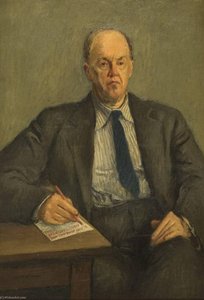 Portrait of David Burliuk1940
26
 Marussia Burliuk1943
27
 Marussia and David Burliuk1943
28
 Female Nude1952 · Worcester Art Museum
29
 Poor, H. Varnum, Portrait Of1965
30
 Dobbs, John, Portrait Of1965
31
 Self Portrait1965
32
 Dickinson, Edwin, Portrait Of1965
33
 Goodrich, Lloyd, Portrait Of1965
34
 Levine, Jack, Portrait Of1965
35
 Hopper, Edward, Portrait Of1965
36
 Baskin, Leonard, Portrait Of1965
37
 Dora and Sol Wilson1974 · Metropolitano meno muziejus
38
 José de Creeft (1884-1982)1980 · Metropolitano meno muziejus
39
 Jules, Mervin, Portrait Of1979
40
 Female Nude
41
 Self portrait
42
 Leon Kroll
43
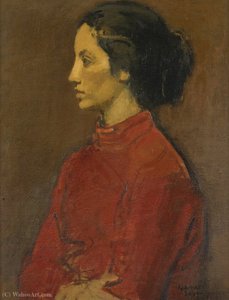 Georgiana
44
 Girl in Thought
45
 Study for Homage to Thomas Eakins1964
46
 Portraits At A Party1974
Ketverios temos, dažniausiai pasikrausto originaluose, kiekvienos su savo puikiausiu pavyzdžiu.
4 muziejai, kuriuose saugoma daugiausia šioje pusėje esamų paveikslų.
| Muzejaus | Miestas | Rafaelis Sojeris darbai | Šiojo sąrašo paveikslai |
|---|---|---|---|
 Metropolitano meno muziejus |
Niujorkas | 2 | Dora and Sol Wilson, José de Creeft (1884-1982) |
 The Phillips Collection |
Vašingtonas | 1 | Self-Portrait |
 Cleveland Museum of Art |
Klevlandas | 1 | Self-Portrait |
 Worcester Art Museum |
Worcester | 1 | Female Nude |
Pasirinkite dešimtmetį, kad pamatytėte jį apibrėžusį originalą.


Farewell to Lincoln Square (Pedestrians) (1959). Toliausiai eina Soyer, Moses, Portrait Of (1965) ir Girl in White Blouse (1932).
60 metų amžiaus: Farewell to Lincoln Square (Pedestrians) sukurta 1959 m. Nr. Rafaelis Sojeris gimė 1899.
Farewell to Lincoln Square (Pedestrians), Soyer, Moses, Portrait Of, Girl in White Blouse, Portrait of Mina, Two Girls, The Artist's Parents, The Mission, Bowery Nocturne, Sleeping Girl ir Waiting for the Audition. Viršuje esančioje reitingo sąraše nurodyta kiekvieno kūrinio metis ir muziejus.
Mūsų kataloge yra 49 Rafaelis Sojeris darbų, skirtų laikotarpiui nuo 1925 iki 1980.
Daugiausia – Metropolitano meno muziejus (Niujorkas), The Phillips Collection (Vašingtonas) ir Cleveland Museum of Art (Klevlandas). Viršuje esančiame muziejų sąraše yra visi jie.
1960s laikotarpiu: 13 iš 46 šioje pusėje esančių darbų buvo sukurtos tada, iš jų Soyer, Moses, Portrait Of.
Šioje pusėje seniausias darbas yra In A Jewish Cafe (1925), o naujausias – José de Creeft (1884-1982) (1980).
Portrait (5), Russian art (2) ir 1930s (2) iš 46 šioje pusėje esamų darbų.
Contemporary realism, vadovaujantis šios puslapio originalais kūriniais.
Dora and Sol Wilson ir José de Creeft (1884-1982): Metropolitano meno muziejus, Niujorkas kolekcijoje yra 2 šioje pusėje esančių darbų.
In the bustling, often indifferent landscape of twentieth-century New York, few artists captured the quiet, melancholic pulse of urban humanity as tenderly as Raphael Soyer. Born in 1899 in Borisoglebsk, Russia, Soyer’s journey was one defined by migration, resilience, and an unwavering commitment to the representational truth. Alongside his identical twin brother, Moses, Raphael was raised in a household where intellect and artistry were paramount. His father, Abraham, a Hebrew scholar and teacher, fostered an environment of deep academic pursuit that would later provide the intellectual scaffolding for Raphael’s social commentary. The family's flight from Russian oppression in 1912 brought them to the United States, eventually settling in the Bronx, where the gritty, vibrant energy of New York would become the primary protagonist in Soyer’s life and work.
Soyer’s artistic evolution was deeply rooted in the pedagogical traditions of the great American institutions. His early training at Cooper Union’s Free Schools—where he forged a lifelong bond with fellow artist Chaim Gross—served as a vital gateway to the professional art world. As he progressed through the National Academy of Design and the Art Students League of New York, studying under masters like Guy Pene du Bois and Boardman Robinson, Soyer began to absorb the spirit of the Ashcan School. This movement, which rejected the polished idealism of previous eras in favor of the raw, unvarntle reality of street life, became the cornerstone of his aesthetic. He learned to look past the grand monuments of the city to find the profound stories hidden within its crowded subway stations, dim cafes, and lonely apartments.
The work of Raphael Soyer is characterized by a unique blend of Social Realism and a deeply personal, almost psychological intimacy. While many of his contemporaries focused on the political upheaval of the era through broad strokes of protest, Soyer found his strength in the individual. His canvases often feature portraits of friends, family, and strangers alike, rendered with a sensitivity that captures both their physical presence and their internal struggles. There is a recurring sense of melancholy in his depictions of New York life—a quiet loneliness that permeates his urban scenes, suggesting the isolation that can exist even within a teeming metropolis.
His technical mastery allowed him to navigate various mediums, from the structured precision of his drawings and prints to the emotive fluidity of his watercolors and oil paintings. In works such as Two Girls or The Flowered Skirt, one can observe his ability to use muted earth tones and thoughtful brushwork to evoke atmosphere and emotion. His subjects—often female nudes or working-class citizens—are never mere objects of study; they are vessels of human experience. Through his relentless investigation of these themes, Soyer created a visual record of the American Scene that is as much about the internal landscape of the soul as it is about the external landscape of the city.
As the art world shifted toward abstraction and more experimental, non-representational forms in the mid-twentieth century, Soyer remained a steadfast advocate for the power of the figure and the recognizable world. This stance occasionally placed him at odds with the burgeoning avant-garde, yet it was precisely this artistic integrity that preserved the human element in his oeuvre. He refused to abandon the narrative potential of the portrait or the social weight of the urban scene, ensuring that his work remained a bridge between the classical traditions of the past and the modern realities of his time.
Today, Raphael Soyer is remembered not merely as a painter of New York, but as a chronicler of the human condition. His legacy resides in his ability to find dignity in the ordinary and beauty in the somber. To look upon a Soyer painting is to encounter the faces of a bygone era—faces that reflect the aspirations, disappointments, and enduring resilience of the urban spirit. His contributions to American Social Realism continue to resonate, offering a poignant reminder of the profound stories etched into the very fabric of our shared humanity.

