Peteris Tillemansas portretas

Peteris Tillemansas tapiai: 38 garsiausi πίναšiai, galerijos akimis

Atnaujinta lapkritis 2026 · pagal mūsų populiarumumo koeficientą (paieškos, lankytojai ir užsakymai kiekvienam kūriniui) · 38 Peteris Tillemansas darbai mūsų kataloge

Trumpai tariant

Galerijos akimais, garsiausias Peteris Tillemansas tapas yra Queen Anne (1665-1714) in the House of Lords (1711), kurio originalas eksponuojamas Royal Collection, Londonas. Mary Liddell, Mrs John Myddelton (d. 1741) (1724) ir The Reverend Jemmet Browne at a meet of foxhound (1730) užbaia trio, kurį atpažįsta kiekvienas ž)/\ Iš 38 Peteris Tillemansas darbų mūsų kataloge, galerija žemiau pristato 38 garsiausius – kiekvienas yra originalus, su nurodytu metais, muziejumi bei unikaliu aprašymu.

1684 – 1734, Antverpijas Baroque Daugiausia darbų: Yale Center for British Art

10 geriausių galerijos Peteris Tillemansas paveikslų

1
Queen Anne (1665-1714) in the House of Lords (1711) aut. Peteris Tillemansas

Queen Anne (1665-1714) in the House of Lords

1711 · Oil · Royal Collection, Londonas

The House of Lords is rendered as a vast, hierarchical chamber, viewed from a slightly elevated perspective that emphasizes the immense scale of the architecture. At the far end of the hall, Queen Anne sits upon an elevated throne, sheltered by a heavy red canopy. The composition is strictly symmetrical, drawing the eye through a sea of noblemen and officials toward the central monarch. Deep reds from ceremonial robes and…

2
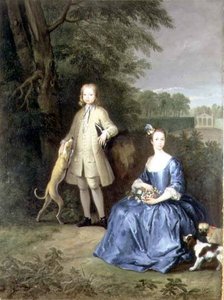
Mary Liddell, Mrs John Myddelton (d. 1741) (1724) aut. Peteris Tillemansas

Mary Liddell, Mrs John Myddelton (d. 1741)

1724 · Oil On Canvas

This formal 18th-century portrait, dating to 1724, presents a three-quarter length depiction of Mary Liddell, Mrs John Myddelton (d. 1741). The subject is positioned slightly off-center, exuding high social status through a poised posture and luxurious attire. She is dressed in a vibrant, saturated red gown, contrasted by the deep blue of the draped fabric resting in her lap. The composition features the sitter against a background that blends architectural…

3
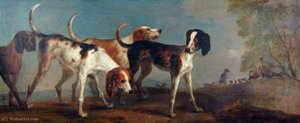
The Reverend Jemmet Browne at a meet of foxhound (1730) aut. Peteris Tillemansas

The Reverend Jemmet Browne at a meet of foxhound

1730 · Oil On Canvas · Yale Center for British Art, New Haven

In the lively scene of The Reverend Jemmet Browne at a meet of foxhound, the air feels thick with the anticipation of the chase. Painted by Peter Tillemans about 1730, this work captures a spirited gathering of the landed gentry amidst a sprawling, undulating countryside. The focus rests upon the social rituals of the hunt, where the movement of horses and the frantic energy of hounds define the moment. One…

4
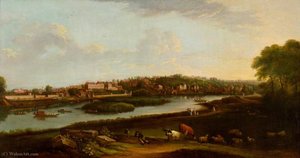
Chester and the Roodee aut. Peteris Tillemansas

Chester and the Roodee

Oil

The composition presents a wide landscape centered on the town of Chester, characterized by a large body of water that occupies the foreground and middle ground. Grassy hills rise toward the background, where the stone architecture of a castle is situated against the horizon. The scene is populated by several figures and animals distributed across the terrain. A single horse is positioned near the center of the frame, while two…

5
The Battle of Glenshiel (1719) aut. Peteris Tillemansas

The Battle of Glenshiel

1719 · Oil On Canvas · Škotijos nacionalinė portretų galerija, Edinburgas

The 1719 Jacobite rising reached its singular pitched engagement at Glenshiel, a moment captured here with topographical precision. The scene unfolds against the rugged backdrop of the Scottish mountains, where the landscape itself becomes an active participant in the struggle. Red-coated soldiers on horseback move through the terrain, their formation pressing toward the viewer amidst a heavy, clouded sky. This atmospheric tension mirrors the uncertainty of the campaign, as forces…

Peteris Tillemansas tapiai, rangos nuo 11 iki 38

Temos, kurios domino Peteris Tillemansas

Ketverios temos, dažniausiai pasikrausto originaluose, kiekvienos su savo puikiausiu pavyzdžiu.

Muziejai, kuriuose saugomi Peteris Tillemansas originalūs darbai

5 muziejai, kuriuose saugoma daugiausia šioje pusėje esamų paveikslų.

Muzejaus Miestas Peteris Tillemansas darbai Šiojo sąrašo paveikslai
Yale Center for British Art, New HavenYale Center for British Art New Haven 2 The Reverend Jemmet Browne at a meet of foxhound, The Round Course at Newmarket, Cambridgeshire, Preparing for the King's Plate
UpparkUppark 2 A View of Uppark, A View over the Downs near Uppark
Royal Collection, LondonasRoyal Collection Londonas 1 Queen Anne (1665-1714) in the House of Lords
Škotijos nacionalinė portretų galerija, EdinburgasŠkotijos nacionalinė portretų galerija Edinburgas 1 The Battle of Glenshiel
Fitzwilliam MuseumFitzwilliam Museum 1 View of a town

Peteris Tillemansas, po vieno ikoninio paveikslio kiekvienam dešimtmenės laikotarpiui

Darbai pagal dešimtmečius

Pasirinkite dešimtmetį, kad pamatytėte jį apibrėžusį originalą.

Peteris Tillemansas tapyiniai: galerijos atsakymai

Kuris Peteris Tillemansas paveikslas yra pats garsiausias iš visų?Atsakymas

Queen Anne (1665-1714) in the House of Lords (1711), Royal Collection, Londonas. Toliau seka Mary Liddell, Mrs John Myddelton (d. 1741) (1724) ir The Reverend Jemmet Browne at a meet of foxhound (1730).

Kiek metų buvo Peteris Tillemansas, kai sukūrė Queen Anne (1665-1714) in the House of Lords?Atsakymas

27 metų amžiaus: Queen Anne (1665-1714) in the House of Lords sukurta 1711 m. Nr. Peteris Tillemansas gimė 1684.

Kuriose yra 10 geriausių Peteris Tillemansas paveikslų?Atsakymas

Queen Anne (1665-1714) in the House of Lords, Mary Liddell, Mrs John Myddelton (d. 1741), The Reverend Jemmet Browne at a meet of foxhound, Chester and the Roodee, The Battle of Glenshiel, View of a town, Chirk Castle from the North, The Battle of Belgrade, 16 - 17 August 1717, The Round Course at Newmarket, Cambridgeshire, Preparing for the King's Plate ir Little haugh hall, suffolk. Viršuje esančioje reitingo sąraše nurodyta kiekvieno kūrinio metis ir muziejus.

Kiek kūrinių sukūrė Peteris Tillemansas?Atsakymas

Mūsų kataloge yra 38 Peteris Tillemansas darbų, skirtų laikotarpiui nuo 1709 iki 1730.

Kur kabinami garsiausi Peteris Tillemansas originalūs darbai?Atsakymas

Daugiausia – Yale Center for British Art (New Haven), Uppark ir Royal Collection (Londonas). Viršuje esančiame muziejų sąraše yra visi jie.

Kada Peteris Tillemansas sukūrė savo garsiausias paveikslus?Atsakymas

1710s laikotarpiu: 3 iš 38 šioje pusėje esančių darbų buvo sukurtos tada, iš jų Queen Anne (1665-1714) in the House of Lords.

Kokie yra ankstyviausi ir vėliausi garsieji Peteris Tillemansas kūriniai?Atsakymas

Šioje pusėje seniausias darbas yra View of a town (1709), o naujausias – The Reverend Jemmet Browne at a meet of foxhound (1730).

Kurią temą Peteris Tillemansas kūrė dažniausiai?Atsakymas

Landscape (7), 18th century (7) ir Hunting (3) iš 38 šioje pusėje esamų darbų.

Kurią techniką Peteris Tillemansas naudojo dažniausiai?Atsakymas

Oil On Canvas, iš 38 šios puslapio darbų – 3.

Su kokiu kierliu siejama Peteris Tillemansas?Atsakymas

Baroque, vadovaujantis šios puslapio originalais kūriniais.

Kurių Peteris Tillemansas originalų turi Yale Center for British Art?Atsakymas

The Reverend Jemmet Browne at a meet of foxhound ir The Round Course at Newmarket, Cambridgeshire, Preparing for the King's Plate: Yale Center for British Art, New Haven kolekcijoje yra 2 šioje pusėje esančių darbų.

Peteris Tillemansas: menininkas

The Pioneer of the Sporting Landscape

In the vibrant tapestry of early eighteenth-century art, few threads are as dynamic or as uniquely English as those woven by Peter Tillemans. Born around 1684 in the illustrious artistic hub of Antwerp, Belgium, Tillemans emerged from a lineage of craftsmanship as the son of a diamond cutter. This early exposure to precision and fine detail likely laid the foundation for a career defined by meticulous observation. While his roots were firmly planted in the Flemish tradition, his spirit was drawn toward the burgeoning art scene of London, a move prompted in 1708 by the influential picture-dealer Turner. This migration would prove transformative, as Tillemans did not merely join an existing tradition but became a primary architect of a new movement: the English school of sporting painting.

Tillemans’s artistic journey was deeply intertwined with the stylistic currents of the Low Countries. Under the tutelage of various masters in Antwerp, he absorbed the rich, atmospheric techniques of his contemporaries, including a notable connection to his brother-in-law, the celebrated painter Pieter Casteels. These formative years instilled in him a mastery of light and landscape that would later allow him to elevate simple topographical views into dramatic narratives. His work was never static; it possessed a kinetic energy that mirrored the very subjects he sought to capture—the thundering hooves of racehorses, the breathless pursuit of the hunt, and the sweeping vistas of the British countryside.

A Legacy of Motion and Topography

What truly distinguished Tillemans from his peers was his ability to fuse the rigid accuracy of topographical art with the visceral, emotional thrill of sporting life. Alongside luminaries such as John Wootton and James Seymour, he spearheaded a revolution that rejected the stiff academic conventions of the era in favor of a more naturalistic and spirited approach. His canvases became windows into an age of aristocratic leisure, capturing the precise anatomy of horses and the rugged textures of the landscape with an eye for both scientific detail and atmospheric beauty. Whether depicting the intense drama of The Battle of Glenshield or the serene grandeur of East View of Newsterad Abbey, his work resonated with a sense of place and purpose.

The significance of Tillemans's contribution extends far beyond mere decoration. He helped establish a genre that celebrated the intersection of nature and human endeavor. His paintings served as both historical records of 18th-century sporting culture and as high art that commanded respect in the London galleries. The breadth of his repertoire was remarkable, encompassing:

  • Equestrian Portraits: Capturing the grace and power of Thoroughbreds during the dawn of organized racing.
  • Hunting Scenes: Documenting the social rituals and intense physical landscapes of the English hunt.
  • Topographical Landscapes: Providing detailed, almost documentary-style views of significant British estates and landmarks.
  • Battle and Action Scenes: Utilizing his mastery of movement to depict historical conflicts with cinematic flair.

Final Years and Enduring Influence

Despite his professional triumphs, Tillemans’s later years were marked by the physical toll of a chronic struggle with asthma. This ailment eventually led him to seek the more temperate air of Richmond, a quiet retreat that stood in stark contrast to the bustling London art markets he had once dominated. His death on December 5th, 1734, marked the end of an era for the sporting school, yet his influence continued to ripple through the generations of British landscape painters who followed. He left behind a legacy of technical excellence and a profound respect for the natural world.

Today, the works of Peter Tillemans are cherished not only as masterpieces of the Baroque-influenced English style but as vital cultural artifacts. They remind us of a time when art was used to capture the very pulse of life—the wind in the trees, the spray of mud from a galloping horse, and the enduring beauty of the land itself. Through his brush, the fleeting moments of 18th-century sport were granted a permanent, breathtaking immortality.