Otto Eerelman portretas

Otto Eerelman tapiai: 93 garsiausi πίναšiai, galerijos akimis

Atnaujinta lapkritis 2026 · pagal mūsų populiarumumo koeficientą (paieškos, lankytojai ir užsakymai kiekvienam kūriniui) · 93 Otto Eerelman darbai mūsų kataloge

Trumpai tariant

Galerijos akimais, garsiausias Otto Eerelman tapas yra Portrait of Cornelisje Eerelman-Pluimker, wife of Samuel Eerelman, mother of the painter (1859), kurio originalas eksponuojamas Groninger Museum, Hroningen. Portrait of Anna Frederica Braak, wife of the painter (1881) ir Portrait of Fokje van Griffen, wife of Rudolph Jacob Schierbeek (1869) užbaia trio, kurį atpažįsta kiekvienas ž)/\ Iš 93 Otto Eerelman darbų mūsų kataloge, galerija žemiau pristato 93 garsiausius – kiekvienas yra originalus, su nurodytu metais, muziejumi bei unikaliu aprašymu.

1839 – 1926, Groningenas Realism Daugiausia darbų: Groninger Museum

10 geriausių galerijos Otto Eerelman paveikslų

1
Portrait of Cornelisje Eerelman-Pluimker, wife of Samuel Eerelman, mother of the painter (1859) aut. Otto Eerelman

Portrait of Cornelisje Eerelman-Pluimker, wife of Samuel Eerelman, mother of the painter

1859 · Oil On Canvas · Groninger Museum, Hroningen

We are looking at the Portrait of Cornelisje Eerelman-Pluimker, wife of Samuel Eerelman, mother of the painter. This intimate work was executed by Otto Eerelman, a Dutch artist born in 1839 who would go on to achieve significant recognition in his native Groningen. The subject of this piece is Cornelisje Eerelman-Pluimker herself, captured in a moment of quiet composure.

2
Portrait of Anna Frederica Braak, wife of the painter (1881) aut. Otto Eerelman

Portrait of Anna Frederica Braak, wife of the painter

1881 · Oil On Canvas · Groninger Museum, Hroningen

The light finds her face first, a pale island in a sea of dark pigment. Anna Frederica Braak sits with a quiet, heavy dignity, her gaze meeting the viewer with a steady, unblinking clarity. She is framed by the deep shadows of a 19th-century interior, where the darkness feels thick and tactile. Her high-collared black dress is a study in texture, the fine embroidery and lace catching the light just…

3
Portrait of Fokje van Griffen, wife of Rudolph Jacob Schierbeek (1869) aut. Otto Eerelman

Portrait of Fokje van Griffen, wife of Rudolph Jacob Schierbeek

1869 · Oil On Canvas · Groninger Museum, Hroningen

The gaze of the viewer meets the steady, composed presence of the subject in the Portrait of Fokje van Griffen, wife of Rudolph Jacob Schierbeek. Painted in 1869, this work captures a specific moment of quiet dignity. The woman, Fokje van Griffen, sits as the central figure, her identity inextricably linked to her husband, Rudolph Jacob Schierbeek, through the very title of the piece. She exists here in a state…

4
Participation of the Groningen marksmen in the campaign of 1830-1831, (1861) aut. Otto Eerelman

Participation of the Groningen marksmen in the campaign of 1830-1831,

1861 · Textile · Groninger Museum, Hroningen

The imagery functions as a visual record of military honor and regional identity. By grouping these specific artifacts—the drums, the flags, and the weaponry—the artist creates a static, frontal perspective that emphasizes the permanence of the achievements being commemorated. The verticality of the columns and flags provides a rigid structure to the piece, contrasting with the fluid movement of the textiles. It remains a formal study of the symbols associated…

5
Portrait of Samuel Eerelman, husband of Cornelisje Eerelman-Pluimker, father of the artist (1861) aut. Otto Eerelman

Portrait of Samuel Eerelman, husband of Cornelisje Eerelman-Pluimker, father of the artist

1861 · Oil · Groninger Museum, Hroningen

The light enters from the upper left, a sharp, singular presence that carves the face of Samuel Eerelman out of a heavy, dark void. He sits in a three-quarter pose, a man anchored by the weight of his own history. His hair is a textured landscape of grey, curling around ears and sideburns that frame a face etched with the fine, quiet lines of age. There is a stillness here,…

6
Portrait of Geert Jaxon Deelman (1876) aut. Otto Eerelman

Portrait of Geert Jaxon Deelman

1876 · Oil On Canvas · Groninger Museum, Hroningen

In this 1876 oil portrait, we encounter Geert Jaxon Deelman, a man whose presence commands a quiet, somber respect. The composition is a bust-length study, presented within an oval format that focuses our attention entirely on the subject's face and upper torso. There is a certain gravity in his expression, a stillness that suggests a life of consequence. The lighting is handled with a delicate chiaroscuro, a soft light emanating…

7
Circus Artist (1887) aut. Otto Eerelman

Circus Artist

1887 · Oil On Canvas · Museum Voor Moderne Kunst, Arnhem

The air in the room feels heavy, thick with the scent of old wood and the lingering dust of a performance just ended. A solitary circus performer sits in the dim light, her body leaning against a weathered wooden structure as she finds a moment of stillness. She is draped in a soft pink costume that catches the light, a stark contrast to the deep, earthy shadows that swallow the…

8
Self-Portrait at Age 50, (1889) aut. Otto Eerelman

Self-Portrait at Age 50,

1889 · Oil On Canvas · Groninger Museum, Hroningen

In this 1889 oil on canvas, we find the artist looking back at himself through a lens of quiet gravity. The portrait captures a man in the middle of his life, positioned slightly off-center as he meets the viewer's gaze with a steady, direct presence. There is a certain weight to the composition, a sense of a man settled into his own skin and his own history. The lighting is…

9
Selbstporträt (1889) aut. Otto Eerelman

Selbstporträt

1889 · Oil On Canvas

In this 1889 oil-on-canvas, we find ourselves in a quiet, intimate encounter with the artist himself. The composition is a close-up portrait, focusing on the head and shoulders of a middle-aged man positioned slightly off-center. There is a certain weight to the presence of the subject, a sense of gravity that comes from his direct gaze toward the viewer. The lighting is handled with a deliberate chiaroscuro technique; a single…

10
St. Bernard Dog (1899) aut. Otto Eerelman

St. Bernard Dog

1899 · Oil On Canvas · Fries Museum, Leeuwarden

A heavy, silent stillness settles over the landscape as a large St. Bernard dog gazes out from a wintry scene. The air feels thick with the dampness of an overcast sky, casting a soft, diffused light that avoids harsh shadows and instead wraps the subject in a gentle, muted glow. Every detail of the dog's coat is palpable, from the coarse, thick texture of the brown and white fur to…

Otto Eerelman tapiai, rangos nuo 11 iki 93

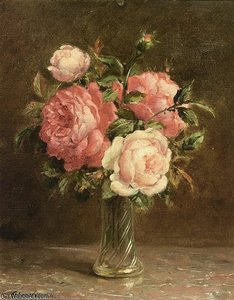
11Farmers with cattle on the road to the market of Simmering near Vienna, Hungarian farmers with cattle on the road to the market of Simmering near Vienna, (1917) aut. Otto EerelmanFarmers with cattle on the road to the market of Simmering near Vienna, Hungarian farmers with cattle on the road to the market of Simmering near Vienna,1917 · Groninger Museum 12Abyssinian Lion, (1914) aut. Otto EerelmanAbyssinian Lion,1914 · Groninger Museum 13Decoupling of the Pack, Rendez-vous for the Fox Hunt, (1921) aut. Otto EerelmanDecoupling of the Pack, Rendez-vous for the Fox Hunt,1921 · Groninger Museum 14A Lady With A Dog aut. Otto EerelmanA Lady With A Dog 15Head of a St. Bernard Dog (1895) aut. Otto EerelmanHead of a St. Bernard Dog1895 · Museum Boijmans Van Beuningen 16Sitting Up aut. Otto EerelmanSitting Up 17Flowers aut. Otto EerelmanFlowers 18The Horse Market on the Vreeburg in Utrecht, Palm Monday (1884) aut. Otto EerelmanThe Horse Market on the Vreeburg in Utrecht, Palm Monday1884 · Museum Boijmans Van Beuningen 19Dog with Parrot (1893) aut. Otto EerelmanDog with Parrot1893 20The Frederiksplein in Amsterdam during the arrival of Queen Wilhelmina, 5 September 1898 (1899) aut. Otto EerelmanThe Frederiksplein in Amsterdam during the arrival of Queen Wilhelmina, 5 September 18981899 · Rijksmuseum 21Dogs aut. Otto EerelmanDogsDordrechts Museum 22DECAYING Two Russian greyhounds on terrace, Two borzois on a terrace, (1909) aut. Otto EerelmanDECAYING Two Russian greyhounds on terrace, Two borzois on a terrace,1909 · Groninger Museum 23The Sleigh-ride aut. Otto EerelmanThe Sleigh-ride 24To The Party aut. Otto EerelmanTo The Party 25Preparing The Sleigh aut. Otto EerelmanPreparing The Sleigh 26The Ice Rink Sweeper aut. Otto EerelmanThe Ice Rink Sweeper 27Stable Interior aut. Otto EerelmanStable Interior 28Four Curious Saint Bernards Puppies aut. Otto EerelmanFour Curious Saint Bernards Puppies 29Jacoba van Beieren with her horse aut. Otto EerelmanJacoba van Beieren with her horse 30A Saint Bernard Dog aut. Otto EerelmanA Saint Bernard Dog 31Head of a Dog (1912) aut. Otto EerelmanHead of a Dog1912 32Black Stallion and Fox in Meadow, (1915) aut. Otto EerelmanBlack Stallion and Fox in Meadow,1915 · Groninger Museum 33Affenpinscher, (1924) aut. Otto EerelmanAffenpinscher,1924 · Groninger Museum 34Flowers, Fruit And Nuts aut. Otto EerelmanFlowers, Fruit And Nuts 35A Portrait Of A Horse aut. Otto EerelmanA Portrait Of A Horse 36Sketch with horses and a jockey aut. Otto EerelmanSketch with horses and a jockey 37Troika in the Snow aut. Otto EerelmanTroika in the Snow 38Studies With Horses aut. Otto EerelmanStudies With Horses 39The Flirtation aut. Otto EerelmanThe Flirtation 40Study With Dog aut. Otto EerelmanStudy With Dog 41Zeelandish Girl aut. Otto EerelmanZeelandish Girl 42Horse drawn sleigh aut. Otto EerelmanHorse drawn sleigh 43Study Of A Dog aut. Otto EerelmanStudy Of A Dog 44A Dachshund Puppy aut. Otto EerelmanA Dachshund Puppy 45Behind The Scenes At The Circus aut. Otto EerelmanBehind The Scenes At The Circus 46A Mastiff On A Cushion aut. Otto EerelmanA Mastiff On A Cushion 47Study Of Two Hounds aut. Otto EerelmanStudy Of Two Hounds 48Nest Met Jonge Mastiffs aut. Otto EerelmanNest Met Jonge Mastiffs 49A Dog aut. Otto EerelmanA Dog 50Afbeeldingen Van Grieksche En Romeinsche Goden aut. Otto EerelmanAfbeeldingen Van Grieksche En Romeinsche Goden 51A Healthy Brood aut. Otto EerelmanA Healthy Brood 52A Riding Tour In The Snow aut. Otto EerelmanA Riding Tour In The Snow 53At The Circus aut. Otto EerelmanAt The Circus 54Lady On A Horse-drawn Sledge aut. Otto EerelmanLady On A Horse-drawn Sledge 55Two Saint Bernard Dogs aut. Otto EerelmanTwo Saint Bernard Dogs 56A Romantic Proposal aut. Otto EerelmanA Romantic Proposal 57Terrier With A Calling Card In His Mouth aut. Otto EerelmanTerrier With A Calling Card In His Mouth 58Four Puppies aut. Otto EerelmanFour Puppies 59Roland aut. Otto EerelmanRoland 60Men Loading Timber On A Cart aut. Otto EerelmanMen Loading Timber On A Cart 61A Puppy And A Young Mastiff aut. Otto EerelmanA Puppy And A Young Mastiff 62Working The Land aut. Otto EerelmanWorking The Land 63A St. Bernard Pup aut. Otto EerelmanA St. Bernard Pup 64A Saint-bernard In The Snow aut. Otto EerelmanA Saint-bernard In The Snow 65Mastiff Holding A Calling Card In His Mouth aut. Otto EerelmanMastiff Holding A Calling Card In His Mouth 66In The Snow aut. Otto EerelmanIn The Snow 67A Study Of A Saint Bernard Puppy aut. Otto EerelmanA Study Of A Saint Bernard Puppy 68Two St Bernard Puppies aut. Otto EerelmanTwo St Bernard Puppies 69Two Saint-bernard Puppies Playing With A Hat aut. Otto EerelmanTwo Saint-bernard Puppies Playing With A Hat 70The Little Lions aut. Otto EerelmanThe Little Lions 71A Saint Bernard Puppy aut. Otto EerelmanA Saint Bernard Puppy 72A Circus Girl Grooming The Horses aut. Otto EerelmanA Circus Girl Grooming The Horses 73A Mother's Watchful Eye aut. Otto EerelmanA Mother's Watchful Eye 74Study Of Boxers aut. Otto EerelmanStudy Of Boxers 75In The Stables Of The Circus aut. Otto EerelmanIn The Stables Of The Circus 76At The Fair aut. Otto EerelmanAt The Fair 77The Two Friends aut. Otto EerelmanThe Two Friends 78Portrait Of A Bouvier De Flandres Dog From The Le Fevre De Montigny Family aut. Otto EerelmanPortrait Of A Bouvier De Flandres Dog From The Le Fevre De Montigny Family 79A Scottish Collie aut. Otto EerelmanA Scottish Collie 80A Black And Tan King Charles Spaniel aut. Otto EerelmanA Black And Tan King Charles Spaniel 81Horses In Stable aut. Otto EerelmanHorses In Stable 82A Riding Tour On A Sunny Day aut. Otto EerelmanA Riding Tour On A Sunny Day 83A Still Life Of Pink Roses aut. Otto EerelmanA Still Life Of Pink Roses 84Portrait Of A Girl aut. Otto EerelmanPortrait Of A Girl 85A Pincher aut. Otto EerelmanA Pincher 86A Brown Foal aut. Otto EerelmanA Brown Foal 87Saint-bernard Puppies aut. Otto EerelmanSaint-bernard Puppies 88English Mastiff aut. Otto EerelmanEnglish Mastiff 89A Griffon Bruxellois aut. Otto EerelmanA Griffon Bruxellois 90A Still Life Of Flowers aut. Otto EerelmanA Still Life Of Flowers 91A King Charles Spaniel With A Blue Ribbon aut. Otto EerelmanA King Charles Spaniel With A Blue Ribbon 92Portrait Of A Horse In Front Of A Stable aut. Otto EerelmanPortrait Of A Horse In Front Of A Stable 93De Paardenkeuring (1920) aut. Otto EerelmanDe Paardenkeuring1920

žymios Otto Eerelman tapiojamos, pagal laikotarpį

Temos, kurios domino Otto Eerelman

Ketverios temos, dažniausiai pasikrausto originaluose, kiekvienos su savo puikiausiu pavyzdžiu.

Muziejai, kuriuose saugomi Otto Eerelman originalūs darbai

6 muziejai, kuriuose saugoma daugiausia šioje pusėje esamų paveikslų.

Muzejaus Miestas Otto Eerelman darbai Šiojo sąrašo paveikslai
Groninger Museum, HroningenGroninger Museum Hroningen 13 Portrait of Cornelisje Eerelman-Pluimker, wife of Samuel Eerelman, mother of the painter, Portrait of Anna Frederica Braak, wife of the painter, Portrait of Fokje van Griffen, wife of Rudolph Jacob Schierbeek
Museum Boijmans Van Beuningen, RoterdamasMuseum Boijmans Van Beuningen Roterdamas 2 Head of a St. Bernard Dog, The Horse Market on the Vreeburg in Utrecht, Palm Monday
Museum Voor Moderne Kunst, ArnhemMuseum Voor Moderne Kunst Arnhem 1 Circus Artist
Fries Museum, LeeuwardenFries Museum Leeuwarden 1 St. Bernard Dog
Rijksmuseum, AmsterdamasRijksmuseum Amsterdamas 1 The Frederiksplein in Amsterdam during the arrival of Queen Wilhelmina, 5 September 1898
Dordrechts Museum, DordrechtDordrechts Museum Dordrecht 1 Dogs

Otto Eerelman, po vieno ikoninio paveikslio kiekvienam dešimtmenės laikotarpiui

Darbai pagal dešimtmečius

Pasirinkite dešimtmetį, kad pamatytėte jį apibrėžusį originalą.

Otto Eerelman tapyiniai: galerijos atsakymai

Kuris Otto Eerelman paveikslas yra pats garsiausias iš visų?Atsakymas

Portrait of Cornelisje Eerelman-Pluimker, wife of Samuel Eerelman, mother of the painter (1859), Groninger Museum, Hroningen. Toliau seka Portrait of Anna Frederica Braak, wife of the painter (1881) ir Portrait of Fokje van Griffen, wife of Rudolph Jacob Schierbeek (1869).

Kiek metų buvo Otto Eerelman, kai sukūrė Portrait of Cornelisje Eerelman-Pluimker, wife of Samuel Eerelman, mother of the painter?Atsakymas

20 metų amžiaus: Portrait of Cornelisje Eerelman-Pluimker, wife of Samuel Eerelman, mother of the painter sukurta 1859 m. Nr. Otto Eerelman gimė 1839.

Kuriose yra 10 geriausių Otto Eerelman paveikslų?Atsakymas

Portrait of Cornelisje Eerelman-Pluimker, wife of Samuel Eerelman, mother of the painter, Portrait of Anna Frederica Braak, wife of the painter, Portrait of Fokje van Griffen, wife of Rudolph Jacob Schierbeek, Participation of the Groningen marksmen in the campaign of 1830-1831,, Portrait of Samuel Eerelman, husband of Cornelisje Eerelman-Pluimker, father of the artist, Portrait of Geert Jaxon Deelman, Circus Artist, Self-Portrait at Age 50,, Selbstporträt ir St. Bernard Dog. Viršuje esančioje reitingo sąraše nurodyta kiekvieno kūrinio metis ir muziejus.

Kiek kūrinių sukūrė Otto Eerelman?Atsakymas

Mūsų kataloge yra 93 Otto Eerelman darbų, skirtų laikotarpiui nuo 1859 iki 1924.

Kur kabinami garsiausi Otto Eerelman originalūs darbai?Atsakymas

Daugiausia – Groninger Museum (Hroningen), Museum Boijmans Van Beuningen (Roterdamas) ir Museum Voor Moderne Kunst (Arnhem). Viršuje esančiame muziejų sąraše yra visi jie.

Kada Otto Eerelman sukūrė savo garsiausias paveikslus?Atsakymas

1880s laikotarpiu: 5 iš 93 šioje pusėje esančių darbų buvo sukurtos tada, iš jų Portrait of Anna Frederica Braak, wife of the painter.

Kokie yra ankstyviausi ir vėliausi garsieji Otto Eerelman kūriniai?Atsakymas

Šioje pusėje seniausias darbas yra Portrait of Cornelisje Eerelman-Pluimker, wife of Samuel Eerelman, mother of the painter (1859), o naujausias – Affenpinscher, (1924).

Kurią temą Otto Eerelman kūrė dažniausiai?Atsakymas

Saints (6), Woman (4) ir Man (4) iš 93 šioje pusėje esamų darbų.

Kurią techniką Otto Eerelman naudojo dažniausiai?Atsakymas

Oil On Canvas, iš 93 šios puslapio darbų – 11.

Su kokiu kierliu siejama Otto Eerelman?Atsakymas

Realism ir Contemporary realism, vadovaujantis šios puslapio originalais kūriniais.

Kurių Otto Eerelman originalų turi Groninger Museum?Atsakymas

Portrait of Cornelisje Eerelman-Pluimker, wife of Samuel Eerelman, mother of the painter, Portrait of Anna Frederica Braak, wife of the painter ir Portrait of Fokje van Griffen, wife of Rudolph Jacob Schierbeek: Groninger Museum, Hroningen kolekcijoje yra 13 šioje pusėje esančių darbų.

Otto Eerelman: menininkas

Otto Eerelman: Holendijos žuočių ir žirgų portretų meistras

Otto Eerelman (1839–1926) laikomas svarbiu 19 amžiaus holandijos menininkų garsiniu vardu, ypač pasireigęs dėl savo meistriškų žuočių ir žirgų atvaizdavimų – temų, kurie labai susiję su šio laiko žmonių jausmuo. Gimęs Groningene, Holandijoje, jis turėjo natūralią meninę talantę, kurią padidino jo tėvio vaidmuo kaip der aa-kerk saugojas. Jis priešinos pačiam savo tėvų lūkesčius ir 1860 m. pradėjo formalų mokymą „Academie Minerva“. Šis pagrindinis patirtis jam suteikė pagrindinę žinią apie meninės principus ir įtvirtino jo ryšį su vizualiniu atvaizdavimu.
  • Pirmieji įtakos: Eerelmano meninė kelionė prasidėjo po J.H. egenbergerio vadovavimu „Minerva“, o toliau jis praleido metus, tobulindamas savo įgūdžius Antverpų karališkame dailės akademijoje – vietoje, kurios buvo idealiai tinkanti kūrinio gebėjimo ir techninės įgūdžių vystymui.
  • Karališkas mecenatasmas ir meninis vystimasis: Pastatę jo augančią talantę, Eerelmano pasinaudojo privačiais pamokomis iš Lawrence Alma-Tademo, įsiverdamas impresionizmo šviesos ir spalvos tyrimais. Jo ryšius realizmui judėjo jį užfiksuoti žuočių subjektų esmę be lygio patikslės.
Jo meninis kūrinys apima įvairias priemones – olejne pikturas, gražinimo piešinius ir litografiškus sprendimus – atspindė universalumą, kuris išskiria jį nuo daugelio bendgrafinių. Ypač vertinga yra tai, kad jis buvo karališkas dailininkas karalienės Vilhelminos, kūrdamas portretus, kurie dokumentavo jos valdę ir panaudojo jo reputaciją už gebėjimą įsileisti regali dignidadę ir gračiumas. Šios užimtumas reikalavo kruopštumo pažiūrėjimo ir įgūdžiu apdarojimo, rodydami Eerelmano įsipareigojimą meninio pobūdžio aukščiausiems standartams.

Groningeno žirgų mugė ir meninis palikimas

Galbūt Eerelmano išlikęs didžiausias prasaulis yra „De paardenkeuring op de grote markt op de 28ste augustus“ – monumentalus olejne pikturas, apribojantis anksčiau vykstančią Groningeno žirgų mugę, tradiciją, kuri minėja Groningeno apklausos nutraukimą I pasaulinio karo metu. Ši įkvėpanti scena užfiksuoja ne tik renginio spektaklį, bet ir jo simbolinę reikšmę – atspindėji stiprumą ir bendruomenės dvasiadienę. Pikturo didangelis mastas ir išsamus realizmas pavyzdžiuoja Eerelmano meninį viziją ir iki šios dienos priverčia žiūrovimą.
  • Ilustraciniai albumai ir populiariausiasme: Jo darbas gavo didelę garsumą per „Horse Races“, iliustrinį albumą, kuriame yra 40 litografiškų sprendimų Richard Schoenbecko kūriniais – projektas, kuris pasiekė patikslus komercinį sėkmę dėl karalienės Vilhelminos meilės įspėjinam žirgui „Woyko“.
  • Pagalba Groningeno riboms: Eerelmano garsumas išplaugo už savo gimtoje vietoje; jis buvo apdovanojamas titulu ir Groningene yra gatvė, pavadinta jo vardu – tai patvirtinimas jo įnašos holandijos kultūrai.

Atgaivimas ir šiuolaikinė reikšmė

Nepaisant to, kad per vidį XX amžių jis išnyko pamiršimo, Otto Eerelmano kūriniai patyrė susidomėjimo atgaivimą užtikriomis tylomis ilgesiais. Didelė retrospektyva „Museum Nieno“ 2015 m. pasikėlė įvertinimą jo meniniams pasiekimams ir pabrėžė žuočių atvaizdavimų išlikdžiusią galia – temų, kurie toliau susiję su pasaulio žiūrovime.
  • Tylus genijus: Eerelmano subtilus stilius – pažymėtas kruopštumu ir giliu žuočių anatomijos supratimu – atspindi išskirtinę estetiką holandijos meninio istorijos kontekste.
  • Louvras ir meninė reputacija: Otto Eerelmano išlikęs palikimas yra patvirtintas fakto, kad lankydamas „Louvrą“ galima garsiai pasakyti: „Kur yra eerelmanai?“ – tai patvirtinimas jo meninio įtakos ir ilgalaikio įspūdžio daugenerėms žiūrovims.
Jo pikturos suteikia žvilgsį į praėjusį laiką, užfiksuojant ne tik vizualią grožį, bet ir holandijos bendruomenės dvylikte IX amžiaus savastovę. Otto Eerelmanas išlieka menininkas, vertingas toliau studijų ir pagybos – tylus genijus, kurio įnaša žuočių portretų darbas toliau įkvepia menininkus šiandadienį.