Oskaras Šlemperas portretas

12 garsiausių Oskaras Šlemperas paveikių rinkinys: galerijos išboru

Atnaujinta lapkritis 2026 · pagal mūsų populiarumumo koeficientą (paieškos, lankytojai ir užsakymai kiekvienam kūriniui) · 28 Oskaras Šlemperas darbai mūsų kataloge

Trumpai tariant

Iš visų paliktų originalų kūrinių Oskaras Šlemperas garsiausias yra Danceress (The Gesture) (1922), esantis Bavarijos valstybinės paveikslų kolekcijos kolekcijoje, Miunchas. Tiesiog už jų seka Nude, Woman, and Approaching Figure (1925) ir Stairway Scene (1932). Mūsų kataloge yra 28 darbų autoriaus Oskaras Šlemperas; galerija išsaugojo 12 labiausiai pasaulyje žyminiausių kūrinių – kiekvienas jų pateikiamas su datos, muziejaus ir istorijos aprašymu.

1888 – 1943, Štutgartis Daugiausia darbų: Bavarijos valstybinės paveikslų kolekcijos

Oskaras Šlemperas geriausios 10 paveikslų: galerijos pasirinkimas

2
Nude, Woman, and Approaching Figure (1925) aut. Oskaras Šlemperas

Nude, Woman, and Approaching Figure

1925 · Oil On Canvas

In the vertically oriented composition of Nude, Woman, and Approaching Figure by Oskar Schlemmer, a central, elongated nude female figure moves toward the right side of the frame. Following closely behind her is a dark, shadowy shape resembling a cloak. The scene is set within an interior space defined by a receding hallway effect, created by the diagonal lines of a tiled floor. To the side, a window with vertical…

3
Stairway Scene (1932) aut. Oskaras Šlemperas

Stairway Scene

1932 · Tempera · Hamburger Kunsthalle, Hambargas

The painting titled Stairway Scene emerged around 1932. It is a work by Oskar Schlemmer, a German artist whose hands moved between the precision of sculpture and the fluid motion of dance. His practice was a convergence of many disciplines, encompassing the roles of painter, sculptor, designer, and choreographer.

4
Dinner Party (1935) aut. Oskaras Šlemperas

Dinner Party

1935 · Oil · Städel Museum, Frankfurtas

Oskar Schlemmer’s Dinner Party, created about 1935, organizes a group of figures around a central meal. A large, rectangular white table dominates the foreground and middle ground, acting as the anchor for the entire composition. This central placement establishes a sense of stability and directs the viewer's focus toward the gathering. Several individuals are seated around the perimeter of the table, while two standing figures occupy the background, suggesting a…

5
Alley Corner (1911) aut. Oskaras Šlemperas

Alley Corner

1911 · Oil

In Alley Corner, Oskar Schlemmer organizes an urban scene through a series of deliberate geometric simplifications. The composition relies on strong verticality, anchored by dark tree trunks on the right and a street lamp positioned in the center-left. These upright elements balance the sharp, angular rooftops of the buildings that define the upper register. Lines serve a dual purpose, delineating the rigid architectural edges of the structures while also forming…

6
Jagdschloss Grunewald (1912) aut. Oskaras Šlemperas

Jagdschloss Grunewald

1912 · Oil · Berlinische Galerie, Berlinas

Jagdschloss Grunewald is a painting by the artist Oskar Schlemmer. Created about 1912, this work emerged during a period when the artist was refining his approach to form and space. Schlemmer was born in 1888 in Stuttgart, Germany, and remained active in the visual arts until his death in 1943.

7
A vase of gladiolus and dalias (1925) aut. Oskaras Šlemperas

A vase of gladiolus and dalias

1925 · Oil On Canvas · Šv. Jono Pauliaus II kolekcijos muziejus, Varšiena

A vase of gladiolus and dalias by Oskar Schlemmer features a centered floral arrangement positioned within the upper two-thirds of the frame. The bouquet consists of blossoms in shades of soft pink, cream, and deep red. These flowers are held within a teal-blue vase that possesses a solid, rounded shape. The vessel rests upon a light-colored surface against a muted, neutral grey background. This work was created about 1925.

8
Abstract figure (1921) aut. Oskaras Šlemperas

Abstract figure

1921 · Bronze · Kröller-Müller muziejus, Otterlo

Oskar Schlemmer's "Abstract Figure," crafted in 1921, isn’t merely a sculpture; it’s a crystallized moment of artistic and philosophical inquiry. Born from the crucible of the Bauhaus school—a revolutionary institution dedicated to uniting art, craft, and technology—this bronze masterpiece embodies a radical reimagining of the human form within the burgeoning landscape of early 20th-century Europe. More than a representation of physicality, Schlemmer sought to distill the essence of being into…

9
Composition with Four Figures (1936) aut. Oskaras Šlemperas

Composition with Four Figures

1936 · Kunsthalle Bremen, Bremena

The painting Composition with Four Figures, a small-format work for this artist, was done when Oskar Schlemmer had already officially withdrawn from the German art scene and had begun to live in “inner emigration.” The walls the artist had painted at the Staatliche Akademie für Kunst und Kunstgewerbe in Breslau (present- day Wrocäaw) had been destroyed by the Nazis as early as 1930. Despite all hardships, in 1932, he created…

Oskaras Šlemperas darba rinkinys tęsiamas, nuo 11 iki 12

Temos, kurios domino Oskaras Šlemperas

Ketverios temos, dažniausiai pasikrausto originaluose, kiekvienos su savo puikiausiu pavyzdžiu.

Muziejai, kuriuose saugomi Oskaras Šlemperas originalūs darbai

8 muziejai, kuriuose saugoma daugiausia šioje pusėje esamų paveikslų.

Muzejaus Miestas Oskaras Šlemperas darbai Šiojo sąrašo paveikslai
Bavarijos valstybinės paveikslų kolekcijos, MiunchasBavarijos valstybinės paveikslų kolekcijos Miunchas 1 Danceress (The Gesture)
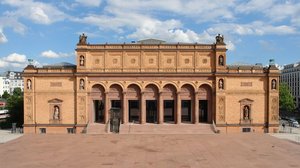
Hamburger Kunsthalle, HambargasHamburger Kunsthalle Hambargas 1 Stairway Scene
Städel Museum, FrankfurtasStädel Museum Frankfurtas 1 Dinner Party
Berlinische Galerie, BerlinasBerlinische Galerie Berlinas 1 Jagdschloss Grunewald
Šv. Jono Pauliaus II kolekcijos muziejus, VaršienaŠv. Jono Pauliaus II kolekcijos muziejus Varšiena 1 A vase of gladiolus and dalias
Kröller-Müller muziejus, OtterloKröller-Müller muziejus Otterlo 1 Abstract figure
Kunsthalle Bremen, BremenaKunsthalle Bremen Bremena 1 Composition with Four Figures
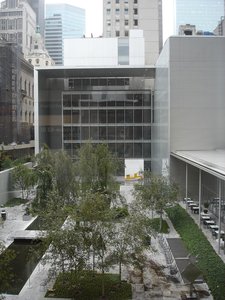
MOMA - Moderniosios menų muziejus, NiujorkasMOMA - Moderniosios menų muziejus Niujorkas 1 Bauhaus stairway

Oskaras Šlemperas dešimtmetėms po dešimtmetės: originalus kūrinys, apibūdinantis kiekvieną iš jų

Darbai pagal dešimtmečius

Pasirinkite dešimtmetį, kad pamatytėte jį apibrėžusį originalą.

Kolekcjonerų klausimai apie Oskaras Šlemperas paveikslus

Kuriu darbu Oskaras Šlemperas yra labiausiai garsus?Atsakymas

Danceress (The Gesture) (1922), Bavarijos valstybinės paveikslų kolekcijos, Miunchas. Toliau seka Nude, Woman, and Approaching Figure (1925) ir Stairway Scene (1932).

Kokia buvo Oskaras Šlemperas amžius, kai buvo sukurtas Danceress (The Gesture)?Atsakymas

34 metų amžiaus: Danceress (The Gesture) sukurta 1922 m. Nr. Oskaras Šlemperas gimė 1888.

Kokie yra 10 garsiausių Oskaras Šlemperas paveikslų?Atsakymas

Danceress (The Gesture), Nude, Woman, and Approaching Figure, Stairway Scene, Dinner Party, Alley Corner, Jagdschloss Grunewald, A vase of gladiolus and dalias, Abstract figure, Composition with Four Figures ir Bauhaus stairway. Viršuje esančioje reitingo sąraše nurodyta kiekvieno kūrinio metis ir muziejus.

Kiek paveikslų paliko Oskaras Šlemperas?Atsakymas

Mūsų kataloge yra 28 Oskaras Šlemperas darbų, skirtų laikotarpiui nuo 1911 iki 1936.

Kuriuose muziejuose eksponuojami Oskaras Šlemperas šedevrai?Atsakymas

Daugiausia – Bavarijos valstybinės paveikslų kolekcijos (Miunchas), Hamburger Kunsthalle (Hambargas) ir Städel Museum (Frankfurtas). Viršuje esančiame muziejų sąraše yra visi jie.

Kuriomis metais Oskaras Šlemperas tapo savo garsiausius kūrinius?Atsakymas

1920s laikotarpiu: 6 iš 12 šioje pusėje esančių darbų buvo sukurtos tada, iš jų Danceress (The Gesture).

Kokie yra pirmasis ir paskutinis garsieji Oskaras Šlemperas originalūs darbai?Atsakymas

Šioje pusėje seniausias darbas yra Alley Corner (1911), o naujausias – Composition with Four Figures (1936).

Kurią temą Oskaras Šlemperas rinkosi dažniausiai?Atsakymas

Figures (3) ir People (2) iš 12 šioje pusėje esamų darbų.

Kurią techniką Oskaras Šlemperas naudojo dažniausiai?Atsakymas

Oil On Canvas, iš 12 šios puslapio darbų – 4.

Oskaras Šlemperas: gyvenimas ir kūryba

Oskar Schlemmer: Architect of Form and the Dance of Geometry

Oskar Schlemmer (1888-1943) stands as a pivotal figure in the transition between early modernism and the stark geometries of mid-century abstraction. More than simply a painter or sculptor, he was a visionary designer and choreographer who fundamentally reshaped our understanding of the human form within theatrical space. His work, deeply rooted in the principles of the Bauhaus school, sought to bridge art, technology, and performance, creating a radical new language for visual expression – one that continues to resonate today.

Born in Swabia, Germany, in 1888, Schlemmer’s early life was marked by hardship following the untimely deaths of his parents. Forced to become self-sufficient at a young age, he apprenticed in various crafts—inlay work and marquetry—acquiring a practical understanding of materials and construction that would later inform his artistic explorations. This early experience instilled a sense of resourcefulness and an appreciation for the tangible world, qualities that would prove crucial to his innovative approach.

Schlemmer’s formal artistic training began at the Kunstgewerbeschule in Stuttgart, where he honed his skills in applied arts before earning a scholarship to the Akademie der Bildenden Künste. It was here, under the tutelage of landscape painters Christian Landenberger and Friedrich von Keller, that he began to experiment with abstraction, moving away from traditional representational styles. A pivotal moment arrived in 1910 when he relocated to Berlin, immersing himself in the burgeoning artistic scene and encountering the work of Adolf Hölzel, a key figure in early abstract art. This encounter proved transformative, pushing Schlemmer towards a more geometric and conceptual approach to his art.

The outbreak of World War I dramatically altered Schlemmer’s trajectory. Enlisted in 1914, he served on the Western Front before being transferred to a military cartography unit in Colmar. The experience of witnessing war's devastation profoundly impacted him, contributing to a sense of disillusionment and a desire to explore new ways of representing human existence. Following the war, he returned to Hölzel’s studio, further refining his abstract style and experimenting with techniques like wood relief.

The Bauhaus and the Triadic Ballet

Schlemmer's career truly ascended when he joined the Bauhaus school in Weimar in 1923. Appointed Master of Form for the theatre workshop, he was tasked with revolutionizing stage design and performance. This appointment coincided with a period of intense experimentation at the Bauhaus, driven by Walter Gropius’s vision of “total art” – a synthesis of all artistic disciplines. Schlemmer embraced this ethos wholeheartedly, developing innovative costumes and sets that challenged conventional theatrical norms.

His most celebrated achievement during his time at the Bauhaus was undoubtedly *Triadisches Ballett* (1922). This groundbreaking ballet saw costumed actors transformed into geometric representations of the human body – stylized figures resembling simplified pyramids or cones. Schlemmer described it as a “party of form and colour,” a deliberate rejection of traditional narrative storytelling in favor of exploring pure visual relationships. The dancers, clad in distinctive costumes that emphasized their angular forms, moved with precise, machine-like movements, creating a mesmerizing spectacle that blurred the boundaries between art, dance, and sculpture.

The *Triadic Ballet* wasn’t merely a theatrical production; it was a philosophical statement about the relationship between humanity and technology. Schlemmer sought to deconstruct the human figure into its essential geometric components, reflecting the increasing mechanization of society at the time. He aimed to create a new aesthetic vocabulary that embraced abstraction while retaining a sense of recognizable form.

Sculpting Space and Exploring the Human Form

Schlemmer’s artistic practice extended beyond performance, encompassing painting, sculpture, and design. His sculptures, particularly his relief works like “Composition with Four Figures” (1923), demonstrate a fascination with spatial relationships and the interplay of form and line. These reliefs—often constructed from steel, wire, and painted surfaces—present fragmented human figures that seem to emerge from and recede into the surrounding space.

He continued to explore the human figure in various media, experimenting with techniques such as wood relief and metal sculpture. His work during this period reflects a shift towards greater abstraction while still retaining an awareness of the underlying anatomical structure of the body. Schlemmer’s approach was characterized by a meticulous attention to detail and a desire to create works that were both visually striking and conceptually complex.

Legacy and Influence

Despite facing increasing political pressure during the rise of Nazism, Schlemmer remained committed to his artistic vision until his death in 1943. His work was largely suppressed during the Nazi era, but it has since been recognized as a seminal contribution to modern art and design. The influence of Schlemmer’s geometric abstraction can be seen in the work of numerous artists who followed him, including Josef Albers and László Moholy-Nagy.

Today, Oskar Schlemmer is remembered not only for his groundbreaking *Triadic Ballet* but also for his pioneering contributions to stage design, sculpture, and painting. His exploration of form, space, and the human body continues to inspire artists and designers seeking new ways to express themselves in a rapidly changing world. His legacy lies in his ability to synthesize art, technology, and performance into a uniquely powerful and enduring aesthetic language.