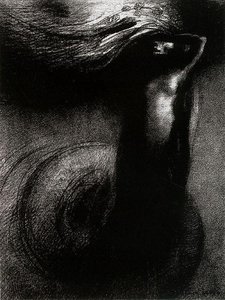
Odilon Redon portretas

100 garsiausių Odilon Redon paveikių – kiekvienas yra unikalus

Atnaujinta spalis 2026 · pagal mūsų populiarumumo koeficientą (paieškos, lankytojai ir užsakymai kiekvienam kūriniui) · 804 Odilon Redon darbai mūsų kataloge

Trumpai tariant

Ciklopas (1914) yra viena矚 most žiūrėlių pritraukiančių Odilon Redon tapierių; originalas saugomas Kröller-Müller muziejus, Otterlo. Po to akmuo patenka į The Black Pegasus ir Woman and Centaur (1900). Iš 804 Odilon Redon darbų mūsų kataloge šios 100 yra garsiausios – kiekvienas yra unikali originali dai̇lia, pateikta su jos metais, muziejumi ir priežastimi, kodėl ji išlieka per amžius.

1840 – 1916, Bordo Symbolism Daugiausia darbų: Musée d'Orsay

10 geriausių Odilon Redon paveikslų: galerijos akimais

1
Ciklopas (1914) aut. Odilon Redon

Ciklopas

1914 · Kröller-Müller muziejus, Otterlo

Apie 1914 m. nutapytas Odilono Redono kūrinys „Ciklopas“ nėra tik graikiško mito vaizdinys; tai pasinėrimas į itin asmenišką ir nerimą keliančią sapnų sferą. Šis intriguojantis darbas, dabar saugomas Kröller-Müller muziekuroje Otterlo, Nidešlande, peržengia paprasto iliustracijos ribas, siūlydamas žiūrintelią į kūrybinio žmogaus nežinomią – realmą, kurį užėmė šešėliai, galingi simboliai ir aktai pajutęs ilgesio jausmas.

2
The Black Pegasus aut. Odilon Redon

The Black Pegasus

Oil On Canvas

To gaze upon Odilon Redon's The Black Pegasus is not merely to look at a painting; it is to step through a veil into the shimmering, melancholic landscape of the subconscious mind. This captivating oil on canvas transports the viewer beyond the mundane realities of the visible world, inviting an intimate communion with the realm of dreams and myth. The central figure—the magnificent black pegasus—is breathtaking in its impossible grace.…

3
Woman and Centaur (1900) aut. Odilon Redon

Woman and Centaur

1900 · Drawing

To stand before Odilon Redon’s Woman and Centaur is to step across the threshold into a dreamscape, a place where the boundaries between myth, instinct, and profound human emotion dissolve. Created in the year 1900, this work is not merely a depiction of two figures; it is a visual poem rendered in ink and shadow, embodying the very spirit of Symbolism. Redon, an artist forever drawn to the unseen realms…

4
Saint Sebastian (1900) aut. Odilon Redon

Saint Sebastian

1900 · Oil On Canvas · Musée d'Orsay, Paris

A nude male figure, Saint Sebastian, occupies the center of this Symbolist composition, his pale skin illuminated against a dark, atmospheric backdrop. He is pierced by arrows, a physical manifestation of martyrdom and spiritual endurance. Large, vertical forms resembling ancient trees or rocky outcroppings loom over him, creating a sense of enclosure. The background features patches of ochre, gold, and cool blues that suggest a nebulous, dreamlike space.

5
The Martyrdom of Saint Sebastian (1910) aut. Odilon Redon

The Martyrdom of Saint Sebastian

1910 · Oil On Canvas · Kunstmuseum Basel, Bazelis

To stand before Odilon Redon's depiction of The Martyrdom of Saint Sebastian is to step across a threshold into the deep, resonant chambers of the Symbolist imagination. This 1910 oil on canvas does not merely record an event; it excavates a profound state of being—one caught between agonizing vulnerability and transcendent spiritual endurance. The composition immediately arrests the viewer with its intense chromatic drama. Saint Sebastian, bound to the base…

6
The Death of Ophelia (1905) aut. Odilon Redon

The Death of Ophelia

1905 · Oil On Canvas

The Death of Ophelia is a captivating painting by the French artist Odilon Redon, created in 1905. This oil on canvas piece is a representation of the tragic death of Ophelia from Shakespeare's play Hamlet. The painting is a prime example of the Symbolist art movement, which sought to represent absolute truths symbolically through language and metaphorical images. Symbols and Metaphors The painting features a woman sitting on a rock…

7
The Birth of Venus (1910) aut. Odilon Redon

The Birth of Venus

1910 · Oil On Canvas

The sea breathes with a quiet, rhythmic pulse as a figure begins to take shape upon the water. Venus lies reclined within a red boat, her form emerging from the depths of the ocean in a moment caught between sleep and awakening. The surface of the water reflects soft shades of blue and yellow, casting a warmth that settles over the scene like a gentle afternoon sun. There is a…

8
White Pegasus (1908) aut. Odilon Redon

White Pegasus

1908 · Oil On Canvas

To gaze upon Odilon Redon's White Pegasus is to step across a threshold into a realm where myth breathes and the spirit takes flight. This captivating oil on canvas, dating from 1908, is far more than a mere depiction of a winged horse; it is a profound meditation on freedom, purity, and the sublime mystery that underpins our visible reality. The composition centers around the magnificent white Pegasus, poised atop…

9
Breton Village (1890) aut. Odilon Redon

Breton Village

1890 · Oil On Canvas · National Gallery of Art, Vašingtonas

To gaze upon Odilon Redon's Breton Village is not merely to observe a scene; it is to step through a veil into a meticulously crafted dream. Painted in 1890, this work stands as a profound testament to the Post-Impressionist spirit—a movement that dared to look beyond the fleeting shimmer of natural light and instead plumb the depths of human emotion and subjective experience. Redon eschews the purely objective record of…

10
Sacred Heart (1910) aut. Odilon Redon

Sacred Heart

1910 · Painting

To gaze upon Odilon Redon’s Sacred Heart is to step through a veil into a realm where the spiritual meets the exquisitely tangible. Painted in 1910, this masterpiece transcends mere portraiture; it is a profound meditation on divine love and boundless compassion. The composition immediately draws the eye to the central figures—a woman, perhaps evoking the timeless grace of Mary, cradling a child whose form, rendered in striking black and…

žinomi Odilon Redon paveikslai, nuo 11 iki 100 numerio

11La Barque Mystique aut. Odilon RedonLa Barque Mystique 12Flower of Blood (1895) aut. Odilon RedonFlower of Blood1895 13The Green Horseman (1904) aut. Odilon RedonThe Green Horseman1904 14The Flame (Goddess of Fire) (1896) aut. Odilon RedonThe Flame (Goddess of Fire)1896 15Reflection aut. Odilon RedonReflection 16The Black Sun aut. Odilon RedonThe Black Sun 17The Cyclops (1914) aut. Odilon RedonThe Cyclops1914 · Kröller-Müller muziejus 18Underwater Flora aut. Odilon RedonUnderwater Flora 19Death: My irony surpasses all others! (1889) aut. Odilon RedonDeath: My irony surpasses all others!1889 20Arbre sur fond jaune (1901) aut. Odilon RedonArbre sur fond jaune1901 21Prayer, Face, Flowers (1893) aut. Odilon RedonPrayer, Face, Flowers1893 · Musée d'Orsay 22Mystical Conversation (1896) aut. Odilon RedonMystical Conversation1896 · Museum of Fine Arts 23Siren (1900) aut. Odilon RedonSiren1900 · Kunstmuseum Basel 24On the Horizon, the Angel of Certitude, and in the Dark Sky, A Questioning Glance (1882) aut. Odilon RedonOn the Horizon, the Angel of Certitude, and in the Dark Sky, A Questioning Glance1882 · Los Angelos apygardos meno muziejus 25Head with Flowers (1907) aut. Odilon RedonHead with Flowers1907 26Le Bouddha (The Buddha) aut. Odilon RedonLe Bouddha (The Buddha) 27The Road to Peyrelebade aut. Odilon RedonThe Road to Peyrelebade 28The Window (1907) aut. Odilon RedonThe Window1907 · Neue Pinakothek 29Lenor appears in front of the black sun of melancholy (1882) aut. Odilon RedonLenor appears in front of the black sun of melancholy1882 30Vision (1883) aut. Odilon RedonVision1883 31The Prisoner (Boulet) (1879) aut. Odilon RedonThe Prisoner (Boulet)1879 32Sita (1893) aut. Odilon RedonSita1893 33Portrait of Mademoiselle Jeanne Roberte de Domecy (1905) aut. Odilon RedonPortrait of Mademoiselle Jeanne Roberte de Domecy1905 34Screen for Olivier Sainsère (1903) aut. Odilon RedonScreen for Olivier Sainsère1903 35Les Origines — Plate 2 (1883) aut. Odilon RedonLes Origines — Plate 21883 36The Departure (1906) aut. Odilon RedonThe Departure1906 37Veiled Woman (1895) aut. Odilon RedonVeiled Woman1895 · Kröller-Müller muziejus 38Woman in Red aut. Odilon RedonWoman in RedMusée d'Orsay 39The Gambler (1879) aut. Odilon RedonThe Gambler1879 40The Mask of the Red Death (1883) aut. Odilon RedonThe Mask of the Red Death1883 41Everywhere eyeballs are aflame (1888) aut. Odilon RedonEverywhere eyeballs are aflame1888 42Flowers (1909) aut. Odilon RedonFlowers1909 43I am still the great Isis! None has yet lifted my veil! My fruit is the Sun! (plate 16) (1896) aut. Odilon RedonI am still the great Isis! None has yet lifted my veil! My fruit is the Sun! (plate 16)1896 · MOMA - Moderniosios menų muziejus 44untitled (5561) aut. Odilon Redonuntitled (5561) 45Saint George and the Dragon (Saint Georges et le dragon) (1909) aut. Odilon RedonSaint George and the Dragon (Saint Georges et le dragon)1909 · Barnes Foundation 46Cup of cognition (The Children's Cup) (1894) aut. Odilon RedonCup of cognition (The Children's Cup)1894 47The Dream (also known as Thought) (1908) aut. Odilon RedonThe Dream (also known as Thought)1908 48Hantise (Obsession) (1894) aut. Odilon RedonHantise (Obsession)1894 · British Museum 49Yellow Tree (1900) aut. Odilon RedonYellow Tree1900 · Musée d'Orsay 50Woman and the mountain landscape (1865) aut. Odilon RedonWoman and the mountain landscape1865 51The Mystical Knight (Oedipus and the Sphinx) (1869) aut. Odilon RedonThe Mystical Knight (Oedipus and the Sphinx)1869 52Two trees (1875) aut. Odilon RedonTwo trees1875 53The Smiling Spider (1881) aut. Odilon RedonThe Smiling Spider1881 54Les Origines — Plate 1 (1883) aut. Odilon RedonLes Origines — Plate 11883 55Les Origines — Cover (1883) aut. Odilon RedonLes Origines — Cover1883 56Christ and the Samaritan Woman (The White Flower Bouquet) (1895) aut. Odilon RedonChrist and the Samaritan Woman (The White Flower Bouquet)1895 · Städel Museum 57Madness (1882) aut. Odilon RedonMadness1882 58There were also embryonic beings (1885) aut. Odilon RedonThere were also embryonic beings1885 59The Egg (1885) aut. Odilon RedonThe Egg1885 60A madman in a dismal landscape (1885) aut. Odilon RedonA madman in a dismal landscape1885 61In the balance (1880) aut. Odilon RedonIn the balance1880 62Flower of the swamp, a head human and sad (1885) aut. Odilon RedonFlower of the swamp, a head human and sad1885 63Upon awakening I saw the Goddess of the Intelligible with her severe and hard profile (1885) aut. Odilon RedonUpon awakening I saw the Goddess of the Intelligible with her severe and hard profile1885 64Profile of Light (1886) aut. Odilon RedonProfile of Light1886 · Škotijos Nacionalinė galerija 65Cauldron of the Sorceress (1879) aut. Odilon RedonCauldron of the Sorceress1879 66Red Boat with Blue Sails (1907) aut. Odilon RedonRed Boat with Blue Sails1907 67Anthony: Help me, O my God! (plate 2) (1896) aut. Odilon RedonAnthony: Help me, O my God! (plate 2)1896 68Immediately three goddesses arise (plate 11) (1896) aut. Odilon RedonImmediately three goddesses arise (plate 11)1896 69Helena (Ennoia) (plate 10) (1896) aut. Odilon RedonHelena (Ennoia) (plate 10)1896 70And the eyes without heads were floating like molluscs (plate 13) (1896) aut. Odilon RedonAnd the eyes without heads were floating like molluscs (plate 13)1896 71She draws from her bosom a sponge, perfectly black, and covers it with kisses (plate 8) (1896) aut. Odilon RedonShe draws from her bosom a sponge, perfectly black, and covers it with kisses (plate 8)1896 72The Old Woman: What are you afraid of? A wide black hole! Perhaps it is a void? (plate 19) (1896) aut. Odilon RedonThe Old Woman: What are you afraid of? A wide black hole! Perhaps it is a void? (plate 19)1896 73Here is the Good Goddess, the Idaean mother of the mountains (plate 15) (1896) aut. Odilon RedonHere is the Good Goddess, the Idaean mother of the mountains (plate 15)1896 74Oannès: I, the first consciousness of chaos, arose from the abyss that I might harden matter, and give law unto forms (plate 14) (1896) aut. Odilon RedonOannès: I, the first consciousness of chaos, arose from the abyss that I might harden matter, and give law unto forms (plate 14)1896 75My kisses have the taste of fruit which would melt in your heart! ... You distain me! Farewell! (plate 4) (1896) aut. Odilon RedonMy kisses have the taste of fruit which would melt in your heart! ... You distain me! Farewell! (plate 4)1896 76Different peoples inhabit the countries of the Ocean (plate 23) (1896) aut. Odilon RedonDifferent peoples inhabit the countries of the Ocean (plate 23)1896 77Portrait of Ari Redon (1898) aut. Odilon RedonPortrait of Ari Redon1898 78Auricular Cell (1894) aut. Odilon RedonAuricular Cell1894 79The Two Graces (1900) aut. Odilon RedonThe Two Graces1900 · Columbus Museum of Art 80Centaur (1900) aut. Odilon RedonCentaur1900 81Woman in a gothic arcade- woman with flowers (1905) aut. Odilon RedonWoman in a gothic arcade- woman with flowers1905 · Van Gogos muziejus 82Profile of a Woman with a Vase of Flowers (1900) aut. Odilon RedonProfile of a Woman with a Vase of Flowers1900 83The Gothic Window (1900) aut. Odilon RedonThe Gothic Window1900 · Indianapolis muziejus 84The Chariot of Apollo (1907) aut. Odilon RedonThe Chariot of Apollo1907 · Pola Museum of Art 85Flowers in a Japanese Vase (1908) aut. Odilon RedonFlowers in a Japanese Vase1908 · Pola Museum of Art 86The Muse on Pegasus (1908) aut. Odilon RedonThe Muse on Pegasus1908 · The Museum of Modern Art, Gunma 87Stained Glass Window aut. Odilon RedonStained Glass Window 88The Captive (1914) aut. Odilon RedonThe Captive1914 · Wallraf-Richartz-Museum 89Evocation of Roussel (1912) aut. Odilon RedonEvocation of Roussel1912 · National Gallery of Art 90Jacob's Struggle with the Angel (1910) aut. Odilon RedonJacob's Struggle with the Angel1910 · Musée d'Orsay 91Dante's Vision (1914) aut. Odilon RedonDante's Vision1914 92Venetian Landscape (1908) aut. Odilon RedonVenetian Landscape1908 93Concern for the Absolute… Philosopher (1880) aut. Odilon RedonConcern for the Absolute… Philosopher1880 94Les yeux clos (Closed Eyes) aut. Odilon RedonLes yeux clos (Closed Eyes) 95Virgin of the Dawn (1890) aut. Odilon RedonVirgin of the Dawn1890 96Vase of Flowers (1904) aut. Odilon RedonVase of Flowers1904 · Virginia Museum of Fine Arts 97cyclops (1898) aut. Odilon Redoncyclops1898 98Landscape with Eve (1900) aut. Odilon RedonLandscape with Eve1900 99Bouquet in a Chinese Vase (1912) aut. Odilon RedonBouquet in a Chinese Vase1912 · Metropolitano meno muziejus 100Caliban on a branch (1881) aut. Odilon RedonCaliban on a branch1881

žymios Odilon Redon tapiojamos, pagal laikotarpį

Temos, kurios domino Odilon Redon

Ketverios temos, dažniausiai pasikrausto originaluose, kiekvienos su savo puikiausiu pavyzdžiu.

Muziejai, kuriuose saugomi Odilon Redon originalūs darbai

8 muziejai, kuriuose saugoma daugiausia šioje pusėje esamų paveikslų.

Muzejaus Miestas Odilon Redon darbai Šiojo sąrašo paveikslai
Musée d'Orsay, ParisMusée d'Orsay Paris 28 Saint Sebastian, Prayer, Face, Flowers, Woman in Red
Kröller-Müller muziejus, OtterloKröller-Müller muziejus Otterlo 7 Ciklopas, The Cyclops, Veiled Woman
National Gallery of Art, VašingtonasNational Gallery of Art Vašingtonas 7 Breton Village, Evocation of Roussel
Pola Museum of Art, HakonePola Museum of Art Hakone 5 The Chariot of Apollo, Flowers in a Japanese Vase
Kunstmuseum Basel, BazelisKunstmuseum Basel Bazelis 2 The Martyrdom of Saint Sebastian, Siren
Metropolitano meno muziejus, NiujorkasMetropolitano meno muziejus Niujorkas 9 Bouquet in a Chinese Vase
MOMA - Moderniosios menų muziejus, NiujorkasMOMA - Moderniosios menų muziejus Niujorkas 8 I am still the great Isis! None has yet lifted my veil! My fruit is the Sun! (plate 16)
Van Gogos muziejus, AmsterdamasVan Gogos muziejus Amsterdamas 5 Woman in a gothic arcade- woman with flowers

Odilon Redon per dešimtmečius: vieniškas originalas kiekvienam

Darbai pagal dešimtmečius

Pasirinkite dešimtmetį, kad pamatytėte jį apibrėžusį originalą.

Odilon Redon tapų klausimai galerijai

Koks yra garsiausias Odilon Redon kūrinys?Atsakymas

Ciklopas (1914), Kröller-Müller muziejus, Otterlo. Toliau seka The Black Pegasus ir Woman and Centaur (1900).

Kuriuo amžiaus atσταση Odilon Redon sukūrė Ciklopas?Atsakymas

74 metų amžiaus: Ciklopas sukurta 1914 m. Nr. Odilon Redon gimė 1840.

Kurios Odilon Redon dešimt paveikslų yra garsiausi?Atsakymas

Ciklopas, The Black Pegasus, Woman and Centaur, Saint Sebastian, The Martyrdom of Saint Sebastian, The Death of Ophelia, The Birth of Venus, White Pegasus, Breton Village ir Sacred Heart. Viršuje esančioje reitingo sąraše nurodyta kiekvieno kūrinio metis ir muziejus.

Kiek žinoma Odilon Redon darbų?Atsakymas

Mūsų kataloge yra 804 Odilon Redon darbų, skirtų laikotarpiui nuo 1865 iki 1914.

Kur galima pamatyti garsiausių Odilon Redon originalų?Atsakymas

Daugiausia – Musée d'Orsay (Paris), Kröller-Müller muziejus (Otterlo) ir National Gallery of Art (Vašingtonas). Viršuje esančiame muziejų sąraše yra visi jie.

Kuriuo laikotarpiu Odilon Redon sukūrė savo žymiausias paveikslus?Atsakymas

1900s laikotarpiu: 28 iš 100 šioje pusėje esančių darbų buvo sukurtos tada, iš jų Woman and Centaur.

Kuris iš garsių Odilon Redon paveikslų yra pirmasis, o kuris – paskutinis?Atsakymas

Šioje pusėje seniausias darbas yra Woman and the mountain landscape (1865), o naujausias – Ciklopas (1914).

Kokia temos Odilon Redon mėgavosi?Atsakymas

Woman (11), Dreamlike (11) ir Flowers (10) iš 100 šioje pusėje esamų darbų.

Kuriomis medžiagomis Odilon Redon tapė dažniausiai?Atsakymas

Oil On Canvas, iš 100 šios puslapio darbų – 19.

Kelią meno kryžkelę priklauso Odilon Redon kūryba?Atsakymas

Symbolism, judging by the originals on this page.

Kurius Odilon Redon originalius galėčiau pamatyti Musée d'Orsay?Atsakymas

Saint Sebastian, Prayer, Face, Flowers ir Woman in Red: Musée d'Orsay, Paris kolekcijoje yra 5 šioje pusėje esančių darbų.

Odilon Redon: meno kūrinys – autoportretas

Pasa nematomas pasa: Enigmatiškas Odilono Redono menas

Odilonas Redonas, gimęs 1840 m. Bokso mieste, Prancūzijoje, buvo menininkas, visada siekiantis įtanginti nematomas vaizduotės ir sapnų sferas į apčiuopiamą formą. Jo kūrybinė kelionė prasidėjo ne nuo didelių ambicijų, o nuo tylios stebėsenos; vos ketverių metų amžiaus jis laimėjo piešimo prizą – tai buvo priešžinys vizualiam jautrumui, kuris apibrėžtų jo gyvenimo kūrybą. Nors šeimos lūkesčiai iš pradžių nukreipė jį link architektūros, Redono tikrasis pašaukimas buvo kitur, apšauktas Žano Leóno Žeromo ir, svarbiausia, Rodolfo Bresdino mokymų, kurie jį vedė per sudėtingą ešliuotės ir litografijos meną. Šios technikos tapo jo ankstyvųjų tyrimų pagrindu, leisdamos jam pasinerti į šešėlių figūrų ir dviprasmių formų pasaulį, kuris netrukus užburė visus, ieškančius alternatyvos akademiniam realizmui. Prancūzų-vokiečių karo pertraukimas privertė Redoną trumpam tarnauti kare, tačiau būtent sugrįžęs į Paryžių, jis pradėjo tikrai suformuoti savo meninę viziją.

Simbolizmo gimimas: „Noirs“ ir ankstyvieji vizijos

Ankai Redono karjera pasižymėjo tyčiniu atsiskyrimu nuo tuorio meno tendencijų. Jis nebandė atkartoti matomo pasaulio, o siekė išaukinti jo slaptas sroves – nerimą, troškimus ir dvasinius ilgesius, slydinčius po kasdienybės paviršiumi. Tai atvedė jį prie garsios „noirs“ serijos – monchromatinio kūrybos, vykdomos anglies kailiu ir litografija. Tai nebuvo tik tamsos studijos; tai buvo pasąsios tyrimai, gyvinami keistais sutvariniais, atsipalaidavusiais akimis ir šiurpiomis figūromis, iškylančiomis iš suvirpusių miglių. Čia jautamas tokių rašytojų kaip Edgaras Allan Poe ir Charles Baudelaire įtampas – bendras fascinas mirties estetika, mystika ir užuominų galia. Šie darbai nebuvo iškart priimti; Redonas metus buvo nežinomas. Tačiau lūžio akimarka įvyko 1884 m. su Joris-Karl Huysmans dėde romanu „À rebours“ (Prieš gamtą), kuriame dekadentinis aristokratas Des Esseintes pagarbino Redono piešinius, akimirksniu pakėlę jo statusą avangardo aplinkose. Šis pripažinimas atvėrė duris ir leido Redonui toliau vystyti savo unikalią meninę kalbą. Jis savo darbą apibūdino kaip dviprasmišką ir neįvardijimą, teigdamas, kad jie turėtų „įdėti mus, tarsi muzika, į neapibrėžtą nežinomybės sferą“.

Pradėjusi paletė: nuo monchromatizmo iki gyvo išraiškos

Nors „noirs“ įtvirtino Redoną kaip svarbią simbolizmo jėgą, 1890-aisiais jo menas patyrė stebėtiną transformaciją. Jis pradėjo priimti spalvą – pirmiausia pastelę, vėliau alyvinius dažtus – į savo kompozicijas įnešdamas naują vibraciją ir švieslumą. Šis pokytis nebuvo tik techninis; jis atspindėjo evoliuciją paties menininko emociniame pasaulyje. Ankstesni darbai dažnai nešė melancholijos ir izoliacijos pojūtį, tačiau vėlesni paveikslai atskleidžia augantį susidomėjimą mitologija, budizmu ir Japonijos menais – *japonizmas* buvo milžiniška įtaka. Tokie darbai kaip „Budos mirtis“ (1899) demonstruoja šį susidomėjimą Rytų spiritualumu, o barono Roberto de Domecy užsakyti kūriniai jo pilyje parodo Redono gebėjimą derinti dekoratyvinius elementus su simboliniu vaizdu. Baronės de Domecy ir jos dukters Jeanne portretai yra itin ryškūs šio laikotarpio pavyzdžiai, įtrapinantys ne tik fizinį panašumą, bet ir vidinę gyvenimo bei psichologinio gylio pratimę. Redonas per savo meną tyrinėjo savo vidinius jausmus ir psichiką, siekdamas „padaryti matomą neįmanoma“.

Palikimas ir įtantis: Surrealizmo priešėdarys

Odilono Redono poveikis menų pasauliui išsiplėtė daug už jo paties gyvenimo ribų. 1903 m. jis buvo apdovanotas Lenkės ordenu, o jo kūryba sulaukė platesnio pripažinimo su parodomis Niujorko Armory Show 1913 m. Tačiau tik po jo mirties 1916 m. jo tikroji reikšmė tapo visiškai aiški. Redono sapnų, pasąsios ir iracionalumo tyrimai pavedjo kelią surrealizmui, įkvėpdami tokius menininkus kaip Marcel Duchamp ir Max Ernst gilintis į panašias teritorijas. Jo pabrėžimas subjektiviai patyrimui ir emociniam išraiškai taip pat atgavo eksprecionistų paveiksluose. Jis ne tiesiog vaizdavo tai, ką matė; jis vizualizavo tai, ką jautė – principas, kuris įkvepia menininkus ir šiandien. Redono palikimas yra meninės drąsos, gebėjimo priimti dviprasmiškumą ir gilaus tikėjimo meno galia atskleisti paslėptinius žmogaus patyrimo dimensijos pavyzdys. Jo piešiniai atsisakė klasifikacijų, atversdami kelią unikaliems fantastiniams vaizdiniams, gimdantiems iš ligos ir delirozės, tačiau visada prisunkti prie šiurpios grožio.

Pagrindinės charakteristikos ir temos

  • Simbolizmas: Redonas laikomas simbolizmo judėjimo pagrindine figūra, teikiantu pirmenybę emociniam ir dvasiniam išraiškaiškumui priešais realistišką vaizdymą.
  • Sapniškas vaizdingumas: Jo kūriniai dažnai pasižymi fantastiniais sutvariniais, dviprasmiškomis kraujose ir scenomis, kurios sukelia sapnų atmosferą.
  • Pasąsos tyrimas: Redonas gilino nerimo, troškimų ir slėptų žmogaus psichikos gilumi temų.
  • Literatūros ir mitologijos įtaka: Jis kūrybai jautė įkvėpimą iš tokių rašytojų kaip Poe ir Baudelaire, taip pat iš Rytų religijų ir mitologijos.
  • Techninis inovatyvumas: Redono meistriškumas litografijoje ir novatoriškas spalvų naudojimas pastelėmis bei alyviniais dažtais buvo esminiai jo meninei vizijai.