Nathaniel Hughes John Baird: A Painter of Rural England
Nathaniel Hughes John Baird (1865-1936) emerged as a significant figure in late 19th and early 20th century British landscape painting, quietly capturing the essence of rural life and the enduring relationship between man and beast. Born in Yetholm, Roxburghshire, Scotland – a region steeped in agricultural tradition – Baird’s artistic journey was shaped by his upbringing amidst rolling hills, working farms, and the rhythms of the countryside. His early exposure to this environment would profoundly influence his subject matter and distinctive style, establishing him as a keen observer and faithful recorder of the British rural scene.
Baird's formal training began at the Coldstream Academy in Edinburgh, followed by studies in London and later Paris. These experiences broadened his artistic horizons, introducing him to various techniques and styles. However, it was his return to Scotland that truly ignited his passion for landscape painting. He quickly developed a reputation for depicting scenes of rural life with remarkable detail and sensitivity, often focusing on the powerful presence of horses – a recurring motif in his work. His paintings weren’t merely representations of landscapes; they were imbued with a palpable sense of atmosphere, capturing the light, weather, and mood of the countryside with an almost photographic realism.
The Palette and Technique
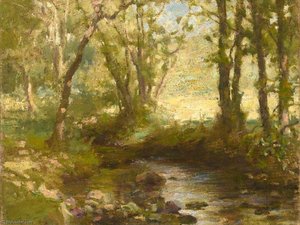
Baird was proficient in both oil and watercolour, though he is perhaps best known for his meticulously rendered oil paintings. His technique involved careful observation and a deliberate layering of paint to achieve subtle tonal variations and textures. He employed a muted colour palette – dominated by earthy greens, browns, greys, and ochres – reflecting the natural hues of the landscapes he depicted. A key element of his style was his ability to convey movement and energy through the depiction of horses in motion; their musculature, posture, and interaction with the environment were rendered with impressive accuracy and dynamism. He paid particular attention to capturing the interplay of light and shadow, creating a sense of depth and realism that drew viewers into the heart of the scene.
Notable Works and Subjects
Baird’s oeuvre is characterized by a diverse range of subjects, all rooted in the rural landscape. Among his most celebrated works are “The Bison Hunters,” a dramatic depiction of men pursuing wild game across a vast moorland; "A Dainty Morsel," a charming portrait of a young girl sharing a treat with her horse; and “Spring Ploughing,” which vividly portrays the arduous labor of farmers preparing their fields for planting. These paintings, along with numerous others, offer intimate glimpses into the daily lives of rural communities and the symbiotic relationship between people and animals.
Interestingly, Baird’s artistic career intersected with that of another notable figure: Agatha Christie, the renowned crime writer. He painted portraits of her family members, including her youngest sister, Agatha, who later achieved international fame as a mystery novelist. This connection adds an intriguing layer to Baird's biography and highlights the interconnectedness of art and society in Edwardian England.
Legacy and Historical Significance
Despite not achieving widespread recognition during his lifetime, Nathaniel Hughes John Baird’s work has gained increasing appreciation in recent decades. His paintings offer a valuable record of rural Britain at the turn of the 20th century, capturing a vanishing way of life before industrialization fundamentally altered the landscape and social structures of the countryside. His meticulous attention to detail, coupled with his ability to evoke a strong sense of place and atmosphere, ensures that his work continues to resonate with viewers today. Baird’s legacy lies in his quiet yet powerful portrayal of rural England – a testament to the enduring beauty and significance of the British countryside.