


1


Atnaujinta spalis 2026 · pagal mūsų populiarumumo koeficientą (paieškos, lankytojai ir užsakymai kiekvienam kūriniui) · 32 Morris Graves darbai mūsų kataloge
Trumpai tariant
Galerijos akimais, garsiausias Morris Graves paveikslas yra Bird Singing in the Moonlight (1938). Crow, Surf and Moon (1943) ir Logged Mountains (1943) užbaia trio, kurį atpažįsta kiekvienas ž)/\ Iš 32 Morris Graves darbų mūsų kataloge, galerija žemiau pristato 30 garsiausius – kiekvienas yra originalus, su nurodytu metais, muziejumi bei unikaliu aprašymu.


The Logged Mountains painting by Morris Graves is a thought-provoking artwork that showcases the artist's skill in combining natural elements with artistic expression. Created in 1943, this oil on canvas painting measures 66 x 92 cm and is currently housed at the Smithsonian American Art Museum in the United States. Artist Background Morris Graves was an American artist known for his delicate and contemplative drawings that capture the essence of…


 Woodpeckers1941
12
 Bird And Chalice1939
13
 Folded Wings Memory the Moon Weeping1943
14
 Night Sky No. 21944 · Art Museum
15
 South American Brush Bird1944
16
 Oregon, from the United States Series1948
17
 Young Gander Ready for Flight1952 · The Phillips Collection
18
 August Still Life1952 · The Phillips Collection
19
 Young Gander1952
20
 Bird Masking1953
21
 Marsh Orchids1955 · Art Museum
22
 Spirit Bird1956
23
 Bouquet1954
24
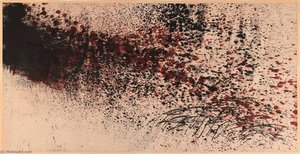 Spring with Machine Age Noise V1957
25
 Flowers1954
26
 Poverty Winter - Still Life1982 · Art Museum
27
 Summer Still Life1988
28
 Hibernation1954
29
 State of the World (Double Necked Vessel)
30
 Winter Flower (Ireland)
3 muziejai, kuriuose saugoma daugiausia šioje pusėje esamų paveikslų.
| Muzejaus | Miestas | Morris Graves darbai | Šiojo sąrašo paveikslai |
|---|---|---|---|
 Art Museum |
Sietla | 6 | Crow, Surf and Moon, Bird in the Night, Sea, Fish and Constellation |
 The Phillips Collection |
Vašingtonas | 3 | Surf and Bird, Young Gander Ready for Flight, August Still Life |
 Smithsonian American Art Museum |
Vašingtonas | 1 | Logged Mountains |
Pasirinkite dešimtmetį, kad pamatytėte jį apibrėžusį originalą.


Bird Singing in the Moonlight (1938). Toliausiai eina Crow, Surf and Moon (1943) ir Logged Mountains (1943).
28 metų amžiaus: Bird Singing in the Moonlight sukurta 1938 m. Nr. Morris Graves gimė 1910.
Bird Singing in the Moonlight, Crow, Surf and Moon, Logged Mountains, Surf and Bird, Snake and Moon, Wheelbarrow, Bird in the Night, Sea, Fish and Constellation, Bird in the Spirit ir Nestling. Viršuje esančioje reitingo sąraše nurodyta kiekvieno kūrinio metis ir muziejus.
Mūsų kataloge yra 32 Morris Graves darbų, skirtų laikotarpiui nuo 1934 iki 1988.
Daugiausia – Art Museum (Sietla), The Phillips Collection (Vašingtonas) ir Smithsonian American Art Museum (Vašingtonas). Viršuje esančiame muziejų sąraše yra visi jie.
1940s laikotarpiu: 11 iš 30 šioje pusėje esančių darbų buvo sukurtos tada, iš jų Crow, Surf and Moon.
Šioje pusėje seniausias darbas yra Wheelbarrow (1934), o naujausias – Summer Still Life (1988).
Crow, Surf and Moon, Bird in the Night ir Sea, Fish and Constellation: Art Museum, Sietla kolekcijoje yra 6 šioje pusėje esančių darbų.