


1


Atnaujinta lapkritis 2026 · pagal mūsų populiarumumo koeficientą (paieškos, lankytojai ir užsakymai kiekvienam kūriniui) · 49 Max Beerbohm darbai mūsų kataloge
Trumpai tariant
John S. Sargent yra Max Beerbohm paveikslas, kuriuo gausiausia žmonių žavisi. Po to akmuo patenka į D.G. Rossetti Precociously Manifesting ... that Queer Indifference to Politics ir Untitled (360). Iš 49 Max Beerbohm darbų mūsų kataloge šios 45 yra garsiausios – kiekvienas yra unikali originali dai̇lia, pateikta su jos metais, muziejumi ir priežastimi, kodėl ji išlieka per amžius.


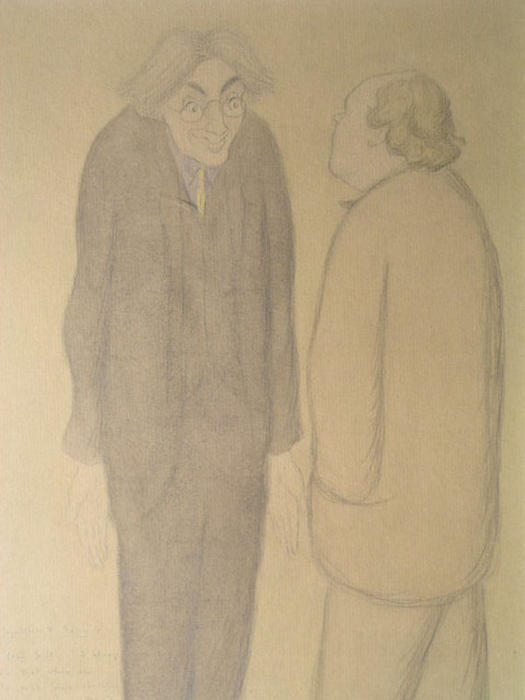
 Frontispiece
12
 Boy in a high top-hat
13
 Annual Banquet. A Suggestion to the New English Art Club
14
 Miss Cornforth. `Oh, very pleased to meet Mr Ruskin, I'm sure
15
 The Small Hours in the ’Sixties at 16, Cheyne Walk
16
 Caricature of a man in a frock coat
17
 Rossetti in his worldlier daysleaving the Arundel Club with George Augustus Sala
18
 An introduction
19
 Mr. Browing brings a lady of rank and fashion to see Mr.Rossetti
20
 A Quiet Morning in the Tate Gallery
21
 Swinburne and Miss Sophia Grimes
22
 A Momentary Vision that once befell Young Millais
23
 Mr. Morley of Blackburn, on an afternoon in the Spring of ’69, introduces Mr. John Stuart Mill
24
 Quis Custodiet Ipsum Custodem
25
 The New English Art Club
26
 Mr. Robert Browning, taking tea with the Browning Society
27
 Mr. Tennyson reading In Memoriam to his Sovereign
28
 Swinburne, Elizabeth Siddal, and Rossetti
29
 Rossetti’s Courtship. Chatham Place
30
 Mr. William Bell Scott wondering what it is those fellows seem to see in Gabriel
31
 Lord Halsbury
32
 Dante Gabriel Rossetti, in his back garden
33
 Topsy and Ned Jones, settled on the settle in Red Lion Square
34
 Rossetti
35
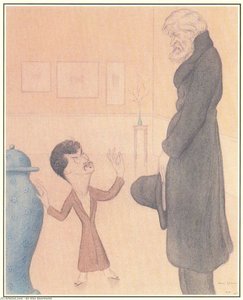 Blue China
36
 Woolner at Farringford
37
 The sole remark likely to have been made by Benjamin Jowett about the mural paintings at the Oxford Union.
38
 Ford Madox Brown being patronised by Holman Hunt
39
 Riverside Scene
40
 Princeps Triplumiferus
41
 Untitled (730)
42
 Sylvester Herringham vainly endeavouring to enlist D. G. R.’s interest in some singulary interesting experiment
43
 Mr.--- and Miss--- nervously perpetuating the touch of a vanished hand
44
 Rossetti insistently exhorted by George Meredith to come forth into the glorius sun and wind for a walk to Hendon and beyond
45
 The name of Dante Gabriel Rossetti is heard for the first time in the Western States of America
Ketverios temos, dažniausiai pasikrausto originaluose, kiekvienos su savo puikiausiu pavyzdžiu.
John S. Sargent. Toliausiai eina D.G. Rossetti Precociously Manifesting ... that Queer Indifference to Politics ir Untitled (360).
John S. Sargent, D.G. Rossetti Precociously Manifesting ... that Queer Indifference to Politics, Untitled (360), Untitled (428), Mr. Arnold Dolmetsch, The Mirror of the Past 1, The Mirror of the Past, Lord Rosebery, Bravura. Sir William Orpen ir Significant Form. Viršuje esančioje reitingo sąraše nurodyta kiekvieno kūrinio metis ir muziejus.
Mūsų kataloge yra 49 darbų autoriaus Max Beerbohm.
Men (10), Clothing (4) ir Caricature (3) iš 45 šioje pusėje esamų darbų.

