Marcin Kober portretas

Marcin Kober paveikslai: 9 garsiausi, galerijos akimis

Atnaujinta lapkritis 2026 · pagal mūsų populiarumumo koeficientą (paieškos, lankytojai ir užsakymai kiekvienam kūriniui) · 9 Marcin Kober darbai mūsų kataloge

Trumpai tariant

Galerijos akimais, garsiausias Marcin Kober tapas yra Miniature of Queen Anna Habsburg (1598), kurio originalas eksponuojamas Galleria degli Uffizi, Florencija. Miniature portrait of King Sigismund III Vasa (1591) ir Portrait of King Stephen Bathory (1583) užbaia trio, kurį atpažįsta kiekvienas ž)/\ Iš 9 Marcin Kober darbų mūsų kataloge, galerija žemiau pristato 9 garsiausius – kiekvienas yra originalus, su nurodytu metais, muziejumi bei unikaliu aprašymu.

Renaissance Daugiausia darbų: Karaliaus Vavelio pilis

10 geriausių galerijos Marcin Kober paveikslų

1
Miniature of Queen Anna Habsburg (1598) aut. Marcin Kober

Miniature of Queen Anna Habsburg

1598 · Oil On Panel · Galleria degli Uffizi, Florencija

Marcin Kober’s “Miniature of Queen Anna Habsburg,” painted in 1598, isn't merely a portrait; it’s a meticulously crafted window into the heart of late 16th-century European courtly life. This exquisite oval painting, encased within an opulent gold frame, transcends its diminutive size to radiate an aura of regal dignity and quiet strength. Kober, considered a pioneer in establishing the Polish royal portraiture tradition, masterfully captures the essence of Queen Anna…

3
Portrait of King Stephen Bathory (1583) aut. Marcin Kober

Portrait of King Stephen Bathory

1583 · Oil On Canvas

The Portrait of King Stephen Bathory is a formal royal portraiture executed by the artist Marcin Kober. Painted in 1583, the work captures the likeness of King Stephen Bathory of Poland. It remains a significant record of the monarch's presence during his reign.

4
Portrait of Stephen Báthory (1586) aut. Marcin Kober

Portrait of Stephen Báthory

1586 · Oil On Canvas · Karaliaus Vavelio pilis, Krokuva

The Portrait of Stephen Báthory by Marcin Kober is a formal, close-up depiction that centers on the subject's face and upper torso. The figure is positioned against a dark background, which isolates the subject and emphasizes the contours of his facial features and clothing. The color palette is dominated by shades of red and brown, accented by touches of black and gold. These tones define the textures of the garments…

5
Portrait of Queen Anna Jagiellon in a widow costume (1595) aut. Marcin Kober

Portrait of Queen Anna Jagiellon in a widow costume

1595 · Oil On Canvas · Karaliaus Vavelio pilis, Krokuva

Portrait of Queen Anna Jagiellon in a widow costume by Marcin Kober captures the Polish monarch in a state of formal mourning. The work is dated about 1595. It belongs to a period when Kober served as a court painter, establishing a visual language for the Polish-Lithuanian Commonwealth through a blend of Renaissance realism and the decorative elegance of Spanish-influenced portraiture.

6
Miniature of Sigismund Vasa and Anna Habsburg (1598) aut. Marcin Kober

Miniature of Sigismund Vasa and Anna Habsburg

The Miniature of Sigismund Vasa and Anna Habsburg presents a quiet, intimate encounter between two figures of immense historical weight. Painted by the court artist Marcin Kober, this work captures the likenesses of Sigismund Vasa and Anna Habsburg in a moment of stillness. The piece dates to 1598. It focuses entirely on the two individuals, drawing the viewer into their immediate presence through a tightly framed composition.

7
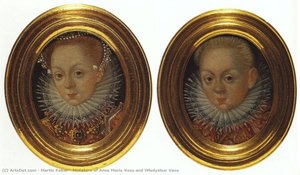
Miniature of Anna Maria Vasa and Władysław Vasa (1598) aut. Marcin Kober

Miniature of Anna Maria Vasa and Władysław Vasa

1598 · Oil On Panel · Bavarijos valstybinės paveikslų kolekcijos, Miunchas

In this intimate Miniature of Anna Maria Vasa and Władysław Vasa, Marcin Kober presents us with a quiet encounter with the Vasa dynasty. Painted about 1598, the work captures two young individuals, likely members of the royal family, in a formal and dignified manner. There is a sense of stillness in their presentation, a characteristic of the courtly portraiture that Kober mastered during his service to the Polish-Lithuanian Commonwealth.

8
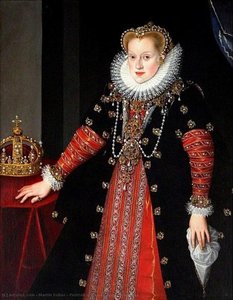
Portrait of Queen Anne of Austria (1595) aut. Marcin Kober

Portrait of Queen Anne of Austria

1595 · Oil On Canvas · Galleria degli Uffizi, Florencija

Marcin Kober's “Portrait of Queen Anne of Austria” is more than just a painting; it’s a meticulously crafted window into the heart of 16th-century European courtly life. Completed around 1595, this remarkable work transcends mere portraiture, offering a profound glimpse into the power, grace, and carefully constructed image of Queen Anne – a woman who navigated the turbulent political landscape of Poland and Austria with both strength and diplomacy.

9
Portrait of King Stephen Báthory of Poland (1583) aut. Marcin Kober

Portrait of King Stephen Báthory of Poland

1583 · Oil On Canvas · Kunsthistorisches Museum, Viena

Marcin Kober’s “Portrait of King Stephen Báthory of Poland,” painted in 1583, is more than just a royal likeness; it's a meticulously crafted window into the heart of late Renaissance Europe and the burgeoning power of the Polish-Lithuanian Commonwealth. This arresting portrait, now housed within the Congregation of Missions Convent’s Historical-Missionary Museum in Kraków, captures not merely the physical appearance of Stephen Báthory but also his commanding presence, projecting an…

Temos, kurios domino Marcin Kober

Ketverios temos, dažniausiai pasikrausto originaluose, kiekvienos su savo puikiausiu pavyzdžiu.

Muziejai, kuriuose saugomi Marcin Kober originalūs darbai

4 muziejai, kuriuose saugoma daugiausia šioje pusėje esamų paveikslų.

Muzejaus Miestas Marcin Kober darbai Šiojo sąrašo paveikslai
Karaliaus Vavelio pilis, KrokuvaKaraliaus Vavelio pilis Krokuva 3 Miniature portrait of King Sigismund III Vasa, Portrait of Stephen Báthory, Portrait of Queen Anna Jagiellon in a widow costume
Galleria degli Uffizi, FlorencijaGalleria degli Uffizi Florencija 2 Miniature of Queen Anna Habsburg, Portrait of Queen Anne of Austria
Bavarijos valstybinės paveikslų kolekcijos, MiunchasBavarijos valstybinės paveikslų kolekcijos Miunchas 2 Miniature of Sigismund Vasa and Anna Habsburg, Miniature of Anna Maria Vasa and Władysław Vasa
Kunsthistorisches Museum, VienaKunsthistorisches Museum Viena 1 Portrait of King Stephen Báthory of Poland

Marcin Kober, pagrindiniai kiekvienų metų paveiksliai

16 metų Marcin Kober kūrybos, nuo 1583 iki 1598: galerija seka jų darbų eigą, pateikdama garsiausius kiekvienų metų originalus.

Darbai pagal metus

Pasirinkite metus, kad pamatytumėte originalus darbus.

Marcin Kober tapyiniai: galerijos atsakymai

Kuris Marcin Kober paveikslas yra pats garsiausias iš visų?Atsakymas

Miniature of Queen Anna Habsburg (1598), Galleria degli Uffizi, Florencija. Toliau seka Miniature portrait of King Sigismund III Vasa (1591) ir Portrait of King Stephen Bathory (1583).

Kiek kūrinių sukūrė Marcin Kober?Atsakymas

Mūsų kataloge yra 9 Marcin Kober darbų, skirtų laikotarpiui nuo 1583 iki 1598.

Kur kabinami garsiausi Marcin Kober originalūs darbai?Atsakymas

Daugiausia – Karaliaus Vavelio pilis (Krokuva), Galleria degli Uffizi (Florencija) ir Bavarijos valstybinės paveikslų kolekcijos (Miunchas). Viršuje esančiame muziejų sąraše yra visi jie.

Kada Marcin Kober sukūrė savo garsiausias paveikslus?Atsakymas

1598 laikotarpiu: 3 iš 9 šioje pusėje esančių darbų buvo sukurtos tada, iš jų Miniature of Queen Anna Habsburg.

Kokie yra ankstyviausi ir vėliausi garsieji Marcin Kober kūriniai?Atsakymas

Šioje pusėje seniausias darbas yra Portrait of King Stephen Bathory (1583), o naujausias – Miniature of Queen Anna Habsburg (1598).

Kurią temą Marcin Kober kūrė dažniausiai?Atsakymas

Portrait (6), Man (4) ir Baroque (3) iš 9 šioje pusėje esamų darbų.

Kurią techniką Marcin Kober naudojo dažniausiai?Atsakymas

Oil On Canvas, iš 9 šios puslapio darbų – 5.

Su kokiu kierliu siejama Marcin Kober?Atsakymas

Renaissance, vadovaujantis šios puslapio originalais kūriniais.

Kurių Marcin Kober originalų turi Karaliaus Vavelio pilis?Atsakymas

Miniature portrait of King Sigismund III Vasa, Portrait of Stephen Báthory ir Portrait of Queen Anna Jagiellon in a widow costume: Karaliaus Vavelio pilis, Krokuva kolekcijoje yra 3 šioje pusėje esančių darbų.

Marcin Kober: menininkas

The Architect of Royal Identity: The Life and Legacy of Marcin Kober

In the grand, sweeping tapestry of Central European history, few artists have played as vital a role in weaving the visual identity of monarchs as Marcin Kober. Born around 1550 in the vibrant city of Wrocław, Poland, Kober was far more than a mere chronicler of faces; he was a pioneer who transformed the way power was perceived and recorded. His journey began not in the courts of kings, but through the rigorous discipline of the guild system. As a young journeyman, he traveled through Germany, absorbing the diverse techniques and stylistic nuances of various workshops. This period of wandering was essential, providing him with a cosmopolitan artistic vocabulary that would later allow him to bridge the gap between the local traditions of the Polish-Lithuanian Commonwealth and the sophisticated, Spanish-influenced aesthetics of the Habsburg courts.

The true metamorphosis of Kober’s career occurred when his path intersected with the highest echelons of European royalty. By 1583, he had arrived in the Polish-Lithuanian Commonwealth, quickly ascending to the position of court painter for King Stephen Báthory and Queen Anna Jagiellon. It was during this era that Kober began to develop what would become known as the "Báthory School." His work during this period was characterized by a profound sense of Renaissance realism, where the physical likeness of the subject was married to a symbolic grandeur. He did not simply paint skin and fabric; he painted authority, legitimacy, and the divine right of kings. His ability to capture the commanding presence of Báthory established a visual language for Polish royalty that would endure for well over a century.

A Master of Courtly Elegance and Symbolism

Kober’s artistic evolution was deeply shaped by his time in Prague, a city that served as a melting pot of international styles under the reign of Emperor Rudolf II. In the vibrant atmosphere of the Imperial court, Kober encountered the subtle, decorative elegance of Spanish portraiture, which favored a meticulous attention to detail and a refined use of color. This influence is palpable in his later works, where the heavy, regal textures of velvet and lace are rendered with such precision that they seem almost tactile. His portraits became masterclasses in psychological depth; he possessed a rare ability to present a sovereign as both an untouchable icon of state and a human being possessing quiet strength and introspective grace.

The breadth of his technical mastery is perhaps best seen in the diversity of his formats. While his large-scale royal portraits commanded the halls of palaces, Kober also excelled in the intimate medium of miniatures. His Miniature of Queen Anna Habsburg serves as a breathtaking example of how he could condense an entire aura of majesty into a small, oval frame. In these smaller works, every brushstroke carries weight, using light and shadow to create a sense of three-dimensional life that transcends the physical limitations of the medium. His work was never merely decorative; it was a carefully constructed instrument of diplomacy and propaganda, designed to project an image of stability and continuity during turbulent political eras.

Historical Significance and the Polish Portrait Tradition

The historical importance of Marcin Kober cannot be overstated. Before his emergence, portraiture in Poland had not yet established itself as a dominant or specialized branch of fine art. Kober changed this trajectory forever, acting as the precursor to the Polish Sarmatian portrait genre. By integrating the sophisticated humanist ideals of the Renaissance with the specific cultural identity of the Polish nobility, he provided the foundation upon which future generations of Polish artists would build. His influence can be traced through the decades, as the iconography he established for the Vasa dynasty became the standard for how the Commonwealth viewed its own leadership.

Even as his career took him across borders—from the workshops of Germany to the Imperial splendor of Prague and back to the royal centers of Kraków and Warsaw—his core mission remained the same: the documentation of a changing world through the lens of royal dignity. Today, his works reside in prestigious museums across Europe, serving as silent witnesses to the grandeur of a bygone era. To study Kober is to study the very birth of a national artistic identity, making him one of the most significant figures in the history of Central European portraiture.