Lui Rėmi Migno portretas

53 garsiausių Lui Rėmi Migno paveikių – kiekvienas yra unikalus

Atnaujinta lapkritis 2026 · pagal mūsų populiarumumo koeficientą (paieškos, lankytojai ir užsakymai kiekvienam kūriniui) · 53 Lui Rėmi Migno darbai mūsų kataloge

Trumpai tariant

Twilight on the Passaic (1861) yra Lui Rėmi Migno paveikslas, kuriuo gausiausia žmonių žavisi. Po to akmuo patenka į Travelers in a Tropical Landscape (1861) ir Sunset on White Mountains (1861). Iš 53 Lui Rėmi Migno darbų mūsų kataloge šios 53 yra garsiausios – kiekvienas yra unikali originali dai̇lia, pateikta su jos metais, muziejumi ir priežastimi, kodėl ji išlieka per amžius.

1831 – 1870, Čarlstonas Hudson river school Daugiausia darbų: New York Historical Society

10 geriausių Lui Rėmi Migno paveikslų: galerijos akimais

1
Twilight on the Passaic (1861) aut. Lui Rėmi Migno

Twilight on the Passaic

1861 · Oil

In "Twilight on the Passaic" by Louis Remy Mignot, the composition centers on a sunset occurring over a body of water. The sky is rendered in warm hues, specifically orange and yellow tones that dominate the upper portion of the canvas. A full moon is positioned rising above the horizon line, appearing as a pale shape against the colored sky. The light from the sky is reflected in the calm…

2
Travelers in a Tropical Landscape (1861) aut. Lui Rėmi Migno

Travelers in a Tropical Landscape

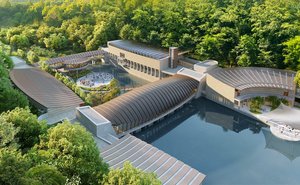
1861 · Oil · Crystal Bridges Museum of American Art, Bentonville

The air feels heavy with moisture as the eye moves through this lush, tropical expanse. Sunlight filters through a dense canopy, casting soft shadows across a winding path where travelers make their way. A sense of movement permeates the scene; figures wander near the edge of a tranquil body of water, their presence suggesting a quiet moment of pause during a long expedition. To the left, a horse stands amidst…

4
A Pastoral Landscape (1853) aut. Lui Rėmi Migno

A Pastoral Landscape

1853 · Oil

In this work, titled A Pastoral Landscape, we encounter a quiet moment from 1853. The artist, Louis Remy Mignot, captures a scene of rural life that reflects his unique position in the mid-nineteenth century. As an American painter of French Catholic descent, Mignot brought a specific sensibility to his depictions of the natural world, blending his heritage with the traditions of his time.

5
The Harvest Moon (1860) aut. Lui Rėmi Migno

The Harvest Moon

1860 · Oil · New York Historical Society, Niujorkas

The Harvest Moon emerges from the brush of Louis Remy Mignot, an American painter who lived from 1831 to 1870. This work belongs to the era of the Hudson River School, a movement that sought to capture the profound spirit of the natural landscape. Through his eyes, the scenery takes on a specific, atmospheric presence that defines his unique contribution to this American tradition.

6
Cotopaxi (1859) aut. Lui Rėmi Migno

Cotopaxi

1859 · Oil On Canvas

The painting titled Cotopaxi was created by the artist Louis Remy Mignot in 1859. This landscape work depicts a mountain characterized by smoke rising from its peak. The composition includes two mountains positioned in the background, with one mountain appearing larger than the other. A river runs through the terrain, and several trees are scattered across the landscape, providing texture and depth to the scene.

7
Sunset on the Guayaquil (1869) aut. Lui Rėmi Migno

Sunset on the Guayaquil

1869 · Oil

The sky over the Guayaquil River burns with a soft, warm intensity, washing the horizon in layers of pink, orange, and yellow. As the sun dips low, the light spills across the surface of the water, turning the ripples into liquid gold. Two small boats drift quietly upon this glowing expanse, their silhouettes resting peacefully against the shifting colors of the dusk. Along the banks, the dark outlines of trees…

8
Washington and Lafayette at Mount Vernon, 1784 (also known as The Home of Washington after the War) (1859) aut. Lui Rėmi Migno

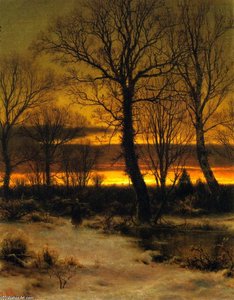
Washington and Lafayette at Mount Vernon, 1784 (also known as The Home of Washington after the War)

1859 · Oil On Canvas · Metropolitano meno muziejus, Niujorkas

The painting Washington and Lafayette at Mount Vernon, 1784 by Louis Remy Mignot is a captivating historical scene that showcases the meeting of two influential figures in American history. Created in 1859, this oil on panel painting is housed at the Metropolitan Museum of Art in New York, United States. Historical Context The painting depicts George Washington and Lafayette standing on the porch of Mount Vernon in 1784, surrounded by…

9
Solitude (1855) aut. Lui Rėmi Migno

Solitude

1855 · Oil On Canvas

The oil on canvas depicts a wide landscape during a sunset. A body of water occupies the middle ground, reflecting the colors of the sky. In the foreground, a single tree is positioned prominently, its form silhouetted against the light. The background contains a range of mountains that sit beneath a vast sky. The horizon line divides the composition into distinct layers of depth. The color palette is dominated by…

10
Winter Scene, Holland (1853) aut. Lui Rėmi Migno

Winter Scene, Holland

1853 · Oil

A quietude settles over this 1853 depiction of the Dutch countryside, where a heavy, clouded sky hangs low over a landscape gripped by winter. In the distance, the silhouette of a castle rises against the horizon, while a windmill and a church spire punctuate the skyline, anchoring the scene in the architectural traditions of Holland. The composition is populated by small, solitary figures that emphasize the vastness of the wintry…

žinomi Lui Rėmi Migno paveikslai, nuo 11 iki 53 numerio

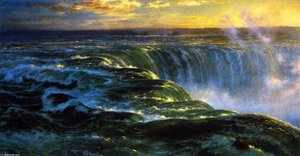
11Winter Scene, Holland (1850) aut. Lui Rėmi MignoWinter Scene, Holland1850 12A Pastoral Landscape (1853) aut. Lui Rėmi MignoA Pastoral Landscape1853 13Winter Skating Scene (also known as Winter Scene in Holland) (1850) aut. Lui Rėmi MignoWinter Skating Scene (also known as Winter Scene in Holland)1850 14Street View in Guayaquil, Ecuador (1859) aut. Lui Rėmi MignoStreet View in Guayaquil, Ecuador1859 · New York Historical Society 15South American Scene (Vespers, Guayaquil River, Ecuador) (1862) aut. Lui Rėmi MignoSouth American Scene (Vespers, Guayaquil River, Ecuador)1862 16Snow Scene (1856) aut. Lui Rėmi MignoSnow Scene1856 17The Old Bog Hole (1856) aut. Lui Rėmi MignoThe Old Bog Hole1856 18Winter Scene (1856) aut. Lui Rėmi MignoWinter Scene1856 19River Scene, Ecuador (I) (1857) aut. Lui Rėmi MignoRiver Scene, Ecuador (I)1857 20View of Riobamba, Ecuador, Looking North Towards Mount Chimborazo (1859) aut. Lui Rėmi MignoView of Riobamba, Ecuador, Looking North Towards Mount Chimborazo1859 21Tropical Landscape (1859) aut. Lui Rėmi MignoTropical Landscape1859 22South American Landscape (also known as Chimborazo from Riobamba) (1858) aut. Lui Rėmi MignoSouth American Landscape (also known as Chimborazo from Riobamba)1858 23Karhuikazo (1860) aut. Lui Rėmi MignoKarhuikazo1860 24Tropical Landscape (1858) aut. Lui Rėmi MignoTropical Landscape1858 25The Day,s Departure (1860) aut. Lui Rėmi MignoThe Day,s Departure1860 26A View of a Colonial City, Ecuador (1861) aut. Lui Rėmi MignoA View of a Colonial City, Ecuador1861 27Lamona (.) (1860) aut. Lui Rėmi MignoLamona (.)1860 28Lagoon of the Guayaquil (1863) aut. Lui Rėmi MignoLagoon of the Guayaquil1863 29Hunters in a Winter Landscape (1856) aut. Lui Rėmi MignoHunters in a Winter Landscape1856 30Mountain Lake in Autumn (1861) aut. Lui Rėmi MignoMountain Lake in Autumn1861 31Winter (also known as Sunset in the Forest) (1862) aut. Lui Rėmi MignoWinter (also known as Sunset in the Forest)1862 32Sunset (1859) aut. Lui Rėmi MignoSunset1859 33Landscape in Ecudor (1859) aut. Lui Rėmi MignoLandscape in Ecudor1859 34A Winter View from Newburgh, New YOrk (1856) aut. Lui Rėmi MignoA Winter View from Newburgh, New YOrk1856 35Street View in Guayaquil, Ecuador (1859) aut. Lui Rėmi MignoStreet View in Guayaquil, Ecuador1859 36Sources of the Susquehanna (1857) aut. Lui Rėmi MignoSources of the Susquehanna1857 37Lowland Landscape with Deer (1860) aut. Lui Rėmi MignoLowland Landscape with Deer1860 38Vesper, Guayaquil River Ecuador (II) . (1862) aut. Lui Rėmi MignoVesper, Guayaquil River Ecuador (II) .1862 39Sunset, Winter (also known as Church at Dusk) (1862) aut. Lui Rėmi MignoSunset, Winter (also known as Church at Dusk)1862 · High Museum of Art 40Indian Summer, Lake George (1862) aut. Lui Rėmi MignoIndian Summer, Lake George1862 41Ave Maria, Scene on the Guayaquil River, Ecuador (1866) aut. Lui Rėmi MignoAve Maria, Scene on the Guayaquil River, Ecuador1866 · New York Historical Society 42Sunset on the Wetterhorn, Switzerland (1868) aut. Lui Rėmi MignoSunset on the Wetterhorn, Switzerland1868 43Twilight (1867) aut. Lui Rėmi MignoTwilight1867 44Moonlight over a Marsh in Ecuador (1869) aut. Lui Rėmi MignoMoonlight over a Marsh in Ecuador1869 45Landscape with Farmhouse by a Stream (1864) aut. Lui Rėmi MignoLandscape with Farmhouse by a Stream1864 46Two Women in a Tropical Landscape (1864) aut. Lui Rėmi MignoTwo Women in a Tropical Landscape1864 47Niagara (1866) aut. Lui Rėmi MignoNiagara1866 · Brooklyn Museum 48Gathering Plantains, Guayaquil Ecuador (1866) aut. Lui Rėmi MignoGathering Plantains, Guayaquil Ecuador1866 49Mount Chimborazo (also known as Table Lands of Rio Bamba, Ecuador .) (1866) aut. Lui Rėmi MignoMount Chimborazo (also known as Table Lands of Rio Bamba, Ecuador .)1866 50Parting Day / Dies like the dolphin, whom each/ Pang imbues/ With a new colour as it gasps/ away (1867) aut. Lui Rėmi MignoParting Day / Dies like the dolphin, whom each/ Pang imbues/ With a new colour as it gasps/ away1867 51View across the Valley of Pierstorn, New York, from a Point above Cascade Hills (1858) aut. Lui Rėmi MignoView across the Valley of Pierstorn, New York, from a Point above Cascade Hills1858 52Morning Sun in Autumn aut. Lui Rėmi MignoMorning Sun in Autumn 53Morning in the Andes (1863) aut. Lui Rėmi MignoMorning in the Andes1863 · Detroito meno institutas

žymios Lui Rėmi Migno tapiojamos, pagal laikotarpį

Temos, kurios domino Lui Rėmi Migno

Ketverios temos, dažniausiai pasikrausto originaluose, kiekvienos su savo puikiausiu pavyzdžiu.

Muziejai, kuriuose saugomi Lui Rėmi Migno originalūs darbai

7 muziejai, kuriuose saugoma daugiausia šioje pusėje esamų paveikslų.

Muzejaus Miestas Lui Rėmi Migno darbai Šiojo sąrašo paveikslai
New York Historical Society, NiujorkasNew York Historical Society Niujorkas 3 The Harvest Moon, Street View in Guayaquil, Ecuador, Ave Maria, Scene on the Guayaquil River, Ecuador
Crystal Bridges Museum of American Art, BentonvilleCrystal Bridges Museum of American Art Bentonville 1 Travelers in a Tropical Landscape
Fine Arts Museums of San Francisco, San FranciscoFine Arts Museums of San Francisco San Francisco 1 Sunset on White Mountains
Metropolitano meno muziejus, NiujorkasMetropolitano meno muziejus Niujorkas 1 Washington and Lafayette at Mount Vernon, 1784 (also known as The Home of Washington after the War)
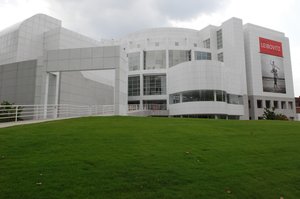
High Museum of Art, AtlantaHigh Museum of Art Atlanta 1 Sunset, Winter (also known as Church at Dusk)
Brooklyn Museum, NiujorkasBrooklyn Museum Niujorkas 1 Niagara
Detroito meno institutas, DetroitasDetroito meno institutas Detroitas 1 Morning in the Andes

Lui Rėmi Migno darbai per metus: kiekvieno unikalūs originalūs kūriniai

Ilgi20 metų karjera, nuo 1850 iki 1869: garsiausi Lui Rėmi Migno originalūs darbai, pateikiami metais po metų.

Darbai pagal metus

Pasirinkite metus, kad pamatytumėte originalus darbus.

Lui Rėmi Migno tapų klausimai galerijai

Koks yra garsiausias Lui Rėmi Migno kūrinys?Atsakymas

Twilight on the Passaic (1861). Toliausiai eina Travelers in a Tropical Landscape (1861) ir Sunset on White Mountains (1861).

Kuriu amžiaus Lui Rėmi Migno sukūrė Twilight on the Passaic?Atsakymas

30 metų amžiaus: Twilight on the Passaic sukurta 1861 m. Nr. Lui Rėmi Migno gimė 1831.

Kurios Lui Rėmi Migno dešimt paveikslų yra garsiausi?Atsakymas

Twilight on the Passaic, Travelers in a Tropical Landscape, Sunset on White Mountains, A Pastoral Landscape, The Harvest Moon, Cotopaxi, Sunset on the Guayaquil, Washington and Lafayette at Mount Vernon, 1784 (also known as The Home of Washington after the War), Solitude ir Winter Scene, Holland. Viršuje esančioje reitingo sąraše nurodyta kiekvieno kūrinio metis ir muziejus.

Kiek žinoma Lui Rėmi Migno darbų?Atsakymas

Mūsų kataloge yra 53 Lui Rėmi Migno darbų, skirtų laikotarpiui nuo 1850 iki 1869.

Kur galima pamatyti garsiausių Lui Rėmi Migno originalų?Atsakymas

Daugiausia – New York Historical Society (Niujorkas), Crystal Bridges Museum of American Art (Bentonville) ir Fine Arts Museums of San Francisco (San Francisco). Viršuje esančiame muziejų sąraše yra visi jie.

Kuriuo laikotarpiu Lui Rėmi Migno sukūrė savo žymiausias paveikslus?Atsakymas

1859 laikotarpiu: 8 iš 53 šioje pusėje esančių darbų buvo sukurtos tada, iš jų Cotopaxi.

Kuris iš garsių Lui Rėmi Migno paveikslų yra pirmasis, o kuris – paskutinis?Atsakymas

Šioje pusėje seniausias darbas yra Winter Scene, Holland (1850), o naujausias – Sunset on the Guayaquil (1869).

Kokia temos Lui Rėmi Migno mėgavosi?Atsakymas

Sky (23), People (23) ir Trees (20) iš 53 šioje pusėje esamų darbų.

Kuriomis medžiagomis Lui Rėmi Migno tapė dažniausiai?Atsakymas

Oil, iš 53 šios puslapio darbų – 31.

Kelią meno kryžkelę priklauso Lui Rėmi Migno kūryba?Atsakymas

Hudson river school ir Romanticism, vadovaujantis šios puslapio originalais kūriniais.

Kurius Lui Rėmi Migno originalius galėčiau pamatyti New York Historical Society?Atsakymas

The Harvest Moon, Street View in Guayaquil, Ecuador ir Ave Maria, Scene on the Guayaquil River, Ecuador: New York Historical Society, Niujorkas kolekcijoje yra 3 šioje pusėje esančių darbų.

Lui Rėmi Migno: meno kūrinys – autoportretas

Eteriški Louis Rémy Mignot peizažai

Platį skirtuose XIX amžiaus amerikietiško meno metrajuptuose tam tikri vardai skamba tarsi galingas kalno viršūnės griaudulys, o kiti šnabžda tarsi tyli miško girios intymybė. Louis Rémy Mignot (1831–1870) priklauso būtent tai antrai, labiau jaudinančiai kategorijai – tai paveislininkas, kurio kūrinys įamžina gilią ramybę ir atmosferinę gamtos pasaulio mystiką. Gimęs Pietų Karolinoje, Mignot iš Amerikos Pietų iškrito, kad surastų savo meninį balsą prestižinėse Hūdsono upės mokyklos tradicijose. Nors jo gyvenimas buvo tragiškai trumpas, jo drobės tarnauja kaip šviesūs langai į praeitį laiką, kuriame ribos tarp realybės ir romantiško idealizmo buvo gražiaily išlydytos.

Mignot meninė tapatybė buvo suformuota per unikalią amerikietiškos paveldėjimo ir europietiško rafinavimo sintezę. Nors jo šaknys įsikūrė Pietuose, jo formalaus mokymosi kelionė nukreipė jį į meno pasaulio širdį: Paryžių. Būtent Prancūzijos studijose jis susidūrė su transformuojančia tokių luministų įtaka kaip Jean-apas Camille Corot bei išraiškingais, emociniais traukų darbais, kauptais Eugène Delacroix. Šis susipažinimas su prancūziška atmosferine perspektyva leido Mignot grįžti į Amerikos žemes su išmanoma technika, gebančia atvaizduoti ne tik fizinį kraštotvę, bet ir patį aplinkosorį, kuris ją suvalo. Jis įslėgė subtilių nuolydžių bei šviesios spalvų paletės meistriškumą, dažnai naudojdamas gilią mėlyną ir žalią spalvą, kad sukurtų liềnimą pajautą gilumę ir drėgmę savo kompozicijose.

Šviesos ir atmosferos meistriškumas

Mignot kūrybos esmė slypi jo gebėjime kasdienybę pakelti į aukštumas, į숭imant ją į숭į. Jo darbams būdingas gilus ištikimumas Hūdsono upės mokyklos tenets, tačiau jis šiuos peizažus prisipildė asmeniškumu ir kontemplatyvumu. Jame garsiajame 1855 metų darbe, „Vartotoje“ (Solitude), žiūrovui atveriamas erdvė tyliai pasimerkti savyje, kur peizažas tampa veidrodžiu žmogaus sielai. Panašiai jo 1856 metų šedevras, „Sniego scena“ (Snow Scene), demonstruoja jo techninį meistriškumą įtvirtinant žiemos svorį ir tekstūrą; per ramų, sniegu užklupusį kraštotvės vaizdą su vienišu šoniu, jis pasiekia harmoningą pusiausvyrą tarp grynosios realybės ir romantiškos nuotaikos.

Be miškų ir slėgių ramybės, Mignot taip pat parodyė nuostabų universalumą dirbant su istorinėmis ir topografinėmis temomis. Jo 1859 metų paveikslas, „Vašingtonas ir La Fayette Mount Vernon���e“, atskleidžia kitą jo talento pusę – neklasicinį tikslumą, naudojamą pagerbti Amerikos istorijai. Šiame darbe kruopštus detalizavimas padeda legendiniams veikėjams įtvirtinti tangentiškėje, orioje realybėje. Nesvarbu, ar jis įamžino žaviantias Niujorko panoramas, tokias kaip vaizdas per Pierstorno slėgį, ar tyrinėjo egzotiškesnes, tropines temas, primenančias jo keliones, Mignot išliko šviesos meistru, naudodamas ją, kad įtekintų gyvybės kiekvienam lapui, šešeliui ir horizonto linijai.

Palikimas ir atradimas

Nors XIX amžiaus viduryje daugelis menininkų pasiekė staigią šlovę, Mignot palikimas patyrė tylos periodą, nes didžioji dalis jo darbų liko paslėpta privačiuose kolekcijose arba prislėgta plačiau veikusių samtvorių. Tačiau neblėstantis jo vizijos galimas atvedė prie šiuolaikinio jo kūrybos atradimo. Šiandien meno istorikai ir entuziastai Mignot mato ne tik kaip Hūdsono upės mokyklos sekėją, bet kaip išskirtį balsą, gebantį perteikti gilią gamtos emocinę rezonansą. Jo gebėjimas sujungti amerikietiško realizmo kruopštumą su prancūziško romantizmo atmosferine sielą užtikrina, kad jo vieta Amerikos meno istorijos audinyje yra tiek tvirta, tiek giliai jaudinanti.