Leo Lesser Ury portretas

Leo Lesser Ury tapiai: 92 garsiausi πίναšiai, galerijos akimis

Atnaujinta lapkritis 2026 · pagal mūsų populiarumumo koeficientą (paieškos, lankytojai ir užsakymai kiekvienam kūriniui) · 92 Leo Lesser Ury darbai mūsų kataloge

Trumpai tariant

Galerijos akimais, garsiausias Leo Lesser Ury tapas yra Nude Lying Down (1889), kurio originalas eksponuojamas Berlinische Galerie, Berlinas. Moses on Mount Nebo Looking at the Promised Land (1927) ir Praying Jew (1931) užbaia trio, kurį atpažįsta kiekvienas ž)/\ Iš 92 Leo Lesser Ury darbų mūsų kataloge, galerija žemiau pristato 92 garsiausius – kiekvienas yra originalus, su nurodytu metais, muziejumi bei unikaliu aprašymu.

1861 – 1931, Miendžuchodas Impressionism Daugiausia darbų: Berlinische Galerie

10 geriausių galerijos Leo Lesser Ury paveikslų

1
Nude Lying Down (1889) aut. Leo Lesser Ury

Nude Lying Down

1889 · Oil · Berlinische Galerie, Berlinas

A woman rests upon a bed of deep red sheets. She lies on her side, her body a pale curve against the saturated fabric. The stillness of the room is heavy, held in place by the weight of shadows and the soft geometry of furniture. A chair sits near the edge of the frame, and a couch occupies the opposite side, anchoring the space in a domestic silence. High above,…

3
Praying Jew (1931) aut. Leo Lesser Ury

Praying Jew

1931 · Oil On Canvas · Žydų muziejus, New York City

Lesser Ury's "Praying Jew," painted in 1931, is more than just a portrait; it’s a poignant meditation on faith, solitude, and the quiet dignity of an aging man. Born Leo Lesser Ury in Birnbaum, Prussia (now Międzychód, Poland), his early life was marked by profound loss – the untimely death of his father instilled within him a sensitivity to the transient nature of existence, a theme that would permeate much…

4
Bülowstraße high station (1922) aut. Leo Lesser Ury

Bülowstraße high station

1922 · Oil

The scene depicts a city street at night, rendered in a black and white palette. Rain falls through the air, creating a sense of movement across the composition. On the asphalt road, several vehicles are positioned at varying distances from the viewer. A bus moves along the street, its form defined by the light and the wet surface of the road. Traffic lights are placed at intervals throughout the urban…

5
Strolling in the Forest (1923) aut. Leo Lesser Ury

Strolling in the Forest

1923

A man and a woman walk a narrow path carved through the woods. They move together, their figures small against the vertical lines of the trees. The forest closes in on both sides, creating a corridor of shade and light. Further ahead, a third figure drifts along the trail, a quiet presence in the distance. The air feels still, caught in the soft, dappled light of the canopy. It is…

6
Interior with Children (the Silblings) (1883) aut. Leo Lesser Ury

Interior with Children (the Silblings)

In Interior with Children (the Silblings), Lesser Ury presents an intimate, quiet scene within a domestic setting. The composition is vertically oriented, drawing the viewer into a private moment shared by three siblings. The figures are arranged in a deliberate triangular formation that guides the eye through the room. At the base of this arrangement, a child sits on the floor in the foreground, facing the viewer directly. This placement…

7
Interior with Woman at the Piano (1888) aut. Leo Lesser Ury

Interior with Woman at the Piano

1888 · Oil On Canvas

A dim hallway stretches into the distance, a narrow passage of receding walls that pulls the eye toward a doorway. The air feels heavy, thick with the quiet of a house at rest. A red sofa sits in the foreground, its saturated color anchoring the composition against a sea of dark tones. Light does not flood this space; it struggles through, creating sharp highlights and deep, velvet shadows that define…

8
Woman at a Desk (also known as At the Desk) (1898) aut. Leo Lesser Ury

Woman at a Desk (also known as At the Desk)

1898 · Oil On Canvas · Alte Nationalgalerie, Berlinas

The composition centers on a woman seated at a desk, positioned before a large window that divides the interior space from the exterior view. The scene is rendered in a grayscale palette, utilizing a range of black, white, and gray tones. The woman is oriented toward the desk, her posture suggesting she is engaged in reading or writing. To her side, a piano stool and various chairs are placed within…

9
Rebekka at the well (1908) aut. Leo Lesser Ury

Rebekka at the well

1908 · Oil · Berlino žydų muziejus, Berlinas

The air feels heavy with the stillness of a fading afternoon. A solitary woman stands poised by a stone well, her figure caught in a moment of quiet contemplation. She holds a water jug, her presence anchoring the composition slightly to the right of center. Around her, the world seems to soften into a haze of muted, earthy tones. Deep blues and dark browns ground the scene, while ochre and…

10
In the café - Woman in red (1911) aut. Leo Lesser Ury

In the café - Woman in red

1911 · Oil · Alte Nationalgalerie, Berlinas

A single figure anchors the composition, a woman draped in a saturated red garment that pulls the eye through the dimness of the café. She sits slightly off-center, her presence heavy and immediate, as if the viewer has just pulled up a chair at her table. Her blonde hair catches a soft, ambient light, contrasting against the pale skin of her face and the deep, murky tones of the background.…

Leo Lesser Ury tapiai, rangos nuo 11 iki 92

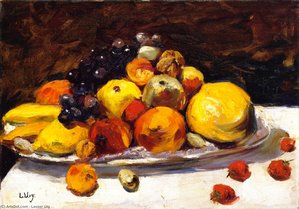
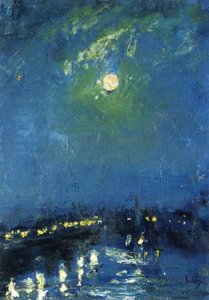
11Street scene at Night, Berlin (1920) aut. Leo Lesser UryStreet scene at Night, Berlin1920 12Selfportrait (1921) aut. Leo Lesser UrySelfportrait1921 13Café Scene in Paris (1928) aut. Leo Lesser UryCafé Scene in Paris1928 14The Red Carpet (1894) aut. Leo Lesser UryThe Red Carpet1894 · Izraelio muziejus 15On Lake Garda (1897) aut. Leo Lesser UryOn Lake Garda1897 16The Pont Royal in Paris (1928) aut. Leo Lesser UryThe Pont Royal in Paris1928 · Hamburger Kunsthalle 17Parisian Interior (1881) aut. Leo Lesser UryParisian Interior1881 18Woman at the Kitchen Stove (1882) aut. Leo Lesser UryWoman at the Kitchen Stove1882 19Flowers on the Mantel (1882) aut. Leo Lesser UryFlowers on the Mantel1882 20Estaminet - Flämische Schenke (1884) aut. Leo Lesser UryEstaminet - Flämische Schenke1884 · Alte Nationalgalerie 21Gargenlichtung am Zaun (1883) aut. Leo Lesser UryGargenlichtung am Zaun1883 22Siblings (1883) aut. Leo Lesser UrySiblings1883 23Self-Portrait (1881) aut. Leo Lesser UrySelf-Portrait1881 24Newspaper Reader in a Café (also known as Woman in a Café or Café Interior) (1882) aut. Leo Lesser UryNewspaper Reader in a Café (also known as Woman in a Café or Café Interior)1882 25In the Sunshine, near Volluvet (1884) aut. Leo Lesser UryIn the Sunshine, near Volluvet1884 26Village Road at the Edge of the Forest (1884) aut. Leo Lesser UryVillage Road at the Edge of the Forest1884 27Mountain Lake (1886) aut. Leo Lesser UryMountain Lake1886 · Berlinische Galerie 28View into a Valley (1890) aut. Leo Lesser UryView into a Valley1890 29The Coast of Rügen (1892) aut. Leo Lesser UryThe Coast of Rügen1892 30Woman by the Chimney Fire (also known as Reverie by the Fireplace) (1890) aut. Leo Lesser UryWoman by the Chimney Fire (also known as Reverie by the Fireplace)1890 31Rocky Shore at Capri (1890) aut. Leo Lesser UryRocky Shore at Capri1890 32Young Lady with a Large Hat (1886) aut. Leo Lesser UryYoung Lady with a Large Hat1886 33Leipzig Street (1889) aut. Leo Lesser UryLeipzig Street1889 · Berlinische Galerie 34NIght Lights (1889) aut. Leo Lesser UryNIght Lights1889 35Unter den Linden after the Rain (1888) aut. Leo Lesser UryUnter den Linden after the Rain1888 36Lake Garda and Monte Baldo (1897) aut. Leo Lesser UryLake Garda and Monte Baldo1897 37Old Man in a Fur Coat (1895) aut. Leo Lesser UryOld Man in a Fur Coat1895 38Moonrise on the Grunewaldsee (1898) aut. Leo Lesser UryMoonrise on the Grunewaldsee1898 39Evening at Café Bauer (1898) aut. Leo Lesser UryEvening at Café Bauer1898 40Interior (also known as Interior Scene with Woman Reading on a Terrace) (1894) aut. Leo Lesser UryInterior (also known as Interior Scene with Woman Reading on a Terrace)1894 41Reader with Magnifying Glass (1895) aut. Leo Lesser UryReader with Magnifying Glass1895 42Sunset at Lake Grunewald (1900) aut. Leo Lesser UrySunset at Lake Grunewald1900 43Ludwig Geiger (1905) aut. Leo Lesser UryLudwig Geiger1905 44Eugen Schiffer (1905) aut. Leo Lesser UryEugen Schiffer1905 45Landscape at Sunset (1900) aut. Leo Lesser UryLandscape at Sunset1900 46View over Nollendorfplatz (1901) aut. Leo Lesser UryView over Nollendorfplatz1901 47Otto Brahm in His Loge at the German Theater (1901) aut. Leo Lesser UryOtto Brahm in His Loge at the German Theater1901 48Stroller in Tiergarten (1905) aut. Leo Lesser UryStroller in Tiergarten1905 49Rainbow at Beelitzhof (also known as Brandenburg Landscape) (1899) aut. Leo Lesser UryRainbow at Beelitzhof (also known as Brandenburg Landscape)1899 50On the Kurfurstendamm (1910) aut. Leo Lesser UryOn the Kurfurstendamm1910 51Field workers in Thuringa (1911) aut. Leo Lesser UryField workers in Thuringa1911 52Berlin street scene with horse-drawn cabs (1910) aut. Leo Lesser UryBerlin street scene with horse-drawn cabs1910 53Berlin, Alexanderplatz (1910) aut. Leo Lesser UryBerlin, Alexanderplatz1910 54Lake Garda Motif (1906) aut. Leo Lesser UryLake Garda Motif1906 55Self-Portrait with Brush and Palette (1910) aut. Leo Lesser UrySelf-Portrait with Brush and Palette1910 56Promontory on Lake Garda (1909) aut. Leo Lesser UryPromontory on Lake Garda1909 57Sunset over the Grunewaldsee (1909) aut. Leo Lesser UrySunset over the Grunewaldsee1909 58Rebecca at the Fountain (1908) aut. Leo Lesser UryRebecca at the Fountain1908 59On a Canal (1912) aut. Leo Lesser UryOn a Canal1912 60Lake Garda with Mount Baldo (1914) aut. Leo Lesser UryLake Garda with Mount Baldo1914 61Self-Portrait with Dark Hat (1914) aut. Leo Lesser UrySelf-Portrait with Dark Hat1914 62In Front of the Cafe (Berlin at Night) (1920) aut. Leo Lesser UryIn Front of the Cafe (Berlin at Night)1920 63Lilac Bouquet (1922) aut. Leo Lesser UryLilac Bouquet1922 64Street Scene with Woman, Berlin (1918) aut. Leo Lesser UryStreet Scene with Woman, Berlin1918 65Newspaper Reader at the Café (also known as Gentleman at a Coffee House) (1920) aut. Leo Lesser UryNewspaper Reader at the Café (also known as Gentleman at a Coffee House)1920 66Two Girls walking along the Street (1921) aut. Leo Lesser UryTwo Girls walking along the Street1921 67Unter den Linden (1922) aut. Leo Lesser UryUnter den Linden1922 68Vase of Flowers (1921) aut. Leo Lesser UryVase of Flowers1921 69Champs-Elysees with Arc de Triomphe, Paris (1928) aut. Leo Lesser UryChamps-Elysees with Arc de Triomphe, Paris1928 70Paris, Sunrise (1928) aut. Leo Lesser UryParis, Sunrise1928 71Waterloo Bridge in the Fog (1926) aut. Leo Lesser UryWaterloo Bridge in the Fog1926 72Eiffel Tower (1928) aut. Leo Lesser UryEiffel Tower1928 73Nollendorfplazt at Night (1925) aut. Leo Lesser UryNollendorfplazt at Night1925 74Lennéstraße (1925) aut. Leo Lesser UryLennéstraße1925 75Traffic Jam at Potsdamer Platz (1925) aut. Leo Lesser UryTraffic Jam at Potsdamer Platz1925 76Schloß Rheinstein am Rhein (1924) aut. Leo Lesser UrySchloß Rheinstein am Rhein1924 77Charing Cross, London (1926) aut. Leo Lesser UryCharing Cross, London1926 78Tiergarten Avenue with Siegessäule (1925) aut. Leo Lesser UryTiergarten Avenue with Siegessäule1925 79Rainy Day in London, Thames Port (1926) aut. Leo Lesser UryRainy Day in London, Thames Port1926 80Waterloo Bridge Emerging in the Sunlight (1926) aut. Leo Lesser UryWaterloo Bridge Emerging in the Sunlight1926 81Paris, Rainy Day at the Quai Voltaire (1928) aut. Leo Lesser UryParis, Rainy Day at the Quai Voltaire1928 82Untitled (Park Scene or Man in the Gray Suit) (1913) aut. Leo Lesser UryUntitled (Park Scene or Man in the Gray Suit)1913 · Žydų muziejus 83Morning Sun (1924) aut. Leo Lesser UryMorning Sun1924 84A Jewish Man in His Prayer Shawl (1931) aut. Leo Lesser UryA Jewish Man in His Prayer Shawl1931 85Still Life with Fruit on a White Table (1920) aut. Leo Lesser UryStill Life with Fruit on a White Table1920 86Thames Bridges in the Twilight (also known as London Bridge) (1926) aut. Leo Lesser UryThames Bridges in the Twilight (also known as London Bridge)1926 87Abendlicher Park bei Regenwetter aut. Leo Lesser UryAbendlicher Park bei Regenwetter 88Tiergartenstrasse, Berlin aut. Leo Lesser UryTiergartenstrasse, Berlin 89Landscape aut. Leo Lesser UryLandscape 90Self Portrait with Spread Fingers aut. Leo Lesser UrySelf Portrait with Spread Fingers 91The River Thames, London, Moonlight aut. Leo Lesser UryThe River Thames, London, Moonlight 92The Fence (also known as Farmyard with Well) (1888) aut. Leo Lesser UryThe Fence (also known as Farmyard with Well)1888

žymios Leo Lesser Ury tapiojamos, pagal laikotarpį

Temos, kurios domino Leo Lesser Ury

Ketverios temos, dažniausiai pasikrausto originaluose, kiekvienos su savo puikiausiu pavyzdžiu.

Muziejai, kuriuose saugomi Leo Lesser Ury originalūs darbai

7 muziejai, kuriuose saugoma daugiausia šioje pusėje esamų paveikslų.

Muzejaus Miestas Leo Lesser Ury darbai Šiojo sąrašo paveikslai
Berlinische Galerie, BerlinasBerlinische Galerie Berlinas 3 Nude Lying Down, Mountain Lake, Leipzig Street
Alte Nationalgalerie, BerlinasAlte Nationalgalerie Berlinas 3 Woman at a Desk (also known as At the Desk), In the café - Woman in red, Estaminet - Flämische Schenke
Žydų muziejus, New York CityŽydų muziejus New York City 2 Praying Jew, Untitled (Park Scene or Man in the Gray Suit)
Bavarijos valstybinės paveikslų kolekcijos, MiunchasBavarijos valstybinės paveikslų kolekcijos Miunchas 1 Interior with Children (the Silblings)
Berlino žydų muziejus, BerlinasBerlino žydų muziejus Berlinas 1 Rebekka at the well
Izraelio muziejus, JeruzalėIzraelio muziejus Jeruzalė 1 The Red Carpet
Hamburger Kunsthalle, HambargasHamburger Kunsthalle Hambargas 1 The Pont Royal in Paris

Leo Lesser Ury, po vieno ikoninio paveikslio kiekvienam dešimtmenės laikotarpiui

Darbai pagal dešimtmečius

Pasirinkite dešimtmetį, kad pamatytėte jį apibrėžusį originalą.

Leo Lesser Ury tapyiniai: galerijos atsakymai

Kuris Leo Lesser Ury paveikslas yra pats garsiausias iš visų?Atsakymas

Nude Lying Down (1889), Berlinische Galerie, Berlinas. Toliau seka Moses on Mount Nebo Looking at the Promised Land (1927) ir Praying Jew (1931).

Kiek metų buvo Leo Lesser Ury, kai sukūrė Nude Lying Down?Atsakymas

28 metų amžiaus: Nude Lying Down sukurta 1889 m. Nr. Leo Lesser Ury gimė 1861.

Kuriose yra 10 geriausių Leo Lesser Ury paveikslų?Atsakymas

Nude Lying Down, Moses on Mount Nebo Looking at the Promised Land, Praying Jew, Bülowstraße high station, Strolling in the Forest, Interior with Children (the Silblings), Interior with Woman at the Piano, Woman at a Desk (also known as At the Desk), Rebekka at the well ir In the café - Woman in red. Viršuje esančioje reitingo sąraše nurodyta kiekvieno kūrinio metis ir muziejus.

Kiek kūrinių sukūrė Leo Lesser Ury?Atsakymas

Mūsų kataloge yra 92 Leo Lesser Ury darbų, skirtų laikotarpiui nuo 1881 iki 1931.

Kur kabinami garsiausi Leo Lesser Ury originalūs darbai?Atsakymas

Daugiausia – Berlinische Galerie (Berlinas), Alte Nationalgalerie (Berlinas) ir Žydų muziejus (New York City). Viršuje esančiame muziejų sąraše yra visi jie.

Kada Leo Lesser Ury sukūrė savo garsiausias paveikslus?Atsakymas

1920s laikotarpiu: 29 iš 92 šioje pusėje esančių darbų buvo sukurtos tada, iš jų Moses on Mount Nebo Looking at the Promised Land.

Kokie yra ankstyviausi ir vėliausi garsieji Leo Lesser Ury kūriniai?Atsakymas

Šioje pusėje seniausias darbas yra Parisian Interior (1881), o naujausias – Praying Jew (1931).

Kurią temą Leo Lesser Ury kūrė dažniausiai?Atsakymas

Woman (8), Interior (7) ir Night (6) iš 92 šioje pusėje esamų darbų.

Kurią techniką Leo Lesser Ury naudojo dažniausiai?Atsakymas

Oil On Canvas, iš 92 šios puslapio darbų – 8.

Su kokiu kierliu siejama Leo Lesser Ury?Atsakymas

Impressionism, vadovaujantis šios puslapio originalais kūriniais.

Kurių Leo Lesser Ury originalų turi Berlinische Galerie?Atsakymas

Nude Lying Down, Mountain Lake ir Leipzig Street: Berlinische Galerie, Berlinas kolekcijoje yra 3 šioje pusėje esančių darbų.

Leo Lesser Ury: menininkas

Šviesa paveikianti gyvenimą: Leo Lesser Ury pasaulis

Leo Lesser Ury – vardas, galbūt ne tiek iškart atpažįstamas kaip kai kurių jo impresionistų samtvorių, vis dėlto užima gyvaltrią ir jaudinantį vietą Vokijos tapybos naratyve. Gimęs 1861 m. lapkričio 7 d. Prusijoje, Birnbaume – šiandien tai Międzychód, Poland – Ury kelionė buvo dukinanti tiek menine triumfu, tiek asmeninėmis sunk Absurdaus. Jo ankstyvoji gyvenimo dalis buvo šešėliuota nuostoliais; mirties 1ngas 1872 m., kai mirė jo baisininkas tėvas, privertė jį su motina persikelti į Berliną. Šis išjudinimas savyje įsisavino galbūt visą gyvenimą trukdančią jautrumą miesto peizažams ir laikinos modernios egzistencijos prigimtei. Pradinai būdamas pramesnio meistro mokinio, Ury meninis pašaukimas buvo per stiprus, kad būtų galima jį ignoruoti, todėl 1789 m. jis赴 Düseldorfo meno akademijai. Tai buvo ilgo Europos tyrimų laikotarpio pradžia – Brüsselio, Paryžiaus, Munkeno, Stutgarto, Karlsruhe – kurioje kiekvienas miestas prisidėjo prie evoliucionės paletės ir perspektyvos, kuri vėliau apibrėžė jo unikalią stilių. Šios kelionės nebuvo tik geografinės; jos buvo pasinerimas į šviesos, atmosferos ir augančios modernaus gyvenimo energijos studijos.

Impresionizmo priėmimas ir miesto sielos įtvirtinimas

Ury meninis vystymasis buvo glaudžiai susipynęs su vėliojo XIX amžiaus meno sūkmeniais. Nors iš pradžių susidūrė su pasipriešinimu – jo pirmoji paroda 1889 m. sulaukė prieinamumo – jis rado rėmėją pas gerbiamą Adolph Menzel, kurio parama atvėrė duris į Berlyno akademiją. Šis pripažinimas tapo tvirtu pagrindu, leidžiančiu Ury tobulinti savo techniką ir viziją. Jo pasirinkimas impresionizmu nebuvo tik stilistinis žingsnis; tai buvo būdas įamžinti praegačius modernaus miesto gyvenimo akimirkas. 1893 m. jis prisijungė prie Munkeno secesijos, prisijungdamas prie menininkų grupės, kuri iššūkį metė akademiniams konvencijoms ir ieškojo naujų išraiškos būdų. Ury drobės pradėjo spinduliuoti gyvais traukais, impasto technika sukūrė tekstūrą ir gylį bei aštrų jautrumą transformuojančiai šviesos galiai. Jo pagrindinės temos tuo metu susikristalizavo: atmosferos prisigėlusios peizažai, jautrios interjero scenos, bet svarbiausia – gyvi, dažnai naktiniai miesto gyvenimo vaizdiniai. Jis ne tiesiog *piešė* Berliną; jis įamžino jo esmę – dujų žibintų šviesą ant lietuje šlapų gatvių, pulsuojančią kavinės energiją, tylią šešėlių kampų vienatvę.

Pripažinimas ir sudėtingas palikimas

XX amžiaus pradžios metais Ury sugrįžo į Berliną, kur greitai tapo svaršia miesto meno figūra. Nuo 1915 m. jo dalyvavimas parodose su Berlyno secesija nuolat didino jo žinomumą. Lemiamą reputaciją užtvirtino 1922 m. įspūdingą paroda, kurioje buvo pristatyti 150 jo paveikslų ir pastelų; Berlyno meras jį vadino „menine sostinės garbintoju“. Šis laikotarpis buvo Ury karjeros viršūnė, skatinama tiek kritikos pagyrimais, tiek komerciniu sėmės. Jis tapo ypač garsus savo meistriškumu naudojant pastelę, pasinaudodamas šia medžiaga, kad sukurtų išimtinio delikatumo ir atmosferinio gylio darbus. Tačiau šis sėkmės šviesumas buvo šešėliuojamas sudėtingu jo veiklos aspektu. Norėdamas patenkinti augančią paklausą, Ury pradėjo kartoti kompozicijas, gamindamas daugybę kopijų – kai kurios buvo mažesnės kokybės – kas, deja, kai kurie kritikai matė kaip meninės vertės sumažinimą. Šis pragmatiškas požiūris, nors ir buvo finansiniu požiūriu naudingas, galiausiai prisidėjo prie kiek ambivalenčio jo kūrybos vertinimo.

Ilgalaikis įspūdis: Istorinė reikšmė ir neblėstantis žavesys

Leo Lesser Ury istorinė reikšmė kertasi giliau nei jo techninis meistriškumas ar estetiniai pojūčiai. Jis prisimenamas kaip aštrus stebėtojas ir jaudinantis modernaus miesto gyvenimo vaizduotojas, ypač naktiniai Berlyno peizažai, kurie rezonavo su auditorija, siekiančia suprasti savo spartai besikeičiantį pasaulį. Jo darbai suteikia žvilgsnį į konkrečios laiko ir vietos fragmentą – miestą modernumo slenksnėje, kovojantį su industrializacija, socialiniais pokyčiais ir naujos eratos nerimu. Be to, kaip žydų menininkas, naršantis per Vokietijos visuomenę, Ury gyvenimas ir kūryba atspindi žydų kultūrinės identybės ir patirties aspektus sudėtingoje socio-politinėje aplinkoje. Jo paveikslai, nors ir ne tiesiogiai politiniai, subtiliai perteikia priklausimo ir išgremtimo jausmą, siūlydami unikalią perspektyvą apie iššūkius, su which susidūrė žydų bendruomenės Vokietijoje tuo laikotarpiu. Nors jis mirė Berlyne 1931 m. spalio 18 d. ir yra palaidotas žydų kapinėje Berlinas-Vaisensėje, jo įtarmis jaučiamas ir šiandien. Jo išskirtinis stilius atvėrė kelią būsimoms menininkų kartoms, o jo jaudinantys miesto gyvenimo vaizdiniai toliau užburia žiūrovus savo grožiu, atmosfera ir įtraukiančiu laiko bei vietos pojūčiu. Ury palikimas yra įrodymas apie meno galią įamžinti ne tik tai, ką matome, bet ir tai, kaip jaučiasi gyvas konkretį akimirką.