Józef Mehoffer portretas

Józef Mehoffer tapiai: 43 garsiausi πίναšiai, galerijos akimis

Atnaujinta spalis 2026 · pagal mūsų populiarumumo koeficientą (paieškos, lankytojai ir užsakymai kiekvienam kūriniui) · 43 Józef Mehoffer darbai mūsų kataloge

Trumpai tariant

Galerijos akimais, garsiausias Józef Mehoffer tapas yra Wife’s portrait study, sketch for “Strange garden” (1902), kurio originalas eksponuojamas Nacionalinis muziejus Varšuvoje, Varšuva. Marshal Milkowski (1885) ir Iza Axentowicz (1907) užbaia trio, kurį atpažįsta kiekvienas ž)/\ Iš 43 Józef Mehoffer darbų mūsų kataloge, galerija žemiau pristato 43 garsiausius – kiekvienas yra originalus, su nurodytu metais, muziejumi bei unikaliu aprašymu.

1869 – 1946, Ropczyce Art nouveau Daugiausia darbų: Nacionalinis muziejus Varšuvoje

10 geriausių galerijos Józef Mehoffer paveikslų

1
Wife’s portrait study, sketch for “Strange garden” (1902) aut. Józef Mehoffer

Wife’s portrait study, sketch for “Strange garden”

1902 · Oil On Canvas · Nacionalinis muziejus Varšuvoje, Varšuva

A woman’s face emerges from a deep, nocturnal gloom. The light catches the curve of her cheek and the bridge of her nose, pulling her features forward from a background of ink and midnight blue. She wears a large, dark hat, a heavy shape defined by swirling, green feather-like strokes that seem to pulse with a life of their own. This is a moment of quietude, a sketch captured in…

3
Iza Axentowicz (1907) aut. Józef Mehoffer

Iza Axentowicz

1907 · Oil On Canvas · Nacionalinis muziejus Varšuvoje, Varšuva

The gaze of Iza Axentowiczowa née Giełgud meets the viewer through this intimate portrait, a work that captures a specific moment of poise and presence. Painted in 1907, the image presents a woman of quiet dignity, her form rendered with a sensitivity that suggests a deep familiarity between the subject and the artist. This portrait of Iza Axentowicz remains a significant piece of the artist's legacy, capturing her essence through…

Józef Mehoffer tapiai, rangos nuo 11 iki 43

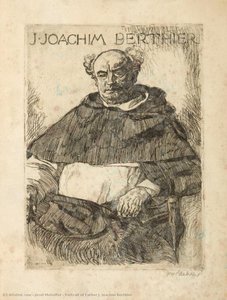
11Strange garden (1903) aut. Józef MehofferStrange garden1903 · Nacionalinis muziejus Varšuvoje 12Portrait of Wife (1904) aut. Józef MehofferPortrait of Wife1904 · Krakovos nacionalinis muziejus 13Paon (Sketches by the Artists of the Young Poland from the Café "Paon" of Ferdynand Turliński) (1899) aut. Józef MehofferPaon (Sketches by the Artists of the Young Poland from the Café "Paon" of Ferdynand Turliński)1899 · Krakovos nacionalinis muziejus 14Three angels (1901) aut. Józef MehofferThree angels1901 · Nacionalinis muziejus Varšuvoje 15Head of a girl against gold background (1901) aut. Józef MehofferHead of a girl against gold background1901 · Nacionalinis muziejus Varšuvoje 16Portrait of Iza Axentowicz (nee Giełgud) (1907) aut. Józef MehofferPortrait of Iza Axentowicz (nee Giełgud)1907 · Nacionalinis muziejus Varšuvoje 17Portrait of artist's wife, Jadwiga (nee Janakowska) (1907) aut. Józef MehofferPortrait of artist's wife, Jadwiga (nee Janakowska)1907 · Nacionalinis muziejus Varšuvoje 18Portrait of Maksymilian Ehrenpreis (1911) aut. Józef MehofferPortrait of Maksymilian Ehrenpreis1911 · Nacionalinis muziejus Varšuvoje 19Portrait of artist's wife with Pegasus. (1913) aut. Józef MehofferPortrait of artist's wife with Pegasus.1913 · Museum of Art in Łódź 20Vita somnium breve (1906) aut. Józef MehofferVita somnium breve1906 · Krakovos nacionalinis muziejus 21Planty Park in Kraków (1898) aut. Józef MehofferPlanty Park in Kraków1898 · Nacionalinis muziejus Varšuvoje 22Our Lady Victorious (1898) aut. Józef MehofferOur Lady Victorious1898 · Fribourg Cathedral 23Head of a Model (1896) aut. Józef MehofferHead of a Model1896 24La Gorge d'Areuse (1897) aut. Józef MehofferLa Gorge d'Areuse1897 · Muzeum Narodowe w Pozaniu 25The Muse (1897) aut. Józef MehofferThe Muse1897 · Muzeum Narodowe w Warszawie 26The Mantelpiece (1895) aut. Józef MehofferThe Mantelpiece1895 · Muzeum Narodowe w Pozaniu 27Main Market Square in Krakow (1903) aut. Józef MehofferMain Market Square in Krakow1903 · Krakovos nacionalinis muziejus 28Landscape, sketch for “Strange garden” (1902) aut. Józef MehofferLandscape, sketch for “Strange garden”1902 · Nacionalinis muziejus Varšuvoje 29Eucharist (1901) aut. Józef MehofferEucharist1901 · Fribourg Cathedral 30The Farewell (1900) aut. Józef MehofferThe Farewell1900 31Three Kings (1905) aut. Józef MehofferThree Kings1905 · Fribourg Cathedral 32The Florentine Portrait of the Artist's Wife (1900) aut. Józef MehofferThe Florentine Portrait of the Artist's Wife1900 33Martyrs (1905) aut. Józef MehofferMartyrs1905 · Fribourg Cathedral 34May sun (1911) aut. Józef MehofferMay sun1911 · Nacionalinis muziejus Varšuvoje 35Zinnias (1911) aut. Józef MehofferZinnias1911 · Nacionalinis muziejus Varšuvoje 36St. George, Michael, Anne and Mary Magdalene (1910) aut. Józef MehofferSt. George, Michael, Anne and Mary Magdalene1910 · Fribourg Cathedral 37Saints bishops and deacons (St. Stephen, Lawrence, Martin of Tours and Claudio of Besançon), (1917) aut. Józef MehofferSaints bishops and deacons (St. Stephen, Lawrence, Martin of Tours and Claudio of Besançon),1917 · Fribourg Cathedral 38Portrait of Father J. Joachim Berthier (1918) aut. Józef MehofferPortrait of Father J. Joachim Berthier1918 39Portrait of Juliusz Kossak aut. Józef MehofferPortrait of Juliusz KossakNacionalinis muziejus Varšuvoje 40Allegory of Prosperity aut. Józef MehofferAllegory of Prosperity 41Mosaic in the Armenian Cathedral in Lviv aut. Józef MehofferMosaic in the Armenian Cathedral in Lviv 42Wife's portrait (1909) aut. Józef MehofferWife's portrait1909 · Silesian Museum in Katowice 43Red Umbrella (1917) aut. Józef MehofferRed Umbrella1917 · Krakovos nacionalinis muziejus

Temos, kurios domino Józef Mehoffer

Ketverios temos, dažniausiai pasikrausto originaluose, kiekvienos su savo puikiausiu pavyzdžiu.

Muziejai, kuriuose saugomi Józef Mehoffer originalūs darbai

7 muziejai, kuriuose saugoma daugiausia šioje pusėje esamų paveikslų.

Muzejaus Miestas Józef Mehoffer darbai Šiojo sąrašo paveikslai
Nacionalinis muziejus Varšuvoje, VaršuvaNacionalinis muziejus Varšuvoje Varšuva 17 Wife’s portrait study, sketch for “Strange garden”, Iza Axentowicz, Portrait of Wanda Strażyńska
Krakovos nacionalinis muziejus, KrakovasKrakovos nacionalinis muziejus Krakovas 8 Self-Portrait (1898), Self-Portrait, Sketch to the Painting "Conversation"
Fribourg Cathedral, FribourgFribourg Cathedral Fribourg 6 Our Lady Victorious, Eucharist, Three Kings
Muzeum Narodowe w Pozaniu, PoznańMuzeum Narodowe w Pozaniu Poznań 2 La Gorge d'Areuse, The Mantelpiece
Museum of Art in Łódź, ŁódźMuseum of Art in Łódź Łódź 1 Portrait of artist's wife with Pegasus.
Muzeum Narodowe w Warszawie, VilniusMuzeum Narodowe w Warszawie Vilnius 1 The Muse
Silesian Museum in Katowice, KatowiceSilesian Museum in Katowice Katowice 1 Wife's portrait

Józef Mehoffer, po vieno ikoninio paveikslio kiekvienam dešimtmenės laikotarpiui

Darbai pagal dešimtmečius

Pasirinkite dešimtmetį, kad pamatytėte jį apibrėžusį originalą.

Józef Mehoffer tapyiniai: galerijos atsakymai

Kuris Józef Mehoffer paveikslas yra pats garsiausias iš visų?Atsakymas

Wife’s portrait study, sketch for “Strange garden” (1902), Nacionalinis muziejus Varšuvoje, Varšuva. Toliau seka Marshal Milkowski (1885) ir Iza Axentowicz (1907).

Kiek metų buvo Józef Mehoffer, kai sukūrė Wife’s portrait study, sketch for “Strange garden”?Atsakymas

33 metų amžiaus: Wife’s portrait study, sketch for “Strange garden” sukurta 1902 m. Nr. Józef Mehoffer gimė 1869.

Kuriose yra 10 geriausių Józef Mehoffer paveikslų?Atsakymas

Wife’s portrait study, sketch for “Strange garden”, Marshal Milkowski, Iza Axentowicz, Portrait of Wanda Strażyńska, Portrait of sculptor Konstanty Laszczka., Self-Portrait (1898), Self-Portrait, Sketch to the Painting "Conversation", Self-portrait ir Village girl. Viršuje esančioje reitingo sąraše nurodyta kiekvieno kūrinio metis ir muziejus.

Kiek kūrinių sukūrė Józef Mehoffer?Atsakymas

Mūsų kataloge yra 43 Józef Mehoffer darbų, skirtų laikotarpiui nuo 1885 iki 1918.

Kur kabinami garsiausi Józef Mehoffer originalūs darbai?Atsakymas

Daugiausia – Nacionalinis muziejus Varšuvoje (Varšuva), Krakovos nacionalinis muziejus (Krakovas) ir Fribourg Cathedral (Fribourg). Viršuje esančiame muziejų sąraše yra visi jie.

Kada Józef Mehoffer sukūrė savo garsiausias paveikslus?Atsakymas

1900s laikotarpiu: 17 iš 43 šioje pusėje esančių darbų buvo sukurtos tada, iš jų Wife’s portrait study, sketch for “Strange garden”.

Kokie yra ankstyviausi ir vėliausi garsieji Józef Mehoffer kūriniai?Atsakymas

Šioje pusėje seniausias darbas yra Marshal Milkowski (1885), o naujausias – Portrait of Father J. Joachim Berthier (1918).

Kurią temą Józef Mehoffer kūrė dažniausiai?Atsakymas

Portrait (3) ir Woman (2) iš 43 šioje pusėje esamų darbų.

Kurią techniką Józef Mehoffer naudojo dažniausiai?Atsakymas

Oil On Canvas, iš 43 šios puslapio darbų – 2.

Su kokiu kierliu siejama Józef Mehoffer?Atsakymas

Art nouveau, vadovaujantis šios puslapio originalais kūriniais.

Kurių Józef Mehoffer originalų turi Nacionalinis muziejus Varšuvoje?Atsakymas

Wife’s portrait study, sketch for “Strange garden”, Iza Axentowicz ir Portrait of Wanda Strażyńska: Nacionalinis muziejus Varšuvoje, Varšuva kolekcijoje yra 17 šioje pusėje esančių darbų.

Józef Mehoffer: menininkas

A Life of Color and Glass

Józef Mehoffer arrived in the world in Ropczyce, Poland, in 1869, though his path to the easel was not immediate. Before he embraced the brush, he pursued legal studies, a direction that only shifted after a gift of paints revealed a different vocation. He sought formal training at the Academy of Fine Arts in Kraków under Władysław Łuszczkiewicz, later expanding his horizons through studies in Vienna and Paris at the Académie Colarossi. This period of wandering through Europe’s great art centers allowed him to absorb the diverse currents of his era.

His work became a bridge between the academic traditions of his teachers, such as Jan Matejko, and the emerging avant-garde. He moved with ease between easel painting and the monumental demands of decorative arts. Whether working on portraits, landscapes, or intricate book illustrations, Mehoffer sought a fusion of form and color. His style grew to include elements of Post- Impressionism and the Secession movement, often utilizing bold palettes and fluid lines that mirrored the organic spirit of Art Nouveau.

The Light of Fribourg

While his presence was felt throughout Poland, Mehoffer achieved significant recognition through his work in Switzerland. Between 1895 and 1936, he dedicated decades to a cycle of thirteen stained-glass compositions for the Cathedral of St. Nicholas in Fribourg. This undertaking required immense technical precision, as he treated the lead came not merely as a structural necessity but as an autonomous graphic line. He selected glass of varying thicknesses and textures, using silver stain and vitreous black to manipulate how light moved through the windows.

The success of these windows brought him international attention. At the 1900 Paris World's Fair, his window titled The Martyrs earned a gold medal. This period of his life saw him blending Polish folk motifs with the sophisticated aesthetics of European Art Nouveau. His ability to translate complex religious and symbolic themes into luminous glass remains a central part of his professional identity.

A Decorative Legacy

Mehoffer’s creative output was remarkably broad, refusing to be confined to a single medium. He was as much a designer of furniture, textiles, and posters as he was a painter of canvases. His hand could be found in the mosaics of the Armenian Cathedral in Lviv and the frescoes of Wawel Cathedral. In 1897, he helped found the society Sztuka, an organization that sought to assert the independence of Polish art from the influence of occupying powers.

In his later years, Mehoffer established a home and studio on Krupnicza Street in Kraków. This house, which he purchased in 1932, became a center for musical and literary gatherings, reflecting his role as a figure of the Polish intelligentsia. He lived through the profound shifts of the early twentieth century, continuing to work even during the hardships of the Second World War. When he passed away in Wadowice in 1946, he left behind a body of work that spanned the transition from nineteenth-century tradition to the modern decorative era.