Josef Püttner portretas

5 garsiausių Josef Püttner paveikių rinkinys: galerijos išboru

Atnaujinta lapkritis 2026 · pagal mūsų populiarumumo koeficientą (paieškos, lankytojai ir užsakymai kiekvienam kūriniui) · 5 Josef Püttner darbai mūsų kataloge

Trumpai tariant

Iš visų paliktų originalų kūrinių Josef Püttner garsiausias yra Sinking of the emigrant ship (1858), esantis Vokiečių istorijos muziejus kolekcijoje, Berlinas. Tiesiog už jų seka Shipwreck near Cape Horn (1854) ir Warship before the South Sea Islands (1854). Mūsų kataloge yra 5 darbų autoriaus Josef Püttner; galerija išsaugojo 5 labiausiai pasaulyje žyminiausių kūrinių – kiekvienas jų pateikiamas su datos, muziejaus ir istorijos aprašymu.

1821 – 1881, Planá Daugiausia darbų: Vokiečių istorijos muziejus

Josef Püttner geriausios 10 paveikslų: galerijos pasirinkimas

1
Sinking of the emigrant ship (1858) aut. Josef Püttner

Sinking of the emigrant ship

1858 · Oil On Canvas · Vokiečių istorijos muziejus, Berlinas

Théodore Géricault’s “Sinking of the Emigrant Ship” (1858), a monumental oil on canvas measuring 112 x 154 cm, stands as a visceral testament to the perilous realities faced by those seeking new lives in the 19th century. Painted during a period of immense social upheaval and mass emigration, this artwork transcends mere historical documentation; it’s a profoundly moving exploration of human desperation, loss, and the fragility of hope. Josef Carl…

2
Shipwreck near Cape Horn (1854) aut. Josef Püttner

Shipwreck near Cape Horn

1854 · Oil On Canvas

A large sailing vessel tilts precariously, caught in the violent grip of a storm near a rocky coastline. The masts lean at sharp, diagonal angles, slicing through a sky of pale yellow and heavy, dark clouds. Below, the sea is a churning mass of creamy white foam and murky brown depths. A sudden break in the clouds casts a sickly, yellowish light onto the crests of the waves, illuminating the…

3
Warship before the South Sea Islands (1854) aut. Josef Püttner

Warship before the South Sea Islands

1854 · Oil

A large sailing warship navigates choppy waters, positioned against a tropical coastline. The composition balances the heavy presence of the vessel on the left with a cluster of palm trees and rocky cliffs on the right. In the distance, a mountain range anchors the horizon under a bright, hazy sky. The scene captures a moment of maritime presence within a South Sea setting, where the scale of the ship is…

4
Night Trip in the Lagoon (1857) aut. Josef Püttner

Night Trip in the Lagoon

1857 · Oil

The water lies heavy and still, a dark mirror reflecting the pale, ghostly glow of a moon partially veiled by drifting clouds. In this quiet corner of the lagoon, a large sailing vessel with a prominent paddle wheel glides through the shadows, its silhouette cutting a steady path against the hazy horizon. Smaller boats and solitary figures near wooden pilings add a sense of human presence to the vast, watery…

5
Handbag aut. Josef Püttner

Handbag

Digital Photography

In this intimate photograph, a vintage handbag is presented against a void of absolute black. The darkness recedes, pushing the object forward and allowing the viewer to focus entirely on its intricate surface. The composition is centered, creating a quiet, singular focal point that emphasizes the craftsmanship of the piece. Soft, diffused light washes over the object, catching the subtle textures of the material and the raised edges of the…

Temos, kurios domino Josef Püttner

Ketverios temos, dažniausiai pasikrausto originaluose, kiekvienos su savo puikiausiu pavyzdžiu.

Muziejai, kuriuose saugomi Josef Püttner originalūs darbai

1 muziejai, kuriuose saugoma daugiausia šioje puslapyje esamų paveikslų.

Muzejaus Miestas Josef Püttner darbai Šiojo sąrašo paveikslai
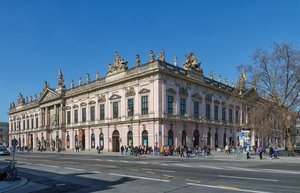
Vokiečių istorijos muziejus, BerlinasVokiečių istorijos muziejus Berlinas 1 Sinking of the emigrant ship

Josef Püttner metai po metų: originalūs darbai, apibūdinantys kiekvieną iš jų

Šioje apžvalsoje Josef Püttner darbai apima tik 5 metų laikotarpį, nuo 1854 iki 1858: trumpa karjera, pateikta čia metis metams.

Darbai pagal metus

Pasirinkite metus, kad pamatytumėte originalus darbus.

Kolekcjonerų klausimai apie Josef Püttner paveikslus

Kuriu darbu Josef Püttner yra labiausiai garsus?Atsakymas

Sinking of the emigrant ship (1858), Vokiečių istorijos muziejus, Berlinas. Toliau seka Shipwreck near Cape Horn (1854) ir Warship before the South Sea Islands (1854).

Kokia buvo Josef Püttner amžius, kai buvo sukurtas Sinking of the emigrant ship?Atsakymas

37 metų amžiaus: Sinking of the emigrant ship sukurta 1858 m. Nr. Josef Püttner gimė 1821.

Kiek paveikslų paliko Josef Püttner?Atsakymas

Mūsų kataloge yra 5 Josef Püttner darbų, skirtų laikotarpiui nuo 1854 iki 1858.

Kuriuose muziejuose eksponuojami Josef Püttner šedevrai?Atsakymas

Daugiausia – Vokiečių istorijos muziejus (Berlinas). Viršuje esančiame muziejų sąraše yra visi jie.

Kuriomis metais Josef Püttner tapo savo garsiausius kūrinius?Atsakymas

1854 laikotarpiu: 2 iš 5 šioje pusėje esančių darbų buvo sukurtos tada, iš jų Shipwreck near Cape Horn.

Kokie yra pirmasis ir paskutinis garsieji Josef Püttner originalūs darbai?Atsakymas

Šioje pusėje seniausias darbas yra Shipwreck near Cape Horn (1854), o naujausias – Sinking of the emigrant ship (1858).

Kurią temą Josef Püttner rinkosi dažniausiai?Atsakymas

Sailing ship (2), Ocean waves (2) ir Cliffs (2) iš 5 šioje pusėje esamų darbų.

Kurią techniką Josef Püttner naudojo dažniausiai?Atsakymas

Oil On Canvas, iš 5 šios puslapio darbų – 2.

Josef Püttner: gyvenimas ir kūryba

A Master of Romantic Drama

The life and artistry of Josef Carl Berthold Püttner represent a profound chapter in the era of German-Austrian Romanticism. A painter whose works resonate with the turbulent energy of the nineteenth century, Püttlar captured the raw, unyielding power of the natural world through his mastery of landscape and marine subjects. His creative journey was deeply shaped by extensive study trips that expanded his visual vocabulary, taking him from the historic streets of Rome to the windswept coasts of the Netherlands and even the icy, dramatic vistas of Iceland. These travels allowed him to absorb diverse atmospheric conditions, which he later translated onto canvas with a singular, emotive intensity.

Working primarily in Vienna and later in Bad Vöslau, Püttner established himself as a significant figure within the prestigious Vienna Künstlerhaus. His presence in the art world was marked by regular exhibitions at the Vienna Academy of Fine Arts, where his ability to depict light-filled seascapes and coastal scenes earned him distinction. His technical approach often leaned into the dramatic, utilizing a style that could evoke the sheer chaos of maritime disaster or the quiet majesty of a rolling landscape.

Technique and Emotional Resonance

Püttner’s work is characterized by an extraordinary ability to manipulate light and shadow, often employing a tenebrist approach to heighten the emotional stakes of his compositions. In his most harrowing depictions, such as those involving the sinking of ships, he masterfully captures the swirling energy of waves and the flickering terror of flames. His brushwork possesses a dynamic vitality, mirroring the instability and desperation found within his subject matter. This technique serves to move the viewer beyond mere observation, inviting them into a visceral experience of human struggle against the elements.

The legacy of his artistry is preserved in notable institutions, ensuring that his vision of the nineteenth-century landscape continues to inspire. His contributions to the canon of Romantic painting can be found in collections such as:

Through his dedication to capturing the sublime and the tragic, Püttner remains a remarkable figure of his time, leaving behind a body of work that stands as a testament to the enduring power of the Romantic spirit.