Joris Hoefnagelis portretas

Joris Hoefnagelis tapiai: 15 garsiausi πίναšiai, galerijos akimis

Atnaujinta lapkritis 2026 · pagal mūsų populiarumumo koeficientą (paieškos, lankytojai ir užsakymai kiekvienam kūriniui) · 15 Joris Hoefnagelis darbai mūsų kataloge

Trumpai tariant

Galerijos akimais, garsiausias Joris Hoefnagelis tapas yra Amersfoort (1588), kurio originalas eksponuojamas Rijksmuseum, Amsterdamas. Diana and Actaeon (1597) ir Allegory on the Friendship between the Artist and Johannes Radermacher (1589) užbaia trio, kurį atpažįsta kiekvienas ž)/\ Iš 15 Joris Hoefnagelis darbų mūsų kataloge, galerija žemiau pristato 15 garsiausius – kiekvienas yra originalus, su nurodytu metais, muziejumi bei unikaliu aprašymu.

1542 – 1600, Antverpijas Renaissance Daugiausia darbų: J. Paul Getty muziejus

10 geriausių galerijos Joris Hoefnagelis paveikslų

1
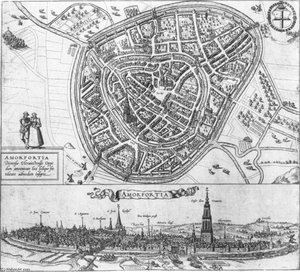
Amersfoort (1588) aut. Joris Hoefnagelis

Amersfoort

1588 · Engraving · Rijksmuseum, Amsterdamas

To gaze upon Joris Hoefnagel’s depiction of Amersfoort is not merely to look at an old map; it is to step through a meticulously preserved portal into the late sixteenth century. This engraving, dating from 1588, transcends the boundaries of mere cartography. It is a vibrant historical document rendered with the delicate precision of high art. Hoefnagel, that masterful illuminator and draftsman, gifted us more than just lines on paper;…

2
Diana and Actaeon (1597) aut. Joris Hoefnagelis

Diana and Actaeon

1597 · Oil On Panel · Liuvro muziejus, Paryžius

In the quiet, dappled light of a late sixteenth-century grove, a profound drama unfolds upon Joris Hoefnagel’s monumental panel, Diana and Actaeon. Completed in 1597, this Flemish masterpiece captures the precise heartbeat of a catastrophe: the moment mortal curiosity collides with divine wrath. The scene draws its soul from Ovid’s Metamorphoses, recounting the fateful encounter where the hunter Actaeon stumbles upon the goddess Diana and her nymphs during their sacred…

3
Allegory on the Friendship between the Artist and Johannes Radermacher (1589) aut. Joris Hoefnagelis

Allegory on the Friendship between the Artist and Johannes Radermacher

1589 · Oil · Museum Boijmans Van Beuningen, Roterdamas

In Joris Hoefnagel's Allegory on the Friendship between the Artist and Johannes Radermacher, a complex narrative unfolds within a sprawling outdoor landscape. The scene transitions from the structured presence of architectural elements on the left toward a dense, encroaching woodland on the right. Within this setting, several figures engage in symbolic actions that suggest a deep allegory of friendship and the spark of artistic inspiration. One figure pours liquid while…

4
Poppy Anemones, Caterpillar, Fig, and Quince (1596) aut. Joris Hoefnagelis

Poppy Anemones, Caterpillar, Fig, and Quince

1596 · Watercolor · J. Paul Getty muziejus, Los Andželis

The red of the poppy bleeds into a yellow background, a sharp contrast that pulls the eye toward the center of the parchment. In this small space, a single caterpillar moves through a landscape of flora. The work is a leaf from the Mira calligraphiae monumenta, a collaboration spanning decades. While the book's calligraphy began in the early 1560s, these specific illuminations were added between 1591 and 1596. The textures…

5
View of Candia and Corfu (1572) aut. Joris Hoefnagelis

View of Candia and Corfu

1572 · Oil

In 1572, Joris Hoefnagel rendered View of Candia and Corfu, a work that captures two distinct coastal scenes from the Mediterranean region. The painting functions as a dual window into maritime life. In the upper register, the view of Candia on the island of Crete unfolds. Buildings and fortifications line the shoreline, anchored by the presence of several ships in the harbor. A large galleon or carrack rests upon the…

Joris Hoefnagelis tapiai, rangos nuo 11 iki 15

Temos, kurios domino Joris Hoefnagelis

Ketverios temos, dažniausiai pasikrausto originaluose, kiekvienos su savo puikiausiu pavyzdžiu.

Muziejai, kuriuose saugomi Joris Hoefnagelis originalūs darbai

8 muziejai, kuriuose saugoma daugiausia šioje pusėje esamų paveikslų.

Muzejaus Miestas Joris Hoefnagelis darbai Šiojo sąrašo paveikslai
J. Paul Getty muziejus, Los AndželisJ. Paul Getty muziejus Los Andželis 2 Poppy Anemones, Caterpillar, Fig, and Quince, Maltese Cross, Mussel, and Ladybird
Rijksmuseum, AmsterdamasRijksmuseum Amsterdamas 1 Amersfoort
Liuvro muziejus, ParyžiusLiuvro muziejus Paryžius 1 Diana and Actaeon
Museum Boijmans Van Beuningen, RoterdamasMuseum Boijmans Van Beuningen Roterdamas 1 Allegory on the Friendship between the Artist and Johannes Radermacher
Hatfield House, HatfieldHatfield House Hatfield 1 A Fête at Bermondsey or A Marriage Feast at Bermondsey.
Nationalmuseum, StokholmasNationalmuseum Stokholmas 1 Still Life with a Vase of Flowers and Two Birds
Hampton Court Palace, LondonasHampton Court Palace Londonas 1 Elizabeth I and the Three Goddesses
Fundación Elkano, GetariaFundación Elkano Getaria 1 San Sebastián

Joris Hoefnagelis, po vieno ikoninio paveikslio kiekvienam dešimtmenės laikotarpiui

Darbai pagal dešimtmečius

Pasirinkite dešimtmetį, kad pamatytėte jį apibrėžusį originalą.

Joris Hoefnagelis tapyiniai: galerijos atsakymai

Kuris Joris Hoefnagelis paveikslas yra pats garsiausias iš visų?Atsakymas

Amersfoort (1588), Rijksmuseum, Amsterdamas. Toliau seka Diana and Actaeon (1597) ir Allegory on the Friendship between the Artist and Johannes Radermacher (1589).

Kiek metų buvo Joris Hoefnagelis, kai sukūrė Amersfoort?Atsakymas

46 metų amžiaus: Amersfoort sukurta 1588 m. Nr. Joris Hoefnagelis gimė 1542.

Kuriose yra 10 geriausių Joris Hoefnagelis paveikslų?Atsakymas

Amersfoort, Diana and Actaeon, Allegory on the Friendship between the Artist and Johannes Radermacher, Poppy Anemones, Caterpillar, Fig, and Quince, View of Candia and Corfu, A Fête at Bermondsey or A Marriage Feast at Bermondsey., Still Life with a Vase of Flowers and Two Birds, Granada and Albaicin, Maltese Cross, Mussel, and Ladybird ir Breno. Viršuje esančioje reitingo sąraše nurodyta kiekvieno kūrinio metis ir muziejus.

Kiek kūrinių sukūrė Joris Hoefnagelis?Atsakymas

Mūsų kataloge yra 15 Joris Hoefnagelis darbų, skirtų laikotarpiui nuo 1572 iki 1597.

Kur kabinami garsiausi Joris Hoefnagelis originalūs darbai?Atsakymas

Daugiausia – J. Paul Getty muziejus (Los Andželis), Rijksmuseum (Amsterdamas) ir Liuvro muziejus (Paryžius). Viršuje esančiame muziejų sąraše yra visi jie.

Kada Joris Hoefnagelis sukūrė savo garsiausias paveikslus?Atsakymas

1590s laikotarpiu: 3 iš 15 šioje pusėje esančių darbų buvo sukurtos tada, iš jų Diana and Actaeon.

Kokie yra ankstyviausi ir vėliausi garsieji Joris Hoefnagelis kūriniai?Atsakymas

Šioje pusėje seniausias darbas yra View of Candia and Corfu (1572), o naujausias – Diana and Actaeon (1597).

Kurią temą Joris Hoefnagelis kūrė dažniausiai?Atsakymas

Botanical illustration (3), Urban landscape (2) ir Manuscript illumination (2) iš 15 šioje pusėje esamų darbų.

Kurią techniką Joris Hoefnagelis naudojo dažniausiai?Atsakymas

Oil, iš 15 šios puslapio darbų – 2.

Su kokiu kierliu siejama Joris Hoefnagelis?Atsakymas

Renaissance, vadovaujantis šios puslapio originalais kūriniais.

Kurių Joris Hoefnagelis originalų turi J. Paul Getty muziejus?Atsakymas

Poppy Anemones, Caterpillar, Fig, and Quince ir Maltese Cross, Mussel, and Ladybird: J. Paul Getty muziejus, Los Andželis kolekcijoje yra 2 šioje pusėje esančių darbų.

Joris Hoefnagelis: menininkas

Joris Hoefnagel: A Pioneer of Naturalism and Manuscript Illumination

Joris Hoefnagel, born in Antwerp around 1542 and tragically dying in Vienna in 1601, stands as a pivotal figure bridging the late Renaissance and the burgeoning Baroque periods. More than simply a painter, he was a master illuminator, a meticulous draftsman, and a keen observer of nature – a confluence of skills that cemented his legacy as one of the most influential artists of his time. His work, often characterized by an almost scientific precision combined with a captivating sense of beauty, profoundly impacted the development of both botanical illustration and topographical drawing, leaving an indelible mark on generations of European artists.

Hoefnagel’s early life remains somewhat shrouded in mystery, though we know he was the son of Jacob Hoefnagel, a successful diamond dealer and tapestry merchant. This privileged upbringing afforded him a comprehensive education, including fluency in several languages and an appreciation for the arts – a foundation that would prove crucial to his future career. While speculation persists regarding his formal training, most scholars believe he received instruction from Hans Bol, a prominent Flemish painter active in Antwerp during the 1570s. This apprenticeship likely introduced him to the intricacies of miniature painting, a skill that would become central to his artistic practice.

The Travels and Transformations

Hoefnagel’s career unfolded across Europe, shaped by both professional opportunities and turbulent political times. He spent time in France from 1560 to 1563, likely honing his skills and expanding his network of contacts before returning to Antwerp and then venturing into Spain between 1563 and 1567. These periods were marked by religious upheaval and artistic censorship, experiences that undoubtedly influenced the themes and styles he explored. His travels to Italy, particularly Venice, proved transformative, exposing him to the innovations of Renaissance masters like Titian and fostering a deeper appreciation for color and composition.

A significant turning point in Hoefnagel’s career arrived with his arrival in England in 1532, invited by Thomas More. He quickly established himself as a sought-after artist, producing portraits for the humanist scholar and capturing the grandeur of More's household. This association with More marked the beginning of a long and fruitful relationship with the English court, culminating in commissions from Henry VIII and Anne Boleyn. His work during this period showcased his remarkable draftsmanship and his ability to render intricate details with astonishing accuracy – qualities that would become hallmarks of his style.

A Master of Detail: Natural History and Topographical Drawing

Hoefnagel’s artistic reputation rests largely on his extraordinary illustrations of natural history subjects. Unlike earlier depictions, which often prioritized symbolic meaning over realistic representation, Hoefnagel approached botanical studies with a meticulousness bordering on scientific observation. His detailed renderings of flowers, insects, and animals – exemplified by works like “The Insects” and “The Flowers” – are not merely decorative; they represent a significant advance in the field of natural history illustration. These images were far more than pretty pictures; they served as valuable reference materials for scholars and physicians.

Furthermore, Hoefnagel’s contributions to topographical drawing were equally groundbreaking. He produced remarkably accurate depictions of cityscapes, landscapes, and architectural details – works that anticipated the rise of landscape painting as a distinct genre. His meticulous attention to perspective and his ability to capture the nuances of light and shadow demonstrated a mastery of technique rarely seen in his contemporaries. These drawings weren’t simply records of places; they were imbued with a sense of atmosphere and observation, reflecting Hoefnagel's keen eye for detail.

Legacy and Influence

Joris Hoefnagel’s impact on the course of art history is undeniable. His meticulous draftsmanship and his pioneering approach to natural history illustration profoundly influenced a generation of artists, including Rembrandt, Rubens, and later, botanical illustrators like Jan van Dijck. He essentially laid the groundwork for the development of scientific illustration as a distinct field, demonstrating the potential for artistic representation to serve both aesthetic and practical purposes.

Beyond his technical achievements, Hoefnagel’s work embodies a unique synthesis of humanist ideals, Renaissance aesthetics, and burgeoning scientific inquiry. His legacy endures not only in the surviving images themselves but also as a testament to the power of observation, precision, and artistic vision – qualities that continue to inspire artists and scholars today.