John Phillip portretas

100 garsiausių John Phillip paveikių – kiekvienas yra unikalus

Atnaujinta spalis 2026 · pagal mūsų populiarumumo koeficientą (paieškos, lankytojai ir užsakymai kiekvienam kūriniui) · 101 John Phillip darbai mūsų kataloge

Trumpai tariant

Mary MacKay Caird, later Mrs James Glen (1847 - 1940) (1866) yra viena矚 most žiūrėlių pritraukiančių John Phillip tapierių; originalas saugomas Škotijos Nacionalinė galerija, Edinburgas. Po to akmuo patenka į William Borthwick Johnstone (1804 - 1868) (1865) ir Gonzalo de Vilches, 1st Earl of Vilches (?) (1850). Iš 101 John Phillip darbų mūsų kataloge šios 100 yra garsiausios – kiekvienas yra unikali originali dai̇lia, pateikta su jos metais, muziejumi ir priežastimi, kodėl ji išlieka per amžius.

1817 – 1867, Aberdeen Academic realism Daugiausia darbų: Royal Collection

10 geriausių John Phillip paveikslų: galerijos akimais

1
Mary MacKay Caird, later Mrs James Glen (1847 - 1940) (1866) aut. John Phillip

Mary MacKay Caird, later Mrs James Glen (1847 - 1940)

1866 · Oil On Canvas · Škotijos Nacionalinė galerija, Edinburgas

A young woman is presented in a medium shot, her presence defined by a quiet, formal elegance. She holds a small dog, a detail that anchors the composition in a sense of domestic intimacy. The subject is positioned against a dark, textured background of foliage, which recedes into a distant, twilight landscape. Light enters from the upper left, casting a soft glow upon her face and chest, while the deep…

2
William Borthwick Johnstone (1804 - 1868) (1865) aut. John Phillip

William Borthwick Johnstone (1804 - 1868)

1865 · Oil On Canvas · Škotijos Nacionalinė galerija, Edinburgas

An elderly man gazes toward the right, his expression marked by quiet introspection and a sense of wisdom. This bust-length portrait utilizes a low-key, dramatic atmosphere to establish a somber tone. The subject's weathered skin and the subtle textures of his clothing are rendered through visible brushstrokes, suggesting the tactile reality of a life lived. Lighting originates from the upper left, casting soft shadows across the right side of the…

3
Gonzalo de Vilches, 1st Earl of Vilches (?) (1850) aut. John Phillip

Gonzalo de Vilches, 1st Earl of Vilches (?)

1850 · Oil On Canvas · Museo del Prado, Madridas

A young man occupies the center of this intimate space, his body turned in a three-quarter view that suggests a sudden, quiet movement. He gazes toward the left, his eyes fixed on something unseen beyond the frame, lending the scene a sense of suspended animation. A heavy, dark mantle drapes over his shoulders, its deep shadows swallowing the light, while a crisp white collar breaks the darkness with a sharp,…

4
Ellen Brown, Mrs William Borthwick Johnstone (1861) aut. John Phillip

Ellen Brown, Mrs William Borthwick Johnstone

1861 · Oil On Canvas · Škotijos Nacionalinė galerija, Edinburgas

The portrait titled Ellen Brown, Mrs William Borthwick Johnstone emerges from the canvas as a quiet study of a woman in her prime. Painted by John Phillip in 1861, the work captures Ellen Brown, the daughter of J. C. Brown, ARSA. She sits with a composed grace that suggests a life of refinement and settled purpose. There is a stillness in her gaze that invites the viewer into her private…

5
Rev. Alexander Dyce Davidson, 1807 - 1872. Free Church minister (1850) aut. John Phillip

Rev. Alexander Dyce Davidson, 1807 - 1872. Free Church minister

1850 · Oil On Canvas · Škotijos nacionalinė portretų galerija, Edinburgas

This oil on canvas portrait is titled Rev. Alexander Dyce Davidson, 1807 - 1872. Free Church minister. The work was executed by the artist John Phillip about 1850. It depicts the subject, Rev. Alexander Dyce Davidson, in a formal bust-length composition. The sitter is positioned slightly off-center, facing toward the viewer's right while his gaze meets the observer directly. He is shown wearing a dark clerical garment and a white…

žinomi John Phillip paveikslai, nuo 11 iki 100 numerio

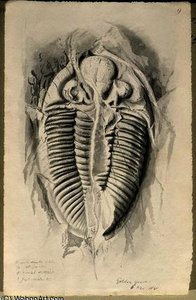
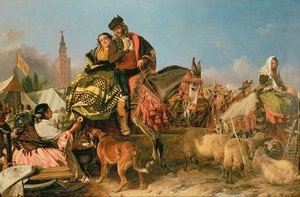
11Dorothea Harriet Gibbs (1840 -1914), as a child (1844) aut. John PhillipDorothea Harriet Gibbs (1840 -1914), as a child1844 · Tyntesfield 12Provost George Henry (1850-1853) (1845) aut. John PhillipProvost George Henry (1850-1853)1845 13Disgorging the Fly (1841) aut. John PhillipDisgorging the Fly1841 14The Highland Home (1845) aut. John PhillipThe Highland Home1845 15Tasso in Disguise Relating his Persecutions to his Sister (1840) aut. John PhillipTasso in Disguise Relating his Persecutions to his Sister1840 16Self Portrait (1840) aut. John PhillipSelf Portrait1840 17Mrs Jean Chalmers (1840) aut. John PhillipMrs Jean Chalmers1840 18A Scotch Fair (1848) aut. John PhillipA Scotch Fair1848 19The Orange Girl (1854) aut. John PhillipThe Orange Girl1854 · Birmingham Museum and Art Gallery 20A Spanish Gipsy Mother (1852) aut. John PhillipA Spanish Gipsy Mother1852 · Royal Collection 21El Paseo (1854) aut. John PhillipEl Paseo1854 · Royal Collection 22Princess Feodora of Hohenlohe-Langenburg (1839-1872) (1852) aut. John PhillipPrincess Feodora of Hohenlohe-Langenburg (1839-1872)1852 · Royal Collection 23Princess Charlotte of Belgium (1840-1927) (1852) aut. John PhillipPrincess Charlotte of Belgium (1840-1927)1852 · Royal Collection 24Collecting the Offering in a Scottish Kirk (1855) aut. John PhillipCollecting the Offering in a Scottish Kirk1855 · York Art Gallery 25La Perla de Triana (1852) aut. John PhillipLa Perla de Triana1852 26William Brodie RSA, sculptor (1850) aut. John PhillipWilliam Brodie RSA, sculptor1850 27John Innes (1850) aut. John PhillipJohn Innes1850 28Gypsy Musicians of Spain (Spanish Minstrels) (1855) aut. John PhillipGypsy Musicians of Spain (Spanish Minstrels)1855 29Sketch for "Drawing For The Militia" (1849) aut. John PhillipSketch for "Drawing For The Militia"1849 30The Marriage of the Princess Victoria Adelaide, Princess Royal (1840-1901) later Empress of Prussia, to Crown Prince Frederick William of Prussia (1831-1888) later Emperor Frederick III, Emperor of G (1858) aut. John PhillipThe Marriage of the Princess Victoria Adelaide, Princess Royal (1840-1901) later Empress of Prussia, to Crown Prince Frederick William of Prussia (1831-1888) later Emperor Frederick III, Emperor of G1858 31The Promenade (1859) aut. John PhillipThe Promenade1859 32The Antonia (1863) aut. John PhillipThe Antonia1863 33The Prison Window (1857) aut. John PhillipThe Prison Window1857 34Princess Beatrice (1857-1944) later Princess Henry of Battenberg (1860) aut. John PhillipPrincess Beatrice (1857-1944) later Princess Henry of Battenberg1860 · Royal Collection 35Spanish Boys Playing at Bull-fighting (1860) aut. John PhillipSpanish Boys Playing at Bull-fighting1860 · Škotijos Nacionalinė galerija 36John Phillip, 1817 - 1867. Artist (Self-portrait) (1863) aut. John PhillipJohn Phillip, 1817 - 1867. Artist (Self-portrait)1863 37William Borthwick Johnstone, 1804 - 1868. Artist (1861) aut. John PhillipWilliam Borthwick Johnstone, 1804 - 1868. Artist1861 · Škotijos nacionalinė portretų galerija 38Samuel Bough, 1822 - 1878. Landscape painter (1856) aut. John PhillipSamuel Bough, 1822 - 1878. Landscape painter1856 · Škotijos nacionalinė portretų galerija 39Spanish peasants at the well (1859) aut. John PhillipSpanish peasants at the well1859 40Albert (1819–1861), Prince Consort (1859) aut. John PhillipAlbert (1819–1861), Prince Consort1859 41La Loteria Nacional (1860) aut. John PhillipLa Loteria Nacional1860 42House of Commons - Study for 'At The House of Commons' (1860) aut. John PhillipHouse of Commons - Study for 'At The House of Commons'1860 43Kate Nickleby (1862) aut. John PhillipKate Nickleby1862 44Miss Jean Isabella Ross (1856) aut. John PhillipMiss Jean Isabella Ross1856 45Sketch for "The Marriage of the Princess Royal" (1858) aut. John PhillipSketch for "The Marriage of the Princess Royal"1858 46Agua-Bendita - A Church Scene (1861) aut. John PhillipAgua-Bendita - A Church Scene1861 47The Artist's Spanish Guide (1856) aut. John PhillipThe Artist's Spanish Guide1856 48The Pride of Seville (1858) aut. John PhillipThe Pride of Seville1858 49La Bomba (1863) aut. John PhillipLa Bomba1863 50O Nannie, Wilt Thou Gang Wi'me (1859) aut. John PhillipO Nannie, Wilt Thou Gang Wi'me1859 51Dolores, A Spanish Widow (1862) aut. John PhillipDolores, A Spanish Widow1862 52Una Maja Bonita (1856) aut. John PhillipUna Maja Bonita1856 53Spanish Peasants - The Wayside in Andalucia (1863) aut. John PhillipSpanish Peasants - The Wayside in Andalucia1863 54'La Gloria': A Spanish Wake (1864) aut. John Phillip'La Gloria': A Spanish Wake1864 · Škotijos Nacionalinė galerija 55Donald Kennedy of Drumashie, Inverness (1865) aut. John PhillipDonald Kennedy of Drumashie, Inverness1865 56The Spanish Flower Seller (1864) aut. John PhillipThe Spanish Flower Seller1864 57The Fortune Teller aut. John PhillipThe Fortune Teller 58First steps aut. John PhillipFirst steps 59Self-portrait aut. John PhillipSelf-portraitŠkotijos Nacionalinė galerija 60The Brig 'Manly' (1834) aut. John PhillipThe Brig 'Manly'1834 61Sketch for 'A Scotch Fair' (1848) aut. John PhillipSketch for 'A Scotch Fair'1848 62Spanish Carnival aut. John PhillipSpanish CarnivalFitzwilliam Museum 63A Highland Piper aut. John PhillipA Highland PiperRoyal Collection 64Two Boys: Study after 'Spanish Boys Playing at Bull-fighting' (NG 534) aut. John PhillipTwo Boys: Study after 'Spanish Boys Playing at Bull-fighting' (NG 534)Škotijos Nacionalinė galerija 65Sir Thomas Blaikie, Provost of Aberdeen 1839-47, 1853-56 aut. John PhillipSir Thomas Blaikie, Provost of Aberdeen 1839-47, 1853-56 66John Smith, First City Architect to Aberdeen aut. John PhillipJohn Smith, First City Architect to Aberdeen 67Bal Masque aut. John PhillipBal Masque 68Nude Bather - after Rubens aut. John PhillipNude Bather - after Rubens 69Gathering The Offerings aut. John PhillipGathering The Offerings 70Highland Lassie aut. John PhillipHighland Lassie 71Self Portrait aut. John PhillipSelf Portrait 72Portrait of a Lady aut. John PhillipPortrait of a Lady 73James Hardie aut. John PhillipJames Hardie 74Cornelius van der Geest - after Van Dyck aut. John PhillipCornelius van der Geest - after Van Dyck 75The Artist and his Wife aut. John PhillipThe Artist and his Wife 76Self Portrait aut. John PhillipSelf Portrait 77Lady Gordon and her Child aut. John PhillipLady Gordon and her Child 78The Bohemian Woman aut. John PhillipThe Bohemian Woman 79Charity aut. John PhillipCharity 80Scotch Washing aut. John PhillipScotch Washing 81Presbyterian catechising aut. John PhillipPresbyterian catechisingŠkotijos Nacionalinė galerija 82Faith (1864) aut. John PhillipFaith1864 · Londono muziejus 83Trilobite from Golden Grove aut. John PhillipTrilobite from Golden Grove 84In The Garden, Seville aut. John PhillipIn The Garden, Seville 85At the Opera aut. John PhillipAt the Opera 86Spanish Industry aut. John PhillipSpanish Industry 87Fiesta Time aut. John PhillipFiesta Time 88Fair At Seville aut. John PhillipFair At Seville 89Life Among The Gypsies, Seville aut. John PhillipLife Among The Gypsies, Seville 90A scottish fair aut. John PhillipA scottish fair 91A Scottish Christening aut. John PhillipA Scottish Christening 92A Gypsy Water-Carrier of Seville aut. John PhillipA Gypsy Water-Carrier of Seville 93The orange seller aut. John PhillipThe orange seller 94Lord Palmerston Addressing the House of Commons aut. John PhillipLord Palmerston Addressing the House of Commons 95A Scotch Roadside Inn aut. John PhillipA Scotch Roadside Inn 96Lady Playing The Mandolin aut. John PhillipLady Playing The MandolinWolverhampton Art Gallery 97The Evil Eye aut. John PhillipThe Evil Eye 98The Dying Contrabandista (1858) aut. John PhillipThe Dying Contrabandista1858 · Royal Collection 99The Marriage of Victoria, Princess Royal, 25 January 1858 (1860) aut. John PhillipThe Marriage of Victoria, Princess Royal, 25 January 18581860 · Royal Collection 100The Letter-Writer of Seville (1854) aut. John PhillipThe Letter-Writer of Seville1854 · Royal Collection

Temos, kurios domino John Phillip

Ketverios temos, dažniausiai pasikrausto originaluose, kiekvienos su savo puikiausiu pavyzdžiu.

Muziejai, kuriuose saugomi John Phillip originalūs darbai

8 muziejai, kuriuose saugoma daugiausia šioje pusėje esamų paveikslų.

Muzejaus Miestas John Phillip darbai Šiojo sąrašo paveikslai
Royal Collection, LondonasRoyal Collection Londonas 9 A Spanish Gipsy Mother, El Paseo, Princess Feodora of Hohenlohe-Langenburg (1839-1872)
Škotijos Nacionalinė galerija, EdinburgasŠkotijos Nacionalinė galerija Edinburgas 8 Mary MacKay Caird, later Mrs James Glen (1847 - 1940), William Borthwick Johnstone (1804 - 1868), Ellen Brown, Mrs William Borthwick Johnstone
Škotijos nacionalinė portretų galerija, EdinburgasŠkotijos nacionalinė portretų galerija Edinburgas 3 Rev. Alexander Dyce Davidson, 1807 - 1872. Free Church minister, William Borthwick Johnstone, 1804 - 1868. Artist, Samuel Bough, 1822 - 1878. Landscape painter
TyntesfieldTyntesfield 3 Oil painting, Antony Gibbs (1841 - 1907), aged 3, Dorothea Harriet Gibbs (1840 -1914), as a child
Museo del Prado, MadridasMuseo del Prado Madridas 1 Gonzalo de Vilches, 1st Earl of Vilches (?)
Birmingham Museum and Art Gallery, BirminghamasBirmingham Museum and Art Gallery Birminghamas 1 The Orange Girl
York Art Gallery, YorkasYork Art Gallery Yorkas 1 Collecting the Offering in a Scottish Kirk
Fitzwilliam MuseumFitzwilliam Museum 1 Spanish Carnival

John Phillip per dešimtmečius: vieniškas originalas kiekvienam

Darbai pagal dešimtmečius

Pasirinkite dešimtmetį, kad pamatytėte jį apibrėžusį originalą.

John Phillip tapų klausimai galerijai

Koks yra garsiausias John Phillip kūrinys?Atsakymas

Mary MacKay Caird, later Mrs James Glen (1847 - 1940) (1866), Škotijos Nacionalinė galerija, Edinburgas. Toliau seka William Borthwick Johnstone (1804 - 1868) (1865) ir Gonzalo de Vilches, 1st Earl of Vilches (?) (1850).

Kuriuo amžiaus atσταση John Phillip sukūrė Mary MacKay Caird, later Mrs James Glen (1847 - 1940)?Atsakymas

49 metų amžiaus: Mary MacKay Caird, later Mrs James Glen (1847 - 1940) sukurta 1866 m. Nr. John Phillip gimė 1817.

Kurios John Phillip dešimt paveikslų yra garsiausi?Atsakymas

Mary MacKay Caird, later Mrs James Glen (1847 - 1940), William Borthwick Johnstone (1804 - 1868), Gonzalo de Vilches, 1st Earl of Vilches (?), Ellen Brown, Mrs William Borthwick Johnstone, Rev. Alexander Dyce Davidson, 1807 - 1872. Free Church minister, Ann Allan, James Blaikie of Craigiebuckler, Provost of Aberdeen (1833-1835), Sketch after Rubens, Oil painting ir Antony Gibbs (1841 - 1907), aged 3. Viršuje esančioje reitingo sąraše nurodyta kiekvieno kūrinio metis ir muziejus.

Kiek žinoma John Phillip darbų?Atsakymas

Mūsų kataloge yra 101 John Phillip darbų, skirtų laikotarpiui nuo 1831 iki 1866.

Kur galima pamatyti garsiausių John Phillip originalų?Atsakymas

Daugiausia – Royal Collection (Londonas), Škotijos Nacionalinė galerija (Edinburgas) ir Škotijos nacionalinė portretų galerija (Edinburgas). Viršuje esančiame muziejų sąraše yra visi jie.

Kuriuo laikotarpiu John Phillip sukūrė savo žymiausias paveikslus?Atsakymas

1850s laikotarpiu: 26 iš 100 šioje pusėje esančių darbų buvo sukurtos tada, iš jų Gonzalo de Vilches, 1st Earl of Vilches (?).

Kuris iš garsių John Phillip paveikslų yra pirmasis, o kuris – paskutinis?Atsakymas

Šioje pusėje seniausias darbas yra Ann Allan (1831), o naujausias – Mary MacKay Caird, later Mrs James Glen (1847 - 1940) (1866).

Kokia temos John Phillip mėgavosi?Atsakymas

Man (4), Woman (3) ir Portrait (3) iš 100 šioje pusėje esamų darbų.

Kuriomis medžiagomis John Phillip tapė dažniausiai?Atsakymas

Oil On Canvas, iš 100 šios puslapio darbų – 6.

Kelią meno kryžkelę priklauso John Phillip kūryba?Atsakymas

Academic realism, judging by the originals on this page.

Kurius John Phillip originalius galėčiau pamatyti Royal Collection?Atsakymas

A Spanish Gipsy Mother, El Paseo ir Princess Feodora of Hohenlohe-Langenburg (1839-1872): Royal Collection, Londonas kolekcijoje yra 9 šioje pusėje esančių darbų.

John Phillip: meno kūrinys – autoportretas

The Painter of Spanish Dreams: The Life and Legacy of John Phillip

Born in the rugged landscape of Aberdeen, Scotland, in 1817, John Phillip would eventually transcend his humble beginnings to become one of the most evocative voices of the Victorian era. Affectionately known by the moniker "Spanish Phillip," his journey was one of profound transformation, moving from the meticulous, somber depictions of Scottish rural life to the sun-drenched, vibrant canvases of Southern Europe. His early years were marked by a burgeoning talent that caught the eye of influential patrons, most notably Lord Panmure, whose generosity provided the essential bridge for Phillip to reach London’s Royal Academy of Arts in 1836. It was within this prestigious institution that Phillip found his artistic tribe, joining the influential group known as The Clique. Led by the eccentric Richard Dadd, this circle of artists shared a deep reverence for the narrative realism of William Hogarth and the dramatic landscapes of David Wilkie, principles that would form the bedrock of Phillip’s early technical mastery.

In his formative years, Phillip’s brush was dedicated to the dignity and hardship of the Scottish people. He captured the quiet, often grueling existence of crofters with a precision that spoke to the soul of his homeland. These early works were characterized by a meticulous attention to detail and a sense of pious domesticity, reflecting the cultural currents of late Victorian Scotland. However, a pivotal shift occurred in 1851, prompted by medical advice to seek warmer climates for his health. This pilgrimage to Spain was not merely a restorative journey but an artistic rebirth. As he wandered through the streets of Seville and Madrid, the shadows of Scotland were replaced by the brilliant light of Andalusia. The influence of Spanish masters Bartolom Tamayo, Bartolomé Esteban Murillo, and Diego Velázquez began to permeate his work, fundamentally altering his palette and his approach to form.

A Transformation of Light and Technique

The transition from the detailed, almost documentary style of his Scottish period to a much broader, more painterly technique marks the most fascinating evolution in Phillip’s career. While he initially resisted the burgeoning Pre-Raphaelite movement, his later works, such as The Letter Writer, Seville, began to exhibit a subtle engagement with their luminous qualities. As his travels deepened his connection to the Spanish spirit, his brushwork grew more confident and expressive, mirroring the late-career developments of contemporaries like John Everett Millais. He moved away from rigid outlines toward an exploration of texture and atmosphere, using impasto to capture the heat and dust of the Spanish landscape.

This stylistic maturation reached its zenith in the 1860s, where his compositions became grander and more emotionally resonant. His ability to weave together the following elements defined his mature period:

  • Dramatic Chiaroscuro: Utilizing deep shadows and piercing highlights to create a sense of theatrical movement.
  • Cultural Immersion: Moving beyond mere observation to capture the very essence of Spanish street life and religious devotion.
  • Narrative Depth: Creating scenes that felt like frozen moments from a larger, unfolding story, much like his inspirations Murillo and Velázquez.

Major achievements such as The Early Career of Murillo (1864) and La Gloria (1865) stand as testaments to this period of mastery. In these works, Phillip did not just paint subjects; he painted the very history of art itself, paying homage to the masters who had inspired his own metamorphosis. His legacy remains that of a bridge-builder—between the somber traditions of Scottish genre painting and the vibrant, light-filled romanticism of the Mediterranean. Though his life was cut short in 1867, John Phillip left behind a body of work that continues to enchant, inviting viewers to step out of the grey mists of the North and into the eternal, golden glow of his Spanish dreams.