John James Halls portretas

15 garsiausių John James Halls paveikių rinkinys: galerijos išboru

Atnaujinta lapkritis 2026 · pagal mūsų populiarumumo koeficientą (paieškos, lankytojai ir užsakymai kiekvienam kūriniui) · 15 John James Halls darbai mūsų kataloge

Trumpai tariant

Iš visų paliktų originalų kūrinių John James Halls garsiausias yra Admiral William Essington (1753–1816), KCB (1809), esantis Ministry of Defence kolekcijoje, London. Tiesiog už jų seka The Honourable William Booth Grey (1773–1852) (1801) ir Julia Halls Holding an Umbrella (1825). Mūsų kataloge yra 15 darbų autoriaus John James Halls; galerija išsaugojo 15 labiausiai pasaulyje žyminiausių kūrinių – kiekvienas jų pateikiamas su datos, muziejaus ir istorijos aprašymu.

1776 – 1853, Colchester Daugiausia darbų: National Trust

John James Halls geriausios 10 paveikslų: galerijos pasirinkimas

1
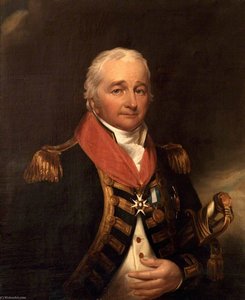
Admiral William Essington (1753–1816), KCB (1809) aut. John James Halls

Admiral William Essington (1753–1816), KCB

1809 · Oil On Canvas · Ministry of Defence, London

A single figure emerges from a dark, impenetrable void. Admiral William Essington meets the viewer's gaze with a steady, unblinking presence. He wears a red cape, its heavy fabric trimmed with gold that catches a phantom light. Beneath the mantle, a white shirt provides a sharp, clean contrast to the shadows. The darkness behind him offers no horizon, no sea, and no sky; there is only the man and the…

2
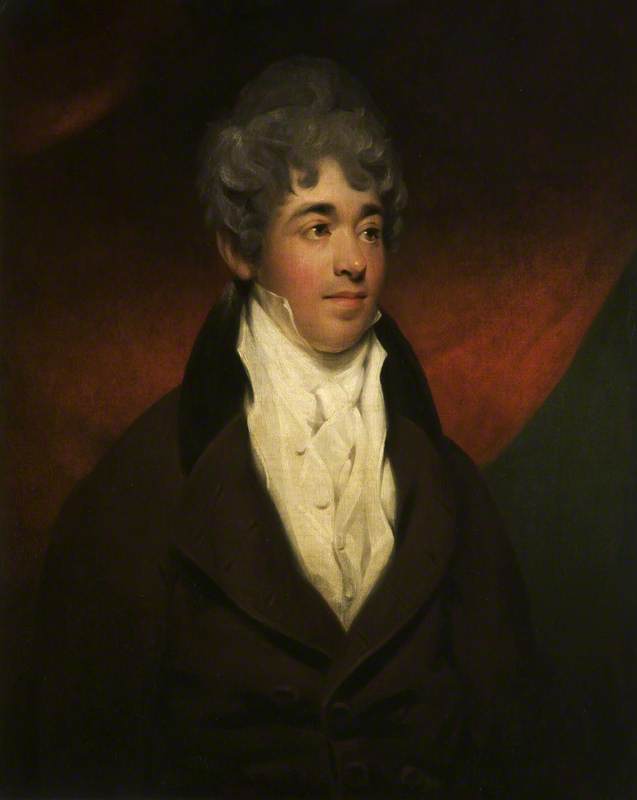
The Honourable William Booth Grey (1773–1852) (1801) aut. John James Halls

The Honourable William Booth Grey (1773–1852)

1801 · Oil On Canvas · National Trust, Altrincham

The face of William Booth Grey emerges from a dark, textured void. Light strikes from the upper left, carving the contours of a man who carries the weight of his era. His gaze is steady, fixed in a three-quarter view that demands a quiet recognition of his presence. The skin is rendered with smooth, deliberate strokes, transitioning from the pale brightness of the forehead to the soft shadows beneath the…

3
Julia Halls Holding an Umbrella (1825) aut. John James Halls

Julia Halls Holding an Umbrella

1825 · Oil On Canvas

The oil on canvas work titled Julia Halls Holding an Umbrella is a portrait executed by the English painter John James Halls. Created in 1825, the painting depicts the subject, Julia Halls, positioned within a wooded landscape. The figure is shown standing outdoors, holding an umbrella as part of the composition.

4
Sir Richard Croft (1762–1818), 6th Bt (1804) aut. John James Halls

Sir Richard Croft (1762–1818), 6th Bt

1804 · Oil · Croft Castle

A man is captured in a moment of quiet contemplation, his gaze directed away from the viewer toward an unseen point of interest. He is dressed in the formal attire of the early nineteenth century, characterized by a dark, heavy coat and a crisp white collar that frames the face. The portrait utilizes a controlled palette to emphasize the subject's features and the texture of his clothing. The lighting is…

5
The Four Eldest Children of Sir Richard Croft (1762–1818), 6th Bt (1803) aut. John James Halls

The Four Eldest Children of Sir Richard Croft (1762–1818), 6th Bt

1803 · Oil · Croft Castle

The air in the room feels heavy with the quiet warmth of a shared afternoon. Four children sit upon the ground, their small forms clustered together in a way that suggests a natural, unforced intimacy. They are the heart of the composition, positioned in a gentle arc that draws the eye across their youthful faces. To the left, one child rests near the center, while others occupy the middle and…

6
Captain The Honourable Henry Grey (1775–1799) (1799) aut. John James Halls

Captain The Honourable Henry Grey (1775–1799)

1799 · Oil On Canvas · National Trust, Altrincham

The man stares directly from the canvas, his gaze meeting the viewer with an intensity that feels startlingly immediate. He wears a crisp white shirt beneath a dark, somber vest, a silhouette that speaks of a life defined by duty and the rigid structures of the late eighteenth century. There is a quiet gravity in his expression, a sense of a person caught in the transition between youth and the…

7
The Honourable Reverend Anchitel Grey (1774–1833) (1801) aut. John James Halls

The Honourable Reverend Anchitel Grey (1774–1833)

1801 · Oil On Canvas · National Trust, Altrincham

The painting depicts a man seated in a chair, positioned in a three-quarter view facing the viewer. He wears a dark suit and a white shirt paired with a tie, a style characteristic of the early nineteenth century. His hands rest in his lap, and his posture is upright. The subject's facial features are rendered with precision, showing the lines of his face and the texture of his skin. He…

8
Elizabeth Margaret Baillie (1794–1876), and William Hunter Baillie (1797–1894) (1802) aut. John James Halls

Elizabeth Margaret Baillie (1794–1876), and William Hunter Baillie (1797–1894)

1802 · Oil

In this 1802 portrait, we find ourselves observing a private moment between two children, Elizabeth Margaret Baillie and William Hunter Baillie. They are positioned outdoors, framed by the soft, natural textures of trees that create a gentle backdrop for their presence. There is a certain stillness to the composition, a pause in time that captures the innocence of their youth. The boy, positioned to the left, is dressed in a…

9
Reverend John Savill (1780–1826) (1811) aut. John James Halls

Reverend John Savill (1780–1826)

1811 · Oil

In this 1811 portrait, we encounter the quiet dignity of Reverend John Savill. The subject is captured in a moment of stillness, his gaze meeting the viewer with a steady, composed expression. He is dressed in the formal attire of his station, a black suit paired with a crisp white collar and tie that provides a sharp, tonal contrast against the darker fabric. His brown hair is rendered with careful…

10
Edmund Kean (1787–1833), as Richard in 'Richard III' by William Shakespeare (1814) aut. John James Halls

Edmund Kean (1787–1833), as Richard in 'Richard III' by William Shakespeare

1814 · Oil On Canvas

A crown rests upon a brow marked by the heavy burden of a stolen throne. The man stands amidst the shadows of a castle, his body a vessel for a character defined by cunning and physical deformity. He grips a scepter in one hand and a staff in the other, his posture a study in tension and royal command. The fabric of his attire catches the light, heavy with the…

John James Halls darba rinkinys tęsiamas, nuo 11 iki 15

žymios John James Halls tapiojamos, pagal laikotarpį

Temos, kurios domino John James Halls

Ketverios temos, dažniausiai pasikrausto originaluose, kiekvienos su savo puikiausiu pavyzdžiu.

Muziejai, kuriuose saugomi John James Halls originalūs darbai

7 muziejai, kuriuose saugoma daugiausia šioje pusėje esamų paveikslų.

Muzejaus Miestas John James Halls darbai Šiojo sąrašo paveikslai
National Trust, AltrinchamNational Trust Altrincham 3 The Honourable William Booth Grey (1773–1852), Captain The Honourable Henry Grey (1775–1799), The Honourable Reverend Anchitel Grey (1774–1833)
Croft CastleCroft Castle 2 Sir Richard Croft (1762–1818), 6th Bt, The Four Eldest Children of Sir Richard Croft (1762–1818), 6th Bt
Ministry of Defence, LondonMinistry of Defence London 1 Admiral William Essington (1753–1816), KCB
National Portrait Gallery, LondrasNational Portrait Gallery Londras 1 Thomas Denman, 1st Baron Denman
Exeter katedra, EkseterExeter katedra Ekseter 1 The Very Reverend John Garnett, DD, Dean of Exeter (1810–1813)
Manx Museum, DouglasManx Museum Douglas 1 John Christian Curwen (1756–1828), MP, MHK
National Maritime Museum, LondonasNational Maritime Museum Londonas 1 Rear Admiral Sir George Cockburn (1772–1853)

John James Halls dešimtmetėms po dešimtmetės: originalus kūrinys, apibūdinantis kiekvieną iš jų

Darbai pagal dešimtmečius

Pasirinkite dešimtmetį, kad pamatytėte jį apibrėžusį originalą.

Kolekcjonerų klausimai apie John James Halls paveikslus

Kuriu darbu John James Halls yra labiausiai garsus?Atsakymas

Admiral William Essington (1753–1816), KCB (1809), Ministry of Defence, London. Toliau seka The Honourable William Booth Grey (1773–1852) (1801) ir Julia Halls Holding an Umbrella (1825).

Kokia buvo John James Halls amžius, kai buvo sukurtas Admiral William Essington (1753–1816), KCB?Atsakymas

33 metų amžiaus: Admiral William Essington (1753–1816), KCB sukurta 1809 m. Nr. John James Halls gimė 1776.

Kokie yra 10 garsiausių John James Halls paveikslų?Atsakymas

Admiral William Essington (1753–1816), KCB, The Honourable William Booth Grey (1773–1852), Julia Halls Holding an Umbrella, Sir Richard Croft (1762–1818), 6th Bt, The Four Eldest Children of Sir Richard Croft (1762–1818), 6th Bt, Captain The Honourable Henry Grey (1775–1799), The Honourable Reverend Anchitel Grey (1774–1833), Elizabeth Margaret Baillie (1794–1876), and William Hunter Baillie (1797–1894), Reverend John Savill (1780–1826) ir Edmund Kean (1787–1833), as Richard in 'Richard III' by William Shakespeare. Viršuje esančioje reitingo sąraše nurodyta kiekvieno kūrinio metis ir muziejus.

Kiek paveikslų paliko John James Halls?Atsakymas

Mūsų kataloge yra 15 John James Halls darbų, skirtų laikotarpiui nuo 1799 iki 1853.

Kuriuose muziejuose eksponuojami John James Halls šedevrai?Atsakymas

Daugiausia – National Trust (Altrincham), Croft Castle ir Ministry of Defence (London). Viršuje esančiame muziejų sąraše yra visi jie.

Kuriomis metais John James Halls tapo savo garsiausius kūrinius?Atsakymas

1800s laikotarpiu: 6 iš 15 šioje pusėje esančių darbų buvo sukurtos tada, iš jų Admiral William Essington (1753–1816), KCB.

Kokie yra pirmasis ir paskutinis garsieji John James Halls originalūs darbai?Atsakymas

Šioje pusėje seniausias darbas yra Captain The Honourable Henry Grey (1775–1799) (1799), o naujausias – The Very Reverend John Garnett, DD, Dean of Exeter (1810–1813) (1853).

Kurią temą John James Halls rinkosi dažniausiai?Atsakymas

Man (7), White shirt (2) ir Dark background (2) iš 15 šioje pusėje esamų darbų.

Kurią techniką John James Halls naudojo dažniausiai?Atsakymas

Oil On Canvas, iš 15 šios puslapio darbų – 7.

Kurių John James Halls darbai eksponuojami National Trust?Atsakymas

The Honourable William Booth Grey (1773–1852), Captain The Honourable Henry Grey (1775–1799) ir The Honourable Reverend Anchitel Grey (1774–1833): National Trust, Altrincham kolekcijoje yra 3 šioje pusėje esančių darbų.

John James Halls: gyvenimas ir kūryba

The Life and Origins of John James Halls

To understand the trajectory of John James Halls, one must look to his roots in Colchester, Essex. Born in 1776, his very name carries the weight of his father's intellectual preoccupations, as he was named after Jean-Jacques Rousseau. This connection to Enlightenment thought was not merely a naming convention; it signaled a lineage of specific, structured ideas that would inform his development. His family connections provided a direct link to the ecclesiastical establishment, as he was the nephew of Dr. John Garnett, the dean of Exeter. This pedigree placed him within a specific social and intellectual stratum from the start.

Halls lived through a period of significant transition in English art, moving from his Essex origins into the professional sphere of London. His life, spanning from 1776 to 1853, reflects the shifting priorities of a society moving from the late eighteenth century into the Victorian era. He was an English painter who navigated these changing tastes with a focus on both the individual and the dramatic. His background provided the social capital necessary to move between the scholarly circles of the clergy and the competitive landscape of the London art scene.

Early Career and London Activity

Halls’ entry into the professional sphere was marked by an early appearance at the Royal Academy in 1791, where he exhibited a landscape. This initial recognition preceded his move to London, where he settled as a professional artist about 1797. The capital provided the necessary environment for an artist of his ambitions to establish a foothold in the competitive English art scene.

His development was significantly shaped by a scholarly trip to Paris in 1802. Accompanied by Henry Fuseli and other contemporaries, Halls traveled to study the vast collections amassed by Napoleon Bonaparte. This exposure to large-scale, historical, and classical works provided the technical and conceptual foundation for his later, more complex compositions. The ability to engage with such significant collections in Paris helped define his approach to large-scale subject matter.

  • 1791: Landscape exhibited at the Royal Academy

Mythological and Biblical Subject Matter

Halls’ early output reveals a preoccupation with the dramatic tension inherent in classical antiquity. Between 1798 and 1800, he established his reputation through a series of mythological exhibitions that relied on high-stakes narrative. He presented Fingal Assailing the Spirit of Loda in 1798, followed by Zephyr and Aurora in 1799. By 1800, his focus shifted toward the tragic, as seen in Creon Finding Hæmon and Antigone in the Cave. These works demonstrate a command of composition and lighting designed to emphasize the weight of the myth rather than mere decoration.

As his career progressed, Halls moved toward more monumental and heavy-handed themes, frequently turning to biblical narratives to achieve scale. His handling of these subjects was characterized by an ability to convey complex human emotion through meticulous detail. He tackled significant scenes including Lot’s Wife (1802), Hero and Leander (1808), and Danae (1811). These paintings were not mere illustrations; they were attempts to capture the psychological gravity of the source material through large-scale visual storytelling.

Notable Portraiture and Engravings

Halls’s legacy is anchored by his ability to translate dramatic character into formal portraiture. His depiction of Charles Kean as Richard III remains a significant example of his capacity to capture theatrical intensity. This work was later translated into the mezzotint medium, ensuring the image reached a wider audience than a single canvas ever could. He frequently utilized engraving to extend the reach of his visual narratives, a practice that solidified his presence in the nineteenth-century art market.

His technical command extended to the mezzotint process, a method requiring precision and a deep understanding of light and shadow. In 1807, Charles Turner engraved Halls’s work 'A Witch' using this technique. This collaboration highlights the artist's involvement in the printmaking culture of the era. Beyond these individual efforts, Halls worked extensively with Samuel Freeman to produce various mezzotint prints, demonstrating a professional reliance on skilled engravers to disseminate his compositions.

The artist also secured a place within the institutional record through high-profile exhibitions. His portrait of Lord Denman was presented at the Royal Academy in 1819, a move that confirmed his standing among the professional elite of London. These portraits were not merely likenesses; they were calculated exercises in status and presence.

  • Charles Kean as Richard III
  • Lord Denman (exhibited 1819)
  • 'A Witch' (engraved 1807)

Major Commissions and Scholarly Works

Halls’ influence extended into the architectural fabric of the church through his work in stained glass. In 1813, he completed a stained-glass window for Lichfield Cathedral, a commission secured through his friendship with Henry Salt. This project demonstrated a technical versatility that moved beyond the easel and into the permanent, structural elements of religious spaces.

His intellectual pursuits were as deliberate as his brushwork. He transitioned from visual representation to the curation of historical narratives, acting as an editor for significant biographical texts. In 1831, he edited the biography of Nathaniel Pearce. This was followed in 1834 by his work on The Life and Correspondence of Henry Salt, F.R.S., a project that included a portrait of Salt painted by Halls himself and engraved by Samuel Freeman.

Where to See His Works Today

The physical presence of Halls's output remains scattered across several significant institutional collections, making his legacy a matter of geographic exploration. In London, his portrait of Thomas Denman, 1st Baron Denman, is held by the National Portrait Gallery. This work sits alongside his depiction of Rear Admiral Sir George Cockburn, which is part of the collection at the National Maritime Museum. These pieces provide a direct look at the technical precision he applied to the high-ranking figures of his era.

Beyond the capital, his reach extends to regional and specialized repositories. The Manx Museum in Douglas maintains his portrait of John Christian Curwen. For those interested in his depictions of familial structures, Croft Castle holds The Four Eldest Children of Sir Richard Croft. These surviving canvases offer the most tangible evidence of his ability to navigate both the formal requirements of portraiture and the specific demands of his patrons.