John Ferneley portretas

John Ferneley tapiai: 86 garsiausi πίναšiai, galerijos akimis

Atnaujinta spalis 2026 · pagal mūsų populiarumumo koeficientą (paieškos, lankytojai ir užsakymai kiekvienam kūriniui) · 106 John Ferneley darbai mūsų kataloge

Trumpai tariant

Galerijos akimais, garsiausias John Ferneley paveikslas yra Mr Powell and his Son, with Norton, a Grey Hunter (1816). The Council of Horses (from John Gay's 'Fables') (1850) ir William Rutson (1791–1867), on a Grey Hunter (1820) užbaia trio, kurį atpažįsta kiekvienas ž)/\ Iš 106 John Ferneley darbų mūsų kataloge, galerija žemiau pristato 86 garsiausius – kiekvienas yra originalus, su nurodytu metais, muziejumi bei unikaliu aprašymu.

1782 – 1860 Neoclassicism Daugiausia darbų: Yale Center for British Art

10 geriausių galerijos John Ferneley paveikslų

1
Mr Powell and his Son, with Norton, a Grey Hunter (1816) aut. John Ferneley

Mr Powell and his Son, with Norton, a Grey Hunter

1816 · Oil On Canvas

A man in a formal suit and top hat stands alongside his son, a composition that anchors the viewer in the social hierarchies of 1816. Beside them, a white horse, identified as the grey hunter Norton, provides a bright, vertical counterpoint to the human figures. The scene is populated by additional figures, including a person to the far left and another near the center, creating a sense of a gathered…

2
The Council of Horses (from John Gay's 'Fables') (1850) aut. John Ferneley

The Council of Horses (from John Gay's 'Fables')

1850 · Oil On Canvas · National Trust, Derby

The woods hold a quiet assembly. Under a canopy of leaves, horses of varying shades—brown, white, black, and red—gather in a clearing. They do not gallop. Instead, they stand in a stillness that feels heavy with intent. Some graze upon the forest floor, their heads lowered to the earth, while others remain upright, watching. Two birds occupy the periphery, one near the upper left and another toward the bottom right,…

John Ferneley tapiai, rangos nuo 11 iki 86

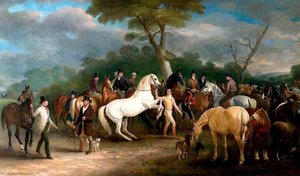
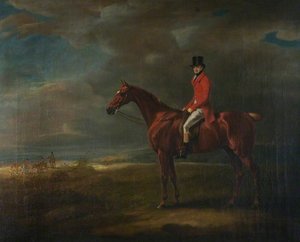
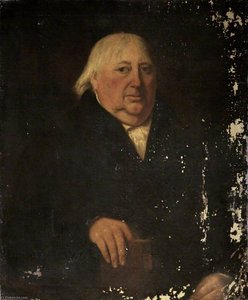
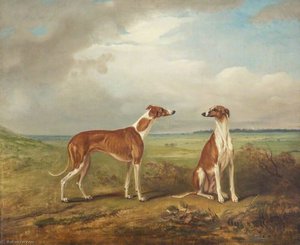
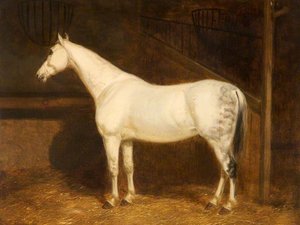
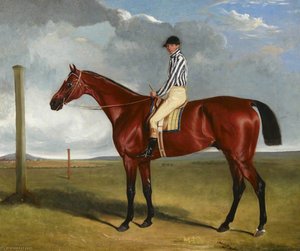
11The Burton Hunt (1830) aut. John FerneleyThe Burton Hunt1830 · Usher Gallery 12The Rev. and Mrs. Henry Palmer with their six younger children at Withcote Hall, Near Oakham, Leicestershire (1838) aut. John FerneleyThe Rev. and Mrs. Henry Palmer with their six younger children at Withcote Hall, Near Oakham, Leicestershire1838 · Yale Center for British Art 13William Massey-Stanley driving his Cabriolet in Hyde Park (1833) aut. John FerneleyWilliam Massey-Stanley driving his Cabriolet in Hyde Park1833 · Yale Center for British Art 14Edward Horner Reynard and his Brother George Grouse-Shooting At Middlesmoor, Yorkshire, with Their Gamekeeper Tully Lamb (1836) aut. John FerneleyEdward Horner Reynard and his Brother George Grouse-Shooting At Middlesmoor, Yorkshire, with Their Gamekeeper Tully Lamb1836 · Yale Center for British Art 15A Groom (Frank Spence) with Two Ponies and Two Greyhounds in a Landscape (1837) aut. John FerneleyA Groom (Frank Spence) with Two Ponies and Two Greyhounds in a Landscape1837 · National Trust 16The Drag of Sir Watkin Williams Wynn (1843) aut. John FerneleyThe Drag of Sir Watkin Williams Wynn1843 · Yale Center for British Art 17Thomas Wilkinson, M.F.H., with the Hurworth Foxhound (1846) aut. John FerneleyThomas Wilkinson, M.F.H., with the Hurworth Foxhound1846 · Yale Center for British Art 18Two Children with a Hurdy Gurdy (1847) aut. John FerneleyTwo Children with a Hurdy Gurdy1847 · New Walk Museum - Art Gallery 19Carthorses with Grooms at a Fair (1856) aut. John FerneleyCarthorses with Grooms at a Fair1856 20A Saddled Grey Hunter in a Loose Box (1854) aut. John FerneleyA Saddled Grey Hunter in a Loose Box1854 · National Trust 21Melton Mowbray Horse Fair aut. John FerneleyMelton Mowbray Horse FairNew Walk Museum - Art Gallery 22Fox and Duck (1813) aut. John FerneleyFox and Duck1813 · Sizergh Castle 23A Groom and Two Hunters (1820) aut. John FerneleyA Groom and Two Hunters1820 · Nunnington Hall 24Sir Robert Leighton after Coursing, with a Groom and a Couple of Greyhounds (1816) aut. John FerneleySir Robert Leighton after Coursing, with a Groom and a Couple of Greyhounds1816 25Thomas Strickland (1792–1835), and Horse in the Hunting Field (1819) aut. John FerneleyThomas Strickland (1792–1835), and Horse in the Hunting Field1819 · Sizergh Castle 26The Quorn Hunt (1819) aut. John FerneleyThe Quorn Hunt1819 · Walker Art Gallery 27Dr Thomas Ford (1820) aut. John FerneleyDr Thomas Ford1820 · New Walk Museum - Art Gallery 28Archibald (1794–1832), Lord Kennedy, Later Earl of Cassillis, on a Hunter (1819) aut. John FerneleyArchibald (1794–1832), Lord Kennedy, Later Earl of Cassillis, on a Hunter1819 · The National Trust For Scotland 29Portrait of an Unknown Man (said to be Joseph Fry) (1816) aut. John FerneleyPortrait of an Unknown Man (said to be Joseph Fry)1816 · Bristol Museum - Art Gallery 30A Chestnut Horse in a Stable (1829) aut. John FerneleyA Chestnut Horse in a Stable1829 31Study of a Saddled Bay Hunter (1828) aut. John FerneleyStudy of a Saddled Bay Hunter1828 · Yale Center for British Art 32John, Henry and Francis Grant at Melton (1823) aut. John FerneleyJohn, Henry and Francis Grant at Melton1823 · New Walk Museum - Art Gallery 33Mr Green's Bay Mare (1825) aut. John FerneleyMr Green's Bay Mare1825 · New Walk Museum - Art Gallery 34Lieutenant Henry Fortescue (1824) aut. John FerneleyLieutenant Henry Fortescue1824 35Heaton Park Races (also known as In the Paddock) (1829) aut. John FerneleyHeaton Park Races (also known as In the Paddock)1829 36A Bay Hunter in a Stable (1829) aut. John FerneleyA Bay Hunter in a Stable1829 · National Trust 37Mr Pare's Coachman with a Newfoundland Dog (1823) aut. John FerneleyMr Pare's Coachman with a Newfoundland Dog1823 · New Walk Museum - Art Gallery 38A Prize Ox in a Landscape (1831) aut. John FerneleyA Prize Ox in a Landscape1831 · National Trust 39'Orion', a Chestnut Hunter Outside a Stable (1831) aut. John Ferneley'Orion', a Chestnut Hunter Outside a Stable1831 · Brooke Robinson Museum 40Two Greyhounds and a Dead Hare (1824) aut. John FerneleyTwo Greyhounds and a Dead Hare1824 · National Trust 41Chestnut Hunter before a Stable (1825) aut. John FerneleyChestnut Hunter before a Stable1825 · National Trust 42A Pair of Greyhounds (1824) aut. John FerneleyA Pair of Greyhounds1824 · Walker Art Gallery 43Portrait of the Artist and His Family in His Studio (1823) aut. John FerneleyPortrait of the Artist and His Family in His Studio1823 44Lieutenant Henry Fortescue (1798–1876) (1824) aut. John FerneleyLieutenant Henry Fortescue (1798–1876)1824 · National Maritime Museum 45Sir John Palmer on His Favourite Mare with His Shepherd, John Green, and His Prize Leicester Longwool Sheep (1823) aut. John FerneleySir John Palmer on His Favourite Mare with His Shepherd, John Green, and His Prize Leicester Longwool Sheep1823 46The Ferneley Family Pew in Melton Mowbray Parish Church, Leicestershire (1828) aut. John FerneleyThe Ferneley Family Pew in Melton Mowbray Parish Church, Leicestershire1828 · New Walk Museum - Art Gallery 47Hunt Scurry (1832) aut. John FerneleyHunt Scurry1832 48John Burgess of Clipstone, Nottinghamshire, on a Favourite Horse, with his Harriers (1838) aut. John FerneleyJohn Burgess of Clipstone, Nottinghamshire, on a Favourite Horse, with his Harriers1838 49Hunter in a Landscape (1839) aut. John FerneleyHunter in a Landscape1839 · New Walk Museum - Art Gallery 50John Burgess of Clipstone, Nottinghamshire, on a Favourite Horse, with his Harriers (1838) aut. John FerneleyJohn Burgess of Clipstone, Nottinghamshire, on a Favourite Horse, with his Harriers1838 51Defiance, a Brood Mare, with Reveller, a Foal (1833) aut. John FerneleyDefiance, a Brood Mare, with Reveller, a Foal1833 52Major Healey, Wearing Raby Hunt Uniform, Riding with the Sedgefield Hunt (1833) aut. John FerneleyMajor Healey, Wearing Raby Hunt Uniform, Riding with the Sedgefield Hunt1833 53Major Healey, Wearing Raby Hunt Uniform, Riding with the Sedgefield Hunt (1833) aut. John FerneleyMajor Healey, Wearing Raby Hunt Uniform, Riding with the Sedgefield Hunt1833 54'General Chasse' on the Course at Aintree (1835) aut. John Ferneley'General Chasse' on the Course at Aintree1835 · Walker Art Gallery 55'Lofty', a Skewbald Carriage Horse, with a Greyhound (1837) aut. John Ferneley'Lofty', a Skewbald Carriage Horse, with a Greyhound1837 · National Trust 56The Opening of the Leicester and Swannington Railway (The Arrival of the First Train at Bagworth, 17 July 1832) (1832) aut. John FerneleyThe Opening of the Leicester and Swannington Railway (The Arrival of the First Train at Bagworth, 17 July 1832)1832 57A Bay Hunter Called 'Queen Mab' outside Calke Abbey (1842) aut. John FerneleyA Bay Hunter Called 'Queen Mab' outside Calke Abbey1842 · National Trust 58Gentleman in a Red Coat on a Bay Hunter (1840) aut. John FerneleyGentleman in a Red Coat on a Bay Hunter1840 · Walker Art Gallery 59A Dappled Grey Hunter Called 'Spangle' and a Terrier Called 'Reveller' (1843) aut. John FerneleyA Dappled Grey Hunter Called 'Spangle' and a Terrier Called 'Reveller'1843 · National Trust 60Two Horses and a Dog (1845) aut. John FerneleyTwo Horses and a Dog1845 61Archery Meeting in Bradgate Park, Leicestershire (1850) aut. John FerneleyArchery Meeting in Bradgate Park, Leicestershire1850 · Yale Center for British Art 62Lieutenant Colonel Sir Robert Tolver Gerard, Bt, and His Regiment, the Lancashire Hussars, on Parade (1851) aut. John FerneleyLieutenant Colonel Sir Robert Tolver Gerard, Bt, and His Regiment, the Lancashire Hussars, on Parade1851 · Duke of Lancaster's Own Yeomanry Museum 63Grooms and Horses in front of Calke Abbey (1850) aut. John FerneleyGrooms and Horses in front of Calke Abbey1850 · National Trust 64Longford Lass and the Jew (1853) aut. John FerneleyLongford Lass and the Jew1853 65Lieutenant Colonel Sir Robert Tolver Gerard, Bt, and His Regiment, the Lancashire Hussars, on Parade (1851) aut. John FerneleyLieutenant Colonel Sir Robert Tolver Gerard, Bt, and His Regiment, the Lancashire Hussars, on Parade1851 · Duke of Lancaster's Own Yeomanry Museum 66A Group of Ponies in the Park (1850) aut. John FerneleyA Group of Ponies in the Park1850 67Longford Lass and the Jew (1853) aut. John FerneleyLongford Lass and the Jew1853 · Fitzwilliam College 68A Group of Ponies in the Park (1850) aut. John FerneleyA Group of Ponies in the Park1850 · National Trust 69A Strawberry Roan Mule and Two Lurchers in a Stable, and a Stable Lad (1850) aut. John FerneleyA Strawberry Roan Mule and Two Lurchers in a Stable, and a Stable Lad1850 · National Trust 70Lord Howe's Groom with Gray Hunter aut. John FerneleyLord Howe's Groom with Gray Hunter 71Master John Marriott on a grey horse, with his sister Annis and their dogs aut. John FerneleyMaster John Marriott on a grey horse, with his sister Annis and their dogs 72firebird and policy aut. John Ferneleyfirebird and policy 73A Bay Hunter In A Loose Box aut. John FerneleyA Bay Hunter In A Loose Box 74A Gentleman Holding Dangerous, the Winner of the 1833 Derby aut. John FerneleyA Gentleman Holding Dangerous, the Winner of the 1833 Derby 75Mountsorrel, Leicestershire, the Market Place (1842) aut. John FerneleyMountsorrel, Leicestershire, the Market Place1842 · New Walk Museum - Art Gallery 76The Game Keeper's Larder (1836) aut. John FerneleyThe Game Keeper's Larder1836 77'Rodolph', a bay hunter, in an extensive landscape aut. John Ferneley'Rodolph', a bay hunter, in an extensive landscape 78A Jockey On A Chestnut Hunter aut. John FerneleyA Jockey On A Chestnut Hunter 79A Chestnut Hunter in a Landscape aut. John FerneleyA Chestnut Hunter in a Landscape 80A Man in Hunt Uniform aut. John FerneleyA Man in Hunt UniformUpton House 81Solomon, Out of King David aut. John FerneleySolomon, Out of King David 82A Grey Hunter in a Stable aut. John FerneleyA Grey Hunter in a StableNational Trust 83A Chestnut Hunter in a Field aut. John FerneleyA Chestnut Hunter in a FieldNational Trust 84Lincoln High Street, Two Years after the Coming of the Railways aut. John FerneleyLincoln High Street, Two Years after the Coming of the RailwaysUsher Gallery 85Bay Racehorse and Rider aut. John FerneleyBay Racehorse and Rider 86A Chestnut Hunter in a Stable aut. John FerneleyA Chestnut Hunter in a StableNational Trust

žymios John Ferneley tapiojamos, pagal laikotarpį

Temos, kurios domino John Ferneley

Ketverios temos, dažniausiai pasikrausto originaluose, kiekvienos su savo puikiausiu pavyzdžiu.

Muziejai, kuriuose saugomi John Ferneley originalūs darbai

8 muziejai, kuriuose saugoma daugiausia šioje pusėje esamų paveikslų.

Muzejaus Miestas John Ferneley darbai Šiojo sąrašo paveikslai
Yale Center for British Art, New HavenYale Center for British Art New Haven 10 Miss Catherine Herrick with her Nieces and Nephews, the Five Elder Children of the Rev. and Mrs. Henry Palmer, signed and dated 1827, The Quorn Hunt: a Sketch of the Artist and his Friends Moving Off, Euxton, with John White Up, at Heaton Park
National Trust, DerbyNational Trust Derby 9 The Council of Horses (from John Gay's 'Fables'), A Groom (Frank Spence) with Two Ponies and Two Greyhounds in a Landscape, A Saddled Grey Hunter in a Loose Box
New Walk Museum - Art Gallery, LeicesterNew Walk Museum - Art Gallery Leicester 9 Two Children with a Hurdy Gurdy, Melton Mowbray Horse Fair, Dr Thomas Ford
Walker Art Gallery, LiverpulisWalker Art Gallery Liverpulis 4 The Quorn Hunt, A Pair of Greyhounds, 'General Chasse' on the Course at Aintree
National Trust, StokportasNational Trust Stokportas 3 A Grey Hunter in a Stable, A Chestnut Hunter in a Field, A Chestnut Hunter in a Stable
Nunnington HallNunnington Hall 2 William Rutson (1791–1867), on a Grey Hunter, A Groom and Two Hunters
Usher Gallery, LincolnUsher Gallery Lincoln 2 The Burton Hunt, Lincoln High Street, Two Years after the Coming of the Railways
Sizergh Castle, KendalSizergh Castle Kendal 2 Fox and Duck, Thomas Strickland (1792–1835), and Horse in the Hunting Field

John Ferneley, po vieno ikoninio paveikslio kiekvienam dešimtmenės laikotarpiui

Darbai pagal dešimtmečius

Pasirinkite dešimtmetį, kad pamatytėte jį apibrėžusį originalą.

John Ferneley tapyiniai: galerijos atsakymai

Kuris John Ferneley paveikslas yra pats garsiausias iš visų?Atsakymas

Mr Powell and his Son, with Norton, a Grey Hunter (1816). Toliausiai eina The Council of Horses (from John Gay's 'Fables') (1850) ir William Rutson (1791–1867), on a Grey Hunter (1820).

Kiek metų buvo John Ferneley, kai sukūrė Mr Powell and his Son, with Norton, a Grey Hunter?Atsakymas

34 metų amžiaus: Mr Powell and his Son, with Norton, a Grey Hunter sukurta 1816 m. Nr. John Ferneley gimė 1782.

Kuriose yra 10 geriausių John Ferneley paveikslų?Atsakymas

Mr Powell and his Son, with Norton, a Grey Hunter, The Council of Horses (from John Gay's 'Fables'), William Rutson (1791–1867), on a Grey Hunter, Mr Powell and his Son, with Norton, a Grey Hunter, The Meet of the Keith Hall Foxhounds, Miss Catherine Herrick with her Nieces and Nephews, the Five Elder Children of the Rev. and Mrs. Henry Palmer, signed and dated 1827, The Quorn Hunt: a Sketch of the Artist and his Friends Moving Off, Euxton, with John White Up, at Heaton Park, Duchess ir The Quorn at Quenby (sketch). Viršuje esančioje reitingo sąraše nurodyta kiekvieno kūrinio metis ir muziejus.

Kiek kūrinių sukūrė John Ferneley?Atsakymas

Mūsų kataloge yra 106 John Ferneley darbų, skirtų laikotarpiui nuo 1813 iki 1856.

Kur kabinami garsiausi John Ferneley originalūs darbai?Atsakymas

Daugiausia – Yale Center for British Art (New Haven), National Trust (Derby) ir New Walk Museum - Art Gallery (Leicester). Viršuje esančiame muziejų sąraše yra visi jie.

Kada John Ferneley sukūrė savo garsiausias paveikslus?Atsakymas

1820s laikotarpiu: 23 iš 86 šioje pusėje esančių darbų buvo sukurtos tada, iš jų William Rutson (1791–1867), on a Grey Hunter.

Kokie yra ankstyviausi ir vėliausi garsieji John Ferneley kūriniai?Atsakymas

Šioje pusėje seniausias darbas yra Fox and Duck (1813), o naujausias – Carthorses with Grooms at a Fair (1856).

Kurią temą John Ferneley kūrė dažniausiai?Atsakymas

Hunting (22), Beach (6) ir Men (6) iš 86 šioje pusėje esamų darbų.

Kurią techniką John Ferneley naudojo dažniausiai?Atsakymas

Oil On Canvas, iš 86 šios puslapio darbų – 3.

Su kokiu kierliu siejama John Ferneley?Atsakymas

Neoclassicism ir Contemporary realism, vadovaujantis šios puslapio originalais kūriniais.

Kurių John Ferneley originalų turi Yale Center for British Art?Atsakymas

Miss Catherine Herrick with her Nieces and Nephews, the Five Elder Children of the Rev. and Mrs. Henry Palmer, signed and dated 1827, The Quorn Hunt: a Sketch of the Artist and his Friends Moving Off ir Euxton, with John White Up, at Heaton Park: Yale Center for British Art, New Haven kolekcijoje yra 10 šioje pusėje esančių darbų.

John Ferneley: menininkas

The Master of the English Hunt

In the golden age of British sporting art, few names evoke the thundering hooves and spirited pursuits of the Regency era quite like John Ferneley I. Born in 1782 in the quiet village of Thrussington, Leicestershire, Ferneley would grow to become a definitive chronicler of the English countryside. His life’s work serves as a vibrant window into a vanished world of aristocratic leisure, where the rhythm of rural life was dictated by the seasons and the exhilarating chase of the fox hunt. To study a Ferneley canvas is to step into the mist of an English morning, feeling the dampness of the dew and the palpable tension of the hounds in pursuit.

Ferneley’s artistic identity was forged through a profound connection to the landscape and the animals that inhabited it. His early training under the esteemed Benjamin Marshall provided him with more than just technical proficiency; it bestowed upon him a specialized vocabulary of movement. Under Marshall's mentorship, Ferneley learned to translate the raw energy of a galloping horse and the subtle shifts in a rider's posture onto canvas. This foundation allowed him to transition from a student of sporting art to a master of its most complex nuances, eventually leading him to the prestigious Royal Academy School where his talent was refined for the grandest stages of British society.

A Legacy of Motion and Detail

The true brilliance of Ferneley’s oeuvre lies in his ability to balance meticulous realism with an almost breathless sense of motion. His compositions are rarely static; instead, they pulse with the vitality of the hunt. He possessed a rare, anatomical understanding of equine musculature, allowing him to depict the strain of a horse in full stride or the sudden halt of a startled beast with startling accuracy. This dedication to detail extended to the human element as well, capturing the varied expressions of hunters—from the focused intensity of the seasoned rider to the breathless excitement of the spectator.

Throughout his prolific career, Ferneley secured the patronage of the highest echelons of British nobility. His studio in Melton Mowbray became a sanctuary for those seeking to immortalize their sporting triumphs. His catalog of work is vast, yet it maintains a consistent emotional resonance. Some of his most enduring contributions to the art world include:

  • The Melton Mowbray Hunt: A sweeping tribute to the very heart of Leicestershire’s hunting traditions.
  • Lord Henry Bentinck’s Chestnut Hunter ‘Firebird’: A masterful study in equine portraiture and individual character.
  • St John’s Co-Cathedral: Demonstrating his ability to pivot from the kinetic energy of the hunt to more serene, architectural subjects.

Historical Significance and Enduring Influence

Beyond the mere documentation of social customs, Ferneley’s work holds a significant place in the evolution of British painting. While often categorized strictly within the genre of sporting art, his approach to light and atmosphere hinted at the burgeoning shifts in artistic thought that would later define the Impressionist movement. He did not merely paint horses; he painted the atmosphere in which they moved, capturing the fleeting qualities of light filtering through autumn leaves or the heavy gloom of a winter afternoon.

As we look back upon his life, which concluded in 1860, we see an artist who successfully bridged the gap between traditional sporting portraiture and a more expressive, atmospheric style. His legacy remains etched in the annals of art history, serving as a vital link to the traditions of the English landed gentry and providing a timeless celebration of the bond between man, horse, and the natural world. Today, his works continue to captivate collectors and historians alike, standing as enduring monuments to the elegance and vigor of a bygone era.