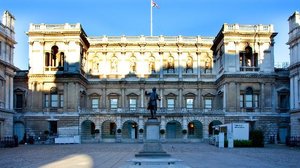
Jean Cooke portretas

7 garsiausių Jean Cooke paveikių – kiekvienas yra unikalus

Atnaujinta lapkritis 2026 · pagal mūsų populiarumumo koeficientą (paieškos, lankytojai ir užsakymai kiekvienam kūriniui) · 7 Jean Cooke darbai mūsų kataloge

Trumpai tariant

Self Portrait (1954) yra Jean Cooke paveikslas, kuriuo gausiausia žmonių žavisi. Po to akmuo patenka į Blast Boadicea (1966) ir Not Waving, Just Painting (1996). Iš 7 Jean Cooke darbų mūsų kataloge šios 7 yra garsiausios – kiekvienas yra unikali originali dai̇lia, pateikta su jos metais, muziejumi ir priežastimi, kodėl ji išlieka per amžius.

1927 – 2008, South London Daugiausia darbų: Karališkoji meno akademija

10 geriausių Jean Cooke paveikslų: galerijos akimais

7
Union Wharf aut. Jean Cooke

Union Wharf

The painting Union Wharf by Jean Cooke is a stunning representation of a bustling harbor scene, showcasing the artist's skill in capturing the essence of everyday life. Measuring 61 x 77 cm, this oil on canvas piece is part of the Government Art Collection in London, United Kingdom. A Glimpse into the Artist's World Jean Cooke's work is a testament to her ability to balance color and composition, creating a…

Muziejai, kuriuose saugomi Jean Cooke originalūs darbai

5 muziejai, kuriuose saugoma daugiausia šioje pusėje esamų paveikslų.

Muzejaus Miestas Jean Cooke darbai Šiojo sąrašo paveikslai
Karališkoji meno akademija, LondonasKarališkoji meno akademija Londonas 1 Blast Boadicea
Usher Gallery, LincolnUsher Gallery Lincoln 1 Not Waving, Just Painting
St Hildas College, OksfordasSt Hildas College Oksfordas 1 Mary Bennett, Principal (1965–1980)
Lincoln College, OksfordasLincoln College Oksfordas 1 Egon Joseph Wellesz (1885–1974), Fellow (1938–1960)
Government Art Collection, LondonasGovernment Art Collection Londonas 1 Union Wharf

Jean Cooke per dešimtmečius: vieniškas originalas kiekvienam

Darbai pagal dešimtmečius

Pasirinkite dešimtmetį, kad pamatytėte jį apibrėžusį originalą.

Jean Cooke tapų klausimai galerijai

Koks yra garsiausias Jean Cooke kūrinys?Atsakymas

Self Portrait (1954). Toliausiai eina Blast Boadicea (1966) ir Not Waving, Just Painting (1996).

Kuriuo amžiaus atσταση Jean Cooke sukūrė Self Portrait?Atsakymas

27 metų amžiaus: Self Portrait sukurta 1954 m. Nr. Jean Cooke gimė 1927.

Kiek žinoma Jean Cooke darbų?Atsakymas

Mūsų kataloge yra 7 Jean Cooke darbų, skirtų laikotarpiui nuo 1954 iki 1996.

Kur galima pamatyti garsiausių Jean Cooke originalų?Atsakymas

Daugiausia – Karališkoji meno akademija (Londonas), Usher Gallery (Lincoln) ir St Hildas College (Oksfordas). Viršuje esančiame muziejų sąraše yra visi jie.

Kuris iš garsių Jean Cooke paveikslų yra pirmasis, o kuris – paskutinis?Atsakymas

Šioje pusėje seniausias darbas yra Self Portrait (1954), o naujausias – Not Waving, Just Painting (1996).

Jean Cooke: meno kūrinys – autoportretas

Jean Cooke (1927–2008): Ungardening – A Quiet Revolution

Jean Cooke was born in London on February 18, 1927, to Arthur Oregon Cooke and his wife. Arthur owned a shop in Blackheath, London where he sold hardware supplies and groceries. Until she was about 6+1⁄2 years old, Cooke spent a lot of time in her father’s shop. Her mother saw little value in education and kept her out of school until then. Her mother had an artistic spirit, creating “beautiful colours to decorate the walls by subtly mixing odd touches of paint.” As a young girl she drew, painted and modeled figures and heads in plasticine. She attended Blackheath High School.

Early Artistic Training & Influences

Cooke began her art studies in 1943 at Central School of Arts and Crafts. She studied life drawing under Bernard Meninsky, textile design, and illustration at the Central School until 1945. Cooke then studied sculpture at Goldsmiths College and pottery at Camberwell College of Arts. Interested in becoming a teacher, she enrolled in the teacher education course at Goldsmiths, which she completed in 1950. Initially, Cooke was most interested in pursuing sculpture, partly because oils were expensive and clay was free at the college. One of her works won a prize, but after suffering a biking accident where she had dislocated her thumb, she worked in pottery. In 1950 she established a pottery workshop in Sussex. Her artistic sensibilities were profoundly shaped by artists like Gwen John and Paula Modersohn-Becker—artists who championed intimacy, observation, and an uncompromising engagement with the materiality of their subjects.

Marriage & Domestic Life: A Complex Relationship

Cooke married John Bratby in 1953. Bratby, a fellow artist, was initially supportive of Cooke’s ambitions but later became increasingly controlling, restricting her painting time to three morning hours and engaging in affairs. Their relationship was marked by emotional turmoil and physical abuse—a reality that Cooke bravely confronted throughout her life, documenting it in her paintings and speaking openly about its impact on her artistic practice. Despite the difficulties, Cooke acknowledged Bratby’s influence on her work, describing him as “an enlivening, inspiring effect.”

Career Highlights & Artistic Style

Cooke's career blossomed after she began teaching at Royal College of Art in 1964. She lectured until 1974 and continued to exhibit her works at the Royal Academy exhibition for decades. Her distinctive style—characterized by meticulous detail, subtle color palettes, and a focus on capturing quiet moments—earned her recognition as one of Britain’s leading landscape painters. Notable commissions included portraits of Mary Bennett (Principal of St Hilda's College) and Walter Oakeshott (Lincoln College), reflecting her commitment to artistic excellence and her ability to convey profound emotion through visual imagery. Her work is held in prestigious collections across the UK, including Tate and the Royal Academy.

Legacy & Recognition

Jean Cooke died on August 6, 2008, leaving behind a remarkable body of work that continues to inspire artists and scholars alike. Her unflinching honesty about her personal life—particularly her experiences with domestic violence—challenged societal norms and paved the way for greater openness about trauma and artistic expression. Cooke’s legacy resides not only in her stunning paintings but also in her courageous advocacy for vulnerable individuals and her unwavering belief in the transformative power of art.