Janas Van Osas portretas

Janas Van Osas paveikslai: 51 garsiausi, galerijos akimis

Atnaujinta lapkritis 2026 · pagal mūsų populiarumumo koeficientą (paieškos, lankytojai ir užsakymai kiekvienam kūriniui) · 52 Janas Van Osas darbai mūsų kataloge

Trumpai tariant

Galerijos akimais, garsiausias Janas Van Osas tapas yra Still Life with Flowers, Fruit and Birds (1774), kurio originalas eksponuojamas Rijksmuseum, Amsterdamas. Still Life with Friut and Flowers (1790) ir Flowers and Fruits on a Stone Cornice, with Mouse and Lizard (1771) užbaia trio, kurį atpažįsta kiekvienas ž)/\ Iš 52 Janas Van Osas darbų mūsų kataloge, galerija žemiau pristato 51 garsiausius – kiekvienas yra originalus, su nurodytu metais, muziejumi bei unikaliu aprašymu.

1744 – 1808, Midelharnisas Rococo Daugiausia darbų: Fitzwilliam Museum

10 geriausių galerijos Janas Van Osas paveikslų

1
Still Life with Flowers, Fruit and Birds (1774) aut. Janas Van Osas

Still Life with Flowers, Fruit and Birds

1774 · Oil On Canvas · Rijksmuseum, Amsterdamas

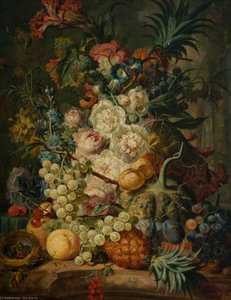
Still Life with Flowers, Fruit and Birds is a work by the Dutch painter Jan Van Os. He was born in Middelharnis, Netherlands. This painting emerged from a lineage of creators, as he was a member of the Van Os family of artists. The canvas captures a dense arrangement of botanical and organic life, centered around a pyramidal cluster of flora and fauna.

2
Still Life with Friut and Flowers (1790) aut. Janas Van Osas

Still Life with Friut and Flowers

1790 · Oil On Canvas · Speed Art Museum, Louisville

Still Life with Friut and Flowers is an oil on canvas work by the Dutch painter Jan Van Os. Created about 1790, this composition reflects the artist's long-standing dedication to the meticulous study of botanical and organic subjects. Van Os, who was born in Middelharnis, Netherlands, brought a specific technical precision to his depictions of nature that became a hallmark of his practice.

3
Flowers and Fruits on a Stone Cornice, with Mouse and Lizard (1771) aut. Janas Van Osas

Flowers and Fruits on a Stone Cornice, with Mouse and Lizard

1771 · Oil On Canvas

A heavy stone cornice anchors the composition, its gritty surface catching a sharp, directional light. Upon this ledge, a pineapple sits with its rough, patterned skin, its warm orange hues contrasting against the deep shadows of the background. Beside it, a cluster of grapes spills downward, some translucent and pale green, others a bruised, dark purple. A sliced melon reveals its moist, glistening interior, its flesh catching the light like…

4
Still Life with Flowers and Fruit (1775) aut. Janas Van Osas

Still Life with Flowers and Fruit

1775 · Oil On Canvas · Centraal Museum, Utrecht

This work, titled Still Life with Flowers and Fruit, was painted by Jan Van Os around 1775. The artist, who was born in Middelharnis, Netherlands, on 23 February 1744, developed a specific command over the textures of the natural world. His practice often focused on the quiet, detailed observation of botanical and organic life, moving away from his earlier interest in seascapes to find a more intimate subject matter.

5
river-landscape with sheep (1769) aut. Janas Van Osas

river-landscape with sheep

1769 · Oil On Canvas

In this monochrome, black and white reproduction of an 18th-century landscape oil painting, Jan Van Os captures a serene river scene. The work, titled river-landscape with sheep, was created about 1769. A small flock of sheep grazes upon a grassy bank in the foreground, some standing while others rest in the quietude. To the left, a dark, thatched-roof cottage sits near the water's edge, while a large, leafy tree anchors…

6
Winter Landscape aut. Janas Van Osas

Winter Landscape

Oil On Panel

The painting titled Winter Landscape belongs to the hand of Jan Van Os. Born in 1744 in Middelharnis, Netherlands, the artist established a presence within a significant Dutch artistic lineage. His life spanned the transition of the eighteenth century, concluding in 1808.

8
Boats and Sailboats on a Quiet Sea (1780) aut. Janas Van Osas

Boats and Sailboats on a Quiet Sea

1780 · Oil · Städel Museum, Frankfurtas

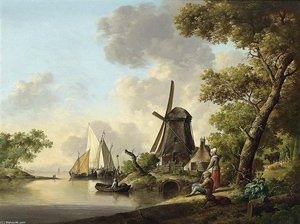
In this oil painting, titled Boats and Sailboats on a Quiet Sea, we encounter a serene maritime scene composed by Jan Van Os. Created in 1780, the work captures a moment of stillness upon the water. It belongs to a period in the artist's career when he focused on the expansive horizons of seascapes, a pursuit that preceded his later, more celebrated focus on floral and fruit still lifes.

9
Flowers (1780) aut. Janas Van Osas

Flowers

1780 · Oil On Canvas · Art Gallery of South Australia, Adelaida

In this 1780 oil painting, Jan van Os presents a dense, lush arrangement of botanical life that feels almost heavy with its own vitality. A large, ornate ceramic vase sits at the center, overflowing with a variety of blooms that spill outward in a controlled yet organic chaos. The composition draws the eye through a collection of roses, tulips, and anemones, their petals rendered with a meticulous attention to texture…

10
Still life of Plants, Flowers and Fruit (1787) aut. Janas Van Osas

Still life of Plants, Flowers and Fruit

1787 · Watercolor · Rijksmuseum, Amsterdamas

Still life of Plants, Flowers and Fruit is a work by Jan Van Os. Created in 1787, this composition captures a dense arrangement of botanical life. The artist, Jan Van Os, focused his attention on the quiet presence of nature through this specific grouping. It is a study of organic forms resting together in a singular moment.

Janas Van Osas tapiai, rangos nuo 11 iki 51

11Dutch Ships Under the Breeze (1800) aut. Janas Van OsasDutch Ships Under the Breeze1800 12Still Life with Dead Birds, Camellia and Fruit (1800) aut. Janas Van OsasStill Life with Dead Birds, Camellia and Fruit1800 13Flowers, grapes, plums, walnuts and a melon on a stone ledge (1800) aut. Janas Van OsasFlowers, grapes, plums, walnuts and a melon on a stone ledge1800 14Still Life with Fruit (1808) aut. Janas Van OsasStill Life with Fruit1808 · The Frick Pittsburgh 15Flowers aut. Janas Van OsasFlowersKrakovos nacionalinis muziejus 16Dutch Vessels in a Calm Water aut. Janas Van OsasDutch Vessels in a Calm WaterSzépművészeti Múzeum 17Dutch Vessels in a Calm Water aut. Janas Van OsasDutch Vessels in a Calm WaterSzépművészeti Múzeum 18Still life with Flowers and Fruit aut. Janas Van OsasStill life with Flowers and FruitMuseum Mayer van den Bergh 19Blomsterstycke aut. Janas Van OsasBlomsterstyckeNationalmuseum 20Flowers aut. Janas Van OsasFlowers 21Flowers And Fruit aut. Janas Van OsasFlowers And FruitFitzwilliam Museum 22Flowers And Fruit - aut. Janas Van OsasFlowers And Fruit - 23Dutch Vessels In Calm Water aut. Janas Van OsasDutch Vessels In Calm WaterNational Gallery 24Fruit, Flowers And A Fish aut. Janas Van OsasFruit, Flowers And A FishNational Gallery 25Still Life Of Flowers aut. Janas Van OsasStill Life Of Flowers 26Still Life Of Summer Flowers aut. Janas Van OsasStill Life Of Summer Flowers 27Fruit And Flowers In A Terracotta Vase aut. Janas Van OsasFruit And Flowers In A Terracotta VaseNational Gallery 28Flower Piece aut. Janas Van OsasFlower Piece 29Vase Of Flowers And Fruit aut. Janas Van OsasVase Of Flowers And FruitFitzwilliam Museum 30Still Life - Grapes And Peaches In A Basket aut. Janas Van OsasStill Life - Grapes And Peaches In A Basket 31Roses, Peony, Auricula And Fritillary In A Vase aut. Janas Van OsasRoses, Peony, Auricula And Fritillary In A VaseDudmaston Hall 32Still Life With Dead Bird, Fruit And Flowers aut. Janas Van OsasStill Life With Dead Bird, Fruit And Flowers 33Fruit aut. Janas Van OsasFruit 34Flowers, Grapes And Dove On A Stone Ledge aut. Janas Van OsasFlowers, Grapes And Dove On A Stone Ledge 35Still Life Of Fruit And Flowers With Bird's Nest On A Marble Ledge aut. Janas Van OsasStill Life Of Fruit And Flowers With Bird's Nest On A Marble Ledge 36Still Life With Roses, Larkspur And Fruit, With A Partridge aut. Janas Van OsasStill Life With Roses, Larkspur And Fruit, With A PartridgeDudmaston Hall 37A Vase Of Flowers aut. Janas Van OsasA Vase Of FlowersFitzwilliam Museum 38Still Life With Fruit, Flowers And Fish aut. Janas Van OsasStill Life With Fruit, Flowers And FishFitzwilliam Museum 39Fruit Piece aut. Janas Van OsasFruit PieceFitzwilliam Museum 40Still-Life aut. Janas Van OsasStill-Life 41Summer Landscape aut. Janas Van OsasSummer Landscape 42Still Life aut. Janas Van OsasStill Life 43Fruits And Flowers aut. Janas Van OsasFruits And FlowersFitzwilliam Museum 44Still Life Of Flowers And Fruit aut. Janas Van OsasStill Life Of Flowers And Fruit 45Flowers In A Goldfish Bowl In A Landscape With A Tower aut. Janas Van OsasFlowers In A Goldfish Bowl In A Landscape With A Tower 46Still Life With Fruit And Flowers aut. Janas Van OsasStill Life With Fruit And Flowers 47Still Life - Flowers And Fruit - aut. Janas Van OsasStill Life - Flowers And Fruit - 48Roses, Tulips And Crown Imperial In A Vase With A Bird's Nest aut. Janas Van OsasRoses, Tulips And Crown Imperial In A Vase With A Bird's NestDudmaston Hall 49Still Life - Flowers And Fruit aut. Janas Van OsasStill Life - Flowers And Fruit 50Flower Piece - aut. Janas Van OsasFlower Piece - 51River Landscape aut. Janas Van OsasRiver Landscape

žymios Janas Van Osas tapiojamos, pagal laikotarpį

Temos, kurios domino Janas Van Osas

Ketverios temos, dažniausiai pasikrausto originaluose, kiekvienos su savo puikiausiu pavyzdžiu.

Muziejai, kuriuose saugomi Janas Van Osas originalūs darbai

8 muziejai, kuriuose saugoma daugiausia šioje pusėje esamų paveikslų.

Muzejaus Miestas Janas Van Osas darbai Šiojo sąrašo paveikslai
Fitzwilliam MuseumFitzwilliam Museum 6 Flowers And Fruit, Vase Of Flowers And Fruit, A Vase Of Flowers
National Gallery, LondonasNational Gallery Londonas 3 Dutch Vessels In Calm Water, Fruit, Flowers And A Fish, Fruit And Flowers In A Terracotta Vase
Dudmaston HallDudmaston Hall 3 Roses, Peony, Auricula And Fritillary In A Vase, Still Life With Roses, Larkspur And Fruit, With A Partridge, Roses, Tulips And Crown Imperial In A Vase With A Bird's Nest
Rijksmuseum, AmsterdamasRijksmuseum Amsterdamas 2 Still Life with Flowers, Fruit and Birds, Still life of Plants, Flowers and Fruit
Szépművészeti Múzeum, BudapeštasSzépművészeti Múzeum Budapeštas 2 Dutch Vessels in a Calm Water, Dutch Vessels in a Calm Water
Speed Art Museum, LouisvilleSpeed Art Museum Louisville 1 Still Life with Friut and Flowers
Centraal Museum, UtrechtCentraal Museum Utrecht 1 Still Life with Flowers and Fruit
Bavarijos valstybinės paveikslų kolekcijos, MiunchasBavarijos valstybinės paveikslų kolekcijos Miunchas 1 Still Life of Flowers

Janas Van Osas, po vieno ikoninio paveikslio kiekvienam dešimtmenės laikotarpiui

Darbai pagal dešimtmečius

Pasirinkite dešimtmetį, kad pamatytėte jį apibrėžusį originalą.

Janas Van Osas tapyiniai: galerijos atsakymai

Kuris Janas Van Osas paveikslas yra pats garsiausias iš visų?Atsakymas

Still Life with Flowers, Fruit and Birds (1774), Rijksmuseum, Amsterdamas. Toliau seka Still Life with Friut and Flowers (1790) ir Flowers and Fruits on a Stone Cornice, with Mouse and Lizard (1771).

Kiek metų buvo Janas Van Osas, kai sukūrė Still Life with Flowers, Fruit and Birds?Atsakymas

30 metų amžiaus: Still Life with Flowers, Fruit and Birds sukurta 1774 m. Nr. Janas Van Osas gimė 1744.

Kuriose yra 10 geriausių Janas Van Osas paveikslų?Atsakymas

Still Life with Flowers, Fruit and Birds, Still Life with Friut and Flowers, Flowers and Fruits on a Stone Cornice, with Mouse and Lizard, Still Life with Flowers and Fruit, river-landscape with sheep, Winter Landscape, Still Life of Flowers, Boats and Sailboats on a Quiet Sea, Flowers ir Still life of Plants, Flowers and Fruit. Viršuje esančioje reitingo sąraše nurodyta kiekvieno kūrinio metis ir muziejus.

Kiek kūrinių sukūrė Janas Van Osas?Atsakymas

Mūsų kataloge yra 52 Janas Van Osas darbų, skirtų laikotarpiui nuo 1769 iki 1808.

Kur kabinami garsiausi Janas Van Osas originalūs darbai?Atsakymas

Daugiausia – Fitzwilliam Museum, National Gallery (Londonas) ir Dudmaston Hall. Viršuje esančiame muziejų sąraše yra visi jie.

Kada Janas Van Osas sukūrė savo garsiausias paveikslus?Atsakymas

1770s laikotarpiu: 4 iš 51 šioje pusėje esančių darbų buvo sukurtos tada, iš jų Still Life with Flowers, Fruit and Birds.

Kokie yra ankstyviausi ir vėliausi garsieji Janas Van Osas kūriniai?Atsakymas

Šioje pusėje seniausias darbas yra river-landscape with sheep (1769), o naujausias – Still Life with Fruit (1808).

Kurią temą Janas Van Osas kūrė dažniausiai?Atsakymas

Flowers (29), Grapes (15) ir Fruit (10) iš 51 šioje pusėje esamų darbų.

Kurią techniką Janas Van Osas naudojo dažniausiai?Atsakymas

Oil On Canvas, iš 51 šios puslapio darbų – 14.

Su kokiu kierliu siejama Janas Van Osas?Atsakymas

Rococo, vadovaujantis šios puslapio originalais kūriniais.

Kurių Janas Van Osas originalų turi Fitzwilliam Museum?Atsakymas

Flowers And Fruit, Vase Of Flowers And Fruit ir A Vase Of Flowers: Fitzwilliam Museum kolekcijoje yra 6 šioje pusėje esančių darbų.

Janas Van Osas: menininkas

The Legacy of Jan van Os

Jan van Os stands as a central figure in a remarkable Dutch artistic dynasty, a painter whose life and work were deeply intertwined with the rich traditions of his homeland. Born in Middelharnis, Netherlands, he emerged from a lineage of creators that would leave an indelible mark on the history of still life painting. His early training under Aert Schouman in The Hague provided him with a foundational mastery that allowed him to navigate the evolving tastes of the eighteenth century. While his professional journey began with the expansive horizons of seascapes, he eventually found his true calling in the intimate, meticulously detailed world of floral and fruit compositions.
The artist's personal life was as much a part of the artistic landscape as his canvases. In 1775, he married Susanna de La Croix, an accomplished pastellist and the daughter of the portraitist Pieter Frederik de la Century. This union not only solidified his place within a community of skilled makers but also established a domestic environment where art was the primary language. Through this connection, Jan van Os became the patriarch of a family of painters, serving as a teacher to his children, including Maria Margaretha van Os and Pieter Gerardus van Os, ensuring that his technical precision and aesthetic sensibilities were passed down through generations.

Mastery of the Still Life

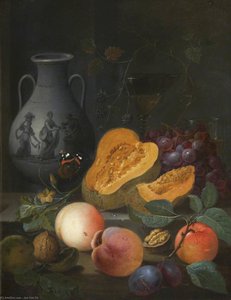
The brilliance of Jan van Os lies in his ability to breathe life into the inanimate. Drawing inspiration from the legendary Jan van Huysum, he perfected a style characterized by breathtaking realism and a vibrant use of color. His floral arrangements are often presented with a sense of theatrical elegance, frequently resting upon a marble ledge set against a deep green background that allows the petals to glow with an almost supernatural light. Every element of his work—from the delicate texture of a petal to the heavy sheen of ripening fruit—was rendered with an obsessive attention to detail that captivated the viewer.

Beyond mere decoration, his works often captured a sense of fleeting beauty and the passage of time. In masterpieces such as Still Life With Dead Bird, Fruit And Flowers, he blended the lushness of nature with more poignant, somber elements, creating a dialogue between life and decay. This ability to balance the exuberant vitality of a blooming rose with the stillness of a taxidermied bird demonstrates a profound emotional depth. His technique was not merely about imitation but about capturing the very essence of his subjects, making each composition a window into a meticulously observed world.

Historical Significance

The importance of Jan van Os extends far beyond his individual achievements as a painter and poet. He was a cornerstone of the Van Os family of artists, a group that helped sustain the prestige of Dutch painting during a period of significant transition. By recording himself in the painters' confraternity in 1773, he formally entered a lineage of professionals dedicated to the elevation of their craft. His influence is seen not only in his own oeuvre but also in the subsequent successes of his children, who carried his meticulous approach into the nineteenth century.

His contribution to the genre of still life remains a testament to the enduring power of observation. Through his work, the traditions of the Dutch Golden Age were preserved and reinterpreted for a new era, blending classical influences with a refined, late-eighteenth-century elegance. Today, his paintings serve as vital links to a period where the mastery of light, texture, and composition reached a pinnacle of sophistication, leaving behind a legacy of beauty that continues to resonate within the halls of art history.