


1


Atnaujinta lapkritis 2026 · pagal mūsų populiarumumo koeficientą (paieškos, lankytojai ir užsakymai kiekvienam kūriniui) · 71 Jack Levine darbai mūsų kataloge
Trumpai tariant
Galerijos akimais, garsiausias Jack Levine paveikslas yra Man with the Stained Glass Eye (1952). Untitled (644) ir Untitled (809) užbaia trio, kurį atpažįsta kiekvienas ž)/\ Iš 71 Jack Levine darbų mūsų kataloge, galerija žemiau pristato 69 garsiausius – kiekvienas yra originalus, su nurodytu metais, muziejumi bei unikaliu aprašymu.


 The Syndicate1939
12
 The End of the Line1948 · The Phillips Collection
13
 Portrait of a Girl1946
14
 Reception in Miami1948
15
 Homage To Boston1949
16
 Hezekiah1956
17
 35 Minutes from Times Square1956
18
 The Scribe1956
19
 Girl with Red Hair1962 · New Britain Museum of American Art
20
 The Last Waltz1962
21
 Flowers1962
22
 The Green Cloche1962
23
 The Turnkey1956
24
 Untitled (407)
25
 Untitled (800)
26
 Untitled (666)
27
 Untitled (402)
28
 Untitled (635)
29
 Untitled (313)
30
 Untitled (833)
31
 Untitled (414)
32
 Untitled (988)
33
 Untitled (306)
34
 Untitled (772)
35
 Untitled (415)
36
 Untitled (337)
37
 Untitled (764)
38
 Untitled (252)
39
 Untitled (381)
40
 Untitled (901)
41
 Untitled (836)
42
 Untitled (273)
43
 Untitled (818)
44
 Untitled (751)
45
 Untitled (922)
46
 Untitled (166)
47
 Untitled (207)
48
 Untitled (904)
49
 Untitled (134)
50
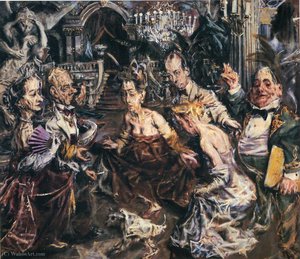 Untitled (170)
51
 Untitled (622)
52
 Untitled (434)
53
 Untitled (600)
54
 Untitled (962)
55
 Untitled (444)
56
 Untitled (816)
57
 Untitled (635)
58
 Untitled (491)
59
 Untitled (782)
60
 Untitled (265)
61
 Untitled (796)
62
 Untitled (196)
63
 Untitled (389)
64
 Untitled (744)
65
 Untitled (966)
66
 Untitled (832)
67
 Untitled (377)
68
 Untitled (199)
69
 Act Of Legislature1949
Ketverios temos, dažniausiai pasikrausto originaluose, kiekvienos su savo puikiausiu pavyzdžiu.
2 muziejai, kuriuose saugoma daugiausia šioje pusėje esamų paveikslų.
| Muzejaus | Miestas | Jack Levine darbai | Šiojo sąrašo paveikslai |
|---|---|---|---|
 The Phillips Collection |
Vašingtonas | 1 | The End of the Line |
 New Britain Museum of American Art |
New Britain | 1 | Girl with Red Hair |
Pasirinkite dešimtmetį, kad pamatytėte jį apibrėžusį originalą.
Man with the Stained Glass Eye (1952). Toliausiai eina Untitled (644) ir Untitled (809).
37 metų amžiaus: Man with the Stained Glass Eye sukurta 1952 m. Nr. Jack Levine gimė 1915.
Man with the Stained Glass Eye, Untitled (644), Untitled (809), Untitled (836), Untitled (604), Untitled (578), Untitled (259), Untitled (284), The Passing Scene ir Burlesque Dancer Verso (Untitled). Viršuje esančioje reitingo sąraše nurodyta kiekvieno kūrinio metis ir muziejus.
Mūsų kataloge yra 71 Jack Levine darbų, skirtų laikotarpiui nuo 1939 iki 1962.
Daugiausia – The Phillips Collection (Vašingtonas) ir New Britain Museum of American Art (New Britain). Viršuje esančiame muziejų sąraše yra visi jie.
1940s laikotarpiu: 7 iš 69 šioje pusėje esančių darbų buvo sukurtos tada, iš jų The Passing Scene.
Šioje pusėje seniausias darbas yra The Syndicate (1939), o naujausias – Girl with Red Hair (1962).
Portrait (4), Reflection (3) ir Elderly man (2) iš 69 šioje pusėje esamų darbų.
Social realism, vadovaujantis šios puslapio originalais kūriniais.


