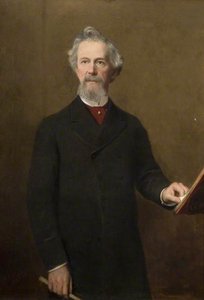
Henry Turner Munns portretas

Henry Turner Munns paveikslai: 24 garsiausi, galerijos akimis

Atnaujinta lapkritis 2026 · pagal mūsų populiarumumo koeficientą (paieškos, lankytojai ir užsakymai kiekvienam kūriniui) · 24 Henry Turner Munns darbai mūsų kataloge

Trumpai tariant

Galerijos akimais, garsiausias Henry Turner Munns tapas yra Chat by the Way (1878), kurio originalas eksponuojamas The New Art Gallery Walsall, Walsall. Sir Josiah Mason (1795–1881) (1873) ir Alderman T. C. Sneyd Kinnersley (1870) užbaia trio, kurį atpažįsta kiekvienas ž)/\ Iš 24 Henry Turner Munns darbų mūsų kataloge, galerija žemiau pristato 24 garsiausius – kiekvienas yra originalus, su nurodytu metais, muziejumi bei unikaliu aprašymu.

1832 – 1898 Daugiausia darbų: Birmingham Museum and Art Gallery

10 geriausių galerijos Henry Turner Munns paveikslų

1
Chat by the Way (1878) aut. Henry Turner Munns

Chat by the Way

1878 · Oil · The New Art Gallery Walsall, Walsall

The scene unfolds in the quietude of 1878, a moment captured through the eyes of Henry Turner Munns. In this work, titled Chat by the Way, the artist invites us into a slice of life from a bygone era. The brushstrokes hold a specific stillness, as if the air itself has paused to allow for a brief exchange between travelers on a dusty path.

2
Sir Josiah Mason (1795–1881) (1873) aut. Henry Turner Munns

Sir Josiah Mason (1795–1881)

1873 · Oil On Canvas · Birmingham Museum and Art Gallery, Birminghamas

The air in the room feels heavy with the scent of old paper and ink. An elderly man sits anchored in his study, his presence commanding the space through a stillness that speaks of a life long lived. He is draped in the formal gravity of a dark coat and waistcoat, the fabric catching a soft, singular light that seems to drift in from a nearby window. This light carves…

3
Alderman T. C. Sneyd Kinnersley (1870) aut. Henry Turner Munns

Alderman T. C. Sneyd Kinnersley

1870 · Oil

Munns was known for his ability to look past the mere likeness of a sitter to find their inner character. In this portrait, we see more than a man in a suit; we see the quiet strength of a Victorian figure. The painting does not rely on grand gestures to command attention. It relies on the truth of the man's expression and the stillness of the room. There is a…

4
Sir Thomas Dakin, Lord Mayor of London (1870) (1871) aut. Henry Turner Munns

Sir Thomas Dakin, Lord Mayor of London (1870)

1871 · Oil · Guildhall Art Gallery, London

The air in the portrait feels heavy with the weight of civic duty and the solemnity of a bygone era. Sir Thomas Dakin sits before us, his presence commanding yet quiet, draped in the formal regalia of his office. A heavy chain rests around his neck, catching the light and marking his status as the Lord Mayor of London. His suit and cape suggest a man of significant responsibility, a…

5
Sir Anthony Marshall (1895) aut. Henry Turner Munns

Sir Anthony Marshall

1895 · Oil On Canvas · Manchester Town Hall, Mančesteris

The portrait of Sir Anthony Marshall by Henry Turner Munns presents a formal encounter with a figure of significant civic standing. Painted in 1895, this work captures a moment of quiet authority through the steady gaze of its subject. The man sits enveloped in elaborate mayoral robes and decorations that signal his high status and dignity. Every fold of his attire and every line upon his face speaks to a…

6
George Dawson (1821–1876) (1877) aut. Henry Turner Munns

George Dawson (1821–1876)

1877 · Oil On Canvas · Birmingham Museum and Art Gallery, Birminghamas

A man sits within the quiet geometry of a room, his presence anchored by the heavy texture of a dark suit and the crisp line of a tie. He is an older gentleman, his face a map of lived experience etched into skin and silvered hair. A beard and mustache frame a mouth that seems to hold the residue of many spoken words. The light catches the ridges of his…

8
Thomas Pinchard (1877) aut. Henry Turner Munns

Thomas Pinchard

1877 · Oil · New Cross Hospital, Wolverhampton

In this 1877 portrait, we find ourselves in the presence of Thomas Pinchard. He sits in a moment of stillness, an older gentleman whose presence fills the frame with a sense of settled dignity. His white hair and mustache catch the light, contrasting against the darker, more subdued tones of his attire. There is a certain weight to his posture, as if he is settled into his chair by habit…

9
Herbert New (c.1820–1893) (1884) aut. Henry Turner Munns

Herbert New (c.1820–1893)

1884 · Oil

A single armchair holds the gravity of a life lived. The subject, Herbert New, sits with hands clasped in his lap, a posture of quiet self-assurance against a backdrop of dark, polished wood. Light falls from the side, tracing the deep lines of a face shaped by decades of thought. His white beard catches the glow, a stark contrast to the dark suit and waistcoat that anchor him in the…

10
Joseph Smith (d.1884) (1883) aut. Henry Turner Munns

Joseph Smith (d.1884)

1883 · Oil On Canvas

The man sits in a heavy chair, his hands folded in a quiet, steady repose. He wears a dark suit and a tie, the formal attire of a man who understands the weight of his own station. His gaze is fixed directly upon us, unblinking and stern, carrying a gravity that seems to pull the air from the room. There is a profound stillness here, a moment frozen in the…

Henry Turner Munns tapiai, rangos nuo 11 iki 24

Temos, kurios domino Henry Turner Munns

Ketverios temos, dažniausiai pasikrausto originaluose, kiekvienos su savo puikiausiu pavyzdžiu.

Muziejai, kuriuose saugomi Henry Turner Munns originalūs darbai

8 muziejai, kuriuose saugoma daugiausia šioje pusėje esamų paveikslų.

Muzejaus Miestas Henry Turner Munns darbai Šiojo sąrašo paveikslai
Birmingham Museum and Art Gallery, BirminghamasBirmingham Museum and Art Gallery Birminghamas 7 Sir Josiah Mason (1795–1881), George Dawson (1821–1876), Joseph Gillot (1799–1872)
Manchester Town Hall, MančesterisManchester Town Hall Mančesteris 3 Sir Anthony Marshall, Sir John Harwood, Abel Heywood
New Cross Hospital, WolverhamptonNew Cross Hospital Wolverhampton 2 Thomas Pinchard, Richard Briscoe
St Peter's College, OksfordasSt Peter's College Oksfordas 2 Thomas Chavasse (1800–1884), MD, FRCS, Miriam Sarah Chavasse, née Wilde (1817–1884)
The New Art Gallery Walsall, WalsallThe New Art Gallery Walsall Walsall 1 Chat by the Way
Guildhall Art Gallery, LondonGuildhall Art Gallery London 1 Sir Thomas Dakin, Lord Mayor of London (1870)
Birminghamio universiteto muziejai, BirminghamasBirminghamio universiteto muziejai Birminghamas 1 Sir Josiah Mason (1795–1881), Founder
National Gallery of Ireland, DublinNational Gallery of Ireland Dublin 1 Portrait of Francis Danby (1793-1861), Artist

Henry Turner Munns, po vieno ikoninio paveikslio kiekvienam dešimtmenės laikotarpiui

Darbai pagal dešimtmečius

Pasirinkite dešimtmetį, kad pamatytėte jį apibrėžusį originalą.

Henry Turner Munns tapyiniai: galerijos atsakymai

Kuris Henry Turner Munns paveikslas yra pats garsiausias iš visų?Atsakymas

Chat by the Way (1878), The New Art Gallery Walsall, Walsall. Toliau seka Sir Josiah Mason (1795–1881) (1873) ir Alderman T. C. Sneyd Kinnersley (1870).

Kiek metų buvo Henry Turner Munns, kai sukūrė Chat by the Way?Atsakymas

46 metų amžiaus: Chat by the Way sukurta 1878 m. Nr. Henry Turner Munns gimė 1832.

Kuriose yra 10 geriausių Henry Turner Munns paveikslų?Atsakymas

Chat by the Way, Sir Josiah Mason (1795–1881), Alderman T. C. Sneyd Kinnersley, Sir Thomas Dakin, Lord Mayor of London (1870), Sir Anthony Marshall, George Dawson (1821–1876), Joseph Gillot (1799–1872), Thomas Pinchard, Herbert New (c.1820–1893) ir Joseph Smith (d.1884). Viršuje esančioje reitingo sąraše nurodyta kiekvieno kūrinio metis ir muziejus.

Kiek kūrinių sukūrė Henry Turner Munns?Atsakymas

Mūsų kataloge yra 24 Henry Turner Munns darbų, skirtų laikotarpiui nuo 1870 iki 1895.

Kur kabinami garsiausi Henry Turner Munns originalūs darbai?Atsakymas

Daugiausia – Birmingham Museum and Art Gallery (Birminghamas), Manchester Town Hall (Mančesteris) ir New Cross Hospital (Wolverhampton). Viršuje esančiame muziejų sąraše yra visi jie.

Kada Henry Turner Munns sukūrė savo garsiausias paveikslus?Atsakymas

1880s laikotarpiu: 11 iš 24 šioje pusėje esančių darbų buvo sukurtos tada, iš jų Herbert New (c.1820–1893).

Kokie yra ankstyviausi ir vėliausi garsieji Henry Turner Munns kūriniai?Atsakymas

Šioje pusėje seniausias darbas yra Alderman T. C. Sneyd Kinnersley (1870), o naujausias – Sir Anthony Marshall (1895).

Kurią temą Henry Turner Munns kūrė dažniausiai?Atsakymas

Man (16), Suit (13) ir Tie (9) iš 24 šioje pusėje esamų darbų.

Kurią techniką Henry Turner Munns naudojo dažniausiai?Atsakymas

Oil On Canvas, iš 24 šios puslapio darbų – 10.

Kurių Henry Turner Munns originalų turi Birmingham Museum and Art Gallery?Atsakymas

Sir Josiah Mason (1795–1881), George Dawson (1821–1876) ir Joseph Gillot (1799–1872): Birmingham Museum and Art Gallery, Birminghamas kolekcijoje yra 7 šioje pusėje esančių darbų.

Henry Turner Munns: menininkas

A Compassionate Eye on Victorian Life: The World of Henry Turner Munns

Henry Turner Munns, born in Birmingham in 1832 and passing away in 1898, occupies a fascinating, yet often overlooked, position within the pantheon of Victorian artists. He wasn’t a revolutionary like the Pre-Raphaelites, nor did he court the dramatic flair of some of his contemporaries. Instead, Munns carved out a niche for himself by offering deeply sensitive and insightful portrayals of everyday British life, particularly focusing on the working classes with an empathy rarely seen in academic painting of the period. His work provides a valuable window into the social fabric of 19th-century England, moving beyond grand historical narratives to capture the quiet dignity and subtle struggles of ordinary people.

Early Life and Artistic Training

Munns’s early life remains somewhat shrouded in mystery; biographical details are scarce. What is known is that he received his artistic training at the Birmingham School of Art, a relatively new institution at the time dedicated to providing accessible art education. This grounding in local artistic circles would profoundly shape his subject matter and approach. Unlike artists who sought inspiration in Italy or classical mythology, Munns turned his gaze inward, finding compelling narratives within the streets and homes of his native city. The influence of early photography is also palpable in his work; the burgeoning medium’s ability to capture realistic detail likely informed his meticulous technique and commitment to portraying authentic scenes. He exhibited at the Birmingham Society of Artists from 1854, quickly gaining recognition for his skill in depicting genre subjects – scenes of everyday life.

A Focus on Genre and Portraiture

Munns’s artistic output primarily revolved around two key areas: genre painting and portraiture. His genre scenes are particularly noteworthy for their lack of sentimentality or moralizing. He didn't depict poverty as a spectacle, but rather focused on the resilience, quiet strength, and familial bonds within working-class communities. Paintings like “The Mother’s Pride” (1860) exemplify this approach; it portrays a mother gazing lovingly at her child, devoid of any overt drama or pathos, yet radiating warmth and affection. His portraits, while often commissioned by middle-class patrons, also reveal his compassionate eye. He wasn't interested in simply capturing likenesses but sought to convey the inner character and dignity of his sitters. He possessed a remarkable ability to imbue even seemingly mundane subjects with a sense of humanity.

Development and Artistic Style

Throughout his career, Munns’s style remained largely consistent – characterized by meticulous detail, realistic rendering, and a subdued palette. He wasn't one for bold experimentation or dramatic brushwork. Instead, he prioritized clarity and accuracy in depicting form and texture. His compositions are often carefully balanced, drawing the viewer’s eye to the central figures and emphasizing their emotional connection. While influenced by earlier Realist painters like Wilkie and Teniers, Munns developed a distinctive voice through his focus on British subjects and his compassionate approach. His landscapes, though less numerous than his genre scenes or portraits, demonstrate a similar attention to detail and atmospheric effect. He often used light and shadow to create a sense of intimacy and mood, further enhancing the emotional impact of his work.

Legacy and Historical Significance

Although Munns never achieved widespread fame during his lifetime, his work has experienced a resurgence in recent years as scholars and collectors have recognized its historical and artistic value. His paintings offer a unique glimpse into Victorian society, providing a counterpoint to the more idealized or sensationalized depictions of the period.
  • His compassionate portrayal of working-class life is particularly significant.
  • He documented a segment of British society often overlooked by academic painters.
  • His meticulous technique and realistic rendering demonstrate a high level of artistic skill.
Munns’s legacy lies in his ability to capture the quiet dignity and resilience of ordinary people, reminding us that even within the most challenging circumstances, humanity prevails. His work continues to resonate with audiences today, offering a poignant and insightful reflection on Victorian life and the enduring power of empathy.