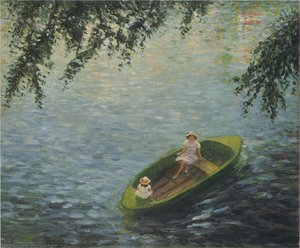
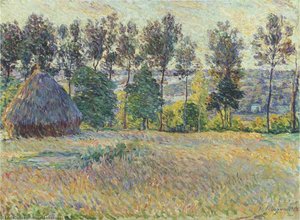
Henri Lebasque portretas

100 garsiausių Henri Lebasque paveikių rinkinys: galerijos išboru

Atnaujinta spalis 2026 · pagal mūsų populiarumumo koeficientą (paieškos, lankytojai ir užsakymai kiekvienam kūriniui) · 539 Henri Lebasque darbai mūsų kataloge

Trumpai tariant

Iš visų originalų, kuriuos paliko Henri Lebasque, garsiausias yra Street by the Port at Collioure (1921). Tiesiog už jų seka Young woman on a hammock (1923) ir On the Beach (1921). Mūsų kataloge yra 539 darbų autoriaus Henri Lebasque; galerija išsaugojo 100 labiausiai pasaulyje žyminiausių kūrinių – kiekvienas jų pateikiamas su datos, muziejaus ir istorijos aprašymu.

1865 – 1937, Champigné Post-impressionism Daugiausia darbų: Wallraf-Richartzas Muziejus

Henri Lebasque geriausios 10 paveikslų: galerijos pasirinkimas

1
Street by the Port at Collioure (1921) aut. Henri Lebasque

Street by the Port at Collioure

1921 · Oil

In this 1921 work, we find ourselves standing at the edge of a quiet harbor, looking out toward the water. The scene captures a narrow street leading down to the port, where the architecture of the town meets the movement of the sea. Several boats are scattered throughout the harbor, their forms resting upon the water, while small figures move along the waterfront. There is a sense of a lived-in…

2
Young woman on a hammock (1923) aut. Henri Lebasque

Young woman on a hammock

1923 · Oil On Canvas

Sunlight filters through a dense canopy of leaves, casting dappled patterns across a secluded garden. In the center of this lush sanctuary, a young woman reclines within the gentle embrace of a hammock. The fabric, marked by distinct stripes of red, yellow, and blue, sways almost imperceptibly between two sturdy trees. She rests in a state of profound contentment, her body softly contoured by the weight of her repose. Around…

3
On the Beach (1921) aut. Henri Lebasque

On the Beach

1921 · Oil On Canvas

On the Beach is an oil on canvas by the French artist Henri Lebasque. Created about 1921, the work reflects the artist's established interest in the interplay of light and leisure. Lebasque, born in Champigné, France, developed a style characterized by a natural brush-stroke and a focus on the serene atmosphere of the outdoors.

4
Girls in the Garden (1905) aut. Henri Lebasque

Girls in the Garden

1905 · Oil

Two young figures occupy a sun-dappled garden, their presence framed by the protective canopy of a large tree. One girl finds balance atop a fence, while her companion sits nearby on the ground. A handbag rests on the earth, a small, domestic detail that anchors the scene in a specific, unscripted moment of childhood. Throughout the composition, birds move through the foliage, adding a sense of life to the stillness.…

5
In the Flowers (1903) aut. Henri Lebasque

In the Flowers

1903 · Oil

In this 1903 composition, we find ourselves drawn into a quiet, sun-drenched corner of a garden. Three women inhabit this lush space, their presence felt through a soft, intimate arrangement of figures and flora. On the left, a woman in a white dress leans down to kiss a child, a gesture of tenderness that anchors the scene in a sense of domestic peace. Behind her, another figure in white observes…

6
bather (1910) aut. Henri Lebasque

bather

1910 · Oil

Created about 1910, bather by Henri Lebasque captures a moment of leisure at the water's edge. The central figure is a woman positioned in the water, appearing to sit upon a bench. Her presence establishes a sense of quietude amidst a lively setting. Around her, several other people are gathered, some standing and others seated, observing or interacting within the shared space.

7
Summer Afternoon at Frejus (1906) aut. Henri Lebasque

Summer Afternoon at Frejus

1906 · Oil

Summer Afternoon at Frejus, painted in 1906, captures a peaceful outdoor scene set near a body of water, such as a lake or the ocean. The composition centers on a woman sitting in the grass, appearing to enjoy her time in nature. The landscape is lush, featuring several trees and bushes that contribute to the tranquil atmosphere.

8
Bathers at a fountain in Saint Tropez (1906) aut. Henri Lebasque

Bathers at a fountain in Saint Tropez

1906 · Oil On Canvas

In this 1906 work, we find ourselves in a secluded corner of a forest, where the heat of the day seems to soften against the cool presence of a stone fountain. Two women, stripped of the complexities of social life, stand near the water, their forms integrated into the lush surroundings. One figure is positioned toward the left, while the other occupies the right, both seemingly lost in a shared,…

9
Woman in a Boat with an Umbrella (1915) aut. Henri Lebasque

Woman in a Boat with an Umbrella

1915 · Oil

A woman sits within a boat characterized by a green hull, positioned upon a body of water. She holds an open umbrella, shielding herself while appearing to exist in a state of quiet repose despite the presence of rain. The water's surface reflects the light and the forms of the figures present. In the background, several other people are visible, some positioned near the shoreline, adding a sense of communal…

10
Blue Reflection in the Fountain at Pradet (1917) aut. Henri Lebasque

Blue Reflection in the Fountain at Pradet

1917 · Oil

Two women sit by the water's edge, seeking repose in a park-like setting. One holds an umbrella, a gesture of shade against the midday sun. Behind them, the landscape rises in soft silhouettes of trees and mountains, framing a scene of stillness. The composition focuses on the intersection of human presence and the natural world, captured during a period when the light of the South of France began to transform…

Henri Lebasque darba rinkinys tęsiamas, nuo 11 iki 100

11The Terrace at Prefailles (1922) aut. Henri LebasqueThe Terrace at Prefailles1922 12Le Pradet Jeune Femme au Hamac (1923) aut. Henri LebasqueLe Pradet Jeune Femme au Hamac1923 13Blue Mountains in Cannes (1926) aut. Henri LebasqueBlue Mountains in Cannes1926 14Women and Children in the Parc de Dammartin (1896) aut. Henri LebasqueWomen and Children in the Parc de Dammartin1896 15Young Woman Seated with Hydrangeas (1920) aut. Henri LebasqueYoung Woman Seated with Hydrangeas1920 16Girls in a Mediterranean landscape aut. Henri LebasqueGirls in a Mediterranean landscape 17Young Girls in a Wood (1897) aut. Henri LebasqueYoung Girls in a Wood1897 · Museo de Arte de Ponce 18Girls in the Forest at Sunset (1898) aut. Henri LebasqueGirls in the Forest at Sunset1898 19Girls in the Garden (1905) aut. Henri LebasqueGirls in the Garden1905 20Fillette à la Fenêtre (1904) aut. Henri LebasqueFillette à la Fenêtre1904 21The Marne at Lagny (1905) aut. Henri LebasqueThe Marne at Lagny1905 22bathers (1910) aut. Henri Lebasquebathers1910 23Marthe and Madame Lebasque at the Fountain (1907) aut. Henri LebasqueMarthe and Madame Lebasque at the Fountain1907 24ms zambelli (1912) aut. Henri Lebasquems zambelli1912 25Cannes in Spring (1921) aut. Henri LebasqueCannes in Spring1921 26Naked on the Red Carpet (1925) aut. Henri LebasqueNaked on the Red Carpet1925 27Nude with Necklace (1923) aut. Henri LebasqueNude with Necklace1923 28The Terrace in Pradet aut. Henri LebasqueThe Terrace in Pradet 29Two Bathers by the Beach aut. Henri LebasqueTwo Bathers by the Beach 30Rest on the Banks of the Yaudet (1897) aut. Henri LebasqueRest on the Banks of the Yaudet1897 31The Siesta (1923) aut. Henri LebasqueThe Siesta1923 32Nude in Provence aut. Henri LebasqueNude in Provence 33Terrace in the Garden aut. Henri LebasqueTerrace in the Garden 34Nude in Repose aut. Henri LebasqueNude in Repose 35a woman reading aut. Henri Lebasquea woman reading 36woman tying up her sandle aut. Henri Lebasquewoman tying up her sandle 37Young girls in a boat on the Marne aut. Henri LebasqueYoung girls in a boat on the Marne 38Garden with Urn (1913) aut. Henri LebasqueGarden with Urn1913 39Women Sewing (1922) aut. Henri LebasqueWomen Sewing1922 40Street in Lagny, in Chessy (1906) aut. Henri LebasqueStreet in Lagny, in Chessy1906 41Young woman with Umbrella at St Maxime (1918) aut. Henri LebasqueYoung woman with Umbrella at St Maxime1918 42Madame Lebasque and Her Daughters (1903) aut. Henri LebasqueMadame Lebasque and Her Daughters1903 43Nono and a guitar (1910) aut. Henri LebasqueNono and a guitar1910 44Bathers in the Sea aut. Henri LebasqueBathers in the Sea 45Woman in a White Dress (1923) aut. Henri LebasqueWoman in a White Dress1923 46Garden in Spring (1904) aut. Henri LebasqueGarden in Spring1904 47Le Cannet Madame Lebasque Reading in the Garden (1923) aut. Henri LebasqueLe Cannet Madame Lebasque Reading in the Garden1923 48Reading in the Garden (1886) aut. Henri LebasqueReading in the Garden1886 49Conversation in the Park (1898) aut. Henri LebasqueConversation in the Park1898 50Landscape at Champetre (1894) aut. Henri LebasqueLandscape at Champetre1894 51Country Road Bridge and Carriage (1895) aut. Henri LebasqueCountry Road Bridge and Carriage1895 52Conversation in the Park (1898) aut. Henri LebasqueConversation in the Park1898 53Portrait of Marcelle Mezieres Nine Years Old (1896) aut. Henri LebasquePortrait of Marcelle Mezieres Nine Years Old1896 54Market Place (1893) aut. Henri LebasqueMarket Place1893 55Le Château (1897) aut. Henri LebasqueLe Château1897 56Madame Lebasque and her daughter Marthe (1898) aut. Henri LebasqueMadame Lebasque and her daughter Marthe1898 57Young Bather by the River (1897) aut. Henri LebasqueYoung Bather by the River1897 58Village of Champigne (1893) aut. Henri LebasqueVillage of Champigne1893 · Wallraf-Richartzas Muziejus 59By the Marne (1898) aut. Henri LebasqueBy the Marne1898 60Garden at Champigny (1894) aut. Henri LebasqueGarden at Champigny1894 61Sheep in the Village street (1895) aut. Henri LebasqueSheep in the Village street1895 62Young Girl in a Clearing (1897) aut. Henri LebasqueYoung Girl in a Clearing1897 63Landscape at Champetre (1894) aut. Henri LebasqueLandscape at Champetre1894 64A Square in Monterain (1895) aut. Henri LebasqueA Square in Monterain1895 65Madame Lebasque in a Breton landscape (1898) aut. Henri LebasqueMadame Lebasque in a Breton landscape1898 66The Farm at Lagny in Winter (1905) aut. Henri LebasqueThe Farm at Lagny in Winter1905 67The Marne at Lagny (1905) aut. Henri LebasqueThe Marne at Lagny1905 68Pont Pierre at the Lagny River (1902) aut. Henri LebasquePont Pierre at the Lagny River1902 69Child's Head in Profile (1905) aut. Henri LebasqueChild's Head in Profile1905 70The Marne at Ponponne (1905) aut. Henri LebasqueThe Marne at Ponponne1905 71By the River (1900) aut. Henri LebasqueBy the River1900 72Child Playing in the Garden (1903) aut. Henri LebasqueChild Playing in the Garden1903 73Le Parc Monceau (1900) aut. Henri LebasqueLe Parc Monceau1900 74Youn Girl in a Garden at St Tropez (1903) aut. Henri LebasqueYoun Girl in a Garden at St Tropez1903 75Mother and Child in a Landscape (1900) aut. Henri LebasqueMother and Child in a Landscape1900 76Lunchtime at Lagny (1905) aut. Henri LebasqueLunchtime at Lagny1905 77Girls by the River (1905) aut. Henri LebasqueGirls by the River1905 78Girls by the River (1905) aut. Henri LebasqueGirls by the River1905 79Madame Lebasque with Daughter (1900) aut. Henri LebasqueMadame Lebasque with Daughter1900 80Madame Lebasque and daughter by the Marne (1899) aut. Henri LebasqueMadame Lebasque and daughter by the Marne1899 81Landscape with Haystack (1900) aut. Henri LebasqueLandscape with Haystack1900 82Partie de Campagne (1903) aut. Henri LebasquePartie de Campagne1903 83Le Parc de Saint-Cloud (1900) aut. Henri LebasqueLe Parc de Saint-Cloud1900 84Madame Lebasque with daughter (1900) aut. Henri LebasqueMadame Lebasque with daughter1900 85LIttle White Dog (1905) aut. Henri LebasqueLIttle White Dog1905 86The Banks of the Marne at Lagny (1905) aut. Henri LebasqueThe Banks of the Marne at Lagny1905 87The Seine at Paris (1904) aut. Henri LebasqueThe Seine at Paris1904 88Two girls by the Eau river (1900) aut. Henri LebasqueTwo girls by the Eau river1900 89young painter (1905) aut. Henri Lebasqueyoung painter1905 90autumn (1900) aut. Henri Lebasqueautumn1900 91A Small Girl with Her Doll (1900) aut. Henri LebasqueA Small Girl with Her Doll1900 92Lagny, View of the Quai de Pamponne (1904) aut. Henri LebasqueLagny, View of the Quai de Pamponne1904 93Horse and Carriage on a Sunny Road (1900) aut. Henri LebasqueHorse and Carriage on a Sunny Road1900 94In the Forest, the Harvest (1904) aut. Henri LebasqueIn the Forest, the Harvest1904 95Madame Vian Seated in the Park (1900) aut. Henri LebasqueMadame Vian Seated in the Park1900 96Nude with Pearl Necklace aut. Henri LebasqueNude with Pearl Necklace 97Nude Sitting Removing His Shirt aut. Henri LebasqueNude Sitting Removing His Shirt 98Nude Lying with Arms Raised aut. Henri LebasqueNude Lying with Arms Raised 99Young Nude Seated on the Edge of a Well (1907) aut. Henri LebasqueYoung Nude Seated on the Edge of a Well1907 · Houston meno muziejus 100The Diabolo Game (1907) aut. Henri LebasqueThe Diabolo Game1907 · Museum of Fine Arts Ghent (MSK)

žymios Henri Lebasque tapiojamos, pagal laikotarpį

Temos, kurios domino Henri Lebasque

Ketverios temos, dažniausiai pasikrausto originaluose, kiekvienos su savo puikiausiu pavyzdžiu.

Muziejai, kuriuose saugomi Henri Lebasque originalūs darbai

4 muziejai, kuriuose saugoma daugiausia šioje pusėje esamų paveikslų.

Muzejaus Miestas Henri Lebasque darbai Šiojo sąrašo paveikslai
Wallraf-Richartzas Muziejus, KölnWallraf-Richartzas Muziejus Köln 3 Village of Champigne
Museo de Arte de Ponce, PonceMuseo de Arte de Ponce Ponce 1 Young Girls in a Wood
Houston meno muziejus, HjustonasHouston meno muziejus Hjustonas 1 Young Nude Seated on the Edge of a Well
Museum of Fine Arts Ghent (MSK), GentasMuseum of Fine Arts Ghent (MSK) Gentas 1 The Diabolo Game

Henri Lebasque dešimtmetėms po dešimtmetės: originalus kūrinys, apibūdinantis kiekvieną iš jų

Darbai pagal dešimtmečius

Pasirinkite dešimtmetį, kad pamatytėte jį apibrėžusį originalą.

Kolekcjonerų klausimai apie Henri Lebasque paveikslus

Kuriu darbu Henri Lebasque yra labiausiai garsus?Atsakymas

Street by the Port at Collioure (1921). Toliausiai eina Young woman on a hammock (1923) ir On the Beach (1921).

Kokia buvo Henri Lebasque amžius, kai buvo sukurtas Street by the Port at Collioure?Atsakymas

56 metų amžiaus: Street by the Port at Collioure sukurta 1921 m. Nr. Henri Lebasque gimė 1865.

Kokie yra 10 garsiausių Henri Lebasque paveikslų?Atsakymas

Street by the Port at Collioure, Young woman on a hammock, On the Beach, Girls in the Garden, In the Flowers, bather, Summer Afternoon at Frejus, Bathers at a fountain in Saint Tropez, Woman in a Boat with an Umbrella ir Blue Reflection in the Fountain at Pradet. Viršuje esančioje reitingo sąraše nurodyta kiekvieno kūrinio metis ir muziejus.

Kiek paveikslų paliko Henri Lebasque?Atsakymas

Mūsų kataloge yra 539 Henri Lebasque darbų, skirtų laikotarpiui nuo 1886 iki 1926.

Kuriuose muziejuose eksponuojami Henri Lebasque šedevrai?Atsakymas

Daugiausia – Wallraf-Richartzas Muziejus (Köln), Museo de Arte de Ponce (Ponce) ir Houston meno muziejus (Hjustonas). Viršuje esančiame muziejų sąraše yra visi jie.

Kuriomis metais Henri Lebasque tapo savo garsiausius kūrinius?Atsakymas

1900s laikotarpiu: 42 iš 100 šioje pusėje esančių darbų buvo sukurtos tada, iš jų Girls in the Garden.

Kokie yra pirmasis ir paskutinis garsieji Henri Lebasque originalūs darbai?Atsakymas

Šioje pusėje seniausias darbas yra Reading in the Garden (1886), o naujausias – Blue Mountains in Cannes (1926).

Kurią temą Henri Lebasque rinkosi dažniausiai?Atsakymas

Women (13), Rivers (13) ir Woman (10) iš 100 šioje pusėje esamų darbų.

Kurią techniką Henri Lebasque naudojo dažniausiai?Atsakymas

Oil On Canvas, iš 100 šios puslapio darbų – 15.

Kelią meno kryptį priklauso Henri Lebasque?Atsakymas

Post-impressionism ir Impressionism, judging by the originals on this page.

Henri Lebasque: gyvenimas ir kūryba

A Painter of Joy and Light: The Life and Art of Henri Lebasque

Henri Lebasque, a name perhaps less immediately recognized than some of his Post-Impressionist contemporaries, nevertheless occupies a significant place in the artistic landscape of early 20th-century France. Born in Champigné, Maine-et-Loire, in 1865, Lebasque’s journey toward becoming a celebrated painter was one marked by diligent study, evolving influences, and an unwavering commitment to capturing beauty in everyday life. His early education at the École régionale des beaux-arts d'Angers provided a foundational grounding, but it was his move to Paris in 1886 that truly ignited his artistic development. There, under the tutelage of Léon Bonnat and through assisting Ferdinand Humbert with decorative murals at the Panthéon, he honed his technical skills while immersing himself in the vibrant Parisian art scene. This period proved crucial, bringing him into contact with pivotal figures like Camille Pissarro and Auguste Renoir, whose emphasis on light and color would profoundly shape his aesthetic sensibilities.

Early Influences and Artistic Formation

Lebasque’s formative years were steeped in Impressionist ideals. He absorbed the lessons of Claude Monet and Pierre-Auguste Renoir, recognizing their pioneering exploration of fleeting moments and atmospheric effects. However, Lebasque wasn't merely replicating Impressionism; he sought to transcend its limitations, striving for a deeper emotional resonance. His initial artistic experiments focused on landscapes—particularly those bathed in sunlight—capturing the shimmering beauty of nature with meticulous detail. Yet, it was his encounter with Les Nabis – Édouard Vuillard and Pierre Bonnard – that irrevocably altered his trajectory. These artists championed intimacy and domesticity, encouraging Lebasque to turn his gaze inward, exploring the complexities of human relationships and capturing the subtle nuances of everyday life. The influence of Georges Seurat’s Chromoluminarism became increasingly apparent as he progressed, prompting him to experiment with complementary color pairings—blues and oranges, reds and greens—to create luminous compositions that pulsed with vitality.

The Parisian Atelier: Mastering Technique

Lebasque established his studio in Paris during the late 1880s, immersing himself in a milieu brimming with artistic innovation. He diligently practiced his craft, refining his brushstrokes and mastering the techniques of layering paint—a method he termed “glazing”—to achieve remarkable depth and luminosity. This painstaking process allowed him to build up translucent layers of color, revealing underlying hues and creating an ethereal quality that distinguishes his paintings from more conventional styles. Lebasque’s palette favored muted tones—pale yellows, soft greens, dusky blues—harmoniously blended to evoke a sense of tranquility and serenity. He meticulously observed the interplay of light and shadow, capturing the subtle gradations of color that define natural landscapes and interior scenes alike. His compositions were carefully balanced, prioritizing visual harmony and conveying an understated elegance.

Notable Works and Artistic Vision

Lebasque’s oeuvre encompasses a diverse range of subjects—portraits, landscapes, still lifes—each imbued with his distinctive artistic vision. Among his most celebrated paintings are La Cigarette – a masterful depiction of a woman smoking—and Una joven en el bosque – a luminous portrayal of a young girl amidst foliage—works that exemplify his ability to convey emotion through subtle color harmonies and delicately rendered forms. He skillfully employed expressive brushstrokes to imbue his canvases with movement and vitality, capturing the fleeting gestures of human figures and the rustling sounds of wind-swept trees. Lebasque’s artistic sensibility resonated deeply with the spirit of the Belle Époque—the era of opulent salons and carefree indulgence—reflecting a fascination for beauty and pleasure that permeated his entire oeuvre.

Legacy and Recognition: An Enduring Impression

Henri Lebasque enjoyed considerable acclaim during his lifetime, participating in prominent exhibitions such as the Salon d’Automne – which he helped found alongside Henri Matisse – and securing commissions for decorative projects—including murals at theaters and opulent interiors. His paintings are now housed in prestigious museums across Europe—the Musée d'Orsay in Paris, the Petit Palais in Geneva, and institutions throughout France—testament to his enduring artistic significance. Lebasque’s legacy extends beyond his individual artworks; he championed a distinctive aesthetic—one rooted in Impressionist principles yet infused with Nabis sensibilities—inspiring generations of artists who followed him. His paintings continue to captivate viewers today, offering a poignant reminder of the transformative power of art and its capacity to illuminate the beauty inherent in ordinary moments.