


1


Atnaujinta lapkritis 2026 · pagal mūsų populiarumumo koeficientą (paieškos, lankytojai ir užsakymai kiekvienam kūriniui) · 28 Henri Evenepoel darbai mūsų kataloge
Trumpai tariant
Man in Red (1894) yra viena矚 most žiūrėlių pritraukiančių Henri Evenepoel tapierių; originalas saugomas Musées Royaux Des Beaux, Briuselis. Po to akmuo patenka į My Ill Grandfather (1892) ir Charles Milcendeau (1899). Iš 28 Henri Evenepoel darbų mūsų kataloge šios 26 yra garsiausios – kiekvienas yra unikali originali dai̇lia, pateikta su jos metais, muziejumi ir priežastimi, kodėl ji išlieka per amžius.


This portrait, titled Charles Milcendeau, was painted by Henri Evenepoel in 1899. It captures a specific individual, Charles Edmond Théodore Soullans, who is known to us through this work as Charles Milcendeau. The painting offers a direct encounter with the subject, presented in a way that feels both personal and quiet.


 Count Aymer de la Chevalerie1896 · Antverpio karališkasis gražiųjų menų muziejus
12
 The running girl1895 · Antverpio karališkasis gražiųjų menų muziejus
13
 Wrestling Barrack at a Fair1898 · Antverpio karališkasis gražiųjų menų muziejus
14
 The Poulterer1897 · Antverpio karališkasis gražiųjų menų muziejus
15
 The Box1896 · Antverpio karališkasis gražiųjų menų muziejus
16
 Portrait of Edward Tuck, Vice-Consul of the United States in Paris1899 · Museum of Fine Arts Ghent (MSK)
17
 Sunday at the Bois de Boulogne1899 · Antverpio karališkasis gražiųjų menų muziejus
18
 Sunday in the Bois de Boulogne1891
19
 Orange Market at Blida1898 · Belgijos Karališkųjų dailės muziejų kompleksas
20
 Sunday Fair at Les Invalides1897 · Antverpio karališkasis gražiųjų menų muziejus
21
 Mendiant. Algerie1897
22
 Veterans' Festival1898 · Musées Royaux des Beaux-Arts
23
 Henriette in a Large Hat1899 · Musées Royaux Des Beaux
24
 La chambre de l'artiste
25
 Charles in a Striped Jersey1898
26
 The Spaniard in Paris1899 · Museum of Fine Arts Ghent (MSK)
8 muziejai, kuriuose saugoma daugiausia šioje pusėje esamų paveikslų.
| Muzejaus | Miestas | Henri Evenepoel darbai | Šiojo sąrašo paveikslai |
|---|---|---|---|
 Antverpio karališkasis gražiųjų menų muziejus |
Antverpys | 10 | My Ill Grandfather, Louise in Mourning, Returning from Work at Sunset |
 Museum of Fine Arts Ghent (MSK) |
Gentas | 4 | Portrait of Hélène Roulet, the Wife of the Artist Adolphe Crespin, The Clown, Portrait of Edward Tuck, Vice-Consul of the United States in Paris |
 Musées Royaux Des Beaux |
Briuselis | 2 | Man in Red, Henriette in a Large Hat |
 Belgijos Karališkųjų dailės muziejų kompleksas |
Briuselis | 2 | Pictures - Portrait of Louis Charles Crespin, Orange Market at Blida |
 Musée d'Orsay |
Paris | 1 | Charles Milcendeau |
 Städel Museum |
Frankfurtas | 1 | In the Café d'Harcourt in Paris |
 Houston meno muziejus |
Hjustonas | 1 | At the Moulin Rouge |
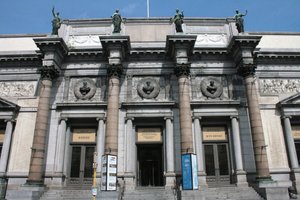 Musées Royaux des Beaux-Arts |
Brišelis | 1 | Veterans' Festival |
Čia pateiktos Henri Evenepoel originalios darbai, apimantys maždaug dešimt metų laikotarpį, nuo 1891 iki 1899: akmuo seka juos metus po metų.
Pasirinkite metus, kad pamatytumėte originalus darbus.

Daugiau nuo 1896
This portrait, titled Charles Milcendeau, was painted by Henri Evenepoel in 1899. It captures a specific individual, Charles Edmond Théodore Soullans, who is known to us through this work as Charles Milcendeau. The painting offers a direct encounter with the subject, presented in a way that feels both personal and quiet.
Daugiau nuo 1899
Man in Red (1894), Musées Royaux Des Beaux, Briuselis. Toliau seka My Ill Grandfather (1892) ir Charles Milcendeau (1899).
22 metų amžiaus: Man in Red sukurta 1894 m. Nr. Henri Evenepoel gimė 1872.
Man in Red, My Ill Grandfather, Charles Milcendeau, In the Café d'Harcourt in Paris, Pictures - Portrait of Louis Charles Crespin, At the Moulin Rouge, Portrait of Hélène Roulet, the Wife of the Artist Adolphe Crespin, The Clown, Louise in Mourning ir Returning from Work at Sunset. Viršuje esančioje reitingo sąraše nurodyta kiekvieno kūrinio metis ir muziejus.
Mūsų kataloge yra 28 Henri Evenepoel darbų, skirtų laikotarpiui nuo 1891 iki 1899.
Daugiausia – Antverpio karališkasis gražiųjų menų muziejus (Antverpys), Museum of Fine Arts Ghent (MSK) (Gentas) ir Musées Royaux Des Beaux (Briuselis). Viršuje esančiame muziejų sąraše yra visi jie.
1897 laikotarpiu: 5 iš 26 šioje pusėje esančių darbų buvo sukurtos tada, iš jų In the Café d'Harcourt in Paris.
Šioje pusėje seniausias darbas yra Sunday in the Bois de Boulogne (1891), o naujausias – Charles Milcendeau (1899).
My Ill Grandfather, Louise in Mourning ir Returning from Work at Sunset: Antverpio karališkasis gražiųjų menų muziejus, Antverpys kolekcijoje yra 10 šioje pusėje esančių darbų.


