George Elbert Burr portretas

100 garsiausių George Elbert Burr paveikių rinkinys: galerijos išboru

Atnaujinta lapkritis 2026 · pagal mūsų populiarumumo koeficientą (paieškos, lankytojai ir užsakymai kiekvienam kūriniui) · 225 George Elbert Burr darbai mūsų kataloge

Trumpai tariant

Iš visų originalų, kuriuos paliko George Elbert Burr, garsiausias yra Camelback Mountain, Phoenix (1926). Tiesiog už jų seka The Edge of the Desert, Arizona (1924) ir Untitled (transfer drawing for Florence from Monte Oliveto ) (1931). Mūsų kataloge yra 225 darbų autoriaus George Elbert Burr; galerija išsaugojo 100 labiausiai pasaulyje žyminiausių kūrinių – kiekvienas jų pateikiamas su datos, muziejaus ir istorijos aprašymu.

1859 – 1939, Sincinati Contemporary realism Daugiausia darbų: Smithsonian American Art Museum

George Elbert Burr geriausios 10 paveikslų: galerijos pasirinkimas

1
Camelback Mountain, Phoenix (1926) aut. George Elbert Burr

Camelback Mountain, Phoenix

1926 · Etching

A monochromatic study of the Sonoran Desert, this 1926 etching captures the rugged silhouette of Camelback Mountain rising above the Phoenix landscape. The composition relies on a stark interplay of light and shadow to define the geological textures of the mountain range. In the foreground, various cacti are positioned across the sandy terrain, their distinct spines rendered with precise linework. These botanical sentinels provide a sense of scale against the…

3
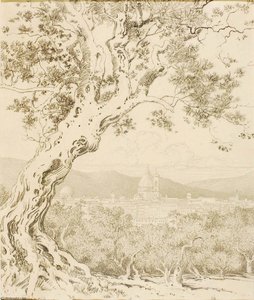
Untitled (transfer drawing for Florence from Monte Oliveto ) (1931) aut. George Elbert Burr

Untitled (transfer drawing for Florence from Monte Oliveto )

1931 · Pencil

The air feels still as the eye moves across the paper, tracing the delicate lines of a landscape captured in 1931. A large tree dominates the foreground, its many branches reaching out like skeletal fingers against the sky. This is a moment of observation, a transfer drawing that seeks to pin down the essence of Florence as seen from the vantage of Monte Oliveto. The cityscape rests in the distance,…

4
Zermatt (1897) aut. George Elbert Burr

Zermatt

1897 · Ink On Paper

Zermatt is a pen and ink drawing on paper created by George Elbert Burr in 1897. This work depicts a mountain landscape situated in Zermatt, Switzerland, within the Alps. The composition focuses on the geological forms of the mountain range and the surrounding terrain.

5
Untitled Figure Studies from Rear (1899) aut. George Elbert Burr

Untitled Figure Studies from Rear

1899 · Pencil

In "Untitled Figure Studies from Rear" by George Elbert Burr, a sense of restless motion fills the frame. The composition is densely packed, with numerous human figures arranged across the space without a single focal point to anchor the eye. These figures, all viewed from behind, overlap and vary in size, creating a rhythmic, crowded energy. One might wonder if we are witnessing a fleeting moment of a gathering or…

6
Old Houses, Lausanne (1899) aut. George Elbert Burr

Old Houses, Lausanne

1899 · Drawing

The architecture of Lausanne rises in a quiet, monochromatic climb. Through fine, precise lines, the houses lean into one another, their rooftops forming a jagged silhouette against a pale, overcast sky. There is a stillness here, a moment captured in the soft, diffused light of a Swiss afternoon. A single figure moves in the foreground, a small anchor of human presence amidst the heavy, stone-like geometry of the buildings. The…

7
Foggy Morning, Nevin, North Wales (1899) aut. George Elbert Burr

Foggy Morning, Nevin, North Wales

1899 · Graphite Pencil

Foggy Morning, Nevin, North Wales is a black and white pencil drawing by George Elbert Burr. Created in 1899, the work captures a maritime scene where a solitary sailboat navigates through dense, foggy waters.

8
Superstition Mountain, Apache Trail, Arizona, Right (1930) aut. George Elbert Burr

Superstition Mountain, Apache Trail, Arizona, Right

1930 · Etching

Superstition Mountain, Apache Trail, Arizona, Right is a landscape by George Elbert Burr. Created in 1930, the work captures the rugged terrain of the Arizona desert. The mountain range dominates the view, its jagged peaks reaching toward a heavy, cloud-filled sky. Two small human figures occupy the foreground, their presence offering a sense of scale against the immense geological formations.

9
Thanksgiving Menu (1905) aut. George Elbert Burr

Thanksgiving Menu

1905 · Watercolor · Smithsonian American Art Museum, Vašingtonas

To gaze upon this depiction of a Thanksgiving Menu is to step directly into the warm, sepia-toned embrace of the early twentieth century. It is more than just an illustration; it is a preserved moment of domestic ritual, rendered with the delicate artistry characteristic of George Elbert Burr. The central focus, the magnificent turkey, dominates the composition, its presence suggesting abundance and the centerpiece of familial gathering. Yet, what elevates…

10
Untitled (transfer drawing for The Home of the Winds [no. 1]) (1917) aut. George Elbert Burr

Untitled (transfer drawing for The Home of the Winds [no. 1])

1917 · Drawing · Smithsonian American Art Museum, Vašingtonas

This evocative drawing, titled Untitled (transfer drawing for The Home of the Winds [no. 1]), invites the viewer into a moment suspended between stillness and powerful motion. George Elbert Burr masterfully captures the raw energy of nature through the depiction of trees caught in a strong gust. It is not merely a sketch of foliage; it is an atmospheric study, a visual poem about resilience. The way the branches bend…

George Elbert Burr darba rinkinys tęsiamas, nuo 11 iki 100

11Untitled (transfer drawing for Florence from Monte Oliveto [No. 2]) (1931) aut. George Elbert BurrUntitled (transfer drawing for Florence from Monte Oliveto [No. 2])1931 · Smithsonian American Art Museum 12Untitled (Trees in Snow) (1883) aut. George Elbert BurrUntitled (Trees in Snow)1883 13Untitled (Cardinal Flower, Lobelia Cardinalis) (1889) aut. George Elbert BurrUntitled (Cardinal Flower, Lobelia Cardinalis)1889 14Untitled (Branches of Apple Tree) (1889) aut. George Elbert BurrUntitled (Branches of Apple Tree)1889 15Untitled (Dewberry and Blackberry) (1889) aut. George Elbert BurrUntitled (Dewberry and Blackberry)1889 16Untitled (Lily, Daisy, Hibiscus) (1889) aut. George Elbert BurrUntitled (Lily, Daisy, Hibiscus)1889 17Untitled (Trumpet Vine) (1889) aut. George Elbert BurrUntitled (Trumpet Vine)1889 18Untitled (Trumpet Vine, Campsis Radicans) (1889) aut. George Elbert BurrUntitled (Trumpet Vine, Campsis Radicans)1889 19Untitled (Harvest Scene) (1890) aut. George Elbert BurrUntitled (Harvest Scene)1890 20Untitled (Sedge Grasses) (1889) aut. George Elbert BurrUntitled (Sedge Grasses)1889 21Untitled (Cattails, Clover, and Blackberries) (1889) aut. George Elbert BurrUntitled (Cattails, Clover, and Blackberries)1889 22Untitled (Sugar Maple and False Solomon's Seal) (1889) aut. George Elbert BurrUntitled (Sugar Maple and False Solomon's Seal)1889 23Untitled (Daisies) (1889) aut. George Elbert BurrUntitled (Daisies)1889 24Untitled (Wild Hazelnut, Corylus Americana) (1889) aut. George Elbert BurrUntitled (Wild Hazelnut, Corylus Americana)1889 25Untitled (Hollyhock) (1889) aut. George Elbert BurrUntitled (Hollyhock)1889 26Untitled (Thistle) (1889) aut. George Elbert BurrUntitled (Thistle)1889 27Untitled (Lilies and Ground Ivy) (Glecoma Hederacea) (1889) aut. George Elbert BurrUntitled (Lilies and Ground Ivy) (Glecoma Hederacea)1889 28Untitled (Spiderweb and Daisies) (1889) aut. George Elbert BurrUntitled (Spiderweb and Daisies)1889 29Untitled (Daisies and Blackberries) (1889) aut. George Elbert BurrUntitled (Daisies and Blackberries)1889 30Untitled (Botanical Study) (1889) aut. George Elbert BurrUntitled (Botanical Study)1889 31Marblehead, (Massachusetts) (1892) aut. George Elbert BurrMarblehead, (Massachusetts)1892 32Untitled (Sedge Grasses) (1889) aut. George Elbert BurrUntitled (Sedge Grasses)1889 · Smithsonian American Art Museum 33Untitled (Woodland Stream) (1889) aut. George Elbert BurrUntitled (Woodland Stream)1889 34Hickory (1888) aut. George Elbert BurrHickory1888 35El Paso, Texas (1890) aut. George Elbert BurrEl Paso, Texas1890 36Oak Cliff Dallas (1890) aut. George Elbert BurrOak Cliff Dallas1890 37Sketch Made 45 Years Ago (1886) aut. George Elbert BurrSketch Made 45 Years Ago1886 38Galveston, Texas (1890) aut. George Elbert BurrGalveston, Texas1890 · Smithsonian American Art Museum 39Alto from Reggio, Morning (1896) aut. George Elbert BurrAlto from Reggio, Morning1896 · Smithsonian American Art Museum 40Rain, Bellagio (1898) aut. George Elbert BurrRain, Bellagio1898 · Smithsonian American Art Museum 41Chimney Pot, Altdorf, Switzerland Felsenthor, Rigi, Switzerland (1898) aut. George Elbert BurrChimney Pot, Altdorf, Switzerland Felsenthor, Rigi, Switzerland1898 42Alto from Reggio, Morning (1896) aut. George Elbert BurrAlto from Reggio, Morning1896 43Wild Rose, Wassen (1898) aut. George Elbert BurrWild Rose, Wassen1898 · Smithsonian American Art Museum 44Near Villeneuve, Suisse (1898) aut. George Elbert BurrNear Villeneuve, Suisse1898 · Smithsonian American Art Museum 45Bake Shop and Mills, Pompei (1897) aut. George Elbert BurrBake Shop and Mills, Pompei1897 46Pines, Public Garden (1897) aut. George Elbert BurrPines, Public Garden1897 47Mills in Bake Shop Pompei (1897) aut. George Elbert BurrMills in Bake Shop Pompei1897 48Harbor of Palermo (1896) aut. George Elbert BurrHarbor of Palermo1896 49On the Marina, Palermo (1896) aut. George Elbert BurrOn the Marina, Palermo1896 50Isola Bella (1897) aut. George Elbert BurrIsola Bella1897 51Street Crossing, Pompeii (1897) aut. George Elbert BurrStreet Crossing, Pompeii1897 52The Rhone from the Path to Salvari (Switzerland) (1898) aut. George Elbert BurrThe Rhone from the Path to Salvari (Switzerland)1898 · Smithsonian American Art Museum 53Capri from Sorrento (1898) aut. George Elbert BurrCapri from Sorrento1898 54Venice (1900) aut. George Elbert BurrVenice1900 · Smithsonian American Art Museum 55Venice (1900) aut. George Elbert BurrVenice1900 · Smithsonian American Art Museum 56Venice (1900) aut. George Elbert BurrVenice1900 · Smithsonian American Art Museum 57Venice (1900) aut. George Elbert BurrVenice1900 · Smithsonian American Art Museum 58Criccieth, N. Wales (1899) aut. George Elbert BurrCriccieth, N. Wales1899 · Smithsonian American Art Museum 59Caernarvon Castle (1899) aut. George Elbert BurrCaernarvon Castle1899 · Smithsonian American Art Museum 60Venice (1900) aut. George Elbert BurrVenice1900 61Near Evian (1899) aut. George Elbert BurrNear Evian1899 62Ventimiglia (1900) aut. George Elbert BurrVentimiglia1900 63Giudecca Venice (1900) aut. George Elbert BurrGiudecca Venice1900 64Heidelberg (1900) aut. George Elbert BurrHeidelberg1900 65Pisa from North (1900) aut. George Elbert BurrPisa from North1900 66Temple of the Sibyl, Tivoli (1900) aut. George Elbert BurrTemple of the Sibyl, Tivoli1900 67The Rhine at Camp (1900) aut. George Elbert BurrThe Rhine at Camp1900 68Olives Fiesole (1900) aut. George Elbert BurrOlives Fiesole1900 69Menu for U.S. Dinner, Oxford (1899) aut. George Elbert BurrMenu for U.S. Dinner, Oxford1899 70The Rhine below Kestert (1900) aut. George Elbert BurrThe Rhine below Kestert1900 71Rhine at St. Goar (1900) aut. George Elbert BurrRhine at St. Goar1900 72Cathedral, Fiesole (1900) aut. George Elbert BurrCathedral, Fiesole1900 73Rhine at Oberwesel (1900) aut. George Elbert BurrRhine at Oberwesel1900 74Rhine below St. Goar (1900) aut. George Elbert BurrRhine below St. Goar1900 75Old Bridge at Heidelburg (1900) aut. George Elbert BurrOld Bridge at Heidelburg1900 76Up Rhine from Hirzenach (1900) aut. George Elbert BurrUp Rhine from Hirzenach1900 77Oberwesel (1900) aut. George Elbert BurrOberwesel1900 78San Piero a Grado, near Pisa (1900) aut. George Elbert BurrSan Piero a Grado, near Pisa1900 79Venice (1900) aut. George Elbert BurrVenice1900 · Smithsonian American Art Museum 80The Rhine below St. Goarshausen (1900) aut. George Elbert BurrThe Rhine below St. Goarshausen1900 81Castle Rheinfels, St. Goar (1900) aut. George Elbert BurrCastle Rheinfels, St. Goar1900 82From the Boboli Gardens, Florence (1900) aut. George Elbert BurrFrom the Boboli Gardens, Florence1900 83Church, Eton (1899) aut. George Elbert BurrChurch, Eton1899 84Bad Moos, Sexten Thal, Tyrol (1900) aut. George Elbert BurrBad Moos, Sexten Thal, Tyrol1900 85Up River from Bacharach, Rhine (1900) aut. George Elbert BurrUp River from Bacharach, Rhine1900 86Roche Vaud (1899) aut. George Elbert BurrRoche Vaud1899 87The Rhine below Niederheimbach (1900) aut. George Elbert BurrThe Rhine below Niederheimbach1900 88Mouth of the Arno (1900) aut. George Elbert BurrMouth of the Arno1900 89Below Bingen Looking down Rhine (1900) aut. George Elbert BurrBelow Bingen Looking down Rhine1900 90Rhine, from Caub (1900) aut. George Elbert BurrRhine, from Caub1900 91Elms Eton, England (1899) aut. George Elbert BurrElms Eton, England1899 92Toblach, Tyrol (1900) aut. George Elbert BurrToblach, Tyrol1900 93Near Roche, Vaud (1899) aut. George Elbert BurrNear Roche, Vaud1899 94Bordighera, Italy (1900) aut. George Elbert BurrBordighera, Italy1900 95From Pincio, Rome (1900) aut. George Elbert BurrFrom Pincio, Rome1900 96Sunset, Heidelberg (1900) aut. George Elbert BurrSunset, Heidelberg1900 97The Rhine at Bacharach (1900) aut. George Elbert BurrThe Rhine at Bacharach1900 98Rhine at the Lurlei (1900) aut. George Elbert BurrRhine at the Lurlei1900 99In the Meadows at Windsor (1899) aut. George Elbert BurrIn the Meadows at Windsor1899 100Caernarvon Castle (1899) aut. George Elbert BurrCaernarvon Castle1899

žymios George Elbert Burr tapiojamos, pagal laikotarpį

Temos, kurios domino George Elbert Burr

Ketverios temos, dažniausiai pasikrausto originaluose, kiekvienos su savo puikiausiu pavyzdžiu.

Muziejai, kuriuose saugomi George Elbert Burr originalūs darbai

1 muziejai, kuriuose yra daugiausia šioje puslapyje esamų paveikslų.

Muzejaus Miestas George Elbert Burr darbai Šiojo sąrašo paveikslai
Smithsonian American Art Museum, VašingtonasSmithsonian American Art Museum Vašingtonas 42 The Edge of the Desert, Arizona, Thanksgiving Menu, Untitled (transfer drawing for The Home of the Winds [no. 1])

George Elbert Burr dešimtmetėms po dešimtmetės: originalus kūrinys, apibūdinantis kiekvieną iš jų

Darbai pagal dešimtmečius

Pasirinkite dešimtmetį, kad pamatytėte jį apibrėžusį originalą.

Kolekcjonerų klausimai apie George Elbert Burr paveikslus

Kuriu darbu George Elbert Burr yra labiausiai garsus?Atsakymas

Camelback Mountain, Phoenix (1926). Toliausiai eina The Edge of the Desert, Arizona (1924) ir Untitled (transfer drawing for Florence from Monte Oliveto ) (1931).

Kokia buvo George Elbert Burr amžius, kai buvo sukurtas Camelback Mountain, Phoenix?Atsakymas

67 metų amžiaus: Camelback Mountain, Phoenix sukurta 1926 m. Nr. George Elbert Burr gimė 1859.

Kokie yra 10 garsiausių George Elbert Burr paveikslų?Atsakymas

Camelback Mountain, Phoenix, The Edge of the Desert, Arizona, Untitled (transfer drawing for Florence from Monte Oliveto ), Zermatt, Untitled Figure Studies from Rear, Old Houses, Lausanne, Foggy Morning, Nevin, North Wales, Superstition Mountain, Apache Trail, Arizona, Right, Thanksgiving Menu ir Untitled (transfer drawing for The Home of the Winds [no. 1]). Viršuje esančioje reitingo sąraše nurodyta kiekvieno kūrinio metis ir muziejus.

Kiek paveikslų paliko George Elbert Burr?Atsakymas

Mūsų kataloge yra 225 George Elbert Burr darbų, skirtų laikotarpiui nuo 1883 iki 1931.

Kuriuose muziejuose eksponuojami George Elbert Burr šedevrai?Atsakymas

Daugiausia – Smithsonian American Art Museum (Vašingtonas). Viršuje esančiame muziejų sąraše yra visi jie.

Kuriomis metais George Elbert Burr tapo savo garsiausius kūrinius?Atsakymas

1900s laikotarpiu: 38 iš 100 šioje pusėje esančių darbų buvo sukurtos tada, iš jų Thanksgiving Menu.

Kokie yra pirmasis ir paskutinis garsieji George Elbert Burr originalūs darbai?Atsakymas

Šioje pusėje seniausias darbas yra Untitled (Trees in Snow) (1883), o naujausias – Untitled (transfer drawing for Florence from Monte Oliveto ) (1931).

Kurią temą George Elbert Burr rinkosi dažniausiai?Atsakymas

Landscape (5), “detailed drawing” (5) ir Sky (3) iš 100 šioje pusėje esamų darbų.

Kurią techniką George Elbert Burr naudojo dažniausiai?Atsakymas

Etching, iš 100 šios puslapio darbų – 3.

Kelią meno kryptį priklauso George Elbert Burr?Atsakymas

Contemporary realism ir Realism, vadovaujantis šios puslapio originalais kūriniais.

Kurių George Elbert Burr darbai eksponuojami Smithsonian American Art Museum?Atsakymas

The Edge of the Desert, Arizona, Thanksgiving Menu ir Untitled (transfer drawing for The Home of the Winds [no. 1]): Smithsonian American Art Museum, Vašingtonas kolekcijoje yra 18 šioje pusėje esančių darbų.

George Elbert Burr: gyvenimas ir kūryba

George Elbert Burr: Deserto vizionierius

George Elbert Burr (1859–1939) išsiskiria kaip ypatinga figūra amerikietiškoje grafikos ir tapybos istorijoje, primenamas dėl meistriškų dramatiškų Amerikos Vakarų kraštlandžių – ypač desertų ir kalnų – vaizduotės. Gimęs Cincinati, Ohajo valstijoje, Burr savo meninę šalinę pradėjo nuo iliustracijos, tačiau vėliau pasisavino etingą ir akvarelio technikas, kurios tapo jo išskirtinio stiliaus pagrindu. Jo kūrinys viršija paprastą vaizduotę; jis įsipina giliu jautrumu šviesai, tekstūrai ir atmosferai, įtrapindamas žiūrovį į vientisumo ir didybės esmę šioose nekraintuose aplinkos platumuose.
  • Formavimo metai ir išsilavinimas: Burr formavimo metus lydėjo susidomėjimas gamtos istorija ir moksliniu stebėjimu – įtakomis, kurios vėliau persmelkė jo meninę viziją. Studijuodamas Cincinati meno akademijoje, jis vėliau plačiai keliavo po Europą, visplatiems absorbuodamas impresionizmo judėjimo technikas ir estetinę filosofiją.
  • apas
  • Etsingo kilimas: Burr meninė garbė pasiekė proveržį dirbant etingo technika – media, kurią jis pilnai priėmė vėlyvųjųje viktorijos laikotarpio eroje. Jo kruopštus požiūris kuriant grafikos darbus apimavo sunkų vaizdų perkėlimą iš piešių į varą, naudojant rūgšties vonias sudėlioti itin subtiliems linijoms išraiškai, kurie galiausiai sukurė stulbinančios detales. Šis ištikimas procesas reikalavo kantrybės ir tikslumo – savybių, kurios Burr turėjo gausiai.
  • Deserto peizažai ir stiliaus evoliucija: XX amžiaus pradžioje Burr meninis dėmesys ryškiai nukrypo link Amerikos Klo𝙣 Southwest regiono. Jis surengė daugybę ekspedicijų į Arizoną, Utahą, Nevadą ir Kaliforniją, dokumentuodamas šio regiono geologinius darinį ir laikinus grožius per kvapą užgaunančius akvarelius bei sukalbuotus etingo darbus. Jo stilius laikui bėgant evoliucionavo – tapo charakterizuojamas palaipsniu formų supaprastinimu ir vis didėjančiu tonų harmonijos pabrėžimu, atspindint jo augančią supratimą apie šviesos sąveiką su paviršiaus tekstūra.
  • Žinomos pasiekimai ir pripažinimas: Burr grafikos darbai savo gyvenimo metu sulaukė didelio pagarba, užtikrinant užsakymus iš tokių svarbių institucijų kaip Smithsonian institucija, ir jis tapo pripažintas kaip viena pagrindinių amerikietiško peizažo meno atstovų. Jo kūriniai saugomi kolekcijose visoje šalyje ir šiandien toliau įkvepia menininkus.

Svarbiausi darbai ir meninė stilistika

Burr kūrybinis palikimas apima apie 350 grafikos ir piešių, demonstruojančių jo neįtikėtiną meninę universalumą. Tarpi jo garsiausių drobučių galima išskirti „Castle Schönburg, Oberwesel“ – itin kruopščiai atliktą akvarelį, į which įamžintą įspūdingą viduramžių pilies siluetą prieš tolem skyrių, taip patems išreiškiamą gebėjimą perteikti tiek istorinę detalę, tiek emocinį rezonansą. Panašiai „Untitled (Transfer Drawing for November)“ pristato gryną ir gražų monokrominį eskizą, perduodantį tuščios Nevados desertinės žemės grožį. Jo išskirtiniam stiliui būdingi:
    ą
  • Išsamios linijos: Burr etingas darbai garsėja itin smulkiomis linijomis – tai jo technikos ženklas, gebantis įamžinti subtilius formos ir tekstūros atspalvius.
  • Toniška harmonija: Akvarelinės paveikslai demonstruoja Burr meistrišką spalvų paletės valdymą, pasiekiamą harmoninį sumišymą, kuris sukelia peizažų nuotaiką ir atmosferą.
  • Šviesos ir šešėlio pabrėžimas: Visuose savo darbuose Burr meistriškai taikė chiaroscuro – šviesos ir šešėlio žaidimą – siekdamas padidinti vizualinę dramą ir suteikti gylio pojūtį.

Palikimas ir istorinė reikšmė

George Elbert Burr prisर्में Amerikos menui ne tik estetinę prasmę; jis į embodies (į embodies) tyrimų ir stebėjimo dvasią, būdingą progresyviam laikotarpiui. Jo nekaltas Vakarų vaizdavimas – dažnai prisunčiantis prie kontempliškos ramybės – tapo įkvėpimu būsimoms menininkų kartoms, siekiantms įamžinti aukštūbinį gamtos didybę. Šiandien Burr grafikos darbai išlieka brangiais XX amžiaus pradžios meno istorijos artefaktais, suteikdami žiūrovams pasiūlyti žvilgsnį į praeitį ir patvirtindami neblėstantį meninės vizijos galiją.