


1


Atnaujinta spalis 2026 · pagal mūsų populiarumumo koeficientą (paieškos, lankytojai ir užsakymai kiekvienam kūriniui) · 25 Edwin Cooper darbai mūsų kataloge
Trumpai tariant
Michael Beverley With His Whipper In And Harriers, (1831) yra Edwin Cooper paveikslas, kuriuo gausiausia žmonių žavisi. Po to akmuo patenka į London To Glasgow Royal Mail On The Open Road ir "Banker", a Racehorse Belonging to Frederick, Duke of York. Iš 25 Edwin Cooper darbų mūsų kataloge šios 25 yra garsiausios – kiekvienas yra unikali originali dai̇lia, pateikta su jos metais, muziejumi ir priežastimi, kodėl ji išlieka per amžius.


 A Gentleman Driving Tandem To A Jaunting CaYale Center for British Art
12
 A Bay Hunter In A LandscapeCalke Abbey
13
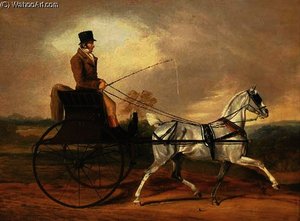 A gentleman riding a horse and gig
14A foxhound and her litter
15
 A Grey Carriage Horse In A StableCalke Abbey
16
 A Huntsman Leading A Bay Hunter, With Hounds Outside Kennels
17
 A Chestnut Hunter And A Terrier In An Extensive Landscape
18
 Elevation Of The Public Library, Marylebone Road
19
 Preparing to set off
20
 A Chestnut Hunter And A Grey Hunter By A Manger, With A River Landscape Beyond
21
 Lord grosvenor's enterprise winning from waty and hannibal at brighton races
22
 A liver chestnut in an extensive landscape
23
 Fighting Cocks
24
 Sir Jacob Astley, 6th Bt, 16th Baron Hastings, On A Grey Hunter, With Huntsmen And Hounds At Melton Constable
25
 A Sportsman With Shooting Pony And Gun DogsYale Center for British Art
Ketverios temos, dažniausiai pasikrausto originaluose, kiekvienos su savo puikiausiu pavyzdžiu.
3 muziejai, kuriuose saugoma daugiausia šioje pusėje esamų paveikslų.
| Muzejaus | Miestas | Edwin Cooper darbai | Šiojo sąrašo paveikslai |
|---|---|---|---|
 Calke Abbey |
3 | A Chestnut Hunter In A Field, A Bay Hunter In A Landscape, A Grey Carriage Horse In A Stable | |
 Yale Center for British Art |
New Haven | 2 | A Gentleman Driving Tandem To A Jaunting Ca, A Sportsman With Shooting Pony And Gun Dogs |
 Royal Collection |
Londonas | 1 | "Banker", a Racehorse Belonging to Frederick, Duke of York |
Visi čia pateikiami datuoti Edwin Cooper originalūs darbai priklauso vienoms metams – 1831: jie išvardyti pagal budulį.
Pasirinkite metus, kad pamatytumėte originalus darbus.
Michael Beverley With His Whipper In And Harriers, (1831). Toliausiai eina London To Glasgow Royal Mail On The Open Road ir "Banker", a Racehorse Belonging to Frederick, Duke of York.
46 metų amžiaus: Michael Beverley With His Whipper In And Harriers, sukurta 1831 m. Nr. Edwin Cooper gimė 1785.
Michael Beverley With His Whipper In And Harriers,, London To Glasgow Royal Mail On The Open Road, "Banker", a Racehorse Belonging to Frederick, Duke of York, A Chestnut Hunter In A Field, Pointers In A Landscape, Mounted Dragoon By The Sea, A Bay Hunter With A Dog By A Fence, Two Gentlemen With Their Hunters, In An Extensive Landscape, A dark bay horse and a terrier in a landscape ir Three Greyhounds In A Landscape. Viršuje esančioje reitingo sąraše nurodyta kiekvieno kūrinio metis ir muziejus.
Mūsų kataloge yra 25 darbų autoriaus Edwin Cooper.
Daugiausia – Calke Abbey, Yale Center for British Art (New Haven) ir Royal Collection (Londonas). Viršuje esančiame muziejų sąraše yra visi jie.
Hunting (8), Landscape (7) ir Beach (4) iš 25 šioje pusėje esamų darbų.
A Chestnut Hunter In A Field, A Bay Hunter In A Landscape ir A Grey Carriage Horse In A Stable: Calke Abbey kolekcijoje yra 3 šioje pusėje esančių darbų.


