Džonas Gilberta portretas

100 garsiausių Džonas Gilberta paveikių rinkinys: galerijos išboru

Atnaujinta lapkritis 2026 · pagal mūsų populiarumumo koeficientą (paieškos, lankytojai ir užsakymai kiekvienam kūriniui) · 204 Džonas Gilberta darbai mūsų kataloge

Trumpai tariant

Iš visų paliktų originalų kūrinių Džonas Gilberta garsiausias yra Fair Saint George (1881), esantis Guildhall Art Gallery kolekcijoje, London. Tiesiog už jų seka The Taming of the Shrew (1860) ir Sir John Falstaff Reviewing His Ragged Regiment (1858). Mūsų kataloge yra 204 darbų autoriaus Džonas Gilberta; galerija išsaugojo 100 labiausiai pasaulyje žyminiausių kūrinių – kiekvienas jų pateikiamas su datos, muziejaus ir istorijos aprašymu.

1817 – 1897, Sari Victorian romanticism Daugiausia darbų: Guildhall Art Gallery

Džonas Gilberta geriausios 10 paveikslų: galerijos pasirinkimas

1
Fair Saint George (1881) aut. Džonas Gilberta

Fair Saint George

1881 · Oil On Canvas · Guildhall Art Gallery, London

The air feels heavy with the scent of damp earth and the metallic tang of polished steel. In this frozen moment, a knight stands as a pillar of strength against a backdrop of rolling hills and a restless, cloudy sky. He holds his lance upright, his hands gripping the shaft with a steady, practiced ease that suggests a pause in a much longer, more perilous trek. His armor catches the…

2
The Taming of the Shrew (1860) aut. Džonas Gilberta

The Taming of the Shrew

1860 · Oil On Canvas · Birmingham Museum and Art Gallery, Birminghamas

The Taming of the Shrew is a dramatic scene rendered by the English artist John Gilbert. This work captures a moment of friction from a comedy written by William Shakespeare between 1590 and 1592. The image functions as an illustration for the publication of Tales from Shakespeare by Charles Lamb. George Routledge released this specific version of the work.

3
Sir John Falstaff Reviewing His Ragged Regiment (1858) aut. Džonas Gilberta

Sir John Falstaff Reviewing His Ragged Regiment

1858 · Oil · Birmingham Museum and Art Gallery, Birminghamas

In this 1858 work, we find ourselves drawn into a dense, theatrical scene that feels less like a static image and more like a captured moment from a stage play. The composition centers on Sir John Falstaff, draped in heavy red robes, as he conducts a meticulous review of his ragged regiment. Around him, a crowd of rustic characters gathers, their presence creating a sense of bustling, lived-in energy. The…

4
Scene From Shakespeare's The Merchant Of Venice (1864) aut. Džonas Gilberta

Scene From Shakespeare's The Merchant Of Venice

1864 · Watercolor · Birmingham Museum and Art Gallery, Birminghamas

Scene From Shakespeare's The Merchant Of Venice by John Gilbert, a 19th-century watercolor painting, captures a dramatic moment from the play. Created about 1864, the work reflects the artist's deep engagement with literary narratives and the theatricality of the era. Gilbert, a prominent figure in British art, utilized the medium of watercolor to translate dramatic tension into a visual format.

5
The Return Of The Victors (1878) aut. Džonas Gilberta

The Return Of The Victors

1878 · Oil On Canvas · Birmingham Museum and Art Gallery, Birminghamas

The air thickens with the dust of a thousand marching feet in The Return Of The Victors. This grand scene, painted in 1878, captures a moment of triumphant movement as a victorious army sweeps through the landscape. The scale of the work suggests a panoramic view of history in motion, where the weight of victory meets the chaotic energy of a returning crowd. Every figure contributes to a sense of…

6
Margaret of Anjou Taken Prisoner after the Battle of Tewkesbury (1875) aut. Džonas Gilberta

Margaret of Anjou Taken Prisoner after the Battle of Tewkesbury

1875 · Oil On Canvas · Guildhall Art Gallery, London

The oil painting titled Margaret of Anjou Taken Prisoner after the Battle of Tewkesbury was executed by the British artist John Gilbert in 1875. This work depicts a specific historical event centered on the aftermath of the Battle of Tewkesbury. The subject matter focuses on the immediate consequences of the conflict, specifically capturing the brutality and the state of the battlefield following the engagement.

7
Don Quixote and Sancho at the Castle of the Duke (1883) aut. Džonas Gilberta

Don Quixote and Sancho at the Castle of the Duke

1883 · Oil On Canvas

The scene unfolds within a stone courtyard, where the heavy architecture of a castle provides a rigid backdrop to a moment of profound human interaction. Two figures dominate the composition, their physical presence defined by a stark contrast in stature and temperament. One figure, clad in the metallic sheen of armor, reaches upward with an air of lofty idealism, his posture embodying the very essence of knightly fantasy. Beside him,…

8
Landscape with a Gypsy Encampment (1888) aut. Džonas Gilberta

Landscape with a Gypsy Encampment

1888 · Oil On Canvas

A steep hillside descends toward a valley, where the earth meets a turbulent sky. Beneath a canopy of dark, heavy clouds, a small fire flickers, casting a warm glow against the encroaching gloom. Figures huddle near the flames, surrounded by the quiet presence of horses, camels, and sheep. The air feels thick with the scent of woodsmoke and the weight of an approaching storm. Light breaks through the darkness in…

9
Lancelot du Lac (1886) aut. Džonas Gilberta

Lancelot du Lac

1886 · Oil On Canvas · Guildhall Art Gallery, London

The river churns with a heavy, white froth, swallowing the light beneath the weight of armored horses. Two knights collide in the center of the surge, their swords and shields cutting through the spray. A tree leans precariously over the bank, its branches heavy with the threat of falling into the chaos below. In the foreground, a woman watches. Her face is a pale study in melancholy, a quiet stillness…

10
Ego et Rex Meus (1888) aut. Džonas Gilberta

Ego et Rex Meus

1888 · Oil · Guildhall Art Gallery, London

In this 1888 oil painting, two men are positioned in a close, vertical composition against the architectural backdrop of a stone building. The figure on the left wears a crown and is draped in heavy red robes accented with gold. He is turned toward the second man, his posture suggesting he is in the middle of speaking. The second man, characterized by a beard, is dressed in similar red and…

Džonas Gilberta darba rinkinys tęsiamas, nuo 11 iki 100

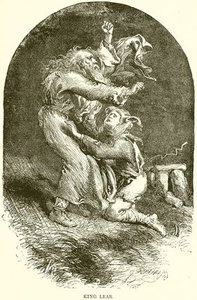
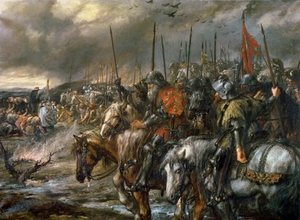
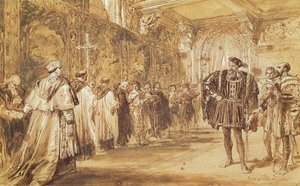
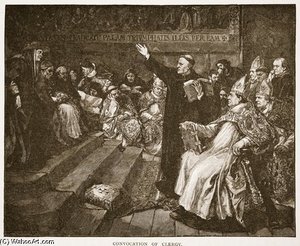
11The Ford (1891) aut. Džonas GilbertaThe Ford1891 · Guildhall Art Gallery 12Don Quixote and Sancho Panza (1840) aut. Džonas GilbertaDon Quixote and Sancho Panza1840 13Don Quixote Disputing with the Priest and the Barber (1844) aut. Džonas GilbertaDon Quixote Disputing with the Priest and the Barber1844 14Her Majesty the Queen Holding a Drawing Room at St James's Palace (1851) aut. Džonas GilbertaHer Majesty the Queen Holding a Drawing Room at St James's Palace1851 15'Henry VIII', Act I, Scene 1, Cardinal Wolsey and Buckingham (1861) aut. Džonas Gilberta'Henry VIII', Act I, Scene 1, Cardinal Wolsey and Buckingham1861 · Royal Shakespeare Company Collection 16Keston Common, Kent (1856) aut. Džonas GilbertaKeston Common, Kent1856 17Study Of Trees (1874) aut. Džonas GilbertaStudy Of Trees1874 · Birmingham Museum and Art Gallery 18Old Cottages At Lewisham (1876) aut. Džonas GilbertaOld Cottages At Lewisham1876 · Birmingham Museum and Art Gallery 19Preparing For The Charge (1873) aut. Džonas GilbertaPreparing For The Charge1873 · Birmingham Museum and Art Gallery 20Landscape Sketch (1877) aut. Džonas GilbertaLandscape Sketch1877 · Birmingham Museums And Art Gallery 21Don Sancho Panza, Governor of Barataria (1875) aut. Džonas GilbertaDon Sancho Panza, Governor of Barataria1875 · Manchester Art Gallery 22The Baggage Wagon (1884) aut. Džonas GilbertaThe Baggage Wagon1884 · Birmingham Museum and Art Gallery 23A Windy Day (1885) aut. Džonas GilbertaA Windy Day1885 · Birmingham Museum and Art Gallery 24The Horse Pond at Tarring, Sussex (1882) aut. Džonas GilbertaThe Horse Pond at Tarring, Sussex1882 25The Morning of the Battle of Agincourt (1884) aut. Džonas GilbertaThe Morning of the Battle of Agincourt1884 · Guildhall Art Gallery 26Don Quixote's Niece and Housekeeper (1891) aut. Džonas GilbertaDon Quixote's Niece and Housekeeper1891 · Guildhall Art Gallery 27Stock exchange aut. Džonas GilbertaStock exchange 28The aberdeen cabinet aut. Džonas GilbertaThe aberdeen cabinet 29King John aut. Džonas GilbertaKing John 30King Henry's Forces At The Siege Of Harfleur, aut. Džonas GilbertaKing Henry's Forces At The Siege Of Harfleur, 31Richard Ii aut. Džonas GilbertaRichard Ii 32Henry Iv, Part I aut. Džonas GilbertaHenry Iv, Part I 33War - After The Battle aut. Džonas GilbertaWar - After The Battle 34Marmion's Defence to Douglas aut. Džonas GilbertaMarmion's Defence to Douglas 35Queen Elizabeth I Knighting Francis Drake aut. Džonas GilbertaQueen Elizabeth I Knighting Francis Drake 36Coriolanus, aut. Džonas GilbertaCoriolanus, 37As You Like It aut. Džonas GilbertaAs You Like It 38King Lear aut. Džonas GilbertaKing Lear 39King Lear aut. Džonas GilbertaKing Lear 40The Battle Of The Standard aut. Džonas GilbertaThe Battle Of The Standard 41Morning Of The Battle Of Agincourt aut. Džonas GilbertaMorning Of The Battle Of Agincourt 42Titus Andronicus aut. Džonas GilbertaTitus Andronicus 43The Heir Of Linne aut. Džonas GilbertaThe Heir Of Linne 44Guy Fawkes Before King James aut. Džonas GilbertaGuy Fawkes Before King James 45Much Ado About Nothing aut. Džonas GilbertaMuch Ado About Nothing 46King Henry Vi aut. Džonas GilbertaKing Henry Vi 47The Merchant Of Venice aut. Džonas GilbertaThe Merchant Of Venice 48The Merchant Of Venice aut. Džonas GilbertaThe Merchant Of Venice 49Battle of the Standard, aut. Džonas GilbertaBattle of the Standard, 50Henry Viii And Cardinal Thomas Wolsey aut. Džonas GilbertaHenry Viii And Cardinal Thomas Wolsey 51Cordelia aut. Džonas GilbertaCordelia 52Convocation Of Clergy aut. Džonas GilbertaConvocation Of Clergy 53What Shall He Have That Killed The Deer aut. Džonas GilbertaWhat Shall He Have That Killed The Deer 54Wolsey aut. Džonas GilbertaWolsey 55King Henry VI, Part I aut. Džonas GilbertaKing Henry VI, Part I 56Cardinal Wolsey On His Way To Westminster Hall, aut. Džonas GilbertaCardinal Wolsey On His Way To Westminster Hall, 57The Brave Lord Willoughby aut. Džonas GilbertaThe Brave Lord Willoughby 58Valentine And Ursine aut. Džonas GilbertaValentine And Ursine 59Under The Greenwood Tree aut. Džonas GilbertaUnder The Greenwood Tree 60Rembrandt in his Studio aut. Džonas GilbertaRembrandt in his Studio 61Fairies In A Bird's Nest aut. Džonas GilbertaFairies In A Bird's Nest 62A Girl with Fruit (1882) aut. Džonas GilbertaA Girl with Fruit1882 · Guildhall Art Gallery 63Landscape with Hunting Party (1893) aut. Džonas GilbertaLandscape with Hunting Party1893 · Guildhall Art Gallery 64King Henry's Fleet Sails For France, aut. Džonas GilbertaKing Henry's Fleet Sails For France, 65Malvolio aut. Džonas GilbertaMalvolio 66Measure For Measure, aut. Džonas GilbertaMeasure For Measure, 67The Tempest aut. Džonas GilbertaThe Tempest 68Julius Caesar aut. Džonas GilbertaJulius Caesar 69Henry Iv, Part Ii aut. Džonas GilbertaHenry Iv, Part Ii 70Henry Vi, Part I, aut. Džonas GilbertaHenry Vi, Part I, 71Come Away, Come Away, Death aut. Džonas GilbertaCome Away, Come Away, Death 72The Merchant Of Venice, aut. Džonas GilbertaThe Merchant Of Venice, 73The Two Gentlemen Of Verona aut. Džonas GilbertaThe Two Gentlemen Of Verona 74Romeo And Juliet, aut. Džonas GilbertaRomeo And Juliet, 75Othello aut. Džonas GilbertaOthello 76Henry Vi, Part Iii, aut. Džonas GilbertaHenry Vi, Part Iii, 77After The Battle Of Naseby aut. Džonas GilbertaAfter The Battle Of Naseby 78Twelfth Night aut. Džonas GilbertaTwelfth Night 79The Merry Wives Of Windsor aut. Džonas GilbertaThe Merry Wives Of Windsor 80Joan La Pucelle Abandoned aut. Džonas GilbertaJoan La Pucelle Abandoned 81Valentine And Ursine aut. Džonas GilbertaValentine And Ursine 82As You Like It aut. Džonas GilbertaAs You Like It 83The Yellow Dwarf, aut. Džonas GilbertaThe Yellow Dwarf, 84Investiture Of A Knight Of The Garter aut. Džonas GilbertaInvestiture Of A Knight Of The Garter 85Andrew Barton aut. Džonas GilbertaAndrew Barton 86Macbeth aut. Džonas GilbertaMacbeth 87Henry Viii aut. Džonas GilbertaHenry Viii 88Hamlet aut. Džonas GilbertaHamlet 89Tempest aut. Džonas GilbertaTempest 90Taming Of The Shrew aut. Džonas GilbertaTaming Of The Shrew 91Othello aut. Džonas GilbertaOthello 92A Midsummer Night's Dream aut. Džonas GilbertaA Midsummer Night's Dream 93King Richard Ii aut. Džonas GilbertaKing Richard Ii 94Henry V aut. Džonas GilbertaHenry VMuseum of Fine Arts 95Timon Of Athens aut. Džonas GilbertaTimon Of Athens 96Joan Of Arc aut. Džonas GilbertaJoan Of Arc 97Apotheosis Of Shakespeare's Characters aut. Džonas GilbertaApotheosis Of Shakespeare's Characters 98Guy Fawkes Brought Before James I And His Council aut. Džonas GilbertaGuy Fawkes Brought Before James I And His Council 99Come Away Death aut. Džonas GilbertaCome Away Death 100The Merchant Of Venice aut. Džonas GilbertaThe Merchant Of Venice

žymios Džonas Gilberta tapiojamos, pagal laikotarpį

Temos, kurios domino Džonas Gilberta

Ketverios temos, dažniausiai pasikrausto originaluose, kiekvienos su savo puikiausiu pavyzdžiu.

Muziejai, kuriuose saugomi Džonas Gilberta originalūs darbai

6 muziejai, kuriuose saugoma daugiausia šioje pusėje esamų paveikslų.

Muzejaus Miestas Džonas Gilberta darbai Šiojo sąrašo paveikslai
Guildhall Art Gallery, LondonGuildhall Art Gallery London 9 Fair Saint George, Margaret of Anjou Taken Prisoner after the Battle of Tewkesbury, Lancelot du Lac
Birmingham Museum and Art Gallery, BirminghamasBirmingham Museum and Art Gallery Birminghamas 9 The Taming of the Shrew, Sir John Falstaff Reviewing His Ragged Regiment, Scene From Shakespeare's The Merchant Of Venice
Manchester Art Gallery, MančesterisManchester Art Gallery Mančesteris 2 Don Sancho Panza, Governor of Barataria
Royal Shakespeare Company Collection, AvonasRoyal Shakespeare Company Collection Avonas 1 'Henry VIII', Act I, Scene 1, Cardinal Wolsey and Buckingham
Birmingham Museums And Art Gallery, BirminghamasBirmingham Museums And Art Gallery Birminghamas 1 Landscape Sketch
Museum of Fine Arts, BostonasMuseum of Fine Arts Bostonas 1 Henry V

Džonas Gilberta dešimtmetėms po dešimtmetės: originalus kūrinys, apibūdinantis kiekvieną iš jų

Darbai pagal dešimtmečius

Pasirinkite dešimtmetį, kad pamatytėte jį apibrėžusį originalą.

Kolekcjonerų klausimai apie Džonas Gilberta paveikslus

Kuriu darbu Džonas Gilberta yra labiausiai garsus?Atsakymas

Fair Saint George (1881), Guildhall Art Gallery, London. Toliau seka The Taming of the Shrew (1860) ir Sir John Falstaff Reviewing His Ragged Regiment (1858).

Kokia buvo Džonas Gilberta amžius, kai buvo sukurtas Fair Saint George?Atsakymas

64 metų amžiaus: Fair Saint George sukurta 1881 m. Nr. Džonas Gilberta gimė 1817.

Kokie yra 10 garsiausių Džonas Gilberta paveikslų?Atsakymas

Fair Saint George, The Taming of the Shrew, Sir John Falstaff Reviewing His Ragged Regiment, Scene From Shakespeare's The Merchant Of Venice, The Return Of The Victors, Margaret of Anjou Taken Prisoner after the Battle of Tewkesbury, Don Quixote and Sancho at the Castle of the Duke, Landscape with a Gypsy Encampment, Lancelot du Lac ir Ego et Rex Meus. Viršuje esančioje reitingo sąraše nurodyta kiekvieno kūrinio metis ir muziejus.

Kiek paveikslų paliko Džonas Gilberta?Atsakymas

Mūsų kataloge yra 204 Džonas Gilberta darbų, skirtų laikotarpiui nuo 1840 iki 1893.

Kuriuose muziejuose eksponuojami Džonas Gilberta šedevrai?Atsakymas

Daugiausia – Guildhall Art Gallery (London), Birmingham Museum and Art Gallery (Birminghamas) ir Manchester Art Gallery (Mančesteris). Viršuje esančiame muziejų sąraše yra visi jie.

Kuriomis metais Džonas Gilberta tapo savo garsiausius kūrinius?Atsakymas

1880s laikotarpiu: 10 iš 100 šioje pusėje esančių darbų buvo sukurtos tada, iš jų Fair Saint George.

Kokie yra pirmasis ir paskutinis garsieji Džonas Gilberta originalūs darbai?Atsakymas

Šioje pusėje seniausias darbas yra Don Quixote and Sancho Panza (1840), o naujausias – Landscape with Hunting Party (1893).

Kurią temą Džonas Gilberta rinkosi dažniausiai?Atsakymas

Battle scene (6), Dramatic lighting (5) ir Royalty (4) iš 100 šioje pusėje esamų darbų.

Kurią techniką Džonas Gilberta naudojo dažniausiai?Atsakymas

Oil On Canvas, iš 100 šios puslapio darbų – 8.

Kelią meno kryptį priklauso Džonas Gilberta?Atsakymas

Victorian romanticism, vadovaujantis šios puslapio originalais kūriniais.

Kurių Džonas Gilberta darbai eksponuojami Guildhall Art Gallery?Atsakymas

Fair Saint George, Margaret of Anjou Taken Prisoner after the Battle of Tewkesbury ir Lancelot du Lac: Guildhall Art Gallery, London kolekcijoje yra 9 šioje pusėje esančių darbų.

Džonas Gilberta: gyvenimas ir kūryba

Sir John Gilbert RA: Viktorijoss fantazijos skulptorius

John Gilbert (1817 m. liepos 21 d. – 1897 m. październio 5 d.), gimęs Blackheath, Surrey, buvo britų menininkas, kurio gausi kūryba užtvirtino jo reputaciją kaip „daिगas paveikslų“, pagarbos, atspindinčios neparedisな meistriškumą įtrapinti literatūrinės klasikos dvasios ir didybės. Skirtingai nei daugelis jo laikoterapijos menininkų, siekusių oficialaus mokymo, Gilbert savo meistriškumą šlifavo per sav disciplina ir kruopščia stebėseną – pirmiausia per grafikos kopijavimą –, taip tapdamas akvarelio, aliejaus ir, svarbiausia, medžio gravjuosto meistru. Jo meninė kelionė prasidėjo kaip mokinio nekilnojamojo turto agentūroje, tačiau greitai persivėlė į vizualinio pasakojimo aistrą, kuri tapo jo karjeros pagrindiniu bružu.

Pirmoji gyvenimo dalis ir meninės pradžios

Formaluosios metų Gilbertui į siltino gilią detalių ir tikslumo vertę – savybes, kurias jis vėliau išvertė į kvapą gniaužiančias iliustracijas. George Lance, vienintelis jo mokytojas, puoselėjo Gilberto talentą, skatindamas jį eksperimentuoti su įvairiais mediais ir ugdydamas nepriklausomą atsidavimą meninei tobulybei. Nors jam buvo uždenyta galimybė studijuoti Karališkojo akademijos mokyklose, Gilberto ryžtas leido jam žengti pirmyn, meistriškai išmokstant technikas, kurios leido sukurti neįtikėtinų grožio ir sudėtingumo darbus. Jo pirmasis susidavimas su menais įvyko per grafikos meną – praktiką, kurią jis priėmė visapusiškai, atpažindamas jos gebėjimą su stebinamu efektyvumu perteikti emocijas ir naratyvą.

„The Illustrated London News“ ir Šekspiras

Gilbertas savo triumfą pasiekė 1856 metais, kai priėmė William Mulready ir Thomas Sheepshanks kvietimą prisidėti prie medžio gravjuostų kūrimo žurnale *The Illustrated London News*. Šis bendradarbiavimas pažymėjo gausios partnerystės pradžią, kurios metu sukurta daugiau nei 2000 gravjuostų – stulbinančio pasiekimo tam laikui –, demonduojančios Gilberto meistriškumą šio reikalavusios medios darbe. Tačiau jo ryškiausias palikimas slypi monumentaliame veisybėje: iliustruotame Šekspiro folio (1ng 1862–63 m.). Su beveik 750 piešinėtais vaizdais, kruopščiai sukauptais siekiant įamžinti Šekspiro dramų esmę, Gilbertas pasiekė pasiekimą, kuris daugeliui jo samtvorių atrodė neįmanomas, ir tapo pagrindiniu Šekspiro draminės vizijos interpretatorium. Šio projekto mastas ir ambicija pabrėžė jo tikėjimą transformuojančia meno galia – ypač jo gebėjimu apšviesti žmogaus būtį.

Technika ir stilius

Gilbertas meninis stilius pasižymėjo meistrišku chiaroscuro valdymu, naudojant dramatiškus šviesos ir šešėlio kontrastus, kad padidintų emocinį poveikį ir pertektų jausmų gębę. Jis teikė pirmenybę kruopščiam detalizavimui, itin tiksliai vaizduodamas tekstūras ir pavarsčius – tai yra jo kūrybos žymė, išskirianti jį nuo daugelio kitų Viktorijos laikotarpio menininkų. Jo paveiksluose dažnai buvo vaizduojami krašt>]ai, prisipildyti atmosferinės didybės, atspindėdami romantiškųjų ideolų žavėnes ir nepaisantį siekį įamžinti aukštingą grožį. Be to, Gilberto meninės paieškos išsiplėtė už tapybos ribas į skulptūrą, kurioje jis kūrė paveikiantis figūras, įgijusias tiek stiprybę, tiek eleganciją.

Palikimas ir pripažinimas

Gilbertaus įtaka Viktorijos laikotarpio menui ir iliustracijoms yra neabejotina. Nuo 1871 m. jis tarnavo kaip Karališkojo akvarelio draugijos prezidentas, užtvirtindamas savo poziciją kaip pirmaujančios figūros britų meninėse aplinkose. Už indėlį į vizualusis menus jis buvo pavietintas 1872 m. ir vėliau rinkamas į Karališkąją akademiją 1876 m. – tai yra įrodymas apie jo neblėstantį reputaciją dėl tobulybės ir inovacijų. Jo darbai ir šiandien įkvepia menininkus, tarnaujant kaip meninės disciplinos, techninio virtuozystės ir vaizdingo pasakojimo pavyzdys. 1870 m. St. Martins mokykloje įkurta Gilbert-Garret konkursas piešimo klubams stovi kaip ilgalaikiškas atsidavimo kūrybai pagarbos ženklas. John Gilbert palikimas išsiekia už jo meninius pasiekimus; jis yra prisimenamas kaip humanizmo vertybių gynėjas – žmogus, siekęs pakelti žmogaus dvasią per grožį ir kontemplaciją. Jis ramiai guva Brockley ir Ladywell kapinėse, Surrey.