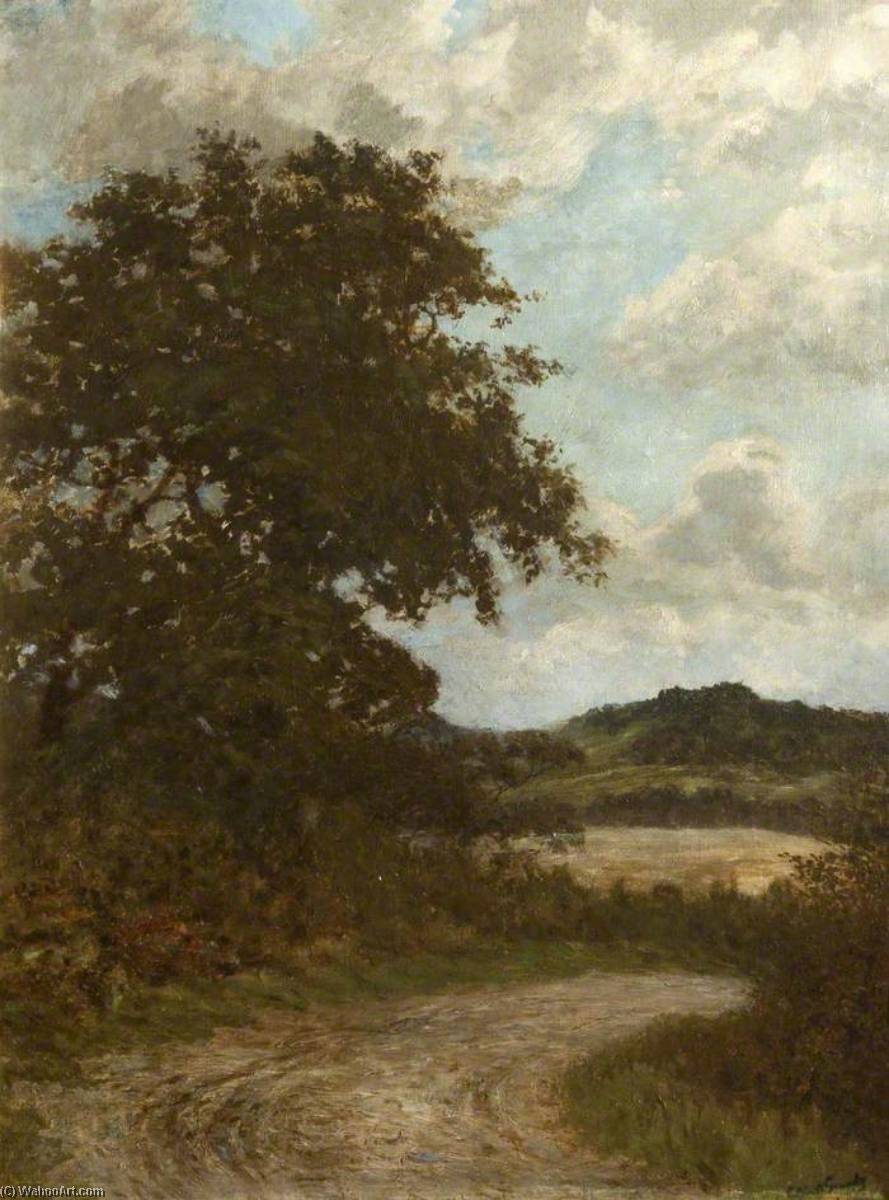
Trumpai tariant
Dawn (1900) yra viena矚 most žiūrėlių pritraukiančių Cuthbert Cartwright Grundy tapierių; originalas saugomas Grundy Art Gallery, Blackpool. Po to akmuo patenka į The Old Millhouse, Milnthorpe (1900) ir The End of the Village. Iš 15 Cuthbert Cartwright Grundy darbų mūsų kataloge šios 15 yra garsiausios – kiekvienas yra unikali originali dai̇lia, pateikta su jos metais, muziejumi ir priežastimi, kodėl ji išlieka per amžius.
10 geriausių Cuthbert Cartwright Grundy paveikslų: galerijos akimais
Autumn
The painting Autumn by Cuthbert Cartwright Grundy is a stunning representation of the fall season, showcasing the artist's skill in capturing the essence of nature. Created in 1919, this oil on canvas piece measures 111 x 86 cm and is currently housed at the Harris Museum - Art Gallery in Preston, United Kingdom. A Closer Look at the Painting The scene features two trees, one on the left side and…
žinomi Cuthbert Cartwright Grundy paveikslai, nuo 11 iki 15 numerio
Temos, kurios domino Cuthbert Cartwright Grundy
Ketverios temos, dažniausiai pasikrausto originaluose, kiekvienos su savo puikiausiu pavyzdžiu.
Landscape 2 darbai
Hills 2 darbai
Tranquility 2 darbai
Atmospheric 2 darbai
Muziejai, kuriuose saugomi Cuthbert Cartwright Grundy originalūs darbai
5 muziejai, kuriuose saugoma daugiausia šioje pusėje esamų paveikslų.
| Muzejaus | Miestas | Cuthbert Cartwright Grundy darbai | Šiojo sąrašo paveikslai |
|---|---|---|---|
| Blackpool | 4 | Dawn, The Old Millhouse, Milnthorpe, View from My Window | |
| Newcastle upon Tyne | 1 | Plas Mawr, Conwy | |
| Preston | 1 | Autumn | |
| Rochdale | 1 | Fresh and Breezy | |
| Bristol | 1 | A Study, A Grassy Bank, with Trees |
Cuthbert Cartwright Grundy per dešimtmečius: vieniškas originalas kiekvienam
Cuthbert Cartwright Grundy tapų klausimai galerijai
Koks yra garsiausias Cuthbert Cartwright Grundy kūrinys?Atsakymas
Dawn (1900), Grundy Art Gallery, Blackpool. Toliau seka The Old Millhouse, Milnthorpe (1900) ir The End of the Village.
Kuriuo amžiaus atσταση Cuthbert Cartwright Grundy sukūrė Dawn?Atsakymas
54 metų amžiaus: Dawn sukurta 1900 m. Nr. Cuthbert Cartwright Grundy gimė 1846.
Kurios Cuthbert Cartwright Grundy dešimt paveikslų yra garsiausi?Atsakymas
Dawn, The Old Millhouse, Milnthorpe, The End of the Village, Plas Mawr, Conwy, View from My Window, Autumn, Landscape, Coming Rain, Undisturbed ir Elterwater. Viršuje esančioje reitingo sąraše nurodyta kiekvieno kūrinio metis ir muziejus.
Kiek žinoma Cuthbert Cartwright Grundy darbų?Atsakymas
Mūsų kataloge yra 15 Cuthbert Cartwright Grundy darbų, skirtų laikotarpiui nuo 1900 iki 1937.
Kur galima pamatyti garsiausių Cuthbert Cartwright Grundy originalų?Atsakymas
Daugiausia – Grundy Art Gallery (Blackpool), Laing Art Gallery (Newcastle upon Tyne) ir Harris Museum - Art Gallery (Preston). Viršuje esančiame muziejų sąraše yra visi jie.
Kuriuo laikotarpiu Cuthbert Cartwright Grundy sukūrė savo žymiausias paveikslus?Atsakymas
1900s laikotarpiu: 2 iš 15 šioje pusėje esančių darbų buvo sukurtos tada, iš jų Dawn.
Kuris iš garsių Cuthbert Cartwright Grundy paveikslų yra pirmasis, o kuris – paskutinis?Atsakymas
Šioje pusėje seniausias darbas yra Dawn (1900), o naujausias – View from My Window (1937).
Kokia temos Cuthbert Cartwright Grundy mėgavosi?Atsakymas
Landscape (2), Hills (2) ir Tranquility (2) iš 15 šioje pusėje esamų darbų.
Kurius Cuthbert Cartwright Grundy originalius galėčiau pamatyti Grundy Art Gallery?Atsakymas
Dawn, The Old Millhouse, Milnthorpe ir View from My Window: Grundy Art Gallery, Blackpool kolekcijoje yra 4 šioje pusėje esančių darbų.
Cuthbert Cartwright Grundy: meno kūrinys – autoportretas
Cuthbert Cartwright Grundy: A Vision of Northumberland
Cuthbert Cartwright Grundy (1846 – 1946) remains a relatively obscure figure in the annals of British watercolor painting, yet his landscapes hold a quiet beauty and profound connection to the rugged terrain of Northumberland. Born into a family steeped in artistic tradition—his father was a noted sculptor—Grundy’s early life fostered an appreciation for visual art that would shape his lifelong dedication to capturing the spirit of Northern England. While biographical details remain sparse, archival records indicate he pursued formal training at Slade School of Art in London, honing his skills under influential instructors and absorbing the stylistic currents of Impressionism and Neo-Romanticism prevalent during his formative years.- Early Influences: Grundy’s artistic sensibilities were undeniably shaped by the Romantic movement's fascination with sublime landscapes and emotional expression. Artists like Turner and Constable served as beacons, demonstrating how watercolor could convey grandeur and evoke powerful feelings.
- Northumberland Obsession: From around 1890 onwards, Grundy established his studio in Kirkcudbrightshire, Scotland, but Northumberland became the focal point of his artistic endeavors. He tirelessly documented the dramatic coastline, rolling hills, and picturesque villages of Northumberland with meticulous detail and sensitivity.
A Distinctive Watercolor Style
Grundy’s technique distinguished him from many of his contemporaries. Unlike looser Impressionists who prioritized fleeting effects of light, Grundy favored a deliberate layering process—often applying multiple washes to build up tonal depth and texture. He meticulously observed the nuances of color and atmosphere, striving for accuracy while simultaneously imbuing his paintings with an emotional resonance. His palette leaned towards muted greens, blues, and browns, reflecting the subdued hues of Northumberland’s landscape. Notably, Grundy employed a technique known as ‘grisaille,’ applying thin washes of gray to establish tonal values before adding color—a method that allowed him to achieve remarkable realism and compositional control.- Detailed Observation: Grundy's approach mirrored the scientific rigor championed by Victorian naturalists; he meticulously documented geological formations, plant life, and animal behavior.
- Emotional Resonance: Despite his technical precision, Grundy’s paintings are imbued with a palpable sense of tranquility and contemplation. He sought to convey not merely what he saw but how he felt—a testament to the power of art as a vehicle for emotional expression.