Cornelis van Spaendonck portretas

Cornelis van Spaendonck tapiai: 15 garsiausi πίναšiai, galerijos akimis

Atnaujinta lapkritis 2026 · pagal mūsų populiarumumo koeficientą (paieškos, lankytojai ir užsakymai kiekvienam kūriniui) · 16 Cornelis van Spaendonck darbai mūsų kataloge

Trumpai tariant

Galerijos akimais, garsiausias Cornelis van Spaendonck tapas yra Still Life of Flowers (1793), kurio originalas eksponuojamas Herbert F. Johnson Museum of Art, Itaka. Still-Life with Fruit on Table (1798) ir Vase of Roses (1806) užbaia trio, kurį atpažįsta kiekvienas ž)/\ Iš 16 Cornelis van Spaendonck darbų mūsų kataloge, galerija žemiau pristato 15 garsiausius – kiekvienas yra originalus, su nurodytu metais, muziejumi bei unikaliu aprašymu.

1756 – 1839, Tilburg Daugiausia darbų: Fitzwilliam Museum

10 geriausių galerijos Cornelis van Spaendonck paveikslų

1
Still Life of Flowers (1793) aut. Cornelis van Spaendonck

Still Life of Flowers

1793 · Oil · Herbert F. Johnson Museum of Art, Itaka

In this 1793 composition, we find ourselves in the presence of a lush, pyramidal arrangement that speaks to the quiet intensity of the late Baroque tradition. A large, cream-colored vase sits at the center, its ornate surface catching the light as it overflows with a dense collection of blossoms. The arrangement is not merely a display of flora but a carefully constructed study of form and shadow. Soft pink peonies…

2
Still-Life with Fruit on Table (1798) aut. Cornelis van Spaendonck

Still-Life with Fruit on Table

1798 · Oil On Canvas · Liuvro muziejus, Paryžius

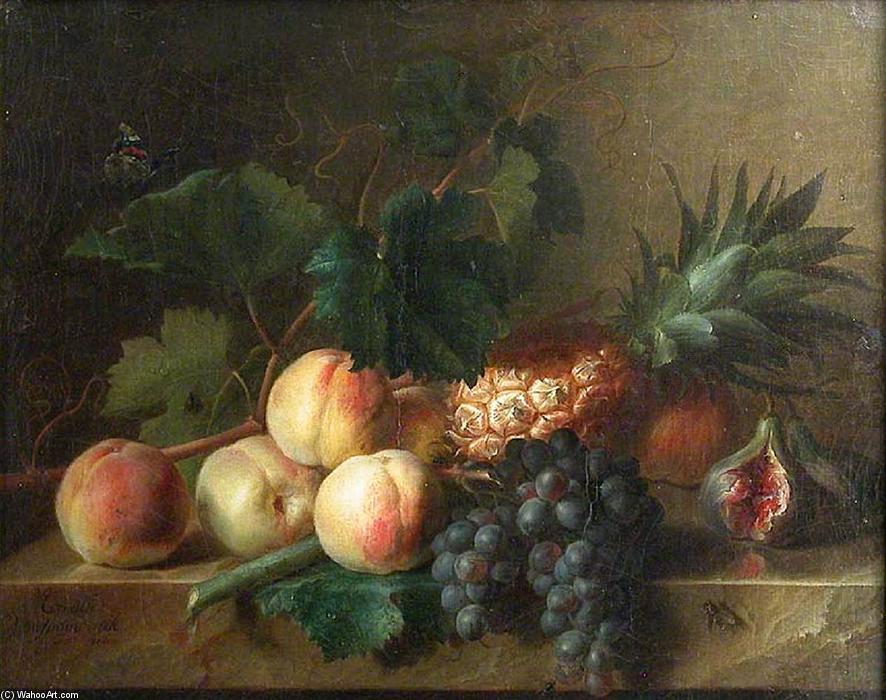
Gaze upon this exquisite vision of abundance, a moment captured in time that speaks volumes through its vibrant arrangement of nature's bounty. This still life, featuring an array of ripe fruit—luscious apples nestled in the foreground, stately pears positioned just behind them, and clusters of deep purple grapes alongside bright oranges—is more than mere depiction; it is a celebration of harvest and earthly pleasure. The composition is further enriched by…

3
Vase of Roses (1806) aut. Cornelis van Spaendonck

Vase of Roses

1806 · Lyon grožio muziejus, Liona

When the Dutch painter Cornelis van Spaendonck was around the age of twenty, he settled in Paris, which had become the new center of flower painting since the mid-18th century. As the artistic director of the Sèvres porcelain manufactory between 1785 and 1800, he created a great number motifs for the porcelain pieces designed to embellish the houses of princes and royals. This bouquet containing several varieties of roses was…

Cornelis van Spaendonck tapiai, rangos nuo 11 iki 15

Temos, kurios domino Cornelis van Spaendonck

Ketverios temos, dažniausiai pasikrausto originaluose, kiekvienos su savo puikiausiu pavyzdžiu.

Muziejai, kuriuose saugomi Cornelis van Spaendonck originalūs darbai

7 muziejai, kuriuose saugoma daugiausia šioje pusėje esamų paveikslų.

Muzejaus Miestas Cornelis van Spaendonck darbai Šiojo sąrašo paveikslai
Fitzwilliam MuseumFitzwilliam Museum 3 Open Wicker Basket Of Mixed Flowers, Including Tulip, Roses, Harebell, Hollyhock, Poppy, Larkspur And Auricula On A Marble Ledge, Vase Of Flowers, Open wicker basket of mixed flowers, including iris, roses, poppies, hollyhock, marigold, larkspur and convolvulus on a marble ledge
Noordbrabants Museum, 's-HertogenboschNoordbrabants Museum 's-Hertogenbosch 2 Cabbage rose, Still Life with Flowers in a Vase
Herbert F. Johnson Museum of Art, ItakaHerbert F. Johnson Museum of Art Itaka 1 Still Life of Flowers
Liuvro muziejus, ParyžiusLiuvro muziejus Paryžius 1 Still-Life with Fruit on Table
Lyon grožio muziejus, LionaLyon grožio muziejus Liona 1 Vase of Roses
Musée des Beaux-Arts, CarcassonneMusée des Beaux-Arts Carcassonne 1 Cornelis Van Spaendonck - Vase de fleurs avec nid
Ashmolean Museum, OksfordasAshmolean Museum Oksfordas 1 Basket of Flowers

Cornelis van Spaendonck, po vieno ikoninio paveikslio kiekvienam dešimtmenės laikotarpiui

Darbai pagal dešimtmečius

Pasirinkite dešimtmetį, kad pamatytėte jį apibrėžusį originalą.

Cornelis van Spaendonck tapyiniai: galerijos atsakymai

Kuris Cornelis van Spaendonck paveikslas yra pats garsiausias iš visų?Atsakymas

Still Life of Flowers (1793), Herbert F. Johnson Museum of Art, Itaka. Toliau seka Still-Life with Fruit on Table (1798) ir Vase of Roses (1806).

Kiek metų buvo Cornelis van Spaendonck, kai sukūrė Still Life of Flowers?Atsakymas

37 metų amžiaus: Still Life of Flowers sukurta 1793 m. Nr. Cornelis van Spaendonck gimė 1756.

Kuriose yra 10 geriausių Cornelis van Spaendonck paveikslų?Atsakymas

Still Life of Flowers, Still-Life with Fruit on Table, Vase of Roses, Still Life with Fruit Basket, Vase of Flowers on a Stone Table, with a Nest and a Male Greenfinch, Cornelis Van Spaendonck - Vase de fleurs avec nid, Cabbage rose, Still Life with Flowers in a Vase, Open Wicker Basket Of Mixed Flowers, Including Tulip, Roses, Harebell, Hollyhock, Poppy, Larkspur And Auricula On A Marble Ledge ir Basket and Vase of Flowers. Viršuje esančioje reitingo sąraše nurodyta kiekvieno kūrinio metis ir muziejus.

Kiek kūrinių sukūrė Cornelis van Spaendonck?Atsakymas

Mūsų kataloge yra 16 Cornelis van Spaendonck darbų, skirtų laikotarpiui nuo 1781 iki 1830.

Kur kabinami garsiausi Cornelis van Spaendonck originalūs darbai?Atsakymas

Daugiausia – Fitzwilliam Museum, Noordbrabants Museum ('s-Hertogenbosch) ir Herbert F. Johnson Museum of Art (Itaka). Viršuje esančiame muziejų sąraše yra visi jie.

Kada Cornelis van Spaendonck sukūrė savo garsiausias paveikslus?Atsakymas

1780s laikotarpiu: 3 iš 15 šioje pusėje esančių darbų buvo sukurtos tada, iš jų Still Life with Fruit Basket.

Kokie yra ankstyviausi ir vėliausi garsieji Cornelis van Spaendonck kūriniai?Atsakymas

Šioje pusėje seniausias darbas yra Still Life with Fruit Basket (1781), o naujausias – Still Life with Flowers in a Vase (1830).

Kurią temą Cornelis van Spaendonck kūrė dažniausiai?Atsakymas

Flowers (4), Vase (2) ir Floral arrangement (2) iš 15 šioje pusėje esamų darbų.

Kurių Cornelis van Spaendonck originalų turi Fitzwilliam Museum?Atsakymas

Open Wicker Basket Of Mixed Flowers, Including Tulip, Roses, Harebell, Hollyhock, Poppy, Larkspur And Auricula On A Marble Ledge, Vase Of Flowers ir Open wicker basket of mixed flowers, including iris, roses, poppies, hollyhock, marigold, larkspur and convolvulus on a marble ledge: Fitzwilliam Museum kolekcijoje yra 3 šioje pusėje esančių darbų.

Cornelis van Spaendonck: menininkas

The Delicate Mastery of Cornelis van Spaendonck

In the grand tapestry of European art history, few threads possess the delicate, luminous quality found in the works of Cornelis van Spaendonck. Born in the Dutch city of Tilburg in 1756, Van Spaendonck emerged from a lineage of profound artistic dedication, beginning his journey under the tutelage of Willem Jacob Herreyns in Antwerp. This early training laid the foundation for a career that would eventually bridge the gap between the meticulous traditions of the Dutch Golden Age and the refined elegance of the French Neoclassical era. In 1773, a pivotal year that redirected the course of his life, he moved to Paris, where he joined his older brother, Gérard van Spaendonck. Together, they became central figures in the Parisian art scene, weaving a legacy of botanical precision and decorative splendor that would captivate the French Academy for decades.

The essence of Van Spaendonck’s artistry lies in his ability to transform the ephemeral into the eternal. While many artists of his era sought the drama of historical epic or the grandeur of portraiture, Cornelis found his muse in the quiet, intimate corners of the natural world. His mastery of oils and gouache allowed him to capture the translucent petals of a rose, the velvety texture of a tulip, and the subtle, dewy moisture on a leaf with an almost scientific accuracy. His compositions often transcend mere botanical documentation; they are poetic meditations on life and decay. In works such as "Open Wicker Basket Of Mixed Flowers," one can sense the artist's profound reverence for each individual bloom, from the sturdy hollyhock to the delicate harebell, all arranged with a grace that feels both spontaneous and perfectly balanced.

A Legacy of Porcelain and Prestige

Van Spaendonck’s influence extended far beyond the canvas, reaching into the very fabric of decorative arts that defined 18th-century luxury. His tenure as the director of the prestigious Sèvres porcelain factory from 1785 to 1800 represents a remarkable intersection of fine art and industrial design. During this period, his botanical sensibilities were translated into exquisite motifs for porcelain, bringing the beauty of the natural world to the tables of the European aristocracy. Even after his administrative departure from Sèvres in 1800, his creative spirit remained tethered to the manufactory, as he continued to design decorative elements that would become hallmarks of French elegance until 1808.

His professional stature was further solidified by his membership in the Académie des Beaux Arts, a distinction he earned in 1789. This prestigious affiliation provided him with a continuous platform to showcase his botanical wonders to the most discerning eyes in Europe. His work often featured more than just flora; he possessed a singular talent for integrating small, living details that breathed life into his still lifes. A wandering bee, a shimmering dragonfly, or a tiny bird's nest tucked among the stems served as subtle reminders of the interconnectedness of nature, adding layers of narrative depth to his compositions.

The historical significance of Cornelis van Spaendonck is found not only in his individual achievements but also in the lineage of talent he helped cultivate. As a mentor to artists like Frédéric Bouchardy, he ensured that the tradition of meticulous botanical illustration would endure into the next century. His life’s work remains a testament to the power of observation and the enduring allure of the natural world, offering a window into an era where beauty was captured with unparalleled precision and profound affection.