Christopher Dresser portretas

5 garsiausių Christopher Dresser paveikių rinkinys: galerijos išboru

Atnaujinta lapkritis 2026 · pagal mūsų populiarumumo koeficientą (paieškos, lankytojai ir užsakymai kiekvienam kūriniui) · 5 Christopher Dresser darbai mūsų kataloge

Trumpai tariant

Iš visų originalų, kuriuos paliko Christopher Dresser, garsiausias yra Spoon warmer (1880). Tiesiog už jų seka Teapot with warmer (1878) ir Jardinière. Mūsų kataloge yra 5 darbų autoriaus Christopher Dresser; galerija išsaugojo 5 labiausiai pasaulyje žyminiausių kūrinių – kiekvienas jų pateikiamas su datos, muziejaus ir istorijos aprašymu.

1834 – 1904, Glasgow Daugiausia darbų: The Baltimore Museum of Art

Christopher Dresser geriausios 10 paveikslų: galerijos pasirinkimas

1
Spoon warmer (1880) aut. Christopher Dresser

Spoon warmer

1880

Dresser, born in 1834, is seen as a pioneer of modern industrial design. Between 1865 and 1885 he designed various everyday objects for silverware factories in London and Birmingham. All objects were industrially manufactured and for the most part silver-plated. Dresser

2
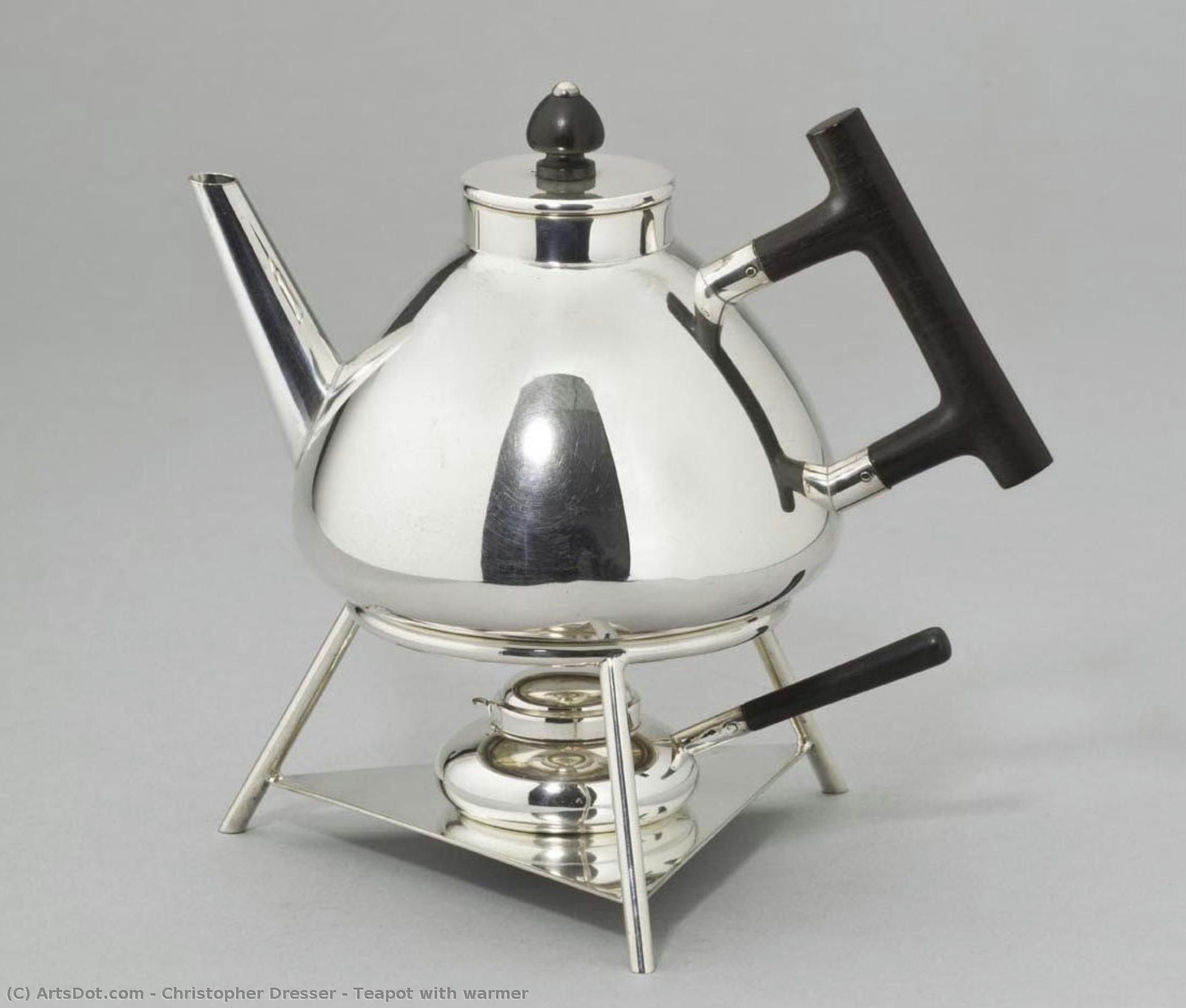
Teapot with warmer (1878) aut. Christopher Dresser

Teapot with warmer

1878

Dresser, born in 1834, is seen as a pioneer of modern industrial design. Between 1865 and 1885 he designed various everyday objects for silverware factories in London and Birmingham. All objects were industrially manufactured and for the most part silver-plated. Dresser

4
Congressional Pugilists (1798) aut. Christopher Dresser

Congressional Pugilists

1798 · Watercolor · Metropolitano meno muziejus, Niujorkas

Congressional Pugilists: A Clash of Styles in Victorian Glasgow The artwork "Congressional Pugilists," created by Christopher Dresser in 1898, transcends mere depiction; it embodies the spirit of its time—a confluence of industrial innovation and artistic rebellion against convention. Executed in black and white watercolor on paper measuring 16 x 22 cm, this piece stands as a testament to Dresser’s pioneering role as an industrial designer and his enduring influence on…

5
Clutha glass vase (1889) aut. Christopher Dresser

Clutha glass vase

1889 · Museum of Applied Arts, Budaras

A long, twisted and wavy bottle with a collar-like, splaying top rim. The blue-green, bubbled glass is enriched with silvery, glittering mica grits and yellow-white and red stripes. This bottle is an outstanding example of the «Clutha»-type glass designed by Christopher Dresser. Jenő Radisics published the piece described above as one made by the Dobson and Rose company. However, the marking on the bottle - and the initials of the…

Temos, kurios domino Christopher Dresser

Ketverios temos, dažniausiai pasikrausto originaluose, kiekvienos su savo puikiausiu pavyzdžiu.

Muziejai, kuriuose saugomi Christopher Dresser originalūs darbai

3 muziejai, kuriuose saugoma daugiausia šioje pusėje esamų paveikslų.

Muzejaus Miestas Christopher Dresser darbai Šiojo sąrašo paveikslai
The Baltimore Museum of Art, BaltimoreThe Baltimore Museum of Art Baltimore 1 Jardinière
Metropolitano meno muziejus, NiujorkasMetropolitano meno muziejus Niujorkas 1 Congressional Pugilists
Museum of Applied Arts, BudarasMuseum of Applied Arts Budaras 1 Clutha glass vase

Christopher Dresser metai po metų: originalūs darbai, apibūdinantys kiekvieną iš jų

Pasirinkimas apima Christopher Dresser kūrybą per 12 metus, nuo 1878 iki 1889, kurioje surinkti geriausi kiekvienų metų originalūs darbai.

Darbai pagal metus

Pasirinkite metus, kad pamatytumėte originalus darbus.

Kolekcjonerų klausimai apie Christopher Dresser paveikslus

Kuriu darbu Christopher Dresser yra labiausiai garsus?Atsakymas

Spoon warmer (1880). Toliausiai eina Teapot with warmer (1878) ir Jardinière.

Kokia buvo Christopher Dresser amžius, kai buvo sukurtas Spoon warmer?Atsakymas

46 metų amžiaus: Spoon warmer sukurta 1880 m. Nr. Christopher Dresser gimė 1834.

Kiek paveikslų paliko Christopher Dresser?Atsakymas

Mūsų kataloge yra 5 Christopher Dresser darbų, skirtų laikotarpiui nuo 1878 iki 1889.

Kuriuose muziejuose eksponuojami Christopher Dresser šedevrai?Atsakymas

Daugiausia – The Baltimore Museum of Art (Baltimore), Metropolitano meno muziejus (Niujorkas) ir Museum of Applied Arts (Budaras). Viršuje esančiame muziejų sąraše yra visi jie.

Kokie yra pirmasis ir paskutinis garsieji Christopher Dresser originalūs darbai?Atsakymas

Šioje pusėje seniausias darbas yra Teapot with warmer (1878), o naujausias – Clutha glass vase (1889).

Christopher Dresser: gyvenimas ir kūryba

Christopher Dresser: The Father of Industrial Design

Christopher Dresser (1834–1904) stands as a monumental figure in Victorian design, recognized today as arguably the first industrial designer and a pivotal contributor to both the Aesthetic Movement and Anglo-Japanese style—influences that continue to resonate across artistic disciplines. Born in Glasgow, Scotland, Dresser’s early life was marked by an interest in botany and natural sciences, shaping his worldview and informing his aesthetic sensibilities. This fascination would become central to his groundbreaking approach to design, prioritizing functionality alongside beauty – a radical departure from prevailing Victorian tastes dominated by ornate decoration.
  • Early Career & Influences: Dresser began his artistic journey as a decorative painter and designer of wallpaper, establishing himself in London’s burgeoning art scene. He was profoundly impacted by Japanese art and craftsmanship during his travels to Japan in 1870, absorbing the principles of asymmetry, simplicity, and natural materials—elements that would become hallmarks of the Anglo-Japanese style.
  • The Aesthetic Movement & Design Reform: Dresser championed the Aesthetic Movement, advocating for a rejection of academic conventions and embracing artistic freedom. He argued passionately for “design reform,” asserting that art should serve practical purposes while elevating human experience. This conviction fueled his tireless pursuit of innovation in various mediums.

A Diverse Artistic Output: Ceramics, Glassware & Furniture

Dresser’s creative output spanned an astonishing range of disciplines—ceramics, glassware, furniture design, textiles, and silver plating. He meticulously studied the techniques of artisans from around the globe, incorporating elements of Japanese craftsmanship into his creations. His ceramics, particularly the Jardinière – a celebrated piece housed in The Baltimore Museum of Art – exemplify his masterful blending of form and function. This vase showcases Dresser’s ability to transform natural materials like stoneware into elegant sculptural objects. Similarly, his glassware designs prioritized clarity and simplicity, reflecting the influence of Japanese aesthetics.
  • Notable Projects: Among Dresser's most significant achievements were collaborations with renowned manufacturers like Josiah Wedgwood & Sons, where he spearheaded transformative innovations in ceramic production. His furniture designs embraced minimalist silhouettes combined with natural textures—a stylistic hallmark of the Anglo-Japanese aesthetic.

The Anglo-Japanese Style: A Synthesis of Tradition and Innovation

Dresser’s embrace of Japanese aesthetics wasn't merely an admiration for exotic beauty; it represented a deliberate effort to reimagine Western design principles. He believed that studying Japanese craftsmanship could inspire new approaches to artistic expression, prioritizing natural materials, understated ornamentation, and harmonious proportions. This fusion of Eastern and Western traditions resulted in a distinctive style characterized by refined elegance and intellectual depth—a style that continues to captivate designers and artists today.

Legacy & Historical Significance

Christopher Dresser’s impact on the history of design is undeniable. He fundamentally challenged Victorian artistic conventions, advocating for a more rational and aesthetically informed approach to craftsmanship. His pioneering spirit paved the way for the emergence of industrial design as a recognized field, establishing Dresser as a visionary ahead of his time. Today, his work remains celebrated for its enduring beauty and its profound contribution to shaping the visual culture of the late nineteenth century—a testament to the transformative power of artistic innovation.