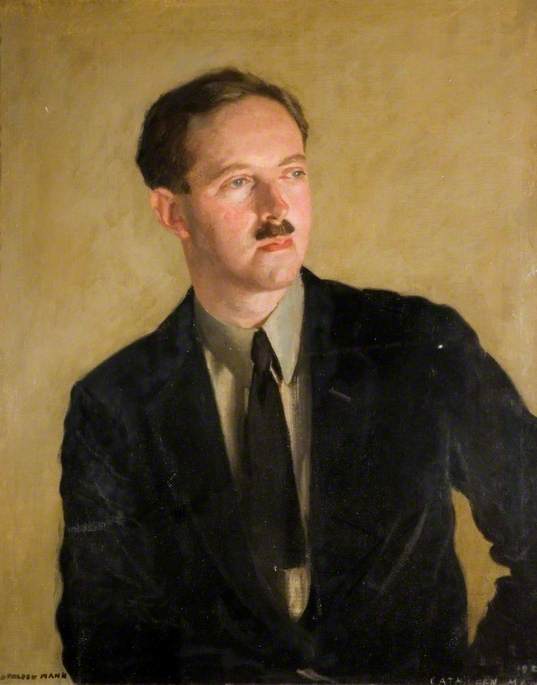
Cathleen Sabine Mann portretas

14 garsiausių Cathleen Sabine Mann paveikių rinkinys: galerijos išboru

Atnaujinta lapkritis 2026 · pagal mūsų populiarumumo koeficientą (paieškos, lankytojai ir užsakymai kiekvienam kūriniui) · 14 Cathleen Sabine Mann darbai mūsų kataloge

Trumpai tariant

Iš visų originalų, kuriuos paliko Cathleen Sabine Mann, garsiausias yra Ballerina (1934). Tiesiog už jų seka Francis Brett Young (1884–1954) (1922) ir Jane Posing (1931). Mūsų kataloge yra 14 darbų autoriaus Cathleen Sabine Mann; galerija išsaugojo 14 labiausiai pasaulyje žyminiausių kūrinių – kiekvienas jų pateikiamas su datos, muziejaus ir istorijos aprašymu.

1896 – 1959, Newcastle upon Tyne Daugiausia darbų: Birminghamio universiteto muziejai

Cathleen Sabine Mann geriausios 10 paveikslų: galerijos pasirinkimas

1
Ballerina (1934) aut. Cathleen Sabine Mann

Ballerina

1934

The Ballerina painting by Cathleen Mann is a stunning example of artistic excellence, showcasing the artist's skill and attention to detail. Created in 1934, this oil on canvas masterpiece measures 91 x 71 cm and is currently housed at the Glasgow Museums Resource Centre in the United Kingdom. Artist Background Cathleen Mann was a talented artist known for her captivating portraits and figurative paintings. Her work often featured women and…

Cathleen Sabine Mann darba rinkinys tęsiamas, nuo 11 iki 14

Muziejai, kuriuose saugomi Cathleen Sabine Mann originalūs darbai

4 muziejai, kuriuose saugoma daugiausia šioje pusėje esamų paveikslų.

Muzejaus Miestas Cathleen Sabine Mann darbai Šiojo sąrašo paveikslai
Birminghamio universiteto muziejai, BirminghamasBirminghamio universiteto muziejai Birminghamas 1 Francis Brett Young (1884–1954)
Ferens Art Gallery, HolasFerens Art Gallery Holas 1 Diana Napier (1904–1982) (Mrs Richard Tauber)
National Trust, GranthamNational Trust Grantham 1 Peregrine Francis Adelbert Cust (1899–1978), 6th Baron Brownlow
Bolton Museum And Art Gallery, BoltonBolton Museum And Art Gallery Bolton 1 Flowers

Cathleen Sabine Mann dešimtmetėms po dešimtmetės: originalus kūrinys, apibūdinantis kiekvieną iš jų

Darbai pagal dešimtmečius

Pasirinkite dešimtmetį, kad pamatytėte jį apibrėžusį originalą.

Kolekcjonerų klausimai apie Cathleen Sabine Mann paveikslus

Kuriu darbu Cathleen Sabine Mann yra labiausiai garsus?Atsakymas

Ballerina (1934). Toliausiai eina Francis Brett Young (1884–1954) (1922) ir Jane Posing (1931).

Kokia buvo Cathleen Sabine Mann amžius, kai buvo sukurtas Ballerina?Atsakymas

38 metų amžiaus: Ballerina sukurta 1934 m. Nr. Cathleen Sabine Mann gimė 1896.

Kokie yra 10 garsiausių Cathleen Sabine Mann paveikslų?Atsakymas

Ballerina, Francis Brett Young (1884–1954), Jane Posing, Composition in Pink and Green, David Douglas, Viscount Drumlanrig (b.1929), Diana Napier (1904–1982) (Mrs Richard Tauber), Barrage Balloons over St James's Park, St James's Park, Evreux ir Evan Frederick Morgan (1893–1949), 2nd Viscount Tredegar (2nd Creation). Viršuje esančioje reitingo sąraše nurodyta kiekvieno kūrinio metis ir muziejus.

Kiek paveikslų paliko Cathleen Sabine Mann?Atsakymas

Mūsų kataloge yra 14 Cathleen Sabine Mann darbų, skirtų laikotarpiui nuo 1922 iki 1952.

Kuriuose muziejuose eksponuojami Cathleen Sabine Mann šedevrai?Atsakymas

Daugiausia – Birminghamio universiteto muziejai (Birminghamas), Ferens Art Gallery (Holas) ir National Trust (Grantham). Viršuje esančiame muziejų sąraše yra visi jie.

Kuriomis metais Cathleen Sabine Mann tapo savo garsiausius kūrinius?Atsakymas

1940s laikotarpiu: 6 iš 14 šioje pusėje esančių darbų buvo sukurtos tada, iš jų Barrage Balloons over St James's Park.

Kokie yra pirmasis ir paskutinis garsieji Cathleen Sabine Mann originalūs darbai?Atsakymas

Šioje pusėje seniausias darbas yra Francis Brett Young (1884–1954) (1922), o naujausias – Sir Eduardo Luigi Paolozzi (1952).

Cathleen Sabine Mann: gyvenimas ir kūryba

A Life in Lines and Layers

Cathleen Mann began her days in Newcastle upon Tyne, born to parents who lived through the brush and pigment. Her father, Harrington Mann, and her mother, Florence Sabine Pasley, were both portraitists, providing a childhood shaped by the quiet work of the studio. She learned to paint within her father's London studio, receiving early lessons that would later lead her to the Slade School of Fine Art and eventually to Paris. These formative years were marked by the steadying influence of Ethel Walker, another painter who continued to guide her even as Cathleen pursued her own studies.

The rhythms of her life changed with the arrival of the First World War. The studio was left behind for the work of an ambulance unit, a period that placed her in the middle of a much larger, more chaotic reality. When she returned to her art, her focus remained on the human form and the quiet details of life. She became known for portraits and landscapes, often capturing women and children with a careful eye for the subtle shifts in emotion. Her work found homes in the Victoria and Albert Museum, the Musée du Luxembourg, and the Royal Glasgow Institute of the Fine Arts.

The Dual Path of Paint and Film

During the 1930s, her hands were busy with more than just canvas. She moved into the world of British film, working as a costume designer. This period saw her contributing to the visual fabric of films such as:

  • The Iron Duke (1935)
  • Things to Come (1937)
  • Backstage (1937)
  • Forbidden Music (1936)
  • The Show Goes On (1936)
  • Evensong (1934)
  • Chu Chin Chow (1934)
  • The Wandering Jew (1933)

Her design work left a physical trace in the collections of the Victoria & Albert Museum. At the same time, her painting continued to evolve. In 1934, she produced Ballerina, an oil on canvas that shows a woman on a couch with a black cat nearby. Her later years brought a shift toward abstraction. Influenced by Matthew Smith, she began experimenting with landscapes of increasing abstraction, nude drawings, and sculpture. This period of experimentation followed the personal losses of 1953, when her husband, John Robert Follett, passed away.

Service and Legacy

The Second World War brought a different kind of responsibility. Mann served as an official war artist, painting portraits of officers and Allied commanders. These works were seen in London and traveled to America, sometimes appearing in the pages of Time magazine. Beyond the canvas, she used her position as the Marchioness of Queensberry to assist others during the bombing of 1940. She worked to secure transport by road and rail to move people to safety in the dock district of south West Ham.

Her career was defined by a movement between the structured world of portraiture and the fluid experimentation of her later years. She held memberships in both the Royal Institute of Oil Painters and the Royal Society of Portrait Painters. Her portraits, such as those of Sir Matthew Smith and Sir Eduardo Paolozzi, remain in the National Portrait Gallery in London. She died in 1959 in her studio on Montpelier Walk, Brompton.