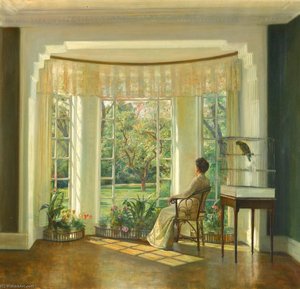
Carlas Holsøe portretas

27 garsiausių Carlas Holsøe paveikių rinkinys: galerijos išboru

Atnaujinta lapkritis 2026 · pagal mūsų populiarumumo koeficientą (paieškos, lankytojai ir užsakymai kiekvienam kūriniui) · 28 Carlas Holsøe darbai mūsų kataloge

Trumpai tariant

Iš visų originalų, kuriuos paliko Carlas Holsøe, garsiausias yra Interior with the artist's wife sewing at the window. (1881). Tiesiog už jų seka Interior with the artist's wife reading a book by the window. (1881) ir Interior with a Girl Sewing (1888). Mūsų kataloge yra 28 darbų autoriaus Carlas Holsøe; galerija išsaugojo 27 labiausiai pasaulyje žyminiausių kūrinių – kiekvienas jų pateikiamas su datos, muziejaus ir istorijos aprašymu.

1863 – 1935, Aarhus Realism Daugiausia darbų: Statens Museum For Kunst

Carlas Holsøe geriausios 10 paveikslų: galerijos pasirinkimas

1
Interior with the artist's wife sewing at the window. (1881) aut. Carlas Holsøe

Interior with the artist's wife sewing at the window.

1881 · Oil On Canvas

Interior with the artist's wife sewing at the window. is a quiet study by Carl Holsøe, painted about 1881. The work captures a solitary moment of domestic life, focusing on a woman seated by a window, absorbed in her sewing. It is a scene that prioritizes the stillness of a room and the subtle presence of a person within a structured space.

2
Interior with the artist's wife reading a book by the window. (1881) aut. Carlas Holsøe

Interior with the artist's wife reading a book by the window.

1881 · Oil On Canvas

The quietude of a private moment finds its form in Interior with the artist's wife reading a book by the window., an oil on canvas painted by Carl Holsøe. Created about 1881, the work captures a stillness that feels as though it is happening right now, just as the light shifts across the room. The scene rests within the intimate confines of a domestic space, where the soft glow from…

4
Interior with Girl (1905) aut. Carlas Holsøe

Interior with Girl

1905 · Oil On Canvas · Bavarijos valstybinės paveikslų kolekcijos, Miunchas

A soft, pale light spills from a window on the far left, washing over a domestic scene that feels suspended in a moment of profound stillness. A young girl sits at a table, her form a gentle, organic curve against the rigid, rectangular lines of the room. The scene is rendered in a monochromatic palette, where every detail relies on the subtle interplay of gray, white, and deep black. There…

5
Interior from the artist's home. (1914) aut. Carlas Holsøe

Interior from the artist's home.

1914 · Oil On Canvas

Interior from the artist's home. is a painting by Carl Holsøe. This work was created in 1914. The artist, Carl Holsøe, was born in Aarhus, Denmark, in 1863 and died in Asserbo in 1935. His practice focused primarily on domestic interior scenes, often capturing the specific arrangement of objects and the way light occupies a room.

6
An Italian village with women at the fountain (1916) aut. Carlas Holsøe

An Italian village with women at the fountain

1916 · Oil On Canvas · Imago Museum, Pescara

In "An Italian village with women at the fountain" by Carl Holsøe, we find ourselves observing a quiet moment of daily life. The scene is set within a tranquil Italian village, where the composition is anchored by a stone fountain. Three women are gathered in the central courtyard, their presence providing a soft human element to the structured environment. This central gathering is framed by architectural structures on the left…

7
Self portrait (1920) aut. Carlas Holsøe

Self portrait

1920 · Oil On Canvas

In this 1920 self-portrait, we find the artist, Carl Holsøe, seated within the sanctuary of his studio. The composition is intentionally asymmetrical, placing the figure slightly to the right and creating a sense of lived-in space. An easel rests in the lower foreground, a subtle reminder of the creative act that has just occurred or is about to begin. The atmosphere is one of profound stillness, where the air itself…

8
Mother and Child by a window (1935) aut. Carlas Holsøe

Mother and Child by a window

1935 · Oil On Canvas

Soft, diffused light spills through a large window, washing the room in a gentle glow that seems to suspend time itself. Within this intimate interior, a mother and her child occupy a space of profound stillness. The scene is a quiet study of domesticity, where the weight of the world is replaced by the soft textures of fabric and the warmth of wood. The mother, dressed in dark, solid tones,…

9
Last Autumn (1935) aut. Carlas Holsøe

Last Autumn

1935 · Oil On Canvas

In Last Autumn by Carl Holsøe, a quietude settles over a solitary interior. Created about 1935, the scene captures a lone woman seated in a room where time seems to have paused. She faces a small wooden chest or table, her dark dress providing a sharp, heavy contrast against the pale, muted tones of her surroundings. To her side, a large, closed white door dominates the space, creating a sense…

10
Interior with Mother and Child. (1881) aut. Carlas Holsøe

Interior with Mother and Child.

1881 · Oil On Canvas

Interior with Mother and Child. is an oil on canvas by Carl Holsøe. Created in 1881, the work belongs to a period when the artist was developing his specific approach to domestic spaces. Holsøe was born in Aarhus, Denmark, in 1863 and remained a significant figure in Danish art until his death in Asserbo in 1935.

Carlas Holsøe darba rinkinys tęsiamas, nuo 11 iki 27

žymios Carlas Holsøe tapiojamos, pagal laikotarpį

Temos, kurios domino Carlas Holsøe

Ketverios temos, dažniausiai pasikrausto originaluose, kiekvienos su savo puikiausiu pavyzdžiu.

Muziejai, kuriuose saugomi Carlas Holsøe originalūs darbai

3 muziejai, kuriuose saugoma daugiausia šioje pusėje esamų paveikslų.

Muzejaus Miestas Carlas Holsøe darbai Šiojo sąrašo paveikslai
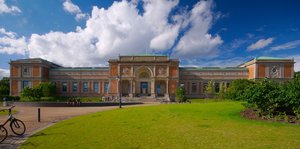
Statens Museum For Kunst, KopenhagaStatens Museum For Kunst Kopenhaga 3 Interior with a Girl Sewing, Interior with a Girl Reading, Interior with the Artist's Wife Emilie Heise
Imago Museum, PescaraImago Museum Pescara 2 An Italian village with women at the fountain, Village in the Apennine Mountains.
Bavarijos valstybinės paveikslų kolekcijos, MiunchasBavarijos valstybinės paveikslų kolekcijos Miunchas 1 Interior with Girl

Carlas Holsøe dešimtmetėms po dešimtmetės: originalus kūrinys, apibūdinantis kiekvieną iš jų

Darbai pagal dešimtmečius

Pasirinkite dešimtmetį, kad pamatytėte jį apibrėžusį originalą.

Kolekcjonerų klausimai apie Carlas Holsøe paveikslus

Kuriu darbu Carlas Holsøe yra labiausiai garsus?Atsakymas

Interior with the artist's wife sewing at the window. (1881). Toliausiai eina Interior with the artist's wife reading a book by the window. (1881) ir Interior with a Girl Sewing (1888).

Kokia buvo Carlas Holsøe amžius, kai buvo sukurtas Interior with the artist's wife sewing at the window.?Atsakymas

18 metų amžiaus: Interior with the artist's wife sewing at the window. sukurta 1881 m. Nr. Carlas Holsøe gimė 1863.

Kokie yra 10 garsiausių Carlas Holsøe paveikslų?Atsakymas

Interior with the artist's wife sewing at the window., Interior with the artist's wife reading a book by the window., Interior with a Girl Sewing, Interior with Girl, Interior from the artist's home., An Italian village with women at the fountain, Self portrait, Mother and Child by a window, Last Autumn ir Interior with Mother and Child.. Viršuje esančioje reitingo sąraše nurodyta kiekvieno kūrinio metis ir muziejus.

Kiek paveikslų paliko Carlas Holsøe?Atsakymas

Mūsų kataloge yra 28 Carlas Holsøe darbų, skirtų laikotarpiui nuo 1881 iki 1935.

Kuriuose muziejuose eksponuojami Carlas Holsøe šedevrai?Atsakymas

Daugiausia – Statens Museum For Kunst (Kopenhaga), Imago Museum (Pescara) ir Bavarijos valstybinės paveikslų kolekcijos (Miunchas). Viršuje esančiame muziejų sąraše yra visi jie.

Kuriomis metais Carlas Holsøe tapo savo garsiausius kūrinius?Atsakymas

1880s laikotarpiu: 5 iš 27 šioje pusėje esančių darbų buvo sukurtos tada, iš jų Interior with the artist's wife sewing at the window..

Kokie yra pirmasis ir paskutinis garsieji Carlas Holsøe originalūs darbai?Atsakymas

Šioje pusėje seniausias darbas yra Interior with the artist's wife sewing at the window. (1881), o naujausias – Mother and Child by a window (1935).

Kurią temą Carlas Holsøe rinkosi dažniausiai?Atsakymas

Woman (15), Window (13) ir Table (13) iš 27 šioje pusėje esamų darbų.

Kurią techniką Carlas Holsøe naudojo dažniausiai?Atsakymas

Oil On Canvas, iš 27 šios puslapio darbų – 19.

Kelią meno kryptį priklauso Carlas Holsøe?Atsakymas

Realism, vadovaujantis šios puslapio originalais kūriniais.

Kurių Carlas Holsøe darbai eksponuojami Statens Museum For Kunst?Atsakymas

Interior with a Girl Sewing, Interior with a Girl Reading ir Interior with the Artist's Wife Emilie Heise: Statens Museum For Kunst, Kopenhaga kolekcijoje yra 3 šioje pusėje esančių darbų.

Carlas Holsøe: gyvenimas ir kūryba

The Architect of Quietude: The Life and Legacy of Carl Holsøe

Carl Vilhelm Holsøe (1863–1935) remains one of the most evocative voices in Danish art, a master of the silent moment who transformed the mundane boundaries of domestic life into profound meditations on light and space. Born in Aarhus to a family deeply rooted in architectural tradition, Holsøe possessed an innate understanding of structural harmony from his earliest years. As the son of the respected architect N.P.C. Holsøe, his gaze was naturally trained toward the logic of lines, the weight of shadows, and the way a room breathes. This early immersion in the geometry of buildings provided the silent foundation for an artistic vision that would eventually prioritize the atmospheric soul of an interior over its mere physical contents. His formal journey through the Royal Danish Academy of Fine Arts in Copenhagen and the Kunstnernes Frie Studieskoler brought him under the mentorship of luminaries like Peder Severin Krøyer. While these studies grounded him in the technical brilliance of Impressionism, Holsøe’s heart leaned toward a more contemplative realism. He found deep inspiration in the Dutch Masters, particularly the luminous stillness of Johannes Vermeer and the dramatic chiaroscuro of Rembrandt. From them, he learned that a single beam of light falling across a wooden floor could carry as much emotional weight as a grand historical epic.

A Mastery of Light and Interiority

Holsø and his contemporaries often explored the boundaries of the domestic sphere, but Holsøe’s approach was uniquely characterized by a deliberate restraint. His breakthrough at the 1886 Charlottenborg December Exhibition, with a piece titled Interior, was hailed by critics as having "almost the character of a manifesto." It signaled the arrival of an artist who did not need grand gestures to command attention; instead, he used a meticulous, almost architectural precision to capture the subtle shifts of light and the quietude of solitude. His technique was a delicate balance of disciplined brushwork and atmospheric sensitivity. In his most celebrated works, such as Girl in an Interior or A Sunlit Interior, the viewer is invited into a world where time seems to suspend itself. There is a profound sense of stillness, often achieved through a muted palette that emphasizes texture and tone over vibrant color. This mastery allowed him to elevate simple domestic scenes—a woman reading, a sun-drenched corner, or a quiet hallway—into spiritual experiences. His frequent model and wife, Emilie Heise, often graced these canvases, lending a human warmth to the otherwise austere and structured environments he created.
Recognition and Historical Significance

Throughout his prolific career, Holsøe was a constant presence in the Danish art scene, exhibiting regularly at the Charlottenborg Spring and Autumn Exhibitions. His talent was recognized with prestigious accolades, including the academy's annual medal in 1901 and 1908, and a gold medal in Munich in 1891. Beyond his individual achievements, he was a vital part of the artistic fabric of his era, maintaining friendships with other titans of Danish painting, such as Vilhelm Hammershøi. Indeed, much like Hammershøi, Holsøe’s work occupies a space where the domestic and the metaphysical intersect, making him a cornerstone of Scandinavian interior painting. The enduring significance of Carl Holsøe lies in his ability to find the extraordinary within the ordinary. He did not merely paint rooms; he painted the feeling of being within them—the solitude, the peace, and the fleeting beauty of a passing afternoon. His legacy continues to resonate with anyone who finds beauty in the quiet corners of the world, proving that the most profound stories are often told in whispers rather than shouts.