Antonio Zucchi portretas

87 garsiausių Antonio Zucchi paveikių rinkinys: galerijos išboru

Atnaujinta lapkritis 2026 · pagal mūsų populiarumumo koeficientą (paieškos, lankytojai ir užsakymai kiekvienam kūriniui) · 101 Antonio Zucchi darbai mūsų kataloge

Trumpai tariant

Iš visų paliktų originalų kūrinių Antonio Zucchi garsiausias yra A Putto Being Woken from Sleep by Tickling of His Nose (1770), esantis Nostell Priory kolekcijoje, Wakefield. Tiesiog už jų seka James Adam, 1732 - 1794. Architect and designer (1763) ir Landscape with a Bridge and Ruins with Peasants Fishing (a set of six decorative wall panels) (1781). Mūsų kataloge yra 101 darbų autoriaus Antonio Zucchi; galerija išsaugojo 87 labiausiai pasaulyje žyminiausių kūrinių – kiekvienas jų pateikiamas su datos, muziejaus ir istorijos aprašymu.

1726 – 1795, Venecija Neoclassical style Daugiausia darbų: Nostell Priory

Antonio Zucchi geriausios 10 paveikslų: galerijos pasirinkimas

1
A Putto Being Woken from Sleep by Tickling of His Nose (1770) aut. Antonio Zucchi

A Putto Being Woken from Sleep by Tickling of His Nose

1770 · Oil · Nostell Priory, Wakefield

We find ourselves before A Putto Being Woken from Sleep by Tickling of His Nose, a work by the Venetian painter Antonio Zucchi. This piece dates to about 1770, a period when Zucchi was establishing his presence within the English artistic landscape. The painting is currently held within the Nostell Priory collection, where it has been preserved as part of their significant holdings.

2
James Adam, 1732 - 1794. Architect and designer (1763) aut. Antonio Zucchi

James Adam, 1732 - 1794. Architect and designer

1763 · Oil On Canvas · Škotijos nacionalinė portretų galerija, Edinburgas

In this portrait, James Adam, 1732 - 1794. Architect and designer, meets the viewer through the brush of Antonio Zucchi. The scene unfolds in Rome, captured during the subject's Grand Tour of Italy in 1763. Here, the youngest member of a prominent dynasty of Scottish architects appears not merely as a man, but as a central figure in the unfolding Neoclassical movement. He carries the weight of his profession with…

3
Landscape with a Bridge and Ruins with Peasants Fishing (a set of six decorative wall panels) (1781) aut. Antonio Zucchi

Landscape with a Bridge and Ruins with Peasants Fishing (a set of six decorative wall panels)

1781 · Oil On Canvas · National Trust, Plymouth

Antonio Zucchi’s “Landscape with a Bridge and Ruins with Peasants Fishing,” painted in 1781, is more than just a picturesque scene; it’s a poignant meditation on time, memory, and the enduring relationship between humanity and nature. This captivating work, originally conceived as one of a set of decorative wall panels, transports us to an idealized Italian countryside where classical grandeur meets rustic simplicity. The eye is immediately drawn to the…

4
Nymphs garlanding Cupid (1774) aut. Antonio Zucchi

Nymphs garlanding Cupid

1774 · Oil · Nostell Priory, Wakefield

This work, titled Nymphs garlanding Cupid, is an oil painting by the Italian painter and printmaker Antonio Zucchi. Created about 1774, the piece presents a mythological scene set within a sun-drenched woodland. The composition focuses on a central group of figures, including several nymphs and a small, nude Cupid, captured in a moment of celebration.

6
Hector and Andromache (1773) aut. Antonio Zucchi

Hector and Andromache

1773 · Oil On Canvas · Nostell Priory, Wakefield

In Hector and Andromache, Antonio Zucchi captures a heavy moment of farewell and reunion. A muscular warrior, clad in a helmet, pulls a woman into a tight embrace. She holds a small baby against her, a fragile weight amidst the tension of the scene. They are framed by the skeletal remains of Roman architecture, where weathered stone walls and broken arches rise into the shadows. In the distance, other figures…

7
Three dancing nymphs and a reclining cupid in a landscape (1772) aut. Antonio Zucchi

Three dancing nymphs and a reclining cupid in a landscape

1772 · Metropolitano meno muziejus, Niujorkas

The forest breathes with a quiet, rhythmic energy as three women move through the dappled light. They are caught in a moment of pure, unburdened motion, their bodies swaying in a synchronized grace that defies the stillness of the trees. One woman leads on the left, her pose a delicate curve against the greenery, while the central figure anchors the movement, her form a focal point of light and motion.…

8
Jurisprudence (1769) aut. Antonio Zucchi

Jurisprudence

1769 · Oil · English Heritage, Londonas

In the quiet, commanding presence of Antonio Zucchi’s Jurisprudence, we encounter more than a mere portrait; we enter a realm where personified virtue meets classical grandeur. Painted in 1769, this exquisite work serves as a profound meditation on the nature of law, wisdom, and authority. The composition centers upon a regal woman, seated with a poised grace that suggests both accessibility and an impenetrable intellect. As she sits with her…

9
The Four Continents America (1777) aut. Antonio Zucchi

The Four Continents America

1777 · Painting · National Trust, Derby

To gaze upon this magnificent piece is to step directly into the vibrant heart of Enlightenment-era global ambition. The Four Continents America, executed in 1777 by Antonio Zucchi, is far more than a mere depiction of people; it is a sweeping, allegorical testament to human connection, exploration, and the perceived organization of the known world at the close of the eighteenth century. The composition immediately draws the eye to the…

10
Mathematics (1769) aut. Antonio Zucchi

Mathematics

1769 · Oil On Canvas · English Heritage, Londonas

In "Mathematics," Antonio Zucchi presents a scene where intellect and grace meet in a quiet, suspended moment. Completed in 1769, the painting centers on a woman seated upon an easel-like structure. She exists in a state of profound contemplation, her gaze directed upwards toward an unseen height, as if she is tracing the very logic of the heavens. This upward look suggests a mind reaching beyond the physical realm to…

Antonio Zucchi darba rinkinys tęsiamas, nuo 11 iki 87

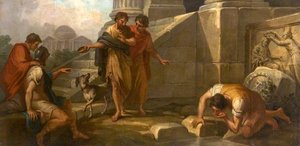
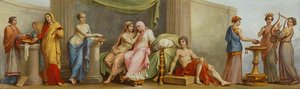
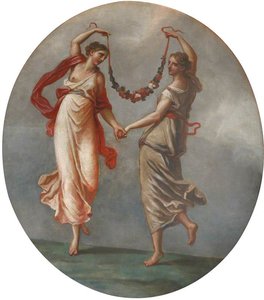
11The Four Continents Europe (1777) aut. Antonio ZucchiThe Four Continents Europe1777 · National Trust 12Winter (1769) aut. Antonio ZucchiWinter1769 · English Heritage 13Chloe Playing the Lyre to Daphnis (or Sappho and Anacreon) (1776) aut. Antonio ZucchiChloe Playing the Lyre to Daphnis (or Sappho and Anacreon)1776 · Nostell Priory 14The Four Continents Asia (1777) aut. Antonio ZucchiThe Four Continents Asia1777 · National Trust 15The Four Continents Africa (1777) aut. Antonio ZucchiThe Four Continents Africa1777 · National Trust 16Diogenes Casting Away His Wooden Bowl as a Superfluity, on Seeing a Youth Drinking from His Hand (a set of three decorative wall panels) (1768) aut. Antonio ZucchiDiogenes Casting Away His Wooden Bowl as a Superfluity, on Seeing a Youth Drinking from His Hand (a set of three decorative wall panels)1768 · National Trust 17Theology (1769) aut. Antonio ZucchiTheology1769 · English Heritage 18Ruins of Classical Baths with Nymphs Bathing (a set of six decorative wall panels) (1781) aut. Antonio ZucchiRuins of Classical Baths with Nymphs Bathing (a set of six decorative wall panels)1781 · National Trust 19A Bacchanal (1769) aut. Antonio ZucchiA Bacchanal1769 · English Heritage 20Minerva among the Arts (1769) aut. Antonio ZucchiMinerva among the Arts1769 · English Heritage 21Sappho Giving Anacreon a Feather from Cupid's Wing (1770) aut. Antonio ZucchiSappho Giving Anacreon a Feather from Cupid's Wing1770 · Nostell Priory 22Capriccio of Figures Dancing amongst Classical Ruins, with a Statue of the Rape of Proserpine (1775) aut. Antonio ZucchiCapriccio of Figures Dancing amongst Classical Ruins, with a Statue of the Rape of Proserpine1775 · Nostell Priory 23Commerce (1769) aut. Antonio ZucchiCommerce1769 · English Heritage 24The Rape of Europa (1769) aut. Antonio ZucchiThe Rape of Europa1769 · English Heritage 25Apollo and the Muses (1767) aut. Antonio ZucchiApollo and the Muses1767 · Nostell Priory 26Capriccio of Figures Dancing amongst Classical Ruins, with a Ruined Arch (1775) aut. Antonio ZucchiCapriccio of Figures Dancing amongst Classical Ruins, with a Ruined Arch1775 · Nostell Priory 27The Aldobrandini Marriage (1769) aut. Antonio ZucchiThe Aldobrandini Marriage1769 · English Heritage 28Navigation (1769) aut. Antonio ZucchiNavigation1769 · English Heritage 29Justice Embracing Peace (1769) aut. Antonio ZucchiJustice Embracing Peace1769 · English Heritage 30Bacchantes (5 of 6 ovals) (1773) aut. Antonio ZucchiBacchantes (5 of 6 ovals)1773 · English Heritage 31Homer Crowned as Poet Laureate (1767) aut. Antonio ZucchiHomer Crowned as Poet Laureate1767 · Nostell Priory 32Agriculture (1769) aut. Antonio ZucchiAgriculture1769 · English Heritage 33Bacchantes (2 of 6 ovals) (1773) aut. Antonio ZucchiBacchantes (2 of 6 ovals)1773 · English Heritage 34Dido and Aeneas ( ) (1773) aut. Antonio ZucchiDido and Aeneas ( )1773 · Nostell Priory 35An Unidentified Classical Subject A Fight (1767) aut. Antonio ZucchiAn Unidentified Classical Subject A Fight1767 · Nostell Priory 36Putti Making Music (1770) aut. Antonio ZucchiPutti Making Music1770 · Nostell Priory 37The Infant Hercules (1769) aut. Antonio ZucchiThe Infant Hercules1769 · English Heritage 38Anacreon Sacrificing to the Three Graces (1770) aut. Antonio ZucchiAnacreon Sacrificing to the Three Graces1770 · Nostell Priory 39Bacchantes (4 of 6 ovals) (1773) aut. Antonio ZucchiBacchantes (4 of 6 ovals)1773 · English Heritage 40Bacchantes (3 of 6 ovals) (1773) aut. Antonio ZucchiBacchantes (3 of 6 ovals)1773 · English Heritage 41Bacchantes (1 of 6 ovals) (1773) aut. Antonio ZucchiBacchantes (1 of 6 ovals)1773 · English Heritage 42Putti Fishing (1770) aut. Antonio ZucchiPutti Fishing1770 · Nostell Priory 43An Epithalium (1769) aut. Antonio ZucchiAn Epithalium1769 · English Heritage 44An Unidentified Classical Subject A Quarrel over a Dead Ass (1767) aut. Antonio ZucchiAn Unidentified Classical Subject A Quarrel over a Dead Ass1767 · Nostell Priory 45Putti with a Bird (1770) aut. Antonio ZucchiPutti with a Bird1770 · Nostell Priory 46Putti with a Dog (1770) aut. Antonio ZucchiPutti with a Dog1770 · Nostell Priory 47Socrates Drinking the Hemlock (1767) aut. Antonio ZucchiSocrates Drinking the Hemlock1767 48Wisdom (Prudence) and Temperance (1767) aut. Antonio ZucchiWisdom (Prudence) and Temperance1767 · Nostell Priory 49Rinaldo and Armida (1773) aut. Antonio ZucchiRinaldo and Armida1773 · Nostell Priory 50A Greek Philosopher and His Disciples (1767) aut. Antonio ZucchiA Greek Philosopher and His Disciples1767 · Nostell Priory 51Justice and Strength (Fortitude) (1767) aut. Antonio ZucchiJustice and Strength (Fortitude)1767 · Nostell Priory 52Minerva Presenting the Personifications of the Arts of Painting, Gardening, Sculpture and Architecture to Britannia (1767) aut. Antonio ZucchiMinerva Presenting the Personifications of the Arts of Painting, Gardening, Sculpture and Architecture to Britannia1767 · Nostell Priory 53Putti with a Garland of Flowers (1770) aut. Antonio ZucchiPutti with a Garland of Flowers1770 · Nostell Priory 54The Return of Telemachus (1773) aut. Antonio ZucchiThe Return of Telemachus1773 · Nostell Priory 55Virgil Reading the Aeneid to the Emperor Augustus, His Wife Livia and His Fainting Sister, Octavia (1767) aut. Antonio ZucchiVirgil Reading the Aeneid to the Emperor Augustus, His Wife Livia and His Fainting Sister, Octavia1767 · Nostell Priory 56Hercules between Glory and the Passions (1769) aut. Antonio ZucchiHercules between Glory and the Passions1769 · English Heritage 57Cupid Preparing Venus for an Amorous Encounter with Mars (1773) aut. Antonio ZucchiCupid Preparing Venus for an Amorous Encounter with Mars1773 · Nostell Priory 58Mythological Subject with a Couple in an Embrace (1773) aut. Antonio ZucchiMythological Subject with a Couple in an Embrace1773 · Nostell Priory 59Bacchus and Ceres (1773) aut. Antonio ZucchiBacchus and Ceres1773 · English Heritage 60Aristippus and His Companions after Being Shipwrecked, Seeing Mathematical Diagrams, Realise the Land Was Inhabited (a set of three decorative wall panels) (1768) aut. Antonio ZucchiAristippus and His Companions after Being Shipwrecked, Seeing Mathematical Diagrams, Realise the Land Was Inhabited (a set of three decorative wall panels)1768 · National Trust 61Mitellus Ordering a Marble Crow to Be Put on the Tomb of His Former Master, Diodorus Siculus (a set of three decorative wall panels) (1768) aut. Antonio ZucchiMitellus Ordering a Marble Crow to Be Put on the Tomb of His Former Master, Diodorus Siculus (a set of three decorative wall panels)1768 · National Trust 62Catullus Comforting Lesbia over the Death of Her Pet Sparrow and Writing an Ode (1773) aut. Antonio ZucchiCatullus Comforting Lesbia over the Death of Her Pet Sparrow and Writing an Ode1773 · Nostell Priory 63Angelica and Medoro Medoro Carving the Name of Angelica into the Trunk of a Tree (1773) aut. Antonio ZucchiAngelica and Medoro Medoro Carving the Name of Angelica into the Trunk of a Tree1773 · Nostell Priory 64Capriccio with a Pagan Temple and a Sacrifice (1776) aut. Antonio ZucchiCapriccio with a Pagan Temple and a Sacrifice1776 · Nostell Priory 65Capriccio with the Ruins of a Triumphal Arch and a Bridge (1776) aut. Antonio ZucchiCapriccio with the Ruins of a Triumphal Arch and a Bridge1776 · Nostell Priory 66A Ruined Temple and Fountain with Musicians (a set of six decorative wall panels) (1781) aut. Antonio ZucchiA Ruined Temple and Fountain with Musicians (a set of six decorative wall panels)1781 · National Trust 67Fountain with Women Washing Clothes (a set of six decorative wall panels) (1781) aut. Antonio ZucchiFountain with Women Washing Clothes (a set of six decorative wall panels)1781 · National Trust 68Daphnis Giving an Apple to Chloe (1776) aut. Antonio ZucchiDaphnis Giving an Apple to Chloe1776 · Nostell Priory 69Daphnis Bestowing a Garland of Flowers on Chloe (1776) aut. Antonio ZucchiDaphnis Bestowing a Garland of Flowers on Chloe1776 · Nostell Priory 70Philetus Explaining Love to Daphnis and Chloe (1776) aut. Antonio ZucchiPhiletus Explaining Love to Daphnis and Chloe1776 · Nostell Priory 71A Procession of Classical Figures with a Donkey and a Tambourine (a set of six decorative wall panels) (1781) aut. Antonio ZucchiA Procession of Classical Figures with a Donkey and a Tambourine (a set of six decorative wall panels)1781 · National Trust 72Girls Dancing amid Classical Ruins (a set of six decorative wall panels) (1781) aut. Antonio ZucchiGirls Dancing amid Classical Ruins (a set of six decorative wall panels)1781 · National Trust 73Philosophy (1769) aut. Antonio ZucchiPhilosophy1769 · English Heritage 74Spring (1769) aut. Antonio ZucchiSpring1769 · English Heritage 75Venus and Cupid aut. Antonio ZucchiVenus and CupidNostell Priory 76Putto with a Personification of Chemistry aut. Antonio ZucchiPutto with a Personification of ChemistryNostell Priory 77Putto with a Personification of Sculpture aut. Antonio ZucchiPutto with a Personification of SculptureNostell Priory 78Putto with a Personification of Drawing aut. Antonio ZucchiPutto with a Personification of DrawingNostell Priory 79Putto with a Personification of Architecture aut. Antonio ZucchiPutto with a Personification of ArchitectureNostell Priory 80Putto with a Personification of Mathematics aut. Antonio ZucchiPutto with a Personification of MathematicsNostell Priory 81Putto with a Personification of Painting aut. Antonio ZucchiPutto with a Personification of PaintingNostell Priory 82Putto with a Personification of Poetry aut. Antonio ZucchiPutto with a Personification of PoetryNostell Priory 83Autumn (1769) aut. Antonio ZucchiAutumn1769 · English Heritage 84Summer (1769) aut. Antonio ZucchiSummer1769 · English Heritage 85Bacchantes (6 iš 6 ovalų) (1773) aut. Antonio ZucchiBacchantes (6 iš 6 ovalų)1773 · English Heritage 86A Pair of Dancing Women aut. Antonio ZucchiA Pair of Dancing WomenNational Trust 87Disarming of Cupid aut. Antonio ZucchiDisarming of CupidThe National Trust For Scotland

žymios Antonio Zucchi tapiojamos, pagal laikotarpį

Temos, kurios domino Antonio Zucchi

Ketverios temos, dažniausiai pasikrausto originaluose, kiekvienos su savo puikiausiu pavyzdžiu.

Muziejai, kuriuose saugomi Antonio Zucchi originalūs darbai

8 muziejai, kuriuose saugoma daugiausia šioje pusėje esamų paveikslų.

Muzejaus Miestas Antonio Zucchi darbai Šiojo sąrašo paveikslai
Nostell Priory, WakefieldNostell Priory Wakefield 43 A Putto Being Woken from Sleep by Tickling of His Nose, Nymphs garlanding Cupid, Putto with Personification of Music
English Heritage, LondonasEnglish Heritage Londonas 26 Jurisprudence, Mathematics, Winter
National Trust, PlymouthNational Trust Plymouth 9 Landscape with a Bridge and Ruins with Peasants Fishing (a set of six decorative wall panels), Diogenes Casting Away His Wooden Bowl as a Superfluity, on Seeing a Youth Drinking from His Hand (a set of three decorative wall panels), Ruins of Classical Baths with Nymphs Bathing (a set of six decorative wall panels)
National Trust, DerbyNational Trust Derby 4 The Four Continents America, The Four Continents Europe, The Four Continents Asia
Škotijos nacionalinė portretų galerija, EdinburgasŠkotijos nacionalinė portretų galerija Edinburgas 1 James Adam, 1732 - 1794. Architect and designer
Metropolitano meno muziejus, NiujorkasMetropolitano meno muziejus Niujorkas 1 Three dancing nymphs and a reclining cupid in a landscape
National Trust, AylesburyNational Trust Aylesbury 1 A Pair of Dancing Women
The National Trust For Scotland, MayboleThe National Trust For Scotland Maybole 1 Disarming of Cupid

Antonio Zucchi dešimtmetėms po dešimtmetės: originalus kūrinys, apibūdinantis kiekvieną iš jų

Darbai pagal dešimtmečius

Pasirinkite dešimtmetį, kad pamatytėte jį apibrėžusį originalą.

Kolekcjonerų klausimai apie Antonio Zucchi paveikslus

Kuriu darbu Antonio Zucchi yra labiausiai garsus?Atsakymas

A Putto Being Woken from Sleep by Tickling of His Nose (1770), Nostell Priory, Wakefield. Toliau seka James Adam, 1732 - 1794. Architect and designer (1763) ir Landscape with a Bridge and Ruins with Peasants Fishing (a set of six decorative wall panels) (1781).

Kokia buvo Antonio Zucchi amžius, kai buvo sukurtas A Putto Being Woken from Sleep by Tickling of His Nose?Atsakymas

44 metų amžiaus: A Putto Being Woken from Sleep by Tickling of His Nose sukurta 1770 m. Nr. Antonio Zucchi gimė 1726.

Kokie yra 10 garsiausių Antonio Zucchi paveikslų?Atsakymas

A Putto Being Woken from Sleep by Tickling of His Nose, James Adam, 1732 - 1794. Architect and designer, Landscape with a Bridge and Ruins with Peasants Fishing (a set of six decorative wall panels), Nymphs garlanding Cupid, Putto with Personification of Music, Hector and Andromache, Three dancing nymphs and a reclining cupid in a landscape, Jurisprudence, The Four Continents America ir Mathematics. Viršuje esančioje reitingo sąraše nurodyta kiekvieno kūrinio metis ir muziejus.

Kiek paveikslų paliko Antonio Zucchi?Atsakymas

Mūsų kataloge yra 101 Antonio Zucchi darbų, skirtų laikotarpiui nuo 1763 iki 1781.

Kuriuose muziejuose eksponuojami Antonio Zucchi šedevrai?Atsakymas

Daugiausia – Nostell Priory (Wakefield), English Heritage (Londonas) ir National Trust (Plymouth). Viršuje esančiame muziejų sąraše yra visi jie.

Kuriomis metais Antonio Zucchi tapo savo garsiausius kūrinius?Atsakymas

1770s laikotarpiu: 38 iš 87 šioje pusėje esančių darbų buvo sukurtos tada, iš jų A Putto Being Woken from Sleep by Tickling of His Nose.

Kokie yra pirmasis ir paskutinis garsieji Antonio Zucchi originalūs darbai?Atsakymas

Šioje pusėje seniausias darbas yra James Adam, 1732 - 1794. Architect and designer (1763), o naujausias – Landscape with a Bridge and Ruins with Peasants Fishing (a set of six decorative wall panels) (1781).

Kurią temą Antonio Zucchi rinkosi dažniausiai?Atsakymas

Woman (28), People (20) ir Man (13) iš 87 šioje pusėje esamų darbų.

Kurią techniką Antonio Zucchi naudojo dažniausiai?Atsakymas

Oil On Canvas, iš 87 šios puslapio darbų – 33.

Kelią meno kryptį priklauso Antonio Zucchi?Atsakymas

Neoclassical style, vadovaujantis šios puslapio originalais kūriniais.

Kurių Antonio Zucchi darbai eksponuojami Nostell Priory?Atsakymas

A Putto Being Woken from Sleep by Tickling of His Nose, Nymphs garlanding Cupid ir Putto with Personification of Music: Nostell Priory, Wakefield kolekcijoje yra 43 šioje pusėje esančių darbų.

Antonio Zucchi: gyvenimas ir kūryba

Francis Cotes: Anglijos pastelės pionierius

Francis Cotes (1726–1770) yra kreipiamas kaip itin svarbi veikla postėsis pradedančioje angliškos portretinės dailės pasaulyje, ypač pripažintas dėl savo inovatyvaus pastelės naudojimo bei gebėjimo įamžinti trumpalaikiškus asmenybės akimirkas. Londonতে gimęs jis dirbo mokinio vardo William Faithorne, dailininko, garsaus savo teatraliniais grupiniu portretais, meistro rankose – patirtis, kuri neabejotinai suformavo jo ankstyvąjį meninę jautrumą. Tačiau Cotes greitai pranokė savo mokytoją, sukūręs itin individualų stilių, pasižymintį ypatingu šviesos, tekstūros ir psichologinių temojų niuansų suvokimu. Skirtingai nei dažna stinganti ankstyvosios angliškos portretinės dailės formalumas, Cotes kūriniai pasižymi gyvu įtraukimu, atspindėdami gilią ryšį su modelio asmenybe ir aštrią suvokimą apie aplinkinę vizualinę aplinką. Jo ankstyvoji karjera buvo palydima užsakymų iš žymių šeimų, įskaitant Astley, kuriems jis sukūrė garsėjusį kūrinį „Septienių metų mergaitė ir jos brolis Edwardas, penkerių ir pusės metų“, – švelnų vaikystės nekaltumo vaizdą, išlikusį vienu mylimiausių jo darbų. Šis paveikslas yra puikus pavyzdys Cotes gebėjimui net ir paprastiausiems motyvams suteikti gilaus emocinio rezonanso. Jis meistriškai taikė pastelę – medžiagą, tuo metu Anglijai laikytą gana nauja – siekdamas pasiekti stebinamų spalvų ir tonų efektų, įamžindamas šveltą odos rausvę, audinio spindulį bei subtilius šviesos ir šešėlio peralus. Cotes ne tiesiog kopijavo išorinius bruožus; jis perleidė stebėtą realybę ant drobės su dailininkiniu elegancija, kuri išskyrė jį iš samtvorių. Jo laisvi, ekspresyvūs traukai sukūrė judėjimo ir gyvybės pojūtį, prisidedėdami prie užburiančios jo portretų kokybės.

Technika ir įtodiniai veiksmai

Cotes techninis meistriškumas kiltas ne tik iš įgudžių, bet ir iš kruopštaus gamtos bei kitų menininkų kūrinių studijų. Jam stipriai įtakos davė olandų meistrai, ypačių Rembrandt, kurio šviesos ir šešėlio naudojimas dramatiškiems efektams yra akivaizdus Cotes portretuose. Jis taip pat žavėjosi Anthony van Dyck kūryba, siekdamas emuliuoti jo elegantiškas kompozicijas ir psichologinį gylį. Tačiau, skirtingai nuo Van Dyck stiliaus poliuotumo, Cotes pasirinko neformalesnį kelią, dažnai vaizduodamas savo modelius atsipalaiduotose pozose ir natūralioje aplinkoje. Jo pastelės technika dar labiau sustiprino eksperimentuojant sluoksniuojant spalvas ir taikant kintamą spaudimą, kas leido jam pasiekti stebinamą tonų bei tekstūrų įvairovę. Galutiniuose portretuose nėra tik panašumų; tai íntūs asmenybės tyrimai, prisunkti gyvybės pojūčiu.

Žymūs darbai ir užsakymai

Be ikoniško „Septienių metų“, Cotes sukūrė reikšmingą kūrybinį palikimą, apimantį daugybę aristokratijos ir bajorų portretų. Jis tapo mėdė, skirta tokiems svarbiems asmenims kaip Sir Robert Peel, Lord Charles Townshend ir Lady Mary Wortley Montagu. Jo užsakymai dažnai buvo motyvuojami noru įamžinti unikalią modelio asmenybę bei socialinę padėtį, atspindint 18 amtaus Anglijos skonių pokyčius. Jo kūryba išsiplėtė ir už portretavimo ribų; jis kūrė peizažus bei žanrinę sceną, demonstruodamas savo meninę universalumą. 1769 metais įkurta Karališkoji akademija pripažino Cotes indą, paskirdama jį vienu iš jos kuruluşų, taip užtvirtindama jo vietą tarp svarbiausių savo laikmečio menininkų.

Palikimas ir istorinė reikšmė

Francis Cotes palikimas pirmiausia slypi jo pionieriškame vaidmenyje angliškos pastelės dailės vystyme. Jis įrodė šios medžiagos potencialą perteikti subtilius spalvų ir tonų niuansus, atvėrędami kelią būsimoms pastelės meistrų kartoms. Jo portretai šiandien vertinami ne tik dėl techninio meistriškumo, bet ir dėl jų psichologinio gylio bei emocinio poveikio. Cotes kūryba reprezentuoti posūkį nuo formalių ankstesnės portretinės dailės konvencijų link íntesnio ir išraiškingesnio požiūrio, atspindinčio Švęčiasios proto epochą. Jis įsimintina kaip pagrindinė figūra įtvirtinant anglišką tapybą kaip išskirtinę ir gyvą tradiciją, palikdama neištrinčiam žymą meno istorijoje. Jo įtaka juntama vėlesnių menininkų darbuose, kurie žingsniais sekė jo pėdsūkiu, patvirtindami jo vietą kaip tikro inovatoria ir savo amato meistro.