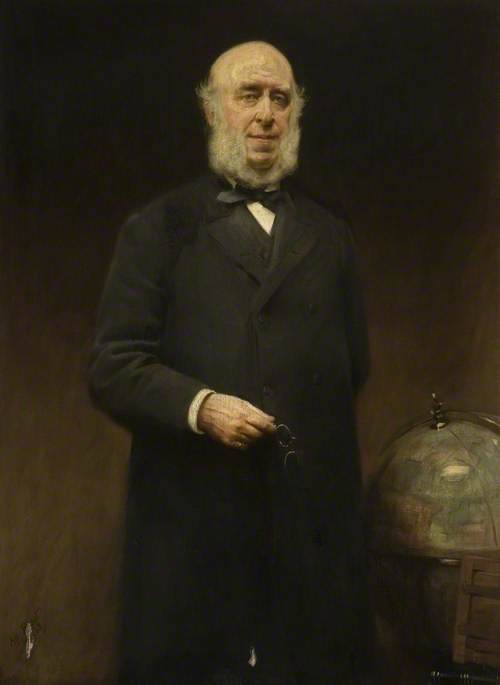
Alfredas Priestas portretas

Alfredas Priestas paveikslai: 20 garsiausi, galerijos akimis

Atnaujinta lapkritis 2026 · pagal mūsų populiarumumo koeficientą (paieškos, lankytojai ir užsakymai kiekvienam kūriniui) · 20 Alfredas Priestas darbai mūsų kataloge

Trumpai tariant

Galerijos akimais, garsiausias Alfredas Priestas paveikslas yra Road by the Churchyard (1834). Scene at Taverham, Norfolk (Taverham Paper Mill) (1839) ir Godstowe Bridge, Oxford (1844) užbaia trio, kurį atpažįsta kiekvienas ž)/\ Iš 20 Alfredas Priestas darbų mūsų kataloge, galerija žemiau pristato 20 garsiausius – kiekvienas yra originalus, su nurodytu metais, muziejumi bei unikaliu aprašymu.

1874 – 1929, Harbornas Academic art Daugiausia darbų: Norfolk Museums

10 geriausių galerijos Alfredas Priestas paveikslų

1
Road by the Churchyard (1834) aut. Alfredas Priestas

Road by the Churchyard

1834 · Oil

The composition centers on a dirt road that cuts through a pastoral landscape. Several cows move along this path, their bodies positioned in various stages of walking. In the background, a herd of sheep occupies a different section of the field, appearing smaller due to their distance from the viewer. A horse is situated in the middle ground, adding to the movement of the animals. Two human figures are present:…

2
Scene at Taverham, Norfolk (Taverham Paper Mill) (1839) aut. Alfredas Priestas

Scene at Taverham, Norfolk (Taverham Paper Mill)

1839 · Oil

The scene unfolds in the quietude of the English countryside in Scene at Taverham, Norfolk (Taverham Paper Mill). Painted about 1839, this work captures a tranquil moment along the waterways of Norfolk. The artist, Alfred Priest, brings this specific landscape to life, focusing on the intersection of rural industry and the natural world. He was a notable member of the Norwich School of painters, a group known for their deep…

3
Godstowe Bridge, Oxford (1844) aut. Alfredas Priestas

Godstowe Bridge, Oxford

1844 · Oil

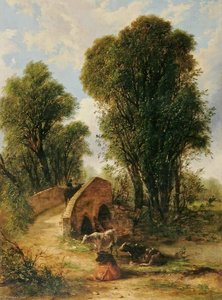
This work, titled Godstowe Bridge, Oxford, was painted by Alfred Priest in 1844. It offers a quiet glimpse into the English countryside, capturing a specific moment of rural life. The scale of the piece is 77 x 55 cm, a size that allows for an intimate viewing of the landscape and its inhabitants.

4
Owlegarchy (1848) aut. Alfredas Priestas

Owlegarchy

1848 · Oil

Deep within the heart of a dense forest, a silent assembly unfolds. The air feels heavy with the stillness of the woods, where dappled light struggles to pierce through the thick canopy above. At the center of this woodland meeting, a group of owls has gathered, their feathered forms blending into the textures of bark and leaf. One owl, positioned with a sense of quiet authority, holds an object—perhaps a…

5
Iffley Mill, Oxford (1844) aut. Alfredas Priestas

Iffley Mill, Oxford

1844 · Oil

Iffley Mill, Oxford is a painting by Alfred Priest, executed about 1844. The work captures a river flowing past a mill, where the water meets the quiet industry of the landscape. It is a scene of steady movement and stillness held in a single frame.

6
Beach Scene (1849) aut. Alfredas Priestas

Beach Scene

1849 · Oil · Norfolk Museums, Norwich

The painting titled Beach Scene is an oil work created by the artist Alfred Priest. This specific piece dates to about 1849. The composition focuses on a coastal setting featuring figures and maritime elements along a shoreline.

7
Beach Scene with Fishermen and Fishing Baskets in the Foreground (1849) aut. Alfredas Priestas

Beach Scene with Fishermen and Fishing Baskets in the Foreground

1849 · Oil

The salt air seems to linger around Beach Scene with Fishermen and Fishing Baskets in the Foreground, a work that places the viewer directly upon the sand. This painting, created by Alfred Priest, captures a quiet moment of maritime labor. It dates to about 1849, a time when the rhythms of the coast dictated the lives of those dwelling near the shore. The scene unfolds with a sense of immediacy,…

8
Sir Benjamin Stone (1838–1914) (1903) aut. Alfredas Priestas

Sir Benjamin Stone (1838–1914)

1903 · Oil On Canvas · Birmingham Central Library, Birminghamas

The oil painting depicts a man positioned in a three-quarter view, facing slightly toward the viewer. He possesses a full, grey-toned beard and a thick mustache that covers much of his lower face. His attire consists of a dark, formal suit jacket over a white shirt and a tie. The lighting is directed from the side, casting shadows that define the contours of his facial features and the texture of…

9
George Thomas Tuby (1857–1932) (1900) aut. Alfredas Priestas

George Thomas Tuby (1857–1932)

1900 · Oil On Canvas · Doncaster Museum And Art Gallery, Doncaster

In this 1900 portrait, we find ourselves in the presence of George Thomas Tuby. He sits with a quiet, settled authority, his gaze meeting ours with a directness that suggests a man accustomed to being heard. There is a certain weight to his presence, anchored by the deep red of his coat, which provides a striking contrast to the more muted tones of the background. A gold chain rests against…

10
Alderman G. H. Dunn (1837–1908), Mayor of Dudley (1897–1898) (1907) aut. Alfredas Priestas

Alderman G. H. Dunn (1837–1908), Mayor of Dudley (1897–1898)

1907 · Black and White Photography

The portrait depicts an older man, identified as Alderman G. H. Dunn, who served as the Mayor of Dudley from 1897 to 1898. He is positioned in a seated or standing pose, facing the viewer with a stern, fixed expression. His attire consists of a dark suit and a tie, typical of formal masculine dress in the early twentieth century. One hand holds a heavy chain, a symbol of his…

Alfredas Priestas tapiai, rangos nuo 11 iki 20

Temos, kurios domino Alfredas Priestas

Ketverios temos, dažniausiai pasikrausto originaluose, kiekvienos su savo puikiausiu pavyzdžiu.

Muziejai, kuriuose saugomi Alfredas Priestas originalūs darbai

7 muziejai, kuriuose saugoma daugiausia šioje pusėje esamų paveikslų.

Muzejaus Miestas Alfredas Priestas darbai Šiojo sąrašo paveikslai
Norfolk Museums, NorwichNorfolk Museums Norwich 1 Beach Scene
Birmingham Central Library, BirminghamasBirmingham Central Library Birminghamas 1 Sir Benjamin Stone (1838–1914)
Doncaster Museum And Art Gallery, DoncasterDoncaster Museum And Art Gallery Doncaster 1 George Thomas Tuby (1857–1932)
Doncaster Mansion House, DoncasterDoncaster Mansion House Doncaster 1 Alderman George Thomas Tuby (1857–1932), Mayor of Doncaster (1921–1922)
The Rifles, SalisburyThe Rifles Salisbury 1 General Sir Felix Ready, Colonel of the Royal Berkshire Regiment (1930–1940), GBE, KCB, CSI, CMG, DSO
Tynwald, DouglasTynwald Douglas 1 John Senhouse Goldie Taubman (1838–1898), Speaker of the House of Keys (1867–1898)
The Mansion House, Newcastle upon TyneThe Mansion House Newcastle upon Tyne 1 Arthur Henderson (1863–1935), Nobel Peace Prize Winner

Alfredas Priestas, pagrindiniai kiekvienų metų paveiksliai

25 metų Alfredas Priestas kūrybos, nuo 1900 iki 1924: galerija seka jų darbų eigą, pateikdama garsiausius kiekvienų metų originalus.

Darbai pagal metus

Pasirinkite metus, kad pamatytumėte originalus darbus.

Alfredas Priestas tapyiniai: galerijos atsakymai

Kuris Alfredas Priestas paveikslas yra pats garsiausias iš visų?Atsakymas

Road by the Churchyard (1834). Toliausiai eina Scene at Taverham, Norfolk (Taverham Paper Mill) (1839) ir Godstowe Bridge, Oxford (1844).

Kuriose yra 10 geriausių Alfredas Priestas paveikslų?Atsakymas

Road by the Churchyard, Scene at Taverham, Norfolk (Taverham Paper Mill), Godstowe Bridge, Oxford, Owlegarchy, Iffley Mill, Oxford, Beach Scene, Beach Scene with Fishermen and Fishing Baskets in the Foreground, Sir Benjamin Stone (1838–1914), George Thomas Tuby (1857–1932) ir Alderman G. H. Dunn (1837–1908), Mayor of Dudley (1897–1898). Viršuje esančioje reitingo sąraše nurodyta kiekvieno kūrinio metis ir muziejus.

Kiek kūrinių sukūrė Alfredas Priestas?Atsakymas

Mūsų kataloge yra 20 Alfredas Priestas darbų, skirtų laikotarpiui nuo 1900 iki 1924.

Kur kabinami garsiausi Alfredas Priestas originalūs darbai?Atsakymas

Daugiausia – Norfolk Museums (Norwich), Birmingham Central Library (Birminghamas) ir Doncaster Museum And Art Gallery (Doncaster). Viršuje esančiame muziejų sąraše yra visi jie.

Kokie yra ankstyviausi ir vėliausi garsieji Alfredas Priestas kūriniai?Atsakymas

Šioje pusėje seniausias darbas yra George Thomas Tuby (1857–1932) (1900), o naujausias – General Sir Felix Ready, Colonel of the Royal Berkshire Regiment (1930–1940), GBE, KCB, CSI, CMG, DSO (1924).

Kurią temą Alfredas Priestas kūrė dažniausiai?Atsakymas

River (7), Landscape (7) ir Man (7) iš 20 šioje pusėje esamų darbų.

Kurią techniką Alfredas Priestas naudojo dažniausiai?Atsakymas

Oil, iš 20 šios puslapio darbų – 9.

Su kokiu kierliu siejama Alfredas Priestas?Atsakymas

Academic art ir Realism, vadovaujantis šios puslapio originalais kūriniais.

Alfredas Priestas: menininkas

A Life Captured in Portraiture: The Story of Alfred Priest

Alfred Priest, born in Harborne, West Midlands, in 1874, was a British artist whose career unfolded against the backdrop of Victorian society and the looming shadow of World War I. While his name may not be as instantly recognizable as some of his contemporaries, Priest carved out a significant niche for himself as a skilled portrait painter, capturing the likenesses of prominent figures and offering glimpses into the lives of the era. His journey began with formal training at Cope and Nicol's art school in Kensington before he gained admission to the prestigious Royal Academy Schools. It was here, under the tutelage of masters like John S. Sargent, W. Q. Orchardson, and George Clausen, that Priest honed his technical abilities and developed a distinctive style characterized by rich detail and dramatic lighting. The 1897 Turner Fund gold medal and scholarship were early indicators of his talent and promise, setting him on a path toward recognition within the art world.

From Academy Walls to Parisian Studios

Priest’s artistic development wasn't confined to the walls of the Royal Academy. A period spent in Paris proved formative, allowing him to immerse himself in different artistic traditions and explore new approaches to his craft. He occasionally studied at the Académie Julian, broadening his perspective and refining his skills through exposure to diverse influences. This time abroad instilled a sense of cosmopolitanism that would later manifest in his work, particularly in his landscape paintings inspired by travels across Europe – Spain, Holland, Switzerland, and Italy all left their mark on his artistic vision. However, Priest’s connection to Britain remained strong; he wasn't an artist who sought complete detachment from his homeland. A significant chapter of his life involved a commission as a celebrity sketch artist for the Daily Chronicle in 1904, bringing him into contact with a wide range of notable personalities and providing valuable experience in capturing fleeting expressions and individual character. Further travels to Australia and India, where his brother served in the Indian Army, added another layer of richness to his experiences and informed his artistic sensibilities.

A Portraitist of Prominence: Subjects and Style

Alfred Priest’s reputation rested primarily on his ability as a portrait painter. His subjects were often individuals of standing – civic leaders like Alderman George Thomas Tuby, Mayor of Doncaster in 1921-1922; literary figures such as Max Pemberton; and members of the burgeoning industrial elite, including Henry Mitchell of Mitchell’s Brewery. He wasn't merely a recorder of appearances, however. Priest sought to capture something deeper – the personality, status, and inner life of his sitters. His portraits are notable for their meticulous attention to detail, particularly in the rendering of clothing, accessories, and facial features. The dramatic lighting he employed added depth and dimension, enhancing the sense of realism and psychological insight. Beyond portraiture, Priest also ventured into landscape painting, creating evocative scenes that reflected his travels and observations. Two paintings, *Mother! Mother!* and *Got 'im.*, stand out as poignant depictions of soldiers in action during World War I, offering a glimpse into the realities of conflict and the emotional toll it took on individuals.

Exhibitions, Recognition, and Lasting Legacy

Throughout his career, Priest exhibited his work at prestigious venues including the Salon, Sunderland Art Gallery, and, importantly, the Royal Academy. These exhibitions provided a platform for showcasing his talent to a wider audience and establishing his reputation within the art world. While he may not have achieved widespread fame during his lifetime, his paintings were appreciated for their technical skill, realism, and ability to capture the spirit of the age. The sudden death in 1929, just nine days after suffering a stroke, brought an abrupt end to a promising career. However, Priest’s legacy lives on through his surviving works, which offer valuable insights into Victorian society, the era surrounding World War I, and the art of portraiture itself. His paintings continue to be admired for their meticulous detail, dramatic lighting, and ability to capture the likenesses – and perhaps even the souls – of those he portrayed. The enduring appeal of his work lies in its combination of technical mastery and psychological depth, making him a noteworthy figure in British art history.