Aleksandras Antigna portretas

21 garsiausių Aleksandras Antigna paveikių rinkinys: galerijos išboru

Atnaujinta lapkritis 2026 · pagal mūsų populiarumumo koeficientą (paieškos, lankytojai ir užsakymai kiekvienam kūriniui) · 21 Aleksandras Antigna darbai mūsų kataloge

Trumpai tariant

Iš visų originalų, kuriuos paliko Aleksandras Antigna, garsiausias yra La Fête Dieu. Tiesiog už jų seka The Lightning (1848) ir L'Eclair. Mūsų kataloge yra 21 darbų autoriaus Aleksandras Antigna; galerija išsaugojo 21 labiausiai pasaulyje žyminiausių kūrinių – kiekvienas jų pateikiamas su datos, muziejaus ir istorijos aprašymu.

1817 – 1878, Orléans Romanticism Daugiausia darbų: Musée d'Orsay

Aleksandras Antigna geriausios 10 paveikslų: galerijos pasirinkimas

1
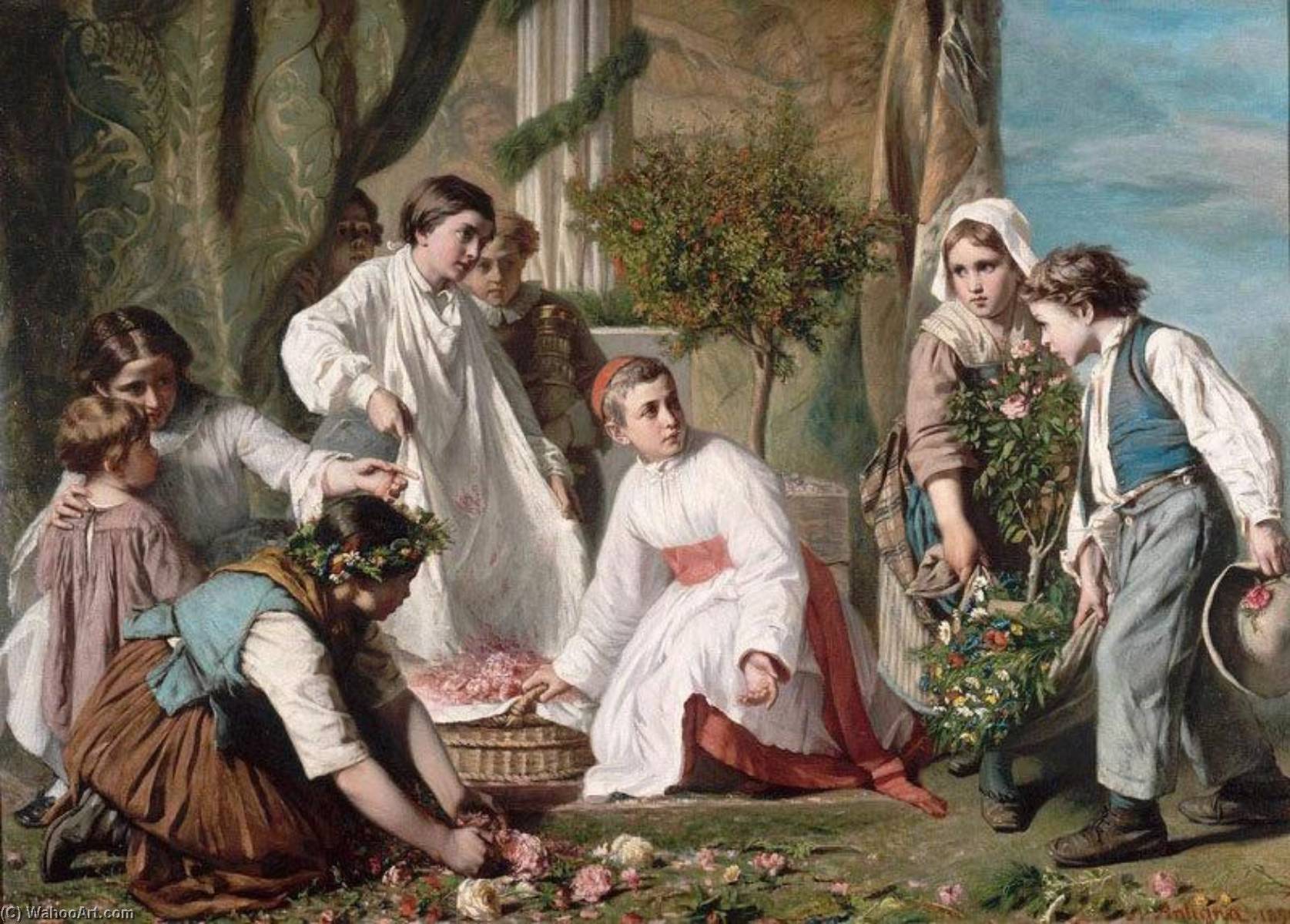
La Fête Dieu aut. Aleksandras Antigna

La Fête Dieu

Oil On Canvas

The oil on canvas titled La Fête Dieu was painted by Alexandre Antigna in 1855. This work measures 55 x 76 3/4 inches (140 x 195 cm). It captures a moment of preparation, where the weight of tradition meets the lightness of youth.

2
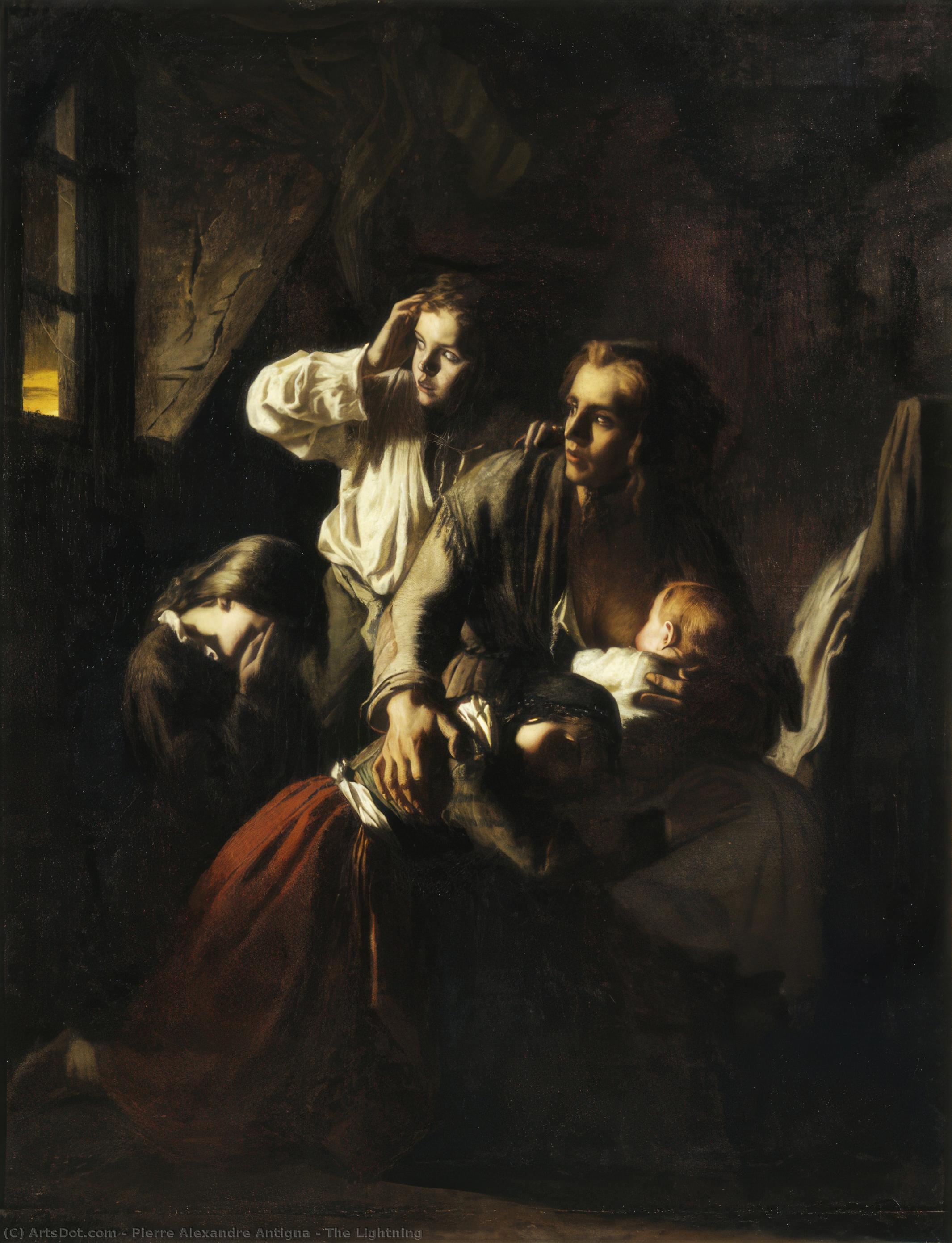
The Lightning (1848) aut. Aleksandras Antigna

The Lightning

1848 · Oil On Canvas · Musée d'Orsay, Paris

“The Lightning,” painted in 1848 by the French artist Pierre Alexandre Antigna, is more than just a depiction of a family huddled together during an electrical storm; it’s a poignant meditation on vulnerability, familial love, and the raw power of nature. Antigna, a key figure in Parisian Realism, masterfully captures a fleeting moment of intense emotion within a dimly lit interior, drawing the viewer into a scene brimming with both…

3
L'Eclair aut. Aleksandras Antigna

L'Eclair

Oil On Canvas · Musée d'Orsay, Paris

The oil on canvas titled L'Eclair was painted in 1848. This tableau captures a singular moment of tension. Alexandre Antigna, born in Orléans, France, in 1817, rendered the scene with a steady hand. The pigment settles into the weave of the fabric, holding a fragment of a storm within its fibers.

4
Circle of children (1853) aut. Aleksandras Antigna

Circle of children

1853 · Oil On Canvas · musée Petiet de Limoux, Limoux

The air feels heavy with the scent of dry hay and sun-warmed earth as a group of children whirl in a rhythmic circle. They move through a wide, rural landscape, their small figures caught in a moment of pure, uninhibited joy. The composition pulls the eye into a continuous loop, following the sweep of outstretched arms and the swirling motion of colorful skirts. Reds, blues, and whites flash against the…

5
Girl striding out reading a book (1853) aut. Aleksandras Antigna

Girl striding out reading a book

1853 · Pencil

The sketch depicts a young girl captured in mid-stride, her body leaning slightly forward into the direction of her movement. She is positioned off-center to the right, creating a sense of momentum as she walks. Her head is tilted downward, eyes fixed upon an open book held in her outstretched hands. The figure is rendered from the mid-thigh upward, focusing the viewer's attention on the interaction between her posture and…

6
Aragonese of Anso (1872) aut. Aleksandras Antigna

Aragonese of Anso

1872 · Oil On Canvas · Musée des Beaux-Arts, Orléans

The light falls from the upper left, casting soft shadows across a gathering of Aragonese people. They sit upon weathered stone steps, framed by the deep green of a grapevine. A woman holds an infant, her chemise a bright white against the earthy tones of the scene. Beside them, a young boy cradles a musical instrument, his small hands poised in a moment of stillness. The air feels heavy with…

7
Head of a Girl aut. Aleksandras Antigna

Head of a Girl

Oil · Worcester Art Museum, Worcester

This oil painting presents a close-up portrait of a young girl, focusing tightly on her head and hands. The subject is positioned in a direct, eye-level view, her chin resting upon her hands in a pensive posture. A headscarf wraps around her face, creating organic folds that frame her features. The lighting originates from the upper left, casting shadows across her face and highlighting the specific expression in her eyes.…

8
The sleeping spinner aut. Aleksandras Antigna

The sleeping spinner

Oil On Canvas · Musée d'art et d'histoire de Saint-Brieuc, Saint-Brieuc

A solitary woman rests in a dimly lit, rustic interior, her form surrendered to sleep. Positioned slightly to the left of center, she is balanced by the large, circular silhouette of a spinning wheel to the right. The composition is vertical, drawing the eye to the heavy, nocturnal atmosphere of the room. Deep, earthy tones of umber and sienna dominate the space, creating a sense of profound stillness. A sharp…

9
Gypsy Girl aut. Aleksandras Antigna

Gypsy Girl

Oil On Canvas · Museum of Fine Arts Ghent (MSK), Gentas

The oil painting titled Gypsy Girl presents a quiet, heavy moment captured on canvas. This work is the creation of Alexandre Antigna, an artist who emerged from the city of Orléans, France. Born in 1817, Antigna brings a specific, focused gaze to the subjects he encounters, often finding the weight of existence in the faces of those living on the margins of society.

10
Miroir des bois aut. Aleksandras Antigna

Miroir des bois

Oil On Canvas

is an oil on canvas by the French painter Alexandre Antigna. The work presents a nude female figure wading into a body of water. This central subject is situated within a dense forest setting, where the natural environment forms a dark, enveloping backdrop around the form.

Aleksandras Antigna darba rinkinys tęsiamas, nuo 11 iki 21

žymios Aleksandras Antigna tapiojamos, pagal laikotarpį

Temos, kurios domino Aleksandras Antigna

Ketverios temos, dažniausiai pasikrausto originaluose, kiekvienos su savo puikiausiu pavyzdžiu.

Muziejai, kuriuose saugomi Aleksandras Antigna originalūs darbai

6 muziejai, kuriuose saugoma daugiausia šioje pusėje esamų paveikslų.

Muzejaus Miestas Aleksandras Antigna darbai Šiojo sąrašo paveikslai
Musée d'Orsay, ParisMusée d'Orsay Paris 2 The Lightning, L'Eclair
Musée des Beaux-Arts, OrléansMusée des Beaux-Arts Orléans 2 Aragonese of Anso, The Fire
musée Petiet de Limoux, Limouxmusée Petiet de Limoux Limoux 1 Circle of children
Worcester Art Museum, WorcesterWorcester Art Museum Worcester 1 Head of a Girl
Musée d'art et d'histoire de Saint-Brieuc, Saint-BrieucMusée d'art et d'histoire de Saint-Brieuc Saint-Brieuc 1 The sleeping spinner
Museum of Fine Arts Ghent (MSK), GentasMuseum of Fine Arts Ghent (MSK) Gentas 1 Gypsy Girl

Aleksandras Antigna dešimtmetėms po dešimtmetės: originalus kūrinys, apibūdinantis kiekvieną iš jų

Darbai pagal dešimtmečius

Pasirinkite dešimtmetį, kad pamatytėte jį apibrėžusį originalą.

Kolekcjonerų klausimai apie Aleksandras Antigna paveikslus

Kuriu darbu Aleksandras Antigna yra labiausiai garsus?Atsakymas

La Fête Dieu. Toliausiai eina The Lightning (1848) ir L'Eclair.

Kokie yra 10 garsiausių Aleksandras Antigna paveikslų?Atsakymas

La Fête Dieu, The Lightning, L'Eclair, Circle of children, Girl striding out reading a book, Aragonese of Anso, Head of a Girl, The sleeping spinner, Gypsy Girl ir Miroir des bois. Viršuje esančioje reitingo sąraše nurodyta kiekvieno kūrinio metis ir muziejus.

Kiek paveikslų paliko Aleksandras Antigna?Atsakymas

Mūsų kataloge yra 21 Aleksandras Antigna darbų, skirtų laikotarpiui nuo 1848 iki 1872.

Kuriuose muziejuose eksponuojami Aleksandras Antigna šedevrai?Atsakymas

Daugiausia – Musée d'Orsay (Paris), Musée des Beaux-Arts (Orléans) ir musée Petiet de Limoux (Limoux). Viršuje esančiame muziejų sąraše yra visi jie.

Kuriomis metais Aleksandras Antigna tapo savo garsiausius kūrinius?Atsakymas

1850s laikotarpiu: 3 iš 21 šioje pusėje esančių darbų buvo sukurtos tada, iš jų Circle of children.

Kokie yra pirmasis ir paskutinis garsieji Aleksandras Antigna originalūs darbai?Atsakymas

Šioje pusėje seniausias darbas yra The Lightning (1848), o naujausias – Aragonese of Anso (1872).

Kurią temą Aleksandras Antigna rinkosi dažniausiai?Atsakymas

Woman (8), Children (4) ir Girl (4) iš 21 šioje pusėje esamų darbų.

Kurią techniką Aleksandras Antigna naudojo dažniausiai?Atsakymas

Oil On Canvas, iš 21 šios puslapio darbų – 15.

Kelią meno kryptį priklauso Aleksandras Antigna?Atsakymas

Romanticism, vadovaujantis šios puslapio originalais kūriniais.

Kurių Aleksandras Antigna darbai eksponuojami Musée d'Orsay?Atsakymas

The Lightning ir L'Eclair: Musée d'Orsay, Paris kolekcijoje yra 2 šioje pusėje esančių darbų.

Aleksandras Antigna: gyvenimas ir kūryba

The Compassionate Eye of Pierre Alexandre Antigna

In the heart of nineteenth-century France, a period defined by profound social upheaval and shifting artistic paradigms, Jean Pierre Alexandre Antigna emerged as a painter of unparalleled empathy. Born in Orléans in 1817, his early artistic journey was rooted in the traditional landscapes of his youth, shaped under the watchful eye of the local painter François Salmon. However, the pull of Paris proved irresistible. Upon entering the prestigious École Nationale Supérieure des Beaux-Arts in 1837, Antigna found himself immersed in a world of academic rigor, studying under masters such as Sébastien Norblin de la Gourdaine and the renowned Paul Delaroche. These early years were marked by a focus on religious subjects and formal portraiture, adhering to the established stylistic conventions of the era.

Yet, the true metamorphosis of Antigna’s soul occurred not within the gilded halls of the academy, but in the shadowed, narrow streets of the Île Saint-Louis. Living amidst the impoverished quarters of Paris, the artist became a witness to the raw, unvarnated struggles of the urban poor. This profound exposure to human hardship acted as a catalyst, steering him away from idealized religious iconography toward a gritty, unflinching Realism. By the time the Revolution of 1848 swept through France, Antigna had fully embraced a style that sought to document the weight of existence. His canvases began to pulse with the heavy burdens and quiet resilience of those on the margins of society, rendered with a textured brushwork and an emotional depth that commanded the attention of the Parisian Salon.

A Journey Through Light and Naturalism

As his career progressed, Antigna’s artistic vision expanded beyond the urban confines of Paris. Driven by an insatiable curiosity about the human condition and the natural world, he embarked on extensive travels through the rugged landscapes of Brittany and the vibrant terrains of Spain. These journeys allowed him to blend his social consciousness with a burgeoning Naturalism. Around 1860, his work began to reflect a meticulous observation of nature, where the atmospheric qualities of the landscape became as much a subject as the people inhabiting them. Whether capturing the dramatic tension of a storm or the quiet dignity of a rural worker, his technique remained anchored in a sense of profound compassion.

His mastery was formally recognized by the French state when he was awarded the Legion of Honor in 1861, a milestone that solidified his standing among the significant figures of his generation. Even as his style evolved toward more naturalist depictions, the core of his work remained an exploration of vulnerability and strength. Notable works such as The Lightning demonstrate this duality, where a family huddled during an electrical storm serves as a poignant meditation on familial love amidst the terrifying power of nature. Through his use of light, shadow, and impasto textures, Antigna did more than merely paint scenes; he captured the very essence of survival.

Legacy of a Social Realist

The historical significance of Pierre Alexandre Antigna lies in his ability to bridge the gap between Romantic emotion and Realist truth. He did not merely observe poverty; he imbued it with a dignity that challenged the era's social hierarchies. His life, which concluded in Paris in 1878, left behind an oeuvre that serves as a vital visual record of nineteenth-century French life. His influence can be seen in the way he utilized the following elements to elevate his subjects:

  • Emotional Resonance: The ability to transform a scene of hardship into a universal study of human resilience.
  • Textural Depth: Using heavy, expressive brushstrokes to mirror the ruggedness of the lives he depicted.
  • Atmospheric Storytelling: Leveraging natural light and weather—such as in his depictions of storms—to reflect internal psychological states.
  • Social Witness: A commitment to documenting the marginalized, ensuring their presence was felt within the prestigious halls of the art world.

Today, Antigna is remembered not just as a painter of scenes, but as a compassionate voice of his era, an artist who looked into the darkness of urban struggle and found the enduring light of the human spirit.