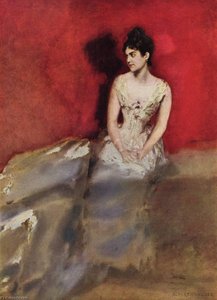
Albertas Von Keleras portretas

78 garsiausių Albertas Von Keleras paveikių – kiekvienas yra unikalus

Atnaujinta lapkritis 2026 · pagal mūsų populiarumumo koeficientą (paieškos, lankytojai ir užsakymai kiekvienam kūriniui) · 79 Albertas Von Keleras darbai mūsų kataloge

Trumpai tariant

The Midnight Dance (1876) yra Albertas Von Keleras paveikslas, kuriuo gausiausia žmonių žavisi. Po to akmuo patenka į In the moonlight (1894) ir Portrait of a Standing Lady with Fan (1871). Iš 79 Albertas Von Keleras darbų mūsų kataloge šios 78 yra garsiausios – kiekvienas yra unikali originali dai̇lia, pateikta su jos metais, muziejumi ir priežastimi, kodėl ji išlieka per amžius.

1844 – 1920, Gaisas Daugiausia darbų: Bavarijos valstybinės paveikslų kolekcijos

10 geriausių Albertas Von Keleras paveikslų: galerijos akimais

1
The Midnight Dance (1876) aut. Albertas Von Keleras

The Midnight Dance

1876

Created in 1876, this work reflects a fascination with the unseen forces that govern human behavior. The scene moves beyond a simple genre study to touch upon the subconscious. The dancers appear to be caught in a trance, their movements dictated by something more profound than mere music. This sense of psychological depth is felt in the way the figures interact with the dark, wooded environment. The presence of the…

2
In the moonlight (1894) aut. Albertas Von Keleras

In the moonlight

1894 · Oil

The painting presents a nude female figure suspended from a wooden structure. Her body is oriented vertically, with arms outstretched and the head tilted backward. This posture creates an elongated silhouette against a dark, textured background. The lighting is directional, casting strong shadows that define the contours of the anatomy and the edges of the wooden beams. The color palette relies heavily on cool tones, specifically shades of blue and…

4
For the Audience (1871) aut. Albertas Von Keleras

For the Audience

1871 · Oil On Canvas · Bavarijos valstybinės paveikslų kolekcijos, Miunchas

In "For the Audience" by Albert Von Keller, the viewer is invited into a quiet, monochromatic space through a frontal perspective. The composition is centered around a large, ornate doorway or portal, which acts as the primary architectural anchor. This threshold is framed by massive, classical columns and pilasters that provide a sense of structural weight and depth. The entire scene is rendered in a strictly grayscale palette, relying on…

5
Bacchanal (1868) aut. Albertas Von Keleras

Bacchanal

1868 · Oil On Canvas · Bavarijos valstybinės paveikslų kolekcijos, Miunchas

The painting presents a horizontal, panoramic scene of human figures in a state of continuous motion. Rendered in a monochromatic palette of black, grey, and white, the work avoids color to focus on the interplay of light and shadow. The figures appear to emerge from a deep, dark void, their forms defined by a chiaroscuro effect where light seems to emanate from the bodies themselves. The brushwork is thick and…

6
Portrait of Frau Catore (1871) aut. Albertas Von Keleras

Portrait of Frau Catore

1871 · Oil On Canvas · Bavarijos valstybinės paveikslų kolekcijos, Miunchas

The gaze of Frau Catore meets us from within the 1871 oil on canvas, a full-length vertical portrait that captures her in a moment of quiet, dignified presence. In this work, the artist Albert Von Keller presents his subject with a formal poise that commands the space. She stands in a three-quarter pose, her figure centered against a dark, indeterminate void that pushes her presence toward the viewer. There is…

7
Musical Entertainment (1871) aut. Albertas Von Keleras

Musical Entertainment

The scene unfolds within the quiet, private confines of a domestic space in Musical Entertainment. This work by Albert Von Keller captures a fleeting moment of intimacy, where the soft light catches the voluminous folds of a woman's gown as she sits poised in her chair. A man stands nearby, his profile etched against the shadows, while another figure lingers in the mid-ground, perhaps lost in the melody of an…

8
Portrait of a lady (1869) aut. Albertas Von Keleras

Portrait of a lady

1869 · Oil

A three-quarter profile view captures a young woman emerging from a deep, atmospheric shadow. Rendered in a monochromatic, grayscale palette, the portrait emphasizes the interplay of light and shadow across her delicate features. She gazes toward the viewer's left with a serene, contemplative expression, her presence defined by the soft, directional light hitting her face and neck. The composition relies on a tension between the vertical lines of her high-collared…

9
Resting nymph with satyr (1869) aut. Albertas Von Keleras

Resting nymph with satyr

1869 · Oil

The oil painting titled Resting nymph with satyr was created by the artist Albert Von Keller. This work dates to 1869. The composition depicts a mythological scene involving a female figure and a male figure within a shaded landscape.

žinomi Albertas Von Keleras paveikslai, nuo 11 iki 78 numerio

11Raising of the Daughter of Jairus (1877) aut. Albertas Von KelerasRaising of the Daughter of Jairus1877 · Bavarijos valstybinės paveikslų kolekcijos 12Lady reading (1876) aut. Albertas Von KelerasLady reading1876 · Bavarijos valstybinės paveikslų kolekcijos 13Andromeda (1876) aut. Albertas Von KelerasAndromeda1876 · Bavarijos valstybinės paveikslų kolekcijos 14Irene von Keller, the Wife of the Artist (1879) aut. Albertas Von KelerasIrene von Keller, the Wife of the Artist1879 · Bavarijos valstybinės paveikslų kolekcijos 15Study of a Female Corpse (1885) aut. Albertas Von KelerasStudy of a Female Corpse1885 · Bavarijos valstybinės paveikslų kolekcijos 16Mystic Healing of the Sick (1885) aut. Albertas Von KelerasMystic Healing of the Sick1885 · Bavarijos valstybinės paveikslų kolekcijos 17Raising of the Daughter of Jairus (1885) aut. Albertas Von KelerasRaising of the Daughter of Jairus1885 · Bavarijos valstybinės paveikslų kolekcijos 18Study of a Girl's Corpse (1885) aut. Albertas Von KelerasStudy of a Girl's Corpse1885 · Bavarijos valstybinės paveikslų kolekcijos 19Empress Faustina in the Temple of Juno at Praeneste (1881) aut. Albertas Von KelerasEmpress Faustina in the Temple of Juno at Praeneste1881 · Bavarijos valstybinės paveikslų kolekcijos 20Awakening of the Daughter of Jairus (1881) aut. Albertas Von KelerasAwakening of the Daughter of Jairus1881 · Bavarijos valstybinės paveikslų kolekcijos 21Portrait of a Woman (1882) aut. Albertas Von KelerasPortrait of a Woman1882 22The Little Parisienne (1882) aut. Albertas Von KelerasThe Little Parisienne1882 · Bavarijos valstybinės paveikslų kolekcijos 23Self portrait of Albert von Keller as a young man (1880) aut. Albertas Von KelerasSelf portrait of Albert von Keller as a young man1880 · Bavarijos valstybinės paveikslų kolekcijos 24Irene von Keller with Son Balthasar (1888) aut. Albertas Von KelerasIrene von Keller with Son Balthasar1888 · Lenbachhaus 25The Judgment of Paris (1891) aut. Albertas Von KelerasThe Judgment of Paris1891 · Lenbachhaus 26In the Salon (1886) aut. Albertas Von KelerasIn the Salon1886 · Bavarijos valstybinės paveikslų kolekcijos 27The Artist's Son as a Child (1889) aut. Albertas Von KelerasThe Artist's Son as a Child1889 · Bavarijos valstybinės paveikslų kolekcijos 28Irene von Keller, the Wife of the Artist (1888) aut. Albertas Von KelerasIrene von Keller, the Wife of the Artist1888 · Bavarijos valstybinės paveikslų kolekcijos 29The Transfer of the Corpse from La Tour d'Auvergne (1889) aut. Albertas Von KelerasThe Transfer of the Corpse from La Tour d'Auvergne1889 · Bavarijos valstybinės paveikslų kolekcijos 30Somnambulist (1886) aut. Albertas Von KelerasSomnambulist1886 · Bavarijos valstybinės paveikslų kolekcijos 31Irene von Keller, the Wife of the Artist (1888) aut. Albertas Von KelerasIrene von Keller, the Wife of the Artist1888 · Bavarijos valstybinės paveikslų kolekcijos 32"witch sleep", Burning a witch (1888) aut. Albertas Von Keleras"witch sleep", Burning a witch1888 33Madame La Suire (1887) aut. Albertas Von KelerasMadame La Suire1887 · Kunsthaus Zürich 34Irene von Keller, the Wife of the Artist (1896) aut. Albertas Von KelerasIrene von Keller, the Wife of the Artist1896 · Bavarijos valstybinės paveikslų kolekcijos 35Im Mondschein (1894) aut. Albertas Von KelerasIm Mondschein1894 36Irene von Keller, the artist's wife (1896) aut. Albertas Von KelerasIrene von Keller, the artist's wife1896 · Bavarijos valstybinės paveikslų kolekcijos 37Eusapia Palladino (1904) aut. Albertas Von KelerasEusapia Palladino1904 · Lenbachhaus 38Son of the artist in uniform (1899) aut. Albertas Von KelerasSon of the artist in uniform1899 · Bavarijos valstybinės paveikslų kolekcijos 39Similarity of a Child (1906) aut. Albertas Von KelerasSimilarity of a Child1906 · Vychodoslovenské Galéria 40Irene von Keller on the Deathbed (1907) aut. Albertas Von KelerasIrene von Keller on the Deathbed1907 · Bavarijos valstybinės paveikslų kolekcijos 41Parisian (1910) aut. Albertas Von KelerasParisian1910 · Bavarijos valstybinės paveikslų kolekcijos 42Countess Lily Alberti (1913) aut. Albertas Von KelerasCountess Lily Alberti1913 · Bavarijos valstybinės paveikslų kolekcijos 43Girl carrying a boar´s head aut. Albertas Von KelerasGirl carrying a boar´s headRegionalinė galerija Liberece 44Faun and Nymph (1869) aut. Albertas Von KelerasFaun and Nymph1869 · Bavarijos valstybinės paveikslų kolekcijos 45Faun und Nymph (1869) aut. Albertas Von KelerasFaun und Nymph1869 46Female Nude with Mask (1877) aut. Albertas Von KelerasFemale Nude with Mask1877 · Bavarijos valstybinės paveikslų kolekcijos 47Lady in an Armchair (1876) aut. Albertas Von KelerasLady in an Armchair1876 48Walk in the woods (Promenade im Wald) (1873) aut. Albertas Von KelerasWalk in the woods (Promenade im Wald)1873 · Bavarijos valstybinės paveikslų kolekcijos 49Evening (1874) aut. Albertas Von KelerasEvening1874 50Chopin (1873) aut. Albertas Von KelerasChopin1873 · Neue Pinakothek 51Garden Bench from Villa Wolkonsky in Rome (1885) aut. Albertas Von KelerasGarden Bench from Villa Wolkonsky in Rome1885 · Bavarijos valstybinės paveikslų kolekcijos 52Cypresses (1885) aut. Albertas Von KelerasCypresses1885 · Bavarijos valstybinės paveikslų kolekcijos 53Raising of the Daughter of Jairus (1880) aut. Albertas Von KelerasRaising of the Daughter of Jairus1880 · Bavarijos valstybinės paveikslų kolekcijos 54Hall in the Schloss zu Versailles (1880) aut. Albertas Von KelerasHall in the Schloss zu Versailles1880 · Bavarijos valstybinės paveikslų kolekcijos 55In the artist's garden (1884) aut. Albertas Von KelerasIn the artist's garden1884 · Bavarijos valstybinės paveikslų kolekcijos 56Milli Beckmann with Daughter, Paris (1883) aut. Albertas Von KelerasMilli Beckmann with Daughter, Paris1883 57The Little Parisienne (1883) aut. Albertas Von KelerasThe Little Parisienne1883 58Milli Beckmann (1883) aut. Albertas Von KelerasMilli Beckmann1883 59Hypnosis at Schrenck Notzing's (1885) aut. Albertas Von KelerasHypnosis at Schrenck Notzing's1885 60The resurrection of Jairus' daughter (1886) aut. Albertas Von KelerasThe resurrection of Jairus' daughter1886 · Bavarijos valstybinės paveikslų kolekcijos 61Empress Alexandra Fyodorovna of Russia (1896) aut. Albertas Von KelerasEmpress Alexandra Fyodorovna of Russia1896 62Lily Disgeistes (1895) aut. Albertas Von KelerasLily Disgeistes1895 63Deutsch Die Tänzerin Madeleine (1904) aut. Albertas Von KelerasDeutsch Die Tänzerin Madeleine1904 · Neue Pinakothek 64Woman with child aut. Albertas Von KelerasWoman with child 65portrait Mathilde Mallinger aut. Albertas Von Kelerasportrait Mathilde Mallinger 66Portrait Sophie Stehle aut. Albertas Von KelerasPortrait Sophie Stehle 67Melancholy aut. Albertas Von KelerasMelancholy 68Gisela von Wehner (1908) aut. Albertas Von KelerasGisela von Wehner1908 69Gisela von Wehner with Daughter Ilka (also known as Gisela von Wehner mit Tochter Ilka) (1906) aut. Albertas Von KelerasGisela von Wehner with Daughter Ilka (also known as Gisela von Wehner mit Tochter Ilka)1906 70Deutsch Porträt der Frau des Künstlers (1887) aut. Albertas Von KelerasDeutsch Porträt der Frau des Künstlers1887 · Neue Pinakothek 71das Paris Urteil aut. Albertas Von Kelerasdas Paris Urteil 72Gattin u. Sohn aut. Albertas Von KelerasGattin u. Sohn 73Erweckung, Jairi Töchterlein aut. Albertas Von KelerasErweckung, Jairi Töchterlein 74Irene aut. Albertas Von KelerasIrene 75A Lady aut. Albertas Von KelerasA Lady 76Madame von Keller aut. Albertas Von KelerasMadame von Keller 77Gallant Scene in the Park aut. Albertas Von KelerasGallant Scene in the Park 78Study of five female nudes aut. Albertas Von KelerasStudy of five female nudes

žymios Albertas Von Keleras tapiojamos, pagal laikotarpį

Temos, kurios domino Albertas Von Keleras

Ketverios temos, dažniausiai pasikrausto originaluose, kiekvienos su savo puikiausiu pavyzdžiu.

Muziejai, kuriuose saugomi Albertas Von Keleras originalūs darbai

6 muziejai, kuriuose saugoma daugiausia šioje pusėje esamų paveikslų.

Muzejaus Miestas Albertas Von Keleras darbai Šiojo sąrašo paveikslai
Bavarijos valstybinės paveikslų kolekcijos, MiunchasBavarijos valstybinės paveikslų kolekcijos Miunchas 38 Portrait of a Standing Lady with Fan, For the Audience, Bacchanal
Lenbachhaus, MiunchenasLenbachhaus Miunchenas 4 The Actress Mimi Cramer, Irene von Keller with Son Balthasar, The Judgment of Paris
Neue Pinakothek, MunchenasNeue Pinakothek Munchenas 3 Chopin, Deutsch Die Tänzerin Madeleine, Deutsch Porträt der Frau des Künstlers
Kunsthaus Zürich, ŽūrichasKunsthaus Zürich Žūrichas 1 Madame La Suire
Vychodoslovenské Galéria, KošiceVychodoslovenské Galéria Košice 1 Similarity of a Child
Regionalinė galerija Liberece, LiberecasRegionalinė galerija Liberece Liberecas 1 Girl carrying a boar´s head

Albertas Von Keleras per dešimtmečius: vieniškas originalas kiekvienam

Darbai pagal dešimtmečius

Pasirinkite dešimtmetį, kad pamatytėte jį apibrėžusį originalą.

Albertas Von Keleras tapų klausimai galerijai

Koks yra garsiausias Albertas Von Keleras kūrinys?Atsakymas

The Midnight Dance (1876). Toliausiai eina In the moonlight (1894) ir Portrait of a Standing Lady with Fan (1871).

Kuriuo amžiaus atσταση Albertas Von Keleras sukūrė The Midnight Dance?Atsakymas

32 metų amžiaus: The Midnight Dance sukurta 1876 m. Nr. Albertas Von Keleras gimė 1844.

Kurios Albertas Von Keleras dešimt paveikslų yra garsiausi?Atsakymas

The Midnight Dance, In the moonlight, Portrait of a Standing Lady with Fan, For the Audience, Bacchanal, Portrait of Frau Catore, Musical Entertainment, Portrait of a lady, Resting nymph with satyr ir The Actress Mimi Cramer. Viršuje esančioje reitingo sąraše nurodyta kiekvieno kūrinio metis ir muziejus.

Kiek žinoma Albertas Von Keleras darbų?Atsakymas

Mūsų kataloge yra 79 Albertas Von Keleras darbų, skirtų laikotarpiui nuo 1868 iki 1913.

Kur galima pamatyti garsiausių Albertas Von Keleras originalų?Atsakymas

Daugiausia – Bavarijos valstybinės paveikslų kolekcijos (Miunchas), Lenbachhaus (Miunchenas) ir Neue Pinakothek (Munchenas). Viršuje esančiame muziejų sąraše yra visi jie.

Kuriuo laikotarpiu Albertas Von Keleras sukūrė savo žymiausias paveikslus?Atsakymas

1880s laikotarpiu: 29 iš 78 šioje pusėje esančių darbų buvo sukurtos tada, iš jų Study of a Female Corpse.

Kuris iš garsių Albertas Von Keleras paveikslų yra pirmasis, o kuris – paskutinis?Atsakymas

Šioje pusėje seniausias darbas yra Bacchanal (1868), o naujausias – Countess Lily Alberti (1913).

Kokia temos Albertas Von Keleras mėgavosi?Atsakymas

Woman (33), Portrait (14) ir Shadows (9) iš 78 šioje pusėje esamų darbų.

Kuriomis medžiagomis Albertas Von Keleras tapė dažniausiai?Atsakymas

Oil On Canvas, iš 78 šios puslapio darbų – 25.

Kurius Albertas Von Keleras originalius galėčiau pamatyti Bavarijos valstybinės paveikslų kolekcijos?Atsakymas

Portrait of a Standing Lady with Fan, For the Audience ir Bacchanal: Bavarijos valstybinės paveikslų kolekcijos, Miunchas kolekcijoje yra 38 šioje pusėje esančių darbų.

Albertas Von Keleras: meno kūrinys – autoportretas

The Soul Behind the Canvas: The Life and Legacy of Albert von Keller

Albert von Keller (1844–1920) stands as a singular figure in German art history—a painter who seamlessly blended the rigorous precision of realism with a burgeoning fascination for psychology and symbolism. Born in Gais, Switzerland, into a family steeped in intellectual tradition, Keller’s early life was marked by a disciplined curiosity. While his father, a professor of law, instilled in him a structured intellect, it was the pursuit of visual expression that would ultimately define his destiny. Though he initially moved toward the study of law at the Ludwig-Maximilians-Universität München, the siren call of the arts proved irresistible, leading him to abandon the courtroom for the studio, where he would spend the rest of his life exploring the profound depths of the human condition.

His formal training began at the prestigious Munich Academy under the guidance of Arthur von Ramberg. It was here that Keller developed a mastery of anatomical precision, particularly through controversial nude studies that challenged the social norms of his era. This technical foundation, however, was merely the beginning of his evolution. As he traveled extensively through Italy, France, England, and the Netherlands, Keller absorbed the luminous qualities of Impressionism and the delicate aesthetics of Japonisme. Yet, unlike many of his contemporaries who abandoned structure for pure light, Keller maintained a steadfast connection to the German Romantic tradition, creating a unique stylistic bridge between the observable world and the unseen psyche.

A Master of Psychological Realism

The true brilliance of von Keller lies in his ability to imbue portraiture and genre scenes with an almost haunting emotional resonance. He became a prominent figure in the Munich Secession, a movement that sought to push the boundaries of traditional art. His work often features female figures, rendered with a grace that oscillates between the ethereal and the tangible. Perhaps no subject was more central to his creative spirit than his wife, Irene von Eichthal. Their partnership, which lasted until her death in 1907, served as a profound muse; he would eventually paint over forty portraits of her, capturing not just her physical elegance but the very essence of her character.

In masterpieces such as Deutsch Porträt der Frau des Künstlers, one can witness his technical prowess. He utilized striking juxtapositions—such as the pristine white of a lace gown against a deep, velvety crimson background—to create a sense of theatrical depth. This mastery of light and shadow allowed him to guide the viewer's eye through a silent dialogue of texture and tone. His ability to render the tactile quality of stone or the delicate fold of fabric served a higher purpose: to ground his more symbolic and psychological themes in a reality that felt undeniably present.

The Intersection of Science, Spirit, and Symbolism

As his career progressed, von Keller’s interests drifted toward the enigmatic. In 1886, he became a member of the Munich Psychological Society, a group devoted to the study of the paranormal under Albert von Schrenck-Notzing. This period marked a fascinating shift in his oeuvre, as he began to incorporate parapsychological motifs and themes of hypnosis into his compositions. Works like Hypnosis at Schrenck Notzing's demonstrate this transition, blending the muted tones of realism with the unsettling tension of the unknown. He explored themes of vulnerability, illness, and the subconscious, often connecting these modern psychological inquiries to classical Christian symbolism.

His international breakthrough at the Paris Salon with Roman Bath solidified his reputation as a painter of great atmospheric sensitivity, drawing comparisons to masters like Monet and Renoir. However, it was his ability to navigate the shadows of the human mind that secured his historical significance. By weaving together the following elements, he created a legacy that remains vital to the study of late 19th-century art:

  • Technical Precision: A rigorous academic foundation in anatomy and light.
  • Psychological Depth: The exploration of the subconscious, hypnosis, and emotional interiority.
  • Symbolic Narrative: The use of genre scenes to communicate complex spiritual and human truths.
  • Stylistic Synthesis: A unique blend of German Romanticism, Impressionist light, and Symbolist mystery.

Today, the works of Albert von Keller serve as a poignant reminder of an era when art was transitioning from the depiction of external reality to the exploration of internal truth. He remains a pioneer who dared to look beneath the surface of the skin to find the soul within.