Aaron Draper Shattuck portretas

Aaron Draper Shattuck tapiai: 14 garsiausi πίναšiai, galerijos akimis

Atnaujinta lapkritis 2026 · pagal mūsų populiarumumo koeficientą (paieškos, lankytojai ir užsakymai kiekvienam kūriniui) · 15 Aaron Draper Shattuck darbai mūsų kataloge

Trumpai tariant

Galerijos akimais, garsiausias Aaron Draper Shattuck paveikslas yra The Shattuck Family, with Grandmother, Mother and Baby William. Mount Washington and the Saco River ir Mount Washington, Clouds at Summit, Conway (1854) užbaia trio, kurį atpažįsta kiekvienas ž)/\ Iš 15 Aaron Draper Shattuck darbų mūsų kataloge, galerija žemiau pristato 14 garsiausius – kiekvienas yra originalus, su nurodytu metais, muziejumi bei unikaliu aprašymu.

1832 – 1928, Francestown Hudson river school Daugiausia darbų: New Britain Museum of American Art

10 geriausių galerijos Aaron Draper Shattuck paveikslų

1
The Shattuck Family, with Grandmother, Mother and Baby William aut. Aaron Draper Shattuck

The Shattuck Family, with Grandmother, Mother and Baby William

Oil

In this intimate oil painting, we find ourselves drawn into a private, warmly lit room where three generations of a family converge. The composition centers on a tender interaction between a woman, an infant, and an older woman, creating a sense of profound familial connection. Light filters softly through a window, casting a gentle glow over the scene and highlighting the delicate features of the baby. The atmosphere is one…

2
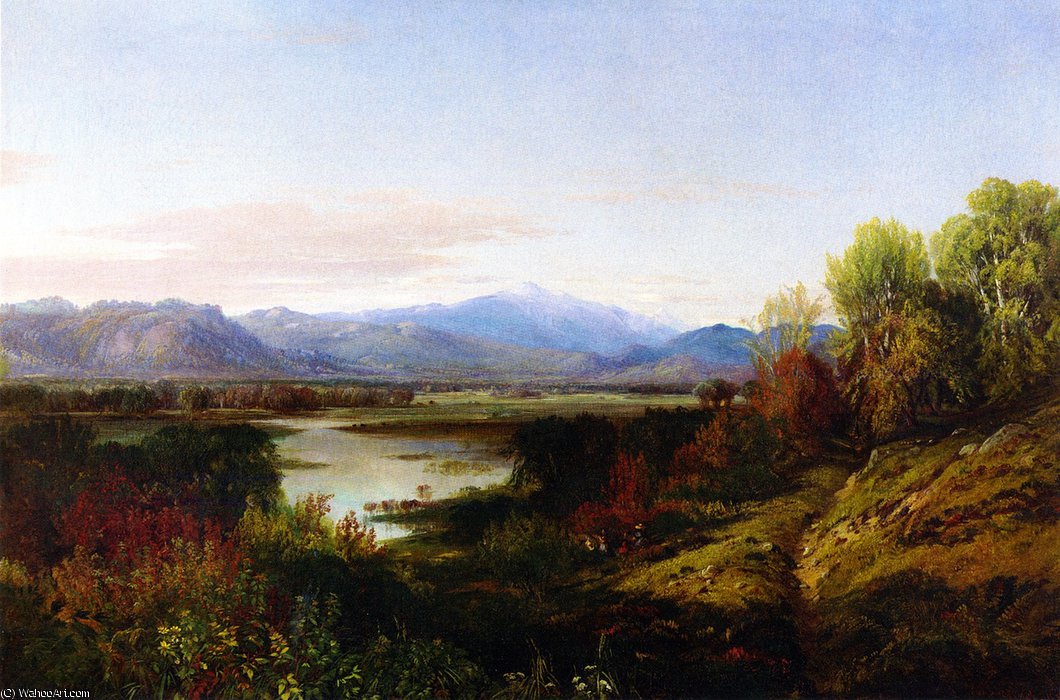
Mount Washington and the Saco River aut. Aaron Draper Shattuck

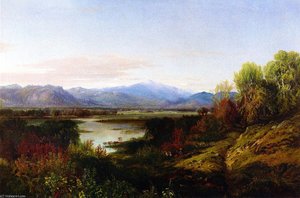
Mount Washington and the Saco River

Oil

In the painting Mount Washington and the Saco River, Aaron Draper Shattuck presents a landscape composed of mountain peaks and expansive water. The composition is anchored by a large body of water that occupies the central and foreground areas, while the silhouette of mountains forms the background. Trees surround the water's edge and the various landforms, providing a perimeter of foliage around the aquatic and mountainous elements. Throughout the scene,…

3
Mount Washington, Clouds at Summit, Conway (1854) aut. Aaron Draper Shattuck

Mount Washington, Clouds at Summit, Conway

1854 · Oil On Canvas

Mount Washington, Clouds at Summit, Conway is an oil painting by the American artist Aaron Draper Shattuck. Created about 1854, this work depicts a mountain range under a heavy, cloud-filled sky. The subject matter focuses on the topography of the White Mountains, specifically the area around Conway, New Hampshire. The composition presents a horizontal view of the terrain, featuring a dark mountain peak that reaches toward a turbulent sky.

6
Farmington River, Connecticut (1875) aut. Aaron Draper Shattuck

Farmington River, Connecticut

In the gentle strokes of Aaron Draper Shattuck’s 1875 masterpiece, Farmington River, Connecticut, we are invited to step into a world where time seems to slow to the rhythmic pulse of flowing water. This evocative landscape serves as more than just a depiction of a specific geography; it is a window into the soul of nineteenth-century American leisure. The painting captures a sun-dappled afternoon by the riverbanks, where figures are…

Aaron Draper Shattuck tapiai, rangos nuo 11 iki 14

Temos, kurios domino Aaron Draper Shattuck

Ketverios temos, dažniausiai pasikrausto originaluose, kiekvienos su savo puikiausiu pavyzdžiu.

Muziejai, kuriuose saugomi Aaron Draper Shattuck originalūs darbai

3 muziejai, kuriuose saugoma daugiausia šioje pusėje esamų paveikslų.

Muzejaus Miestas Aaron Draper Shattuck darbai Šiojo sąrašo paveikslai
New Britain Museum of American Art, New BritainNew Britain Museum of American Art New Britain 1 Stream in Rocky Gorge
Metropolitano meno muziejus, NiujorkasMetropolitano meno muziejus Niujorkas 1 Landscape with Cows
Amon Carter prigimtinio amerikietiško meno muziejus, Fort WorthAmon Carter prigimtinio amerikietiško meno muziejus Fort Worth 1 Farmington River, Connecticut

Aaron Draper Shattuck, po vieno ikoninio paveikslio kiekvienam dešimtmenės laikotarpiui

Darbai pagal dešimtmečius

Pasirinkite dešimtmetį, kad pamatytėte jį apibrėžusį originalą.

Aaron Draper Shattuck tapyiniai: galerijos atsakymai

Kuris Aaron Draper Shattuck paveikslas yra pats garsiausias iš visų?Atsakymas

The Shattuck Family, with Grandmother, Mother and Baby William. Toliausiai eina Mount Washington and the Saco River ir Mount Washington, Clouds at Summit, Conway (1854).

Kuriose yra 10 geriausių Aaron Draper Shattuck paveikslų?Atsakymas

The Shattuck Family, with Grandmother, Mother and Baby William, Mount Washington and the Saco River, Mount Washington, Clouds at Summit, Conway, Stream in Rocky Gorge, Landscape with Cows, Farmington River, Connecticut, Landscape with Cows, Sunset over Lake George, The hay wain - granby - connecticut ir Birds Fly South-Conway. Viršuje esančioje reitingo sąraše nurodyta kiekvieno kūrinio metis ir muziejus.

Kiek kūrinių sukūrė Aaron Draper Shattuck?Atsakymas

Mūsų kataloge yra 15 Aaron Draper Shattuck darbų, skirtų laikotarpiui nuo 1854 iki 1928.

Kur kabinami garsiausi Aaron Draper Shattuck originalūs darbai?Atsakymas

Daugiausia – New Britain Museum of American Art (New Britain), Metropolitano meno muziejus (Niujorkas) ir Amon Carter prigimtinio amerikietiško meno muziejus (Fort Worth). Viršuje esančiame muziejų sąraše yra visi jie.

Kokie yra ankstyviausi ir vėliausi garsieji Aaron Draper Shattuck kūriniai?Atsakymas

Šioje pusėje seniausias darbas yra Mount Washington, Clouds at Summit, Conway (1854), o naujausias – Landscape with Cows (1928).

Kurią temą Aaron Draper Shattuck kūrė dažniausiai?Atsakymas

Landscape (3), Usa (3) ir New england (2) iš 14 šioje pusėje esamų darbų.

Kurią techniką Aaron Draper Shattuck naudojo dažniausiai?Atsakymas

Oil, iš 14 šios puslapio darbų – 3.

Su kokiu kierliu siejama Aaron Draper Shattuck?Atsakymas

Hudson river school, vadovaujantis šios puslapio originalais kūriniais.

Aaron Draper Shattuck: menininkas

A Legacy of New England Light: The Life and Art of Aaron Draper Shattuck

In the grand tapestry of nineteenth-century American art, few threads are as intimately woven into the fabric of the New England landscape as those left by Aaron Draper Shattuck. Born in 1832 in the quiet, scenic town of Francestown, New Hampshire, Shattuck was destined for a life defined by the interplay of light and shadow. He entered a world where art was not merely a profession but a family heritage; his father, Samuel Draper Shattuck, was a respected artist who provided the foundational inspiration for his son’s creative journey. This lineage placed Aaron within a unique creative milieu, one that would eventually lead him to become a cornerstone of both the Hudson River School and the White Mountain School movements.

Unlike many of his illustrious contemporaries who sought the transformative influence of European academies, Shattuck’s artistic soul remained deeply rooted in American soil. His education was a deliberate pursuit of domestic mastery, beginning with the study of portraiture under Alexander Ransom in Boston in 1851, followed by rigorous training at the National Academy of Design in New York City. This commitment to his home landscape allowed him to develop a perspective that was profoundly intimate. While others chased the dramatic, untamed vistas of the far West, Shattuck found infinite complexity within the familiar hills and river valleys of New England, distilling the essence of the region into works that captured both its monumental grandeur and its quiet, pastoral tenderness.

Mastery of the Luminist Tradition

Shattuck’s technical prowess was characterized by a meticulous devotion to Luminism, a style defined by its emphasis on the effects of light and the creation of an atmospheric, often tranquil, sense of space. His brushwork possessed a rare duality; it was precise enough to render the delicate textures of foliage and the gentle ripples of a flowing stream, yet soft enough to evoke the humid, golden haze of a summer afternoon. In masterpieces such as Farmington River, Connecticut, one can witness his ability to command light and shadow, drawing the viewer’s eye through sun-dappled riverbanks into a soft, hazy distance that feels almost palpable.

His work often transcended mere topography to become a study of emotion and time. Through his eyes, the landscape became a vessel for nostalgia and peace. Whether depicting the rugged peaks of the White Mountains or the serene, moonlit meadows of the Berkshire foothills, Shattuck utilized light as a primary character in his compositions. His ability to capture the fleeting nature of a moment—the way moonlight rests upon a meadow or how sunlight filters through a canopy of trees—imbued his paintings with a spiritual quality that resonated deeply with the American Romantic movement.

Ascension and Historical Significance

The trajectory of Shattuck’s career was marked by rapid recognition within the most prestigious artistic circles of his era. His debut at the National Academy and Boston Athenaeum in 1854 signaled the arrival of a significant new talent, leading to his election as an Associate Academician in 1856 and eventually as a Full Academician in 1861. During the transformative years between 1856 and 1870, he resided and worked at the renowned Tenth Street Studio Building in New York City, a vibrant hub of innovation where he collaborated with fellow masters and further refined his understanding of the evolving American aesthetic.

Beyond his landscapes, Shattock’s life was intertwined with the historical currents of his time. Growing up during the American Civil War, he and his brothers utilized their creative talents to support the Northern cause, contributing to the era's propaganda efforts through their considerable imagination. This period of intense national struggle stands in poignant contrast to the enduring tranquility found within his canvases.

Today, Aaron Draper Shattuck is remembered not merely as a painter of scenery, but as a pioneer who captured the very heartbeat of New England. His legacy resides in:

  • The preservation of the American pastoral: His works serve as vital historical windows into nineteenth-century life and landscape.
  • Technical excellence: His mastery of light and atmospheric perspective remains a benchmark for the White Mountain School.
  • A unique regional identity: By eschewing foreign training, he helped establish a distinctly American artistic voice that celebrated the beauty of the local and the known.