Early Life & Quaker Roots: Shaping a Unique Vision
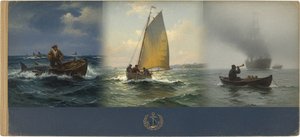
William Bradford’s artistic journey, though celebrated for its majestic depictions of the Arctic wilderness, began not amidst icy expanses but within the quietude of a New England Quaker community. Born in 1830 in Fairhaven, Massachusetts – a town inextricably linked to the whaling industry – Bradford’s early life was steeped in a tradition his family initially discouraged. The Bradfords were not strangers to prosperity; their lineage traced back to the Pilgrim William Bradford, governor of Plymouth Colony, yet they held firm to Quaker principles that valued simplicity and eschewed ostentation, qualities seemingly at odds with the pursuit of artistic expression. This internal tension—a heritage of pioneering spirit coupled with a pragmatic sensibility—would profoundly shape his aesthetic vision. His father’s business occupied much of his youth, but Bradford found himself irresistibly drawn to sketching, a passion that blossomed despite familial reservations. The nascent artist absorbed the details of the bustling harbor, the intricate rigging of ships, and the ever-changing moods of the sea, unknowingly laying the foundation for his future masterpieces. This early exposure instilled in him not only technical skill but also a deep reverence for the power and beauty of nature—a theme that would become central to his oeuvre.
From Ship Portraits to Arctic Majesty: The Evolution of Bradford’s Style
 Early Spring, Pleasant Valley, Connecticut
Admire Robert William Vonnoh’s ‘Early Spring, Pleasant Valley.’ A serene 1916 landscape painting capturing Connecticut's beauty. Hand-painted reproductions available.
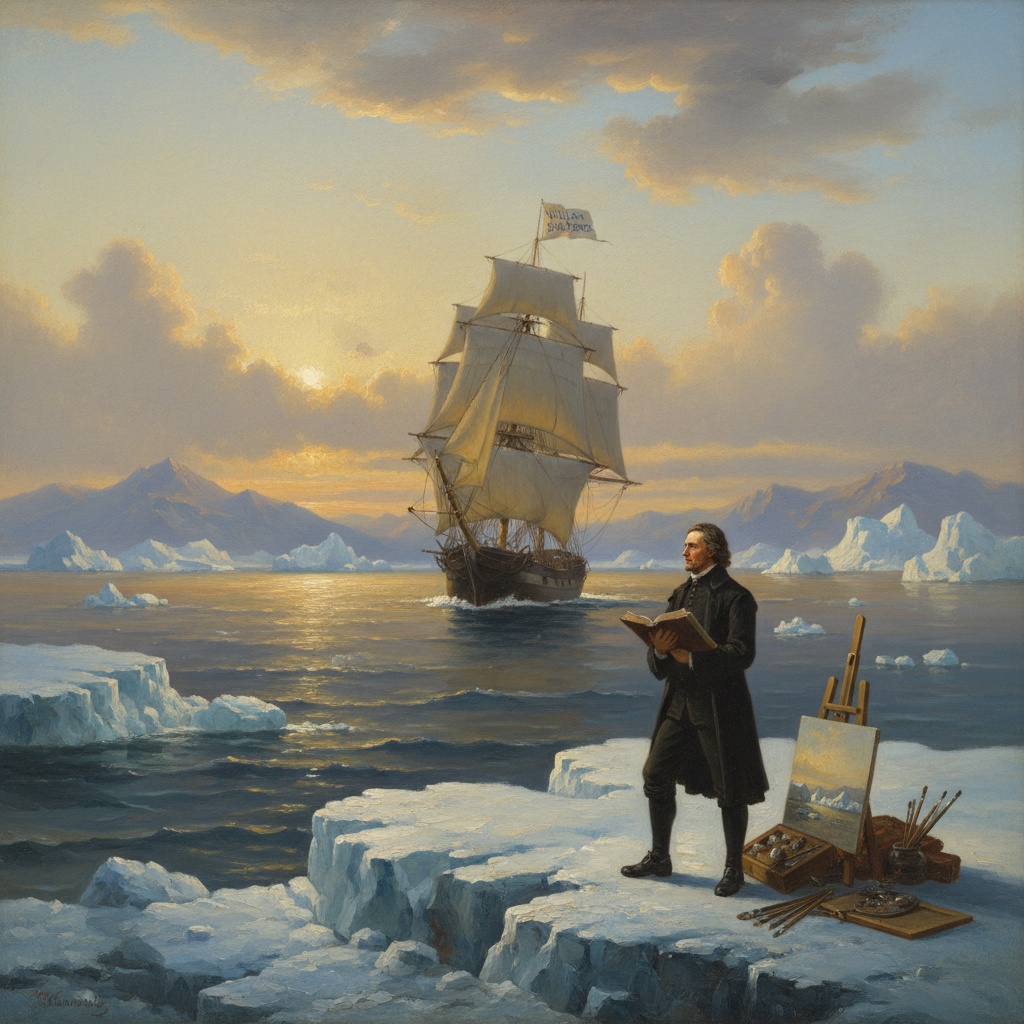
Bradford's initial foray into the art world was pragmatic. Recognizing the need to support himself and his family, he began painting ship portraits – a commercially viable genre in a maritime town like Fairhaven. These early works, while demonstrating considerable skill in capturing detail and likeness, were largely conventional. However, they served as crucial stepping stones, honing his observational abilities and establishing a reputation within the local community. A pivotal moment arrived with his mentorship under Albert Van Beest, a Dutch marine painter who brought a dynamic energy to Bradford’s compositions. This influence is evident in the increased drama and expressive brushwork of paintings from this period. Yet, it was Bradford's yearning for something more—a desire to transcend mere representation—that ultimately propelled him towards his signature style. He began seeking out subjects beyond the familiar harbor scenes, venturing northwards to Labrador and the Arctic regions. These expeditions weren’t merely about capturing landscapes; they were quests for the sublime – an attempt to convey the overwhelming power and spiritual resonance of untouched wilderness. The shift from meticulously rendered ship portraits to expansive Arctic vistas marked a profound artistic transformation.
The Hudson River School & Luminism: Artistic Influences and Techniques
 Williams College Museum of Art
Discover diverse art at Williams College Museum of Art (WCMA) in Massachusetts! Explore American & European paintings, sculpture, contemporary works & rotating exhibitions. A leading college museum for all.
While Bradford forged his own distinct path, he was undeniably influenced by the broader currents of American art in the mid-19th century. His work aligns with the principles of the Hudson River School, a movement characterized by its romanticized depictions of the American landscape and its emphasis on capturing the grandeur of nature. Artists like Frederic Edwin Church and Thomas Cole championed this vision, imbuing their canvases with a sense of awe and reverence. However, Bradford’s style diverges in subtle yet significant ways. He eschewed the dramatic narratives often found in Hudson River School paintings, focusing instead on the inherent beauty and stillness of the Arctic environment. Furthermore, his meticulous attention to detail and atmospheric effects place him firmly within the Luminist tradition. Luminism sought to capture fleeting moments of light and atmosphere, creating a sense of tranquility and spiritual presence. Bradford masterfully employed glazing techniques—layering thin washes of oil paint—to achieve this effect, rendering icebergs with an ethereal glow and capturing the subtle nuances of light reflecting on water. This dedication to atmospheric perspective and luminous detail became hallmarks of his work.
Documenting the Sublime: Bradford's Expeditions to Labrador and Beyond
Bradford’s artistic breakthrough was inextricably linked to his daring expeditions to the Arctic regions. Beginning in 1861, he embarked on a series of voyages to Labrador, often chartering ships at considerable personal expense. These weren’t leisurely explorations; they were arduous journeys undertaken with a singular purpose: to document the raw beauty and untamed power of the northern wilderness. He wasn't simply *painting* the Arctic; he was immersing himself in it, enduring harsh conditions and meticulously observing every detail—the texture of ice floes, the shifting patterns of light, the desolate grandeur of the coastline. Importantly, Bradford embraced photography as a tool to aid his artistic process. He equipped his expeditions with cameras, capturing hundreds of images that served as invaluable references for his studio paintings. While he never directly copied photographs, they provided him with an unparalleled level of detail and accuracy. These voyages weren’t just about aesthetic inspiration; they were acts of scientific documentation, contributing to a growing understanding of the Arctic landscape at a time when much of it remained unexplored.
Beyond the Canvas: Photography, Sketchbooks & Preserving a Legacy
Bradford's artistic practice extended beyond the finished canvas. His sketchbooks—filled with rapid studies and detailed observations—offer a fascinating glimpse into his creative process. These weren’t merely preparatory drawings; they were intimate records of his experiences, capturing fleeting moments of light and atmosphere that might otherwise be lost. The integration of photography further demonstrates his commitment to meticulous documentation. He wasn't content to rely solely on memory or imagination; he actively sought ways to capture the reality of the Arctic environment with scientific precision. Furthermore, Bradford understood the importance of disseminating his work beyond the confines of galleries and private collections. In 1873, he published *The Arctic Regions*, a lavishly illustrated volume that combined his paintings with detailed descriptions of his expeditions. This publication—aimed at a broad audience—helped to popularize his vision of the Arctic and cemented his reputation as both an artist and explorer. His papers, including these sketchbooks, offer invaluable insight into his working methods and artistic philosophy, preserved today by institutions like the Smithsonian American Art Museum.
Bradford’s Enduring Influence & Rediscovery in American Art History
Despite achieving considerable success during his lifetime, William Bradford's work experienced a period of relative obscurity in the early 20th century. However, recent scholarship has led to a renewed appreciation for his artistic achievements and his unique contribution to American art history. His paintings are now recognized as masterful examples of Romanticism and Luminism, capturing not only the physical beauty of the Arctic but also its spiritual resonance. Bradford’s legacy extends beyond his technical skill; he embodies a spirit of exploration and a deep reverence for nature that continues to resonate with contemporary audiences. Today, his works can be found in major museums across the United States, including the New Britain Museum of American Art and the Williams College Museum of Art. OriginalUniqueArt offers high-quality reproductions of Bradford’s iconic paintings, allowing art enthusiasts to experience the majesty of his Arctic landscapes firsthand. Through these meticulously crafted reproductions, we strive to preserve and share the enduring beauty of William Bradford's artistic vision—a testament to the power of nature and the human spirit.