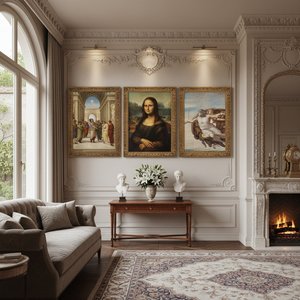
difference between renaissance and mannerism
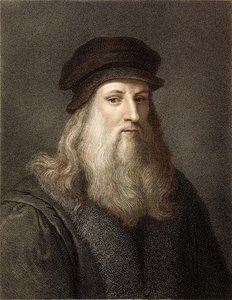 Leonardo da Vinci
Renaissance master Leonardo da Vinci created the Mona Lisa. Discover his legendary paintings and scientific genius today.
The High Renaissance emphasizes proportion, balance, and ideal beauty through harmonious compositions and a revival of classical antiquity. Mannerism, emerging around 1520, prioritizes complexity, technical virtuosity, and artifice over naturalistic representation, often favoring subjective expression and tension over the serene clarity of the earlier period.
High Renaissance art seeks to emulate nature through rational, orderly structures. Artists like Leonardo da Vinci and Raphael established a standard of grace and stability. This era focused on creating a clearly defined, three-dimensional space where figures appear naturally proportioned and serene.
Mannerism functions as a departure from these classical ideals. It is characterized by:
- Compositional tension: A move toward instability and asymmetry.
- Subjectivity: An emphasis on expressive, often distorted forms.
- Artifice: A preference for imitating the style of art rather than the reality of nature.
how did mannerism deviate from renaissance balance and harmony
Mannerism deviated from Renaissance harmony by embracing instability, asymmetry, and crowded compositions. While the High Renaissance sought equilibrium and calm, Mannerist works often project emotional intensity, anxiety, and uncertainty, utilizing elongated figures and jarring color palettes to break away from classical perfection.
The shift was not merely aesthetic but reflected a changing world. The Sack of Rome in 1527 contributed to a sense of social and political unease, which manifested in art as a move away from the stable, ordered compositions of the early 16th century. This era saw artists move toward more complex, intellectualized, and often unsettling arrangements.
In contrast to the balanced serenity of the High Renaissance, Mannerist painters often employed:
- Dense compositions: Figures are frequently packed into crowded, complex spaces.
- Unnatural elegance: Poses that appear graceful yet strained or exaggerated.
- Emotional weight: A focus on despair or intense spirituality rather than calm contemplation.
what specific techniques distinguish renaissance and mannerist art
 Bacchus and Ariadne
, Titian
Renaissance art utilizes naturalistic proportions, clear pictorial space, and harmonious color palettes to achieve clarity. Mannerist art distinguishes itself through the distortion of the human form, the flattening of pictorial space, and the use of acidic, clashing, or unnaturally bright color combinations.
Technique serves different masters in each movement. Renaissance masters used sfumato to create soft, realistic transitions of light and shadow. Mannerists, however, often used color and form to achieve a sense of virtuosity and artifice. For example, Titian’s Bacchus and Ariadne (1523) shows the transition, where emerging Mannerist traits like elongated figures and exaggerated poses begin to challenge strict naturalism.
Key technical distinctions include:
- Spatial Depth: Renaissance art emphasizes a clearly defined, deep space, whereas Mannerism often flattens the pictorial plane.
- Anatomy: Renaissance figures follow natural proportions; Mannerist figures are often elongated or distorted for expressive effect.
- Color: Renaissance palettes are balanced and harmonious; Mannerist palettes can be jarring, bright, or acidic.
Frequently asked questions
When did Mannerism emerge?
Mannerism emerged in Italy around 1520 and lasted until the end of the 16th century.
What are the characteristics of Mannerist art?
Mannerist artists often used jarring or acidic color combinations and emphasized the distortion and elongation of the human figure.
What event contributed to the rise of Mannerism?
The Sack of Rome in 1527 is cited as a pivotal moment in the rise of Mannerism.
When was Bacchus and Ariadne painted?
Titian's Bacchus and Ariadne was painted in 1523.