Early Life & Artistic Foundations: From Rural England to Parisian Studies
 Wikipedia: Philip Wilson Steer
Philip Wilson Steer (28 December 1860 – 18 March 1942) was a British painter of landscapes, seascapes plus portraits and figure studies. He was also an influential art teacher. His sea and landscape paintings made him a leading figure in the Impress...
Philip Wilson Steer, born in 1860 amidst the burgeoning industrial landscape of Birkenhead, Cheshire, might seem an unlikely progenitor of British Impressionism. Yet, his artistic journey was deeply rooted in a childhood spent absorbing the subtle nuances of the English countryside. A move to Whitchurch near Monmouth when he was just three years old proved formative; the pastoral beauty of this border region instilled within him a lifelong appreciation for light and atmosphere. Though initially steered towards a conventional career path – finding the rigors of civil service examinations unappealing – Steer’s dedication to art quickly took hold, leading him through studies at Gloucester School of Art and then the South Kensington Drawing Schools. However, it was his rejection from the Royal Academy that proved pivotal, prompting a relocation to Paris in 1882. This decision would irrevocably alter the course of British painting.
Paris, in the early 1880s, was a crucible of artistic innovation. Steer initially enrolled at the Académie Julian under Bouguerean, but it was his subsequent studies at the École des Beaux-Arts and exposure to the works of Édouard Manet and James McNeill Whistler that truly ignited his passion for Impressionism. He wasn’t merely copying techniques; he was absorbing a philosophy – a commitment to capturing fleeting moments, the subjective experience of light, and the beauty inherent in everyday life. This nascent understanding would soon find expression upon his return to England, challenging established artistic norms.
Embracing Impressionism: Steer's Coastal Visions and the British Response
Impressionism was a 19th-century art movement characterized by visible brush strokes, open composition, emphasis on accurate depiction of light in its changing qualities (often accentuating the effects of the passage of time), ordinary subject matter...
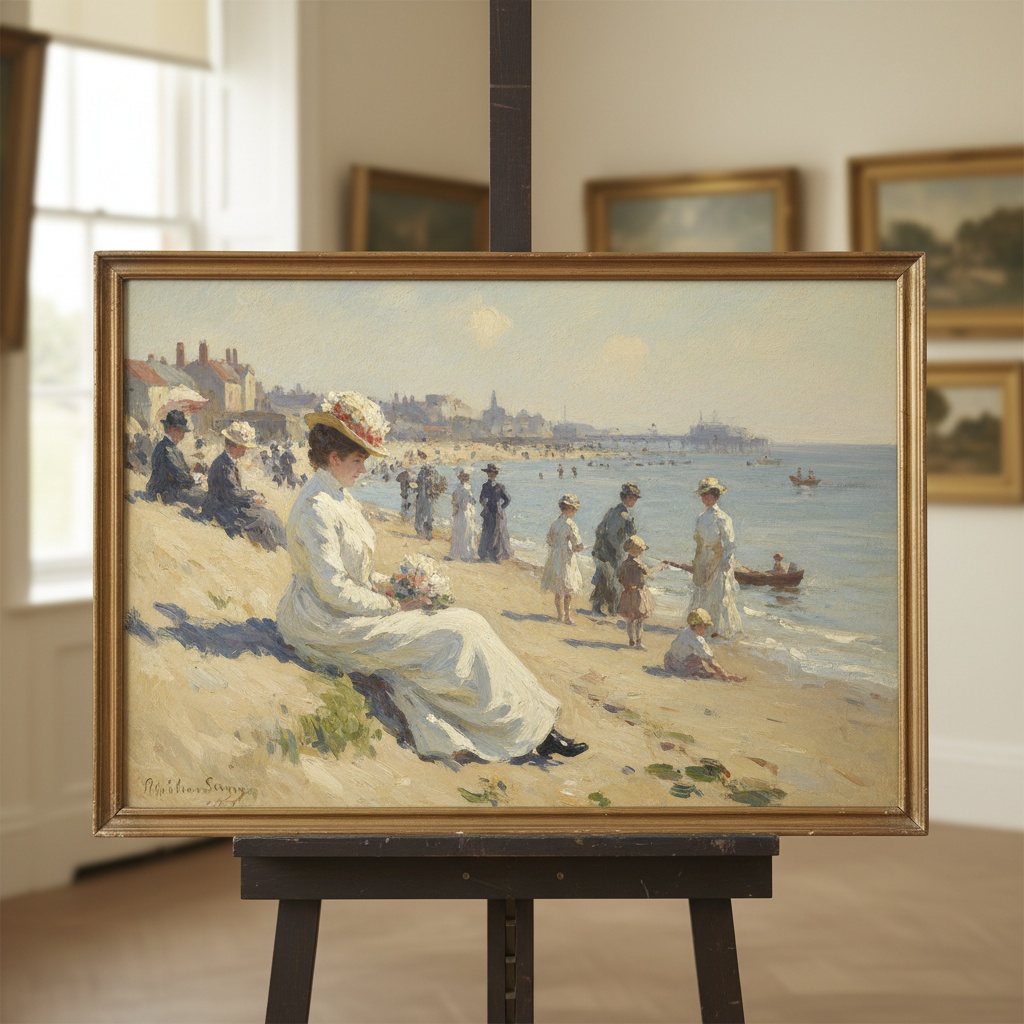
Upon returning to London, Steer embarked on a path that would define him as one of Britain’s foremost Impressionist painters. He began to develop a distinctive style characterized by loose brushstrokes, a silvery palette, and an unwavering focus on depicting beach scenes and seascapes. His early works weren't simply representations of coastal locations; they were attempts to translate the *feeling* of being there – the crisp sea air, the warmth of the sun, the constant movement of light across water. Paintings like ‘Poole Harbour’ (1890) exemplify this approach, showcasing an exceptional ability to capture atmospheric effects and a sense of immediacy.
However, Steer's embrace of Impressionism wasn’t universally welcomed. The British art establishment, steeped in tradition, often viewed his work with skepticism, even hostility. Critics struggled to reconcile his techniques with their expectations of academic precision. This resistance fueled a desire among Steer and like-minded artists – including Walter Sickert – to forge a new path, leading to the formation of the New English Art Club in 1886. The club provided a vital platform for showcasing innovative work and challenging conventional artistic boundaries. In 1889, Steer further cemented his position by participating in the London Impressionist exhibition at the Goupil Gallery, bringing this revolutionary style to a wider audience.
Walberswick & Cowes: Defining Moments in Steer’s Impressionistic Style
 Summer at Cowes
Discover 'Summer at Cowes' by Philip Wilson Steer (1888), a stunning Impressionist landscape of British coastal life. Explore this evocative oil painting’s serene beauty & masterful technique.
The coastal towns of Walberswick and Cowes, both located on the English coast, became central to Steer's artistic development during the late 1880s. These locations offered not only picturesque scenery but also a unique quality of light that perfectly suited his Impressionistic sensibilities. Walberswick, in particular, proved incredibly fertile ground for experimentation. Paintings like ‘Girls Running, Walberswick Pier’ (1888-94) capture the youthful energy and carefree spirit of seaside life with remarkable freshness and spontaneity. The loose brushwork and vibrant colors evoke a sense of movement and joy, transporting the viewer directly to the scene.
‘Summer at Cowes’ (1888) is another defining work from this period, showcasing Steer's masterful technique in capturing serene beauty. The painting depicts a tranquil coastal landscape bathed in warm sunlight, with figures enjoying leisurely activities on the water. It exemplifies his ability to convey not just what he saw but also how it *felt* to be present in that moment. These works weren’t merely depictions of places; they were expressions of Steer's personal connection to the English coast and a testament to the power of Impressionistic techniques.
Beyond Impressionism: A Return to Traditional Influences – Constable, Turner & Portraiture
While Steer is often celebrated as a leading British Impressionist, his artistic journey was far from static. In time, he began to move away from the strict tenets of the French style, increasingly drawn to the traditions of English landscape painting. The influence of John Constable and J.M.W. Turner became increasingly apparent in his work, particularly in his exploration of atmospheric effects and a more nuanced understanding of light and shadow. This wasn’t a rejection of Impressionism but rather an integration of its principles with a deeper appreciation for the British artistic heritage.
This shift also manifested in Steer's growing interest in portraiture. Paintings like ‘Girl Reading A Book’ (1895), featuring his model and girlfriend Rose Pettigrew, demonstrate a newfound sensitivity to character and psychological depth. His portraits weren’t simply likenesses; they were attempts to capture the inner life of his subjects. This period saw Steer receive greater critical acclaim, as his work resonated with audiences seeking a more grounded and emotionally engaging style.
Steer as Educator: Shaping Generations at the Slade School of Art
Beyond his own artistic achievements, Philip Wilson Steer exerted a profound influence on generations of young artists through his long tenure as Professor of Painting at the Slade School of Fine Art in London (1893-1911). Alongside colleagues like Henry Tonks and Frederick Brown, he fostered a tradition of realism and rigorous observation. Steer wasn’t interested in imposing a particular style on his students; rather, he encouraged them to develop their own unique voices while emphasizing the importance of technical skill and a deep understanding of art history.
Among the many notable artists who benefited from Steer's tutelage were Augustus John, William Orpen, Stanley Spencer, and Anna Airy. His emphasis on direct observation, coupled with his willingness to challenge conventional norms, helped shape a new generation of British painters. He instilled in them a passion for art and a commitment to pushing the boundaries of artistic expression.
Legacy and Lasting Influence: The Enduring Appeal of Philip Wilson Steer
Philip Wilson Steer’s legacy extends far beyond his own paintings. He played a pivotal role in introducing Impressionism to Britain, challenging established artistic conventions and paving the way for future generations of artists. While he eventually moved away from the strict tenets of the French style, his early works remain iconic examples of British Impressionism, capturing the beauty and vibrancy of coastal life with remarkable skill and sensitivity.
His influence as an educator is equally significant, shaping the careers of countless artists who went on to become leading figures in the British art world. Today, Steer’s paintings continue to captivate audiences with their evocative atmosphere, masterful technique, and enduring appeal. At OriginalUniqueArt.com, we are proud to offer high-quality reproductions of his most celebrated works, allowing you to experience the beauty and brilliance of Philip Wilson Steer firsthand. Explore our collection and discover why he remains a beloved figure in British art history.