The Allure of the Alpine: Early Representations of Mountains in Art
Landscape painting, also known as landscape art, is the depiction in painting of natural scenery such as mountains, valleys, rivers, trees, and forests, especially where the main subject is a wide view—with its elements arranged into a coherent compo...
For centuries, mountains held a complex position in the human imagination – simultaneously revered as sacred spaces and feared for their untamed power. Unlike the classical world’s preference for idealized forms and gentle landscapes, early depictions of mountains were often relegated to the backgrounds of religious scenes or served as symbols of chaos and isolation. Before the 18th century, detailed representations of mountain ranges were rare; artists tended to focus on the human drama unfolding *within* a landscape rather than the landscape itself. The sheer scale and ruggedness of these formations presented a formidable challenge to artistic conventions. Early attempts often lacked topographical accuracy, prioritizing symbolic meaning over faithful representation. Think of the dramatic peaks in depictions of Moses receiving the Ten Commandments – imposing but not necessarily realistic. It wasn’t until advancements in cartography and a growing fascination with the natural world that artists began to truly grapple with capturing the majesty and complexity of mountainous terrain.
Romanticism's Embrace: The Sublime Landscape and Emotional Power
In aesthetics, the sublime (from Latin sublīmis 'uplifted, lofty, exalted, etc.; elevated, raised') is the quality of greatness, whether physical, moral, intellectual, metaphysical, aesthetic, spiritual, or artistic. The term especially refers to a ...
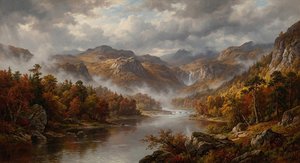
The Romantic era, however, marked a profound shift. Artists and writers alike turned towards nature as a source of spiritual awakening and emotional intensity. Mountains, in particular, became potent symbols of the Sublime – that awe-inspiring combination of terror and beauty that transcends rational understanding. This concept, theorized by thinkers like Edmund Burke and Immanuel Kant, resonated deeply with a generation seeking an alternative to Enlightenment reason. Artists such as Caspar David Friedrich didn’t merely paint mountains; they painted the *experience* of encountering them. His iconic “Wanderer above the Sea of Fog” exemplifies this perfectly – the solitary figure dwarfed by the vastness of the landscape, contemplating his own insignificance in the face of nature's grandeur. The focus shifted from precise depiction to evoking a powerful emotional response in the viewer. Oil paint became the ideal medium for capturing atmospheric effects—the play of light and shadow, the swirling mists, the sense of immensity – all contributing to a feeling of overwhelming power and spiritual connection.
Defining the 'Picturesque': A Counterpoint to the Sublime in Mountain Painting
While the Sublime emphasized raw power and emotional intensity, another aesthetic sensibility emerged alongside it: the Picturesque. Championed by writers like William Gilpin, the Picturesque sought a more refined beauty – one rooted in harmony, balance, and a sense of cultivated order. Unlike the wild, untamed landscapes favored by proponents of the Sublime, Picturesque scenes often featured elements of human intervention—ruins, villages, or carefully arranged compositions that suggested a harmonious relationship between nature and civilization. In mountain painting, this translated into depictions of valleys with winding rivers, charming cottages nestled amongst rolling hills, and meticulously rendered details that emphasized the idyllic qualities of rural life. It wasn’t about conquering the landscape but appreciating its gentle beauty and finding solace in its tranquility. This aesthetic offered a counterpoint to the overwhelming power of the Sublime, appealing to those who sought comfort and reassurance rather than existential angst.
Key Masters of the Mountain Scene: Dahl, Koch & Calame
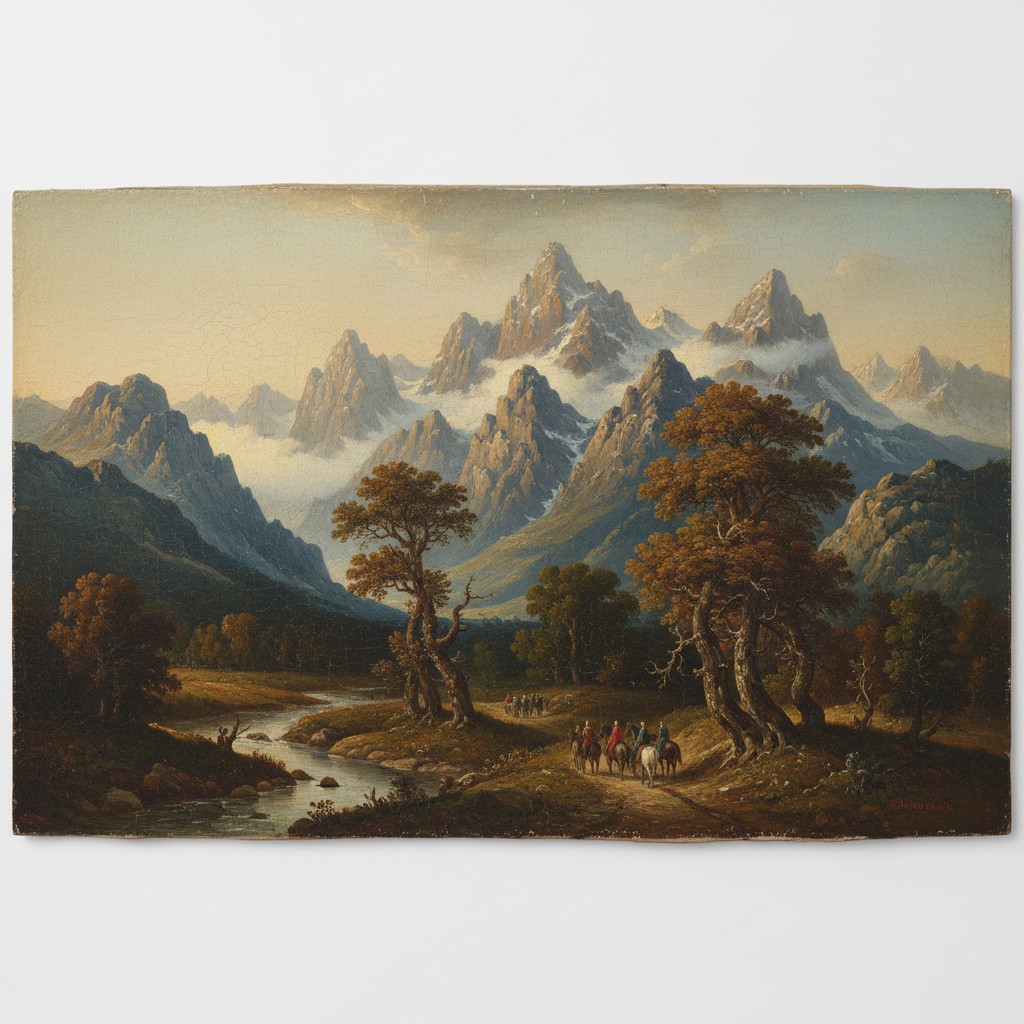
Several artists rose to prominence during this period, each bringing their unique vision to the mountain scene. Johan Christian Dahl, a Norwegian painter often considered the father of Norwegian landscape painting, masterfully captured the dramatic beauty of his homeland’s fjords and peaks. His “Alpine Landscape” (1821) exemplifies his ability to convey both the grandeur and the delicate nuances of nature. Joseph Anton Koch, an Austrian artist, specialized in heroic landscapes populated with classical figures, blending Romantic ideals with a sense of historical gravitas. His “Mountain Scene” (1796), with its cascading waterfall and imposing peaks, showcases his skill in depicting both the power and the beauty of the alpine world. Perhaps most notable is Alexandre Calame, a Swiss painter renowned for his incredibly detailed depictions of Alpine forests and valleys. His meticulous technique and atmospheric perspective created scenes that were almost photographic in their realism, yet imbued with a profound sense of emotional depth.
Beyond Representation: Exploring Identity and Atmosphere in Alpine Art
These artists weren’t simply documenting landscapes; they were exploring themes of national identity, spiritual longing, and the human relationship to nature. For Dahl, painting Norway’s mountains was an act of asserting a distinct cultural identity—celebrating the beauty of his homeland in the face of Danish rule. Koch's classical figures often served as allegorical representations of heroism and virtue, imbuing the landscape with moral significance. Calame’s detailed depictions of forests weren’t merely about topographical accuracy; they were about capturing the atmosphere – the scent of pine needles, the sound of rushing water, the feeling of being enveloped by nature's embrace. The use of light and shadow became increasingly sophisticated, creating a sense of depth and realism that drew viewers into the scene. Artists began to experiment with different techniques—glazing, scumbling, impasto—to convey texture, mood, and emotional intensity.
The Enduring Legacy: Mountains as Inspiration in Contemporary Fine Art
The legacy of these Romantic masters continues to resonate today. Mountains remain a powerful source of inspiration for contemporary artists, photographers, and filmmakers alike. While artistic styles have evolved, the fundamental themes explored by Dahl, Koch, and Calame—the Sublime, the Picturesque, the human relationship to nature—remain relevant. From abstract interpretations of mountain forms to hyperrealistic depictions of alpine landscapes, artists continue to grapple with the challenge of capturing the majesty and complexity of these awe-inspiring formations. At OriginalUniqueArt.com, we offer a curated selection of reproductions from these iconic masters, allowing you to bring the beauty and emotional power of the mountain scene into your own home. Explore our collection today and discover the enduring allure of the alpine world – a testament to the timeless power of art and nature.