Early Life & Artistic Beginnings: From Alpine Herdsman to Aspiring Painter
Giovanni Battista Emanuele Maria Segantini, born in 1858 in the remote mountain village of Arco, Trentino, began life steeped not in artistic privilege but in the harsh realities of rural existence. His early years were marked by profound loss and instability; his father’s itinerant trade kept him largely absent, while his mother battled with deep depression following the tragic death of her firstborn son. This formative period, characterized by poverty and solitude amongst the breathtaking peaks of the Alps, would indelibly shape Segantini's artistic vision. Unlike many artists of his era who benefited from formal patronage, Segantini’s initial education was rudimentary at best. He spent countless hours wandering the mountains as a herdsman, an existence that fostered a deep connection with nature – a bond that would become the cornerstone of his oeuvre.
His nascent artistic talent first came to light during a period of institutional care in Milan. While committed to a reformatory, a chaplain recognized Segantini’s aptitude for drawing and encouraged its development. This small act of encouragement proved pivotal, offering a glimmer of hope amidst hardship. Though largely self-taught initially, he eventually enrolled at the Brera Academy in Milan, immersing himself in the artistic currents of the time. However, it was his connection with the Scapigliatura movement – a group of bohemian artists and intellectuals who challenged conventional norms – that truly ignited his creative spirit. These early experiences laid the foundation for Segantini’s unique path: one forged not through academic tradition but through personal struggle and an unwavering devotion to capturing the essence of the Alpine world.
The Embrace of Divisionism: Segantini’s Technical Innovations in Capturing Light
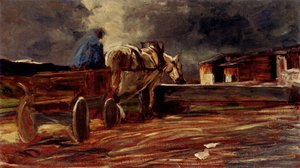 Taking a Drink
Admire 'Taking a Drink' by Giovanni Segantini – a captivating Alpine scene of rural life. Explore Divisionism & Symbolism through this evocative 19th-century masterpiece.
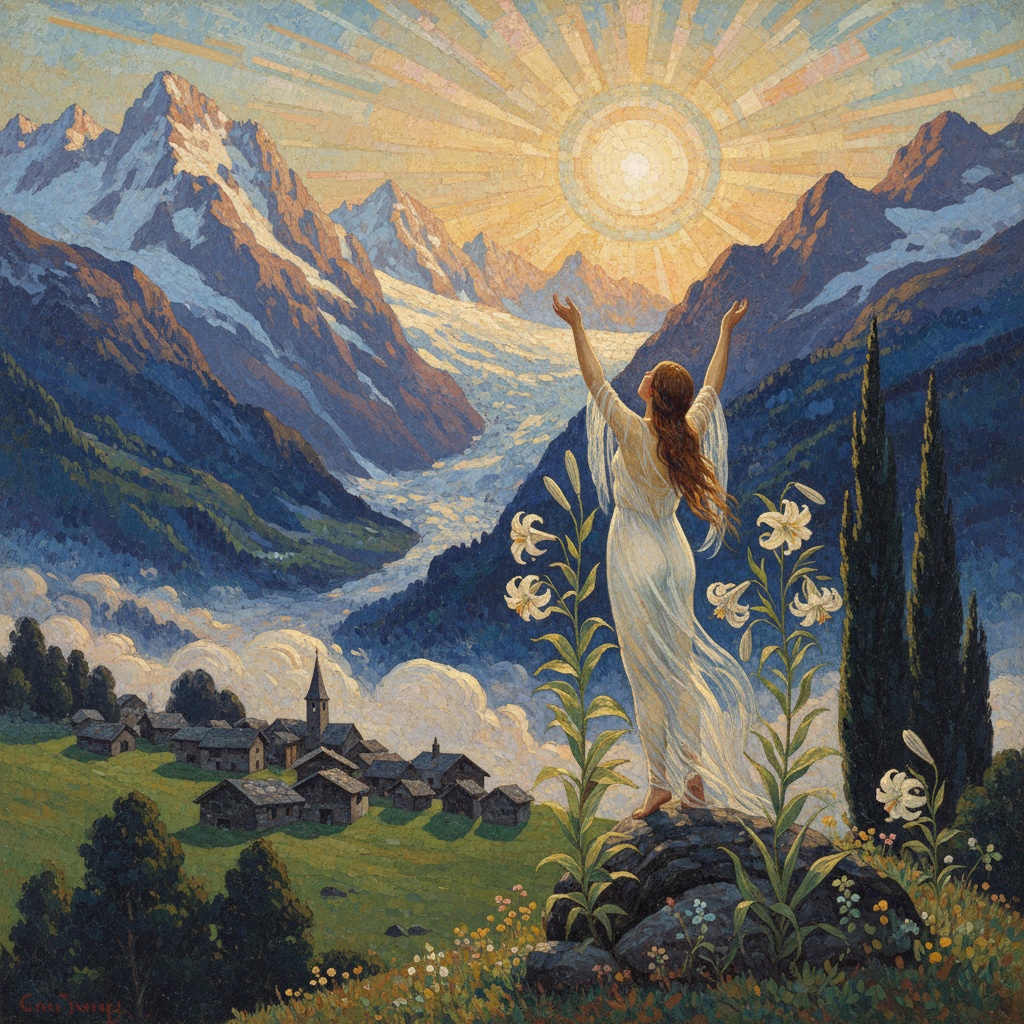
Segantini's artistic evolution took a decisive turn with his adoption of Divisionism, a technique pioneered by Georges Seurat and Paul Signac. However, he didn’t simply replicate the method; he transformed it into something uniquely his own. While Pointillism, as it was often called, focused on scientific precision in applying dots of pure color, Segantini imbued the technique with an emotional intensity rarely seen in other practitioners. He wasn't merely interested in optical mixing but in conveying the very *feeling* of light – its shimmering quality, its ability to transform landscapes, and its profound impact on human perception.
He meticulously layered small brushstrokes of complementary colors, creating a vibrant luminosity that captured the ethereal beauty of the Alpine environment. This wasn’t merely about replicating what he saw; it was about translating the *experience* of being immersed in the mountains – the crispness of the air, the warmth of the sun on skin, and the subtle shifts in color throughout the day. His experimentation extended beyond pure technique; he incorporated gold and silver into his palette to heighten the crystalline effect of light reflecting off snow-covered peaks, a testament to his relentless pursuit of visual authenticity.
Symbolism and Allegory: Unveiling the Deeper Meanings in Segantini's Landscapes
Beyond his technical mastery, Segantini’s work is deeply imbued with Symbolist content. He moved beyond simply depicting Alpine scenes; he sought to imbue them with allegorical meaning, exploring themes of life, death, and humanity’s relationship with nature. His paintings are not merely representations of the physical world but windows into a deeper spiritual realm. Works like “The Punishment of Luxury” (1891) and “The Unnatural Mothers” (1894) reveal a preoccupation with moral decay and the consequences of societal excess, themes that resonated deeply within the fin-de-siècle anxieties of his time.
His later works, such as "Love at the Fountain of Life" (1896), are particularly rich in symbolism. The figures aren’t simply individuals but archetypes representing different stages of life and spiritual awakening. Segantini's pantheistic worldview – a belief in the inherent divinity of nature – is palpable throughout his oeuvre. He saw himself as a conduit, translating the mystical communion he felt with the mountains into visual form. This fusion of Symbolist content with Divisionist technique created a unique artistic language that set him apart from his contemporaries.
Life in the Alps: Rural Existence as a Central Theme & Source of Inspiration
The lives of Alpine peasants – their struggles, their resilience, and their deep connection to the land – formed the very heart of Segantini’s artistic practice. He didn't merely paint *about* these people; he lived amongst them, sharing their hardships and celebrating their simple existence. His paintings offer a poignant glimpse into a way of life that was rapidly disappearing in the face of modernization. “Taking a Drink” (1890) exemplifies this focus, capturing a moment of respite amidst arduous labor – a scene imbued with both dignity and quiet desperation.
Segantini’s commitment to authenticity extended beyond subject matter; he meticulously researched the details of Alpine life, ensuring that his depictions were accurate and respectful. He understood that these weren't simply picturesque scenes but representations of real people facing genuine challenges. His paintings are often imbued with a sense of melancholy, reflecting both the beauty and the harshness of rural existence. This profound empathy for his subjects is what elevates his work beyond mere aesthetic representation.
Masterpieces of Alpine Beauty: 'La Vita,' 'The Angel of Life,' and Beyond
 Life (La Vita)
Discover Giovanni Segantini’s "Life" (La Vita), a stunning Post-Impressionist landscape capturing Alpine beauty & human connection. Explore this masterpiece of nature and symbolism.
Segantini’s most celebrated works – “Life” (La Vita, 1899), “The Angel of Life” (1889), and “Alpine Pasture” (1893-94) – stand as testaments to his artistic genius. “La Vita,” tragically left unfinished at the time of his death, is a monumental depiction of Alpine life, capturing a vast panorama of human activity set against the backdrop of towering peaks. The painting’s scale and ambition are breathtaking, conveying both the grandeur and the fragility of existence.
“The Angel of Life,” with its Pre-Raphaelite influences and rich golden hues, is a stunning portrayal of motherhood and spiritual grace. The intricate detail and symbolic imagery create a deeply moving and evocative scene. “Alpine Pasture” showcases his mastery of Divisionism, capturing the shimmering light and vibrant colors of the mountain landscape. These works, along with countless others, cemented Segantini’s reputation as one of the most important artists of the late 19th century.
Segantini’s Legacy: Influence, Style, and Enduring Appeal
Giovanni Segantini's untimely death in 1899 at the age of 41 cut short a brilliant career, but his influence continues to resonate today. His innovative use of Divisionism, combined with his profound Symbolist content, paved the way for future generations of artists. He challenged conventional notions of landscape painting, imbuing it with emotional depth and spiritual meaning.
His work remains deeply admired for its technical brilliance, its evocative power, and its poignant portrayal of rural life. OriginalUniqueArt.com offers a stunning collection of Segantini’s masterpieces, allowing art enthusiasts to experience the beauty and emotional resonance of his paintings firsthand. Whether you are drawn to the shimmering light of “Alpine Pasture” or the allegorical depth of “The Angel of Life,” Segantini’s work continues to captivate and inspire. His legacy is a testament to the power of art to transcend time and connect us with the fundamental truths of human existence – a connection forged through an unwavering devotion to nature, symbolism, and the enduring beauty of the Alpine world.