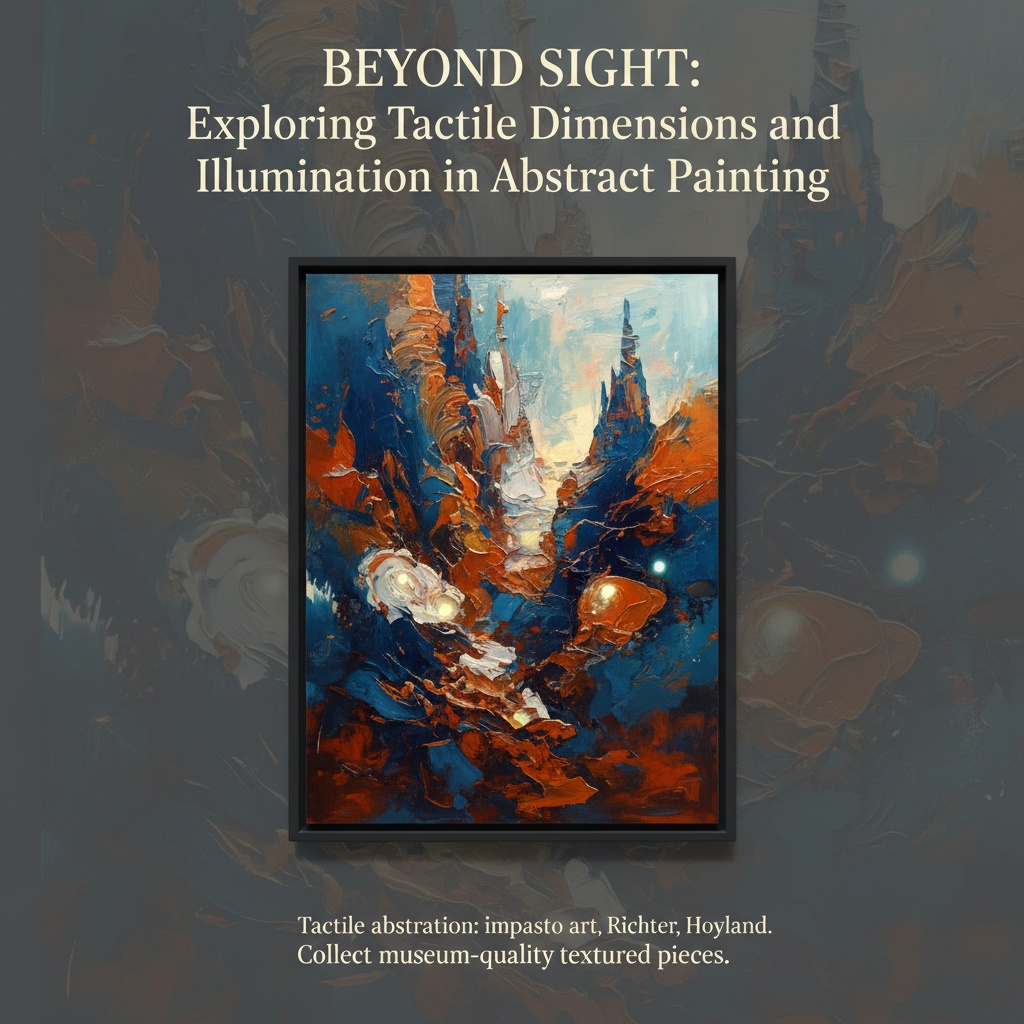
The Tactile Dimension: Exploring Texture Beyond Sight
Impasto is a technique used in painting where paint is laid on an area of the surface thickly, usually thick enough that the brush or painting-knife strokes are visible. Paint can also be mixed right on the canvas. When dry, impasto provides texture;...
Abstract painting, often perceived as a purely visual medium, possesses a rich tactile dimension frequently overlooked. It’s an invitation to move beyond the immediate recognition of form and color, to engage with the artwork on a more primal level – through the suggestion, or even reality, of touch. This isn't merely about appreciating what we *see*, but sensing what we might *feel*. From the subtle undulations of a painted surface to the bold impasto strokes that rise from the canvas, texture becomes a language in itself, capable of conveying emotion, energy, and depth with remarkable power.
The human experience is fundamentally tactile. We navigate the world through touch, interpreting surfaces as indicators of safety, comfort, or danger. Artists have long understood this innate connection, harnessing the physical properties of paint to evoke specific responses in the viewer. The earliest explorations of texture can be traced back to the Venetian Renaissance, where masters like Titian and Rembrandt employed thick layers of pigment – impasto, derived from the Italian word for ‘dough’ – not simply to depict light and shadow, but to create a sense of presence and realism. Consider the sumptuous fabrics in Titian's portraits; the texture isn’t merely *represented*, it is almost physically present on the canvas, inviting us to reach out and feel its weight and drape.
This fascination with texture continued through subsequent centuries, reaching a crescendo with the Impressionists. Van Gogh, perhaps more than any other artist of that era, utilized impasto as a means of capturing the vibrancy of light and nature. His brushstrokes weren’t simply applying color; they were building up layers of energy, creating surfaces that shimmered and pulsed with life. The thick application wasn't just aesthetic; it created shadows and highlights that shifted with changing light conditions, adding a dynamic quality to the work. The physicality of the paint itself became integral to the emotional impact of his paintings – a direct expression of his inner turmoil and passion.
Impasto Through History: From Renaissance Masters to Abstract Expressionism
Abstract expressionism in the United States emerged as a distinct art movement in the aftermath of World War II and gained mainstream acceptance in the 1950s, a shift from the American social realism of the 1930s influenced by the Great Depression an...
The 19th century saw Romantic painters embracing impasto to depict the raw beauty of nature, but it was with the advent of Abstract Expressionism in the aftermath of World War II that texture truly came into its own. Artists like Jackson Pollock, Franz Kline, and Willem de Kooning rejected traditional representational art altogether, seeking instead to convey their emotions directly onto the canvas through spontaneous gesture and unconventional techniques. This wasn’t about depicting *something*; it was about expressing *feeling*.
Pollock's drip paintings are perhaps the most iconic example of texture as expression. By pouring and flinging paint onto the canvas, he created complex layers of interwoven lines and forms that embody energy and chaos. The surface isn’t merely painted; it is built up over time, a record of his physical movements and emotional state. Kline's bold black strokes, often described as calligraphic, similarly relied on texture to convey a sense of power and immediacy. The movement wasn’t solely about spontaneous action; artists also carefully considered the materials they used and how they interacted with each other. The physicality of paint – its weight, viscosity, and color – became integral to the meaning of the work.
This emphasis on materiality paved the way for further exploration of texture in subsequent art movements, challenging traditional notions of artistic skill and representation. The canvas was no longer a window onto another world; it was a space for direct emotional expression, where the artist’s hand – and the very substance of paint itself – took center stage.
Gerhard Richter & Contemporary Approaches to Textured Abstraction
Gerhard Richter represents a fascinating contemporary approach to abstraction that skillfully blends controlled technique with an apparent spontaneity. His work often utilizes impasto, but not in the same way as his predecessors. Richter’s ‘Abstract Painting 780-1’ (1992) is a compelling example of how texture can be used in modern abstract art. The painting features vibrant colors and energetic brushstrokes that create a sense of movement and depth.
However, Richter doesn't simply apply paint thickly; he often uses squeegees to drag and manipulate the layers, creating unique textural patterns. This technique results in a surface that is both chaotic and controlled, reflecting his interest in exploring the boundaries between order and randomness. He builds up layers of color, then scrapes away at them, revealing underlying hues and creating a sense of depth and complexity. This process isn’t about achieving a specific aesthetic; it's about exploring the possibilities of paint itself, allowing chance and accident to play a role in the final composition.
Richter’s approach challenges traditional notions of abstract painting, blurring the lines between gesture and calculation. It suggests that texture can be both intentional and accidental, controlled and spontaneous – a reflection of the complexities of human experience.
Color, Light, and Emotion: The Interplay of Texture in Hoyland’s Paintings
John Hoyland's vibrant Color Field paintings showcase the power of texture to evoke emotion and create immersive visual experiences. He was heavily influenced by American Expressionism, but developed his own unique style that emphasized lyrical abstraction. His canvases are often large-scale, enveloping the viewer in a sea of color and texture.
Hoyland’s impasto technique isn’t about creating realistic effects; it's about conveying energy and emotion through the physicality of paint. The thick application of paint creates a sense of depth and movement, inviting the viewer to explore the surface and engage with the work on a visceral level. He often used bold, saturated colors that seemed to radiate from within, further enhancing the emotional impact of his paintings.
The interplay between color and texture is crucial in Hoyland’s work. The vibrant hues are amplified by the textured surface, creating a sense of luminosity and depth. His paintings aren't simply about what they depict; they're about how they *feel* – a direct expression of his inner state.
The Psychological Impact of Texture: Engaging the Senses
Beyond the technical aspects, understanding the psychological impact of texture is crucial for both artists and collectors. Our brains are wired to interpret textures as information about the environment. Rough surfaces might signal danger or instability, while smooth surfaces suggest comfort and safety. Artists can leverage this innate response by using texture to create specific emotional effects.
A heavily textured surface might evoke a sense of chaos or energy, while a smoother surface might convey tranquility or serenity. The choice of materials also plays a role; certain pigments and mediums have inherent qualities that contribute to the overall sensory experience. Collectors should consider not only the visual appeal of a painting but also its tactile quality and how it will engage their senses.
The very act of looking at a textured surface can trigger a subconscious response, evoking memories and emotions that are deeply personal. This is why texture is so often used in abstract art – to bypass the rational mind and connect directly with the viewer’s emotional core.
Collecting Tactile Art: Considerations for Connoisseurs
When collecting tactile art, it's important to consider not only the aesthetic qualities of the work but also its materiality and craftsmanship. Look for paintings that demonstrate a skillful use of texture – whether through impasto, layering, or other techniques. Pay attention to the quality of the materials used; high-quality oil paints and canvas will ensure that the painting lasts for generations.
Provenance is also important – knowing the history of the work can add value and authenticity. Consider the artist’s background and influences, as well as their place in art history. Ultimately, the most important thing is to choose a painting that resonates with you on an emotional level. A textured artwork has the power to transform a space, adding depth, character, and personality.
At OriginalUniqueArt.com, we offer a curated selection of museum-quality reproductions and original artworks, allowing you to explore the captivating world of tactile abstraction from the comfort of your own home. Our expert team is available to provide personalized consultations and help you find the perfect piece for your collection. Discover the power of texture – and experience art in a whole new dimension.