Early Life & Transatlantic Beginnings: A Quaker’s Artistic Ascent
Benjamin West, a name synonymous with the burgeoning artistic spirit of America and its subsequent impact on the European art world, began his life far removed from the gilded halls and discerning patronage he would eventually command. Born in 1738 in Springfield, Pennsylvania, to an innkeeping family, young Benjamin’s early environment offered little overt encouragement for a career in painting. His Quaker upbringing, while fostering a sense of observation and quiet contemplation, was not traditionally conducive to the flamboyant world of artistic expression. Yet, even amidst these humble surroundings, a nascent talent bloomed. Anecdotes abound of his childhood fascination with color – mixing clay from riverbanks with bear grease to create rudimentary pigments, a testament to an innate desire to capture the visual world around him. This self-taught beginning, fueled by curiosity and a natural aptitude, laid the foundation for a remarkable journey.
His early portraits, though modest in scale and execution, quickly garnered local attention, attracting the patronage of Dr. William Smith, provost of the College of Philadelphia. Smith recognized West’s potential and provided not only crucial financial support but also access to intellectual circles that broadened his artistic horizons. This period saw a pivotal work emerge: *The Death of Socrates*, based on an engraving from Charles Rollin's Ancient History. Though differing significantly from its source material, the painting demonstrated ambition and a burgeoning understanding of composition – a clear indication of West’s developing skill. It was this piece that ultimately propelled him towards Europe, embarking on a path that would redefine his artistic trajectory and establish him as a bridge between two continents.
The Italian Influence & Embracing Neoclassical Ideals
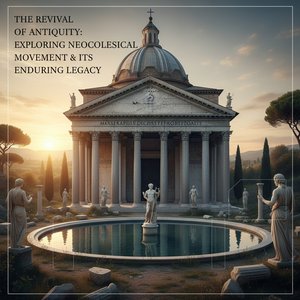
Neoclassicism, also spelled Neo-classicism, emerged as a Western cultural movement in the decorative and visual arts, literature, theatre, music, and architecture that drew inspiration from the art and culture of classical antiquity. Neoclassicism wa...
In 1760, sponsored by Smith and William Allen, West embarked for Italy, a pilgrimage undertaken by aspiring artists seeking immersion in the classical tradition. Rome became his crucible, a city steeped in history and brimming with artistic inspiration. Unlike many of his contemporaries who meticulously copied Old Master works, West’s approach was more analytical. He wasn't merely replicating; he was absorbing the principles underlying the art – the emphasis on form, balance, and narrative clarity. He studied the works of Titian and Raphael, but it was the burgeoning field of archaeology and the writings of Johann Joachim Winckelmann that truly resonated with him.
Winckelmann’s theories, advocating for a return to the “noble simplicity and calm grandeur” of Greek art, profoundly influenced West's aesthetic. He embraced the ideals of Neoclassicism – a style characterized by its emphasis on order, symmetry, and moralizing tales drawn from classical mythology and history. This wasn’t simply an artistic preference; it reflected the broader Enlightenment values that were sweeping across Europe. West began to view art not just as decoration but as a vehicle for conveying virtue and educating the public. His time in Italy was transformative, shaping his artistic vision and preparing him for the challenges and opportunities that awaited him in London.
West in London: Royal Patronage & the Founding of the Royal Academy
 Benjamin West
Discover Benjamin West (1738-1820), a pioneering American artist & Royal Academy president! Explore his historical paintings, Neoclassical style & lasting legacy.
Arriving in London in 1763, West initially intended a brief sojourn before returning to America. However, fate intervened. His paintings – *Angelica and Medora*, *Portrait of Robert Monckton*, and *Cymon and Iphigenia* – exhibited at the Society of Artists garnered attention, attracting the eye of King George III. This marked a turning point in West’s career. The King's patronage was not merely financial; it was an endorsement that opened doors to London’s elite artistic circles.
In 1768, West became a charter member of the newly established Royal Academy, a testament to his growing reputation and influence. He played a pivotal role in its formation, advocating for a more inclusive approach to art education and exhibition practices. In 1772, he was appointed historical painter to the King, receiving a residence and studio at Windsor Castle – an unprecedented honor for an American-born artist. This position solidified his status as a leading figure in the British art world. His appointment wasn’t solely based on artistic merit; it was also due to his affable nature and ability to navigate the complex social landscape of the court, even during the turbulent years of the American Revolution.
Painting History for a New Nation: 'American Commissioners' and Beyond
 American Commissioners of the Preliminary Peace Negotiations with Great Britain
Explore Benjamin West’s ‘American Commissioners’ – a monumental 1783 oil painting depicting the negotiation of American independence. Neoclassical, historical, & symbolic.
West’s historical paintings became increasingly popular, but he consciously sought to incorporate subjects that reflected his American heritage. This was a delicate balancing act – maintaining favor with the English court while acknowledging his roots in a nation on the brink of independence. *The Death of General Wolfe* (1770) exemplifies this tension and innovation. By depicting Wolfe in contemporary uniform rather than classical garb, West challenged convention and created a powerful narrative that resonated with both British and American audiences. The painting’s success led to widespread reproduction, cementing its place as an iconic image of the era.
However, it was *American Commissioners* (1783) – depicting the negotiation of American independence – that truly solidified his role as a chronicler of transatlantic history. This monumental work, rich in symbolism and neoclassical grandeur, captured a pivotal moment in the birth of a nation. The painting wasn’t merely a historical record; it was a carefully constructed statement about diplomacy, self-determination, and the burgeoning relationship between America and Great Britain. West skillfully blended realism with idealization, creating an image that celebrated both the triumph of American independence and the complexities of international relations.
A Transatlantic Legacy: West as Mentor and Influencer
Perhaps West’s most enduring legacy lies not solely in his own paintings but in his role as a mentor to generations of American artists. His home and studio became a haven for aspiring painters traveling abroad, offering them not only instruction and accommodation but also access to the Royal Academy and London’s vibrant art scene. He provided financial assistance, advice, and connections – essentially creating a transatlantic network that fostered artistic exchange.
Among his most notable students were Charles Willson Peale, Gilbert Stuart, and John Singleton Copley – artists who would become foundational figures in American painting. West’s influence extended beyond technical instruction; he instilled in them a sense of ambition, professionalism, and the importance of engaging with contemporary trends. He also amassed an impressive collection of Old Master paintings and casts of classical sculpture, providing his students with invaluable resources for study. His willingness to share his knowledge and connections helped shape the visual identity of the early Republic, ensuring that American art would flourish even in its nascent stages.
The Evolving Style of Benjamin West: From Neoclassicism to Romanticism
While celebrated as a champion of Neoclassicism, West’s artistic journey wasn't static. In his later years, he began to embrace elements of Romanticism – emphasizing more dramatic storytelling and evoking the sublime. This shift reflected a broader change in European art, moving away from strict classical formality towards greater emotional intensity and individual expression.
The Preservation of St Paul after a Shipwreck at Malta, for example, showcases this evolving style with its dynamic composition and heightened sense of drama. His willingness to experiment and adapt ensured his continued relevance throughout his long career. Though criticized by some for abandoning the principles of Neoclassicism, West’s embrace of Romanticism demonstrates his commitment to artistic innovation and his ability to respond to changing tastes. He died in 1820, leaving behind a complex and multifaceted legacy – that of a pioneering American artist who not only bridged two continents but also helped shape the course of art history.
Discover the timeless beauty of Benjamin West’s masterpieces and explore our collection of museum-quality reproductions at OriginalUniqueArt.com