Peržiūrėti realaus dydžio版
 Siųsti
 Dalintis
 Išsamiau
 Vadovas

 Atsisiųsti
 Panašūs eksponatai
 Rentgeno spindulių nuotrauka
 Diaporama
 Statistika
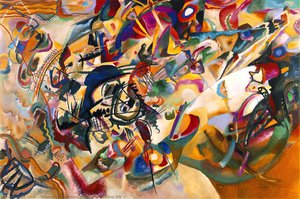
Kompozicija VIII
 Aliejus ant drobės
- Sieninis menas
- Abstract Expressionism
 1923
1923- Modernizmas
 140.0 x 201.0 cm
 Guggenheim muziejus
 Rodyti daugiau
Rankų darbo aliejinės reprodukcijos
Rankiniu būdu tapytas aliejus ant droblio jūsų pageidaujamame dydį ir rėmuose – mūsų menininkų darbas pagal užsakymą. ( Perjungti į spausdinimą Perejti prie skaitmeninių vaizdų)




P118B €10

P118H €10

P118W €10

P438Z €10

P508JH €12

P508YH €12

P805H €10

P805Z €10

P919BZ €10

P919G €10

P919XJ €10

P959ZH €10

P968JZ €12

W106C €8

W218G €10

W218JH €8

W218Y €10

W307PJ €10

W316G €10

W316PJ €8

W316Y €10

W398PJ €8

W4111J €10

W500HY €15

W500JH €15

W692G €12

W849H €8

W940BG €15

W953PJ €8




Pasirinkite iš mūsų nustatytų dydžių, atitinkančių originalaus meno kūrinio proporcijas.

Įveskite jums reikiamą plotį ir aukštį, kad paveikslas atitiktų jūsų rėmą ar sieną. Kadangi šis darbas yra rankinio darbo, siekiant išgauti kitokio formos dydį, paveikslas gali būti šiek tiek didesnis (nuo kraštų bus palikta daugiau erdvės) arba mažesnis – pasirinkite jums patogiausią variantą. Prieš pradedant tapyti, atsiųsime jums skaitmeninį maketą patvirtinimui. Šioje puslapio nuotraukoje matomas vaizdas nėra galutinis rezultatas – jį parodys tik sukurtas maketas.
Gavus užsakymą, OriginalUniqueArt.com komanda susisieks su klientu el. paštu dėl instrukcijų ir pateiks maketo pavyzdį
Pristatymas visame pasaulyje () per 3–4 savaites, o ne įprastai – per 5 savaites. (23 spalis). Kokybė lieka nepakeičiama.

Nemokamas greitasis pristatymas visame pasaulyje

Aukštos kokybės lininis drobė

Pilnas siuntimo draudimas

Muitinės mokesčių grąžinimo garantija

Tikro spalvų atitikimo garantija

100 dienų grąžinimo politika (tik esant įtaigoms)

100% pinigų grąžinimo garantija

Nuolaida dideliems užsakymams
 Stiklo variantas prieinamas tik pasirinkus dydį iki 110 cm

Kompozicija VIII
Reprodukcijos technika
Reprodukcijos dydis
-


Visų pasirinktų variantų kaina
€ 264
Kompozicija VIII: Kandinskio spalvų ir formų simfonija
Wassily Kandinsky’s “Composition VIII,” sukurtas 1923 metais, yra neatsiejamas nuo abstraktaus meno istorijos akstinas. Šis monumentalus kūrinys, išmatavimas 140 x 201 cm, nėra tik paveikslas – tai vizualinis kelionė į vidinio poreikio gelmes, Kandinsky filosofiją, kad menas turėtų kilti iš atlikėjo dvasios ir emocijų. Sukurtas jo darbo metais Bauhaus mokykloje, Vokietijoje, “Composition VIII” puikiai iliustruoja abstraktaus meno vystymąsi, kai Kandinsky kartu su kitais pionieriais, tokiais kaip Piet Mondrian, atsisakė reprezentacinių vaizdų ir ieškojo būdų išreikšti emocijas bei dvasines tiesas grynomis formomis ir spalvomis. Tai neatsiejama nuo jo įsitikinimo, kad spalvos turi savo emocinį poveikį, panašiai kaip muzikos natos.Geometrinės formos ir spalvų dialogas
Paveiksle dominuoja geometrinių figūrų – apskritimų, trikampių, kvadratų ir linijų – dinamiškas tarpusavio ryšys. Tai ne kieti, statiški objektai; jie tarsi plūduriuoja erdvėje, sukurdami judesio ir gylio iliuziją, nepaisant tradicinės perspektyvos nebuvimo. Kandinsky meistriškai naudoja kontrastingas spalvas – ugningo raudonį ir geltonį priešpastatoma vėsiems mėlyniams ir žaliems – sustiprindamas paveikslo vizualinę energiją. Atkreipkite dėmesį į subtilią tekstūrą, kuri pasirodo kai kuriose figūrose, atskleidžiant teptuko braukimo ženklus ir pridedant niuansų šiai plokščiai erdvei. Šis paveikslas yra tarsi vizualus partitūra, kur spalvos ir formos susijungia į harmoningą, tačiau kartais ir disonansinį visumą. Kandinsky siekė perteikti muzikos principus vaizduojamajame mene, tikėdamasis sužadinti gilias emocijas žiūrovo sieloje.Istorinis kontekstas ir Bauhaus įtaka
“Composition VIII” atsirado svarbiu laikotarčiu meninės istorjos – po Pasaulio Pirmojo karo, kai Europa ieškojo naujų išraiškos būdų. Kandinsky, dėstydamas Bauhaus mokykloje, propagavo abstraktaus meno idėjas ir bandė sujungti meną, technologijas bei dizainą. Šis paveikslas atspindi tuometinę tendenciją ieškoti universalių formų ir spalvų kalbos, kuri galėtų perteikti dvasines tiesas nepriklausomai nuo kultūros ar individualaus supratimo. Bauhaus mokyklos atmosfera skatino eksperimentus su forma ir funkcija, o “Composition VIII” yra puikus pavyzdys šio laikotarpio meninės revoliucijos.Simbolizmas ir emocinis poveikis
Kandinsky tikėjo, kad kiekviena spalva ir forma turi savo simbolinę reikšmę. Apskritimas, dažnai pasikartojantis jo kūriniuose, simbolizuoja dvasinį pilnumą ir begalybę. Trikampiai gali atstovauti energiją ir ambicijas, o linijos – ryšius tarp skirtingų elementų. “Composition VIII” nėra tik abstraktaus meno pavyzdys; tai yra bandymas perteikti gilias emocijas ir dvasines patirtis grynomis formomis ir spalvomis. Žiūrint į šį paveikslą, galima pajusti vidinę harmoniją, tačiau kartu ir tam tikrą įtampą, kuri skatina apmąstymus apie gyvenimo prasmę ir žmogaus vietą pasaulyje. Tai kūrinys, kuris nepalieka abejingų – jis kviečia žiūrovą į savo vidų ir leidžia patirti meną kaip gilią emocinę kelionę.问答 (or more naturally for a website heading): Klausimai ir atsakymai
Kaip medžiaga ir judėjimas susilieja darbe „Kompozicija VIII“?
„Kompozicija VIII“ sukurta naudojant Aliejus ant drobės, Abstract Expressionism stiliuje.
Kokio dydžio „Kompozicija VIII“ siūloma Popieriaus svetainė?
Popieriaus svetainė eria rekomenduojamas „Kompozicija VIII“, autorius – Vasilijus Kandinskis spausdinimo dydis yra Didelis formatas.
Kas yra „Kompozicija VIII“ kūrybos autorius?
„Kompozicija VIII“ kūrybinį darbą sukūrė Vasilijus Kandinskis. Šioje puslapio informacijoje aprašomas Vasilijus Kandinskis originalus kūrinys.
Autoriaus biografija
A Life Immersed in Color and Spirit
Wassily Wassilyevich Kandinsky, born December 4, 1866, in Moscow, Russia, was a revolutionary figure who irrevocably altered the course of modern art. His journey wasn’t one of immediate artistic calling; initially destined for a career in law and economics at the University of Moscow, it was a profound encounter with Impressionist painting – specifically Claude Monet's “Haystacks” – and a deeply moving experience witnessing Wagner’s opera "Lohengrin" that ignited within him an irrepressible desire to pursue art. This pivotal moment, occurring around age thirty, marked not merely a career change but a complete transformation of perspective, setting him on a path toward pioneering abstraction. He soon relocated to Munich, enrolling at the prestigious Academy of Fine Arts and studying under Franz von Stuck, though even within formal training, Kandinsky’s spirit yearned for exploration beyond conventional boundaries. Early influences included Russian folk art, gleaned from an ethnographic expedition to the Vologda region in 1889, which instilled a fascination with vibrant color palettes and symbolic imagery. This foundation would prove crucial as he began to develop his unique artistic language. These early explorations weren’t simply about aesthetic preference; they were rooted in a deep cultural connection and a burgeoning understanding of how art could communicate beyond the literal. He experimented with landscapes and portraits, demonstrating considerable skill but always feeling constrained by representational limitations.The Dawn of Abstraction: From Expressionism to Inner Necessity
Kandinsky’s early works reveal a strong expressionistic bent, characterized by bold colors and emotional intensity – pieces like “Papeln (Poplars)” from 1902 exemplify this period. However, he wasn't content with merely representing the external world; he sought to express inner realities, spiritual truths that transcended mere visual depiction. This quest led him gradually away from representational art and toward a revolutionary exploration of color, form, and their emotional resonance. He believed that colors possessed inherent psychological effects, capable of evoking specific feelings and sensations in the viewer. This conviction was deeply intertwined with his burgeoning interest in Theosophy, a spiritual movement emphasizing esoteric knowledge and universal brotherhood. As he delved deeper into these ideas, Kandinsky’s paintings became increasingly non-objective, shedding recognizable forms in favor of abstract compositions driven by an “inner necessity.” This wasn't simply about abandoning representation; it was about discovering a new visual language capable of expressing the intangible realms of emotion and spirituality. He sought to create a visual equivalent of music, where color and form harmonized to evoke profound emotional responses. He began to experiment with landscapes and portraits, demonstrating considerable skill but always feeling constrained by representational limitations. His conviction that colors possessed inherent psychological effects, capable of evoking specific feelings and sensations in the viewer. This conviction was deeply intertwined with his burgeoning interest in Theosophy, a spiritual movement emphasizing esoteric knowledge and universal brotherhood. As he delved deeper into these ideas, Kandinsky’s paintings became increasingly non-objective, shedding recognizable forms in favor of abstract compositions driven by an “inner necessity.” This wasn't simply about abandoning representation; it was about discovering a new visual language capable of expressing the intangible realms of emotion and spirituality. He sought to create a visual equivalent of music, where color and form harmonized to evoke profound emotional responses.Geometric Harmony and Spiritual Resonance
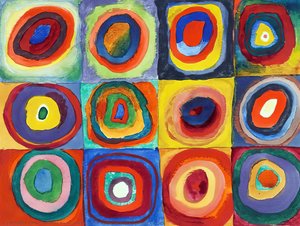
The period following his involvement with the influential artist group Der Blaue Reiter (The Blue Rider), which he co-founded in Munich in 1911, saw a further evolution in Kandinsky’s style. While earlier works often featured fluid, organic shapes, he began to explore geometric abstraction, focusing on the interplay of circles, triangles, and squares. “Several Circles” (140 x 140 cm) stands as a prime example of this phase – a dynamic composition where color and form interact in a harmonious yet energetic dance. He believed that colors possessed inherent psychological effects, capable of evoking specific feelings and sensations in the viewer. This conviction was deeply intertwined with his burgeoning interest in Theosophy, a spiritual movement emphasizing esoteric knowledge and universal brotherhood. As he delved deeper into these ideas, Kandinsky’s paintings became increasingly non-objective, shedding recognizable forms in favor of abstract compositions driven by an “inner necessity.” This wasn't simply about abandoning representation; it was about discovering a new visual language capable of expressing the intangible realms of emotion and spirituality. He sought to create a visual equivalent of music, where color and form harmonized to evoke profound emotional responses. He experimented with landscapes and portraits, demonstrating considerable skill but always feeling constrained by representational limitations. His conviction that colors possessed inherent psychological effects, capable of evoking specific feelings and sensations in the viewer. This conviction was deeply intertwined with his burgeoning interest in Theosophy, a spiritual movement emphasizing esoteric knowledge and universal brotherhood. As he delved deeper into these ideas, Kandinsky’s paintings became increasingly non-objective, shedding recognizable forms in favor of abstract compositions driven by an “inner necessity.” This wasn't simply about abandoning representation; it was about discovering a new visual language capable of expressing the intangible realms of emotion and spirituality. He sought to create a visual equivalent of music, where color and form harmonized to evoke profound emotional responses.Bauhaus Influence and Lasting Legacy
The outbreak of World War I forced Kandinsky's return to Russia in 1914, but following the Russian Revolution, he found himself increasingly at odds with the prevailing artistic climate. In 1920, he accepted a teaching position at the Bauhaus school in Germany, where he profoundly influenced generations of artists with his theories on color, form, and abstraction. The Bauhaus provided an ideal environment for Kandinsky to further develop his ideas and explore new creative avenues. He experimented with landscapes and portraits, demonstrating considerable skill but always feeling constrained by representational limitations. His conviction that colors possessed inherent psychological effects, capable of evoking specific feelings and sensations in the viewer. This conviction was deeply intertwined with his burgeoning interest in Theosophy, a spiritual movement emphasizing esoteric knowledge and universal brotherhood. As he delved deeper into these ideas, Kandinsky’s paintings became increasingly non-objective, shedding recognizable forms in favor of abstract compositions driven by an “inner necessity.” This wasn't simply about abandoning representation; it was about discovering a new visual language capable of expressing the intangible realms of emotion and spirituality. He sought to create a visual equivalent of music, where color and form harmonized to evoke profound emotional responses. He experimented with landscapes and portraits, demonstrating considerable skill but always feeling constrained by representational limitations. His conviction that colors possessed inherent psychological effects, capable of evoking specific feelings and sensations in the viewer. This conviction was deeply intertwined with his burgeoning interest in Theosophy, a spiritual movement emphasizing esoteric knowledge and universal brotherhood. As he delved deeper into these ideas, Kandinsky’s paintings became increasingly non-objective, shedding recognizable forms in favor of abstract compositions driven by an “inner necessity.” This wasn't simply about abandoning representation; it was about discovering a new visual language capable of expressing the intangible realms of emotion and spirituality. He sought to create a visual equivalent of music, where color and form harmonized to evoke profound emotional responses. Kandinsky’s exploration of color, form, and spirituality continues to inspire artists today, solidifying his place as one of the most important figures in 20th-century art history. He didn't just paint pictures; he painted emotions, ideas, and the very essence of the human spirit.
Vasilijus Kandinskis
1866 - 1944 , Rusija
Trumpa informacija apie kūrėją
- Artistic Movement Or Style: Abstrakti meno
- Artists Or Movements Influenced By This Artist: ['Abstrakti ekspresionizmas']
- Artists Who Influenced This Artist:
- Claude Monet
- Richard Wagner
- Date Of Birth: 1866
- Full Name: Wassily Wassilyevich Kandinsky
- Nationality: Rusijoje
- Notable Artworks: ['Murnau su aromatu']
- Place Of Birth: Maskova, Rusija
Susiję straipsniai

Kandinsky's Masterpieces: 25 Paintings That Define Abstract Art | OriginalUniqueArt
Journey through Wassily Kandinsky's 25 most iconic abstract paintings. Explore his revolutionary use of color, form & spiritual expressionism. Find museum-quality Kandinsky reproductions and elevate your home decor with OriginalUniqueArt.com. Discover all masterpieces on OriginalUniqueArt.com!

Top 10 Abstraktus Ekspresionizmas: Simboliai ir Grožio Paslaptys
Atraskite 10 legendinių abstraktus ekspresionizmo kūrinių! Pažinkite Pollocko, Rothko ir kitų genijų istorijas bei jų spalvingas meno interpretacijas. Puikios meninės reprodukcijos jūsų namams – OriginalUniqueArt.com

Geometrinės Abstrakcijos Šedevrai: 10 Kūrinių, Pakeitusių Meną | OriginalUniqueArt.com
Atraskite 10 geometrinės abstrakcijos šedevrų – nuo Mondriano iki Malevičiaus! Sužinokite apie Piet Mondrian, Kazimir Malevič ir kitus menininkus. Meno kūriniai jūsų interjerui | OriginalUniqueArt.com
Kazimiro Malevičiaus Šedevrai: 25 Išskirtiniai Kūriniai Jūsų Interjerui
Atraskite 25 įspūdingiausius Kazimiro Malevičiaus kūrinius! Suprematizmo meistras, Juodas kvadratas ir kiti šedevrai. Įkvėpkite interjero idėjų su abstraktaus meno reprodukcijomis – OriginalUniqueArt.com
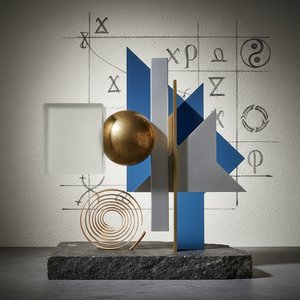
Beyond Form: Exploring the Philosophical Foundations of Geometric Abstraction
Explore the philosophical roots & artistic evolution of geometric abstraction with OriginalUniqueArt. Discover Mondrian, Malevich, De Stijl & more. Expert insights for collectors and art enthusiasts.