Contemporary Realism · 1898
Taking the Count (Thomas Eakins, 1898)
Thomas Eakins (1844–1916) sukūrė Taking the Count. Šis kūrinys datuojamas 1898 m. Šis kūrinys priklaulo Contemporary Realism kieruliui. Pagaminta naudojant Oil On Canvas. Eksponatas saugomas Yale University Art Gallery Hartford, JAV.
- 1898
- Oil On Canvas
- Yale University Art Gallery, Hartford

 Peržiūrėti realaus dydžio版

 Rankinio darbo aliejinės imitacijos paveikslas
 Pasidalinti
 Dalintis
 Informacinė l lapelė


 Atsisiųsti
 Panašūs eksponatai
 Rentgeno spindulių nuotrauka
 Automatinė diorama
 问答

 Statistika
Taking the Count, trumpai
- Pavadinimas
- Taking the Count
- Autorius
- Thomas Eakins (1844–1916)
- Dizainere/is gimęs
- Filadelfija, Jungtinės Amerikos Valstijos
- Data
- 1898
- Mediumas
- Oil On Canvas
- Kur galima pamatyti
- Yale University Art Gallery, Hartford, JAV
- Judėjimas
- Contemporary Realism
- Laikotarpis
- 19th Century
- Tema
- boxing match, anatomy, crowd spectators, referee, philadelphia, realism
Ką vaizduoja Taking the Count?
The Raw Pulse of Philadelphia: A Masterclass in Realism
In the dim, electric atmosphere of Philadelphia’s Arena in 1898, a moment of profound human vulnerability is frozen in time. Thomas Eakins, a titan of American Realism, does not merely paint a boxing match; he dissects the very essence of endurance and physical struggle. In Taking the Count, we are thrust into the center of the ring, where the sweat, the tension, and the heavy breathing of the combatants feel almost palpable. This is not the romanticized, heroic athleticism often found in sporting art; instead, Eakins presents a gritty, unvarnished truth. The scene captures a fallen fighter at his most precarious moment, caught in the agonizing interval between a devastating blow and the referee's decisive count. It is a study of the human body under duress, rendered with a scientific precision that reflects Eakins’ lifelong obsession with anatomy.
The composition draws the eye through a complex web of gazes and physical postures. At the heart of the drama, the kneeling figure embodies a desperate struggle for recovery, his muscles taut and his spirit tested. Surrounding him, the referee and the standing opponent create a triangular tension that anchors the viewer within the ring. Beyond the immediate combatants, the presence of the crowd—a shadowy, watchful collective—adds a layer of psychological depth, reminding us that this private agony is being consumed as public spectacle. For the collector or the lover of fine art, this painting offers more than just a depiction of sport; it provides a window into the late 19th-century urban experience, where the boundaries between physical prowess and human frailty are perpetually blurred.
Anatomy of a Masterpiece: Technique and Light
Eakins’s technical mastery is most evident in his ability to marry scientific rigor with emotional resonance. Having spent years studying the intricacies of musculature and bone structure through dissection, he approaches the canvas with the eye of an anatomist. Every sinew and strained limb in Taking the Count is rendered with an uncompromising accuracy that makes the figures appear to possess weight and volume. His use of light does not serve to beautify the scene but to illuminate its harsh realities. The lighting within the arena creates deep, dramatic shadows that sculpt the bodies of the boxers, emphasizing the physical toll of the fight and adding a sense of cinematic gravity to the composition.
The palette, while grounded in the earthy, somber tones characteristic of Eakins’s realism, is used to direct the viewer's emotional journey. The muted colors of the background allow the pale, strained skin of the athletes to emerge from the gloom, focusing our attention on the visceral reality of the struggle. For interior designers seeking a centerpiece for a sophisticated space, this work offers a profound sense of gravitas. A high-quality reproduction of this masterpiece brings with it an air of intellectual depth and historical weight, making it an ideal choice for galleries, studies, or living spaces that value art which challenges the eye and stirs the soul.
A Legacy of Unflinching Honesty
To understand Taking the Count is to understand the rebellious spirit of Thomas Eakins himself. At a time when many of his contemporaries were retreating into the soft, fleeting impressions of light or the idealized myths of history, Eakins stood firm in his commitment to the real. He found beauty not in perfection, but in the truth of the human condition—in the grit of the city, the precision of science, and the raw intensity of life lived on the edge. This painting remains a testament to that courage.
Owning or displaying a reproduction of this work is an invitation to contemplate the themes of resilience and the cyclical nature of struggle. It serves as a powerful reminder that even in moments of defeat, there is a profound dignity in the attempt to rise again. Whether viewed as a historical document of Philadelphia’s sporting culture or as a timeless exploration of human anatomy, Taking the Count continues to captivate, offering an enduring source of inspiration for those who find beauty in the authentic and the unadorned.
Kuriame muziejuje eksponuojamas karya Taking the Count?
Yale University Art Gallery
Hartford, JAV
Origins and History of the Gallery The Yale University Art Gallery began in 1832. Its foundation rests upon a gift from the collection of John Trumbull. In those early years, the focus remained on paintings depicting the American Revolution.


Taking the Count dididraudžios kokybės vaizdai
Viešoji domenė: suregalis mirė 1916 m.
Thomas Eakins, Taking the Count (1898), Yale University Art Gallery. Viešoji domenė.
Atsakimai į klausimus apie Taking the Count
Kur galima pamatyti „Taking the Count“ – Thomas Eakins originalą?
Kūrinys „Taking the Count“ – Thomas Eakins rodomas Yale University Art Gallery, Hartford, JAV. Muziejaus informacija nuoroda į originalą, o ne į reprodukciją.
Kokia yra „Taking the Count“ – Thomas Eakins kūrybos data?
„Taking the Count“ sukurta 1898 m. Ši data leidžia įvardyti kūrinį Thomas Eakins kūrybinėje karjeroje bei jo epochoje.
Kokia technika sukurta „Taking the Count“ – Thomas Eakins?
Thomas Eakins kūriniui „Taking the Count“ panaudojo Oil On Canvas techniką. Ši technika apibrėžė originalaus kūrinio medžiaginę prigimtį.
Kas yra „Taking the Count“?
„Taking the Count“ – Thomas Eakins vaizdeletas: boxing match, anatomy, crowd spectators, referee, philadelphia, realism, athlete.
Ar „Taking the Count“ yra viešosios teisės kūrinys?
Autorių teisių statusas kūriniui „Taking the Count“ – Thomas Eakins: kūrinys priklauso yra viešosios erdvės dalis – jo autorinė teisė pasibaigusi. Tai nulemia, ar galima laisvai reprodukciuoti šį vaizdą.
Kas sukūrė „Taking the Count“?
„Taking the Count“ kūrybinį darbą sukūrė Thomas Eakins. Šioje puslapio informacijoje aprašomas Thomas Eakins originalus kūrinys.
Kokio meno kryžmės dalis yra „Taking the Count“ – Thomas Eakins?
„Taking the Count“ – Thomas Eakins priklauso Contemporary Realism stiliui. Ši dailės kryptis suteikia kūriniui stilistinį kontekstą.
Kokio Thomas Eakins kūrybos laikotarpio priklauso „Taking the Count“?
Thomas Eakins kūrybos enceklopedijoje kūrinys „Taking the Count“ priskiriamas Mature Period laikotarpiui. Šis etapas leidžia palyginti jį su kitais šio autoriaus kūriniais.
Kokia buvo Thomas Eakins amžius sukuriant „Taking the Count"]?
Thomas Eakins buvo 54 metų, kai 1898 m. sukūrė kūrinį „Taking the Count“. Amžius apskaičiuotas remiantis gimimo metais 1844.
Apie šį menininką, Thomas Eakins

1844–1916, Jungtinės Amerikos Valstijos
Thomas Eakins
Thomaso Eakinso gyvenimas Gimęs Pensilvanijos Filadelfijoje 1844 m. liepos 25 d., Thomasas Eakinsas gyvenimą, glaudžiai įsišakinusį jo gimimo mieste, skvėrė į daugybę meninių ir mokslinių disciplinų. Jis buvo universalus kūrybos žmogus – dailininkas, fotografas, skulptorius ir aukštomasmeninis meno pedagogas. Nors studijų metu jo domėjimas dažnai vedė jį už Danės seas, jo egzistencijos geografija iš esmės išliko Filadelfijos rėmuose.
Taip pat Thomas Eakins darbai
 „The Gross Clinic“1875
 Plaukiot1885
 Maxas Šmitsas vienoje taikės1871
 Portrait of Samuel Murray1889
Esdai apie Taking the Count
 Precision in Portraiture: The Technical Rigor of Anatomical Mastery and Hyper-RealismMaster the technical rigor of hyper-realism and anatomical precision. Explore the evolution of portraiture mastery now.
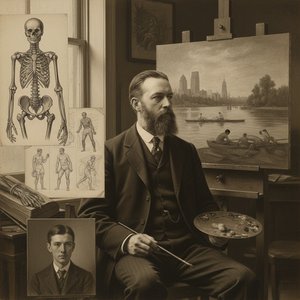 Thomas Eakins: Realism, Anatomy & the American Spirit – A Comprehensive Exploration of Life and LegacyExplore the life & legacy of Thomas Eakins, a pivotal American Realist painter. Discover his groundbreaking techniques, anatomical precisio…
 Romantic Realism's Finest: 10 Masterpieces for Your Home | OriginalUniqueArtExplore 10 defining masterpieces of Romantic Realism! Discover Courbet, Millet & Daumier's powerful paintings—capturing emotion and social …